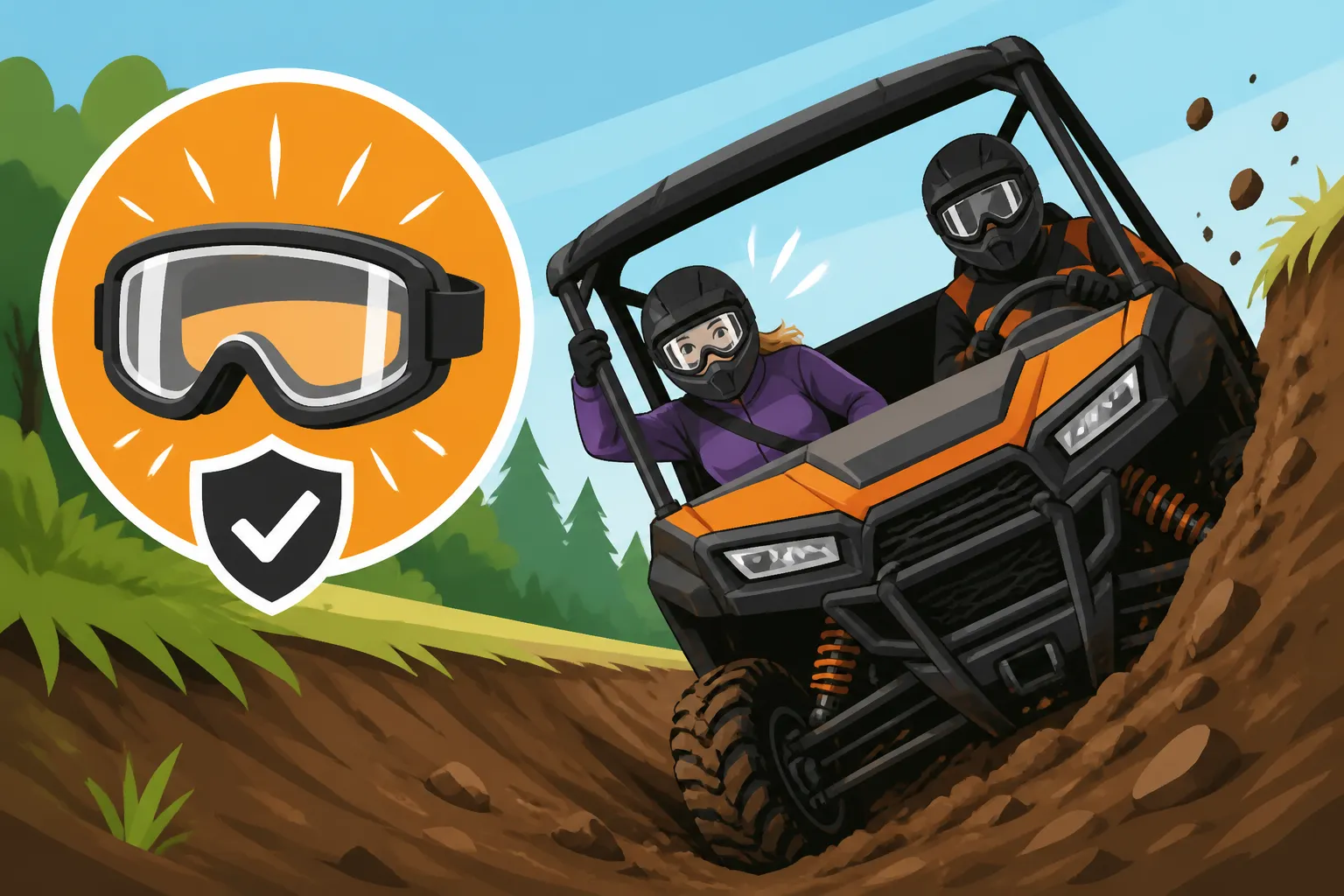
Eye Protection for a Passenger in the Ditch
A passenger in a Minnesota roadside ditch can take a face full of grit, insects, or branches before the driver has time to react. Eye protection is more than a comfort issue, and passengers should not assume the driver’s windshield will protect them too. Here’s how to think about Minnesota requirements, choose suitable eyewear, and keep it working through a ride.
When a Passenger Needs Eye Protection
Minnesota ATV rules include eye-protection requirements for public riding, with the machine’s equipment and the place you ride affecting what applies. A passenger should not assume the requirement is only for the operator. If an ATV has no windshield, plan for both people to wear eye protection on a ditch ride, and check current Minnesota DNR guidance for the rules that apply to your machine and route.
A roadside ditch is not the same as riding on private land. Ditch riding takes place in a public road right-of-way and is subject to specific restrictions. Before setting out, review What Minnesota Requires Before You Ride the Ditch and Riding the Ditch of a Minnesota Right of Way. A route that looks open may still have restrictions, and eye protection does not make an otherwise prohibited ride legal.
A windshield may reduce wind and debris for someone sitting behind it, but coverage varies. A small windscreen, a windshield with gaps, or an open-sided cab may leave a passenger exposed to dust and flying material. Even when a machine’s equipment affects the legal requirement for separate eye protection, eyewear is still a sensible safety choice. A windshield can also be dirty, scratched, or ineffective at blocking debris from the sides.
The passenger’s position matters. A front passenger may be exposed to debris kicked up by the front tires; someone in a side-by-side may have protection from a cab but still face dust or wind entering through an open side. Do not assume the driver’s goggles, helmet visor, or position shields the person beside or behind them.
| Riding setup | Practical eye-protection approach |
|---|---|
| ATV without a windshield | Both operator and passenger should wear secure protective eyewear; check current rules for the ride setting. |
| ATV with a small or partial windshield | Wear eyewear if wind or debris can reach the rider; partial coverage may not protect the passenger. |
| Side-by-side with open sides | Use protective eyewear suited to dust and flying debris, even if the cab has a front windshield. |
| Enclosed cab | Check the machine’s equipment and applicable rules; eyewear remains useful if dust enters or the windshield is open. |
| Private property | Follow any applicable rules and the property owner’s conditions; protective eyewear is still a prudent choice. |
Eye protection is only one part of passenger safety. The machine must be designed to carry a passenger, and the passenger needs a proper seat and secure handholds or restraints as appropriate. A rider should not perch on a fender, cargo rack, or another spot not intended for carrying someone. For related age and helmet considerations, see Minnesota Helmet Requirements Under 18 and Minnesota Helmet Standards and Who Must Wear One.
What Counts as Useful Eye Protection
The goal is to keep wind, dust, bugs, and debris away from the eyes while allowing the passenger to see clearly. Ordinary sunglasses may cut glare, but they are not necessarily designed to resist impact or stay in place over rough ground. A passenger choosing eyewear for a trail or ditch ride should look for a secure fit, lenses intended for impact protection, and coverage that suits the machine.
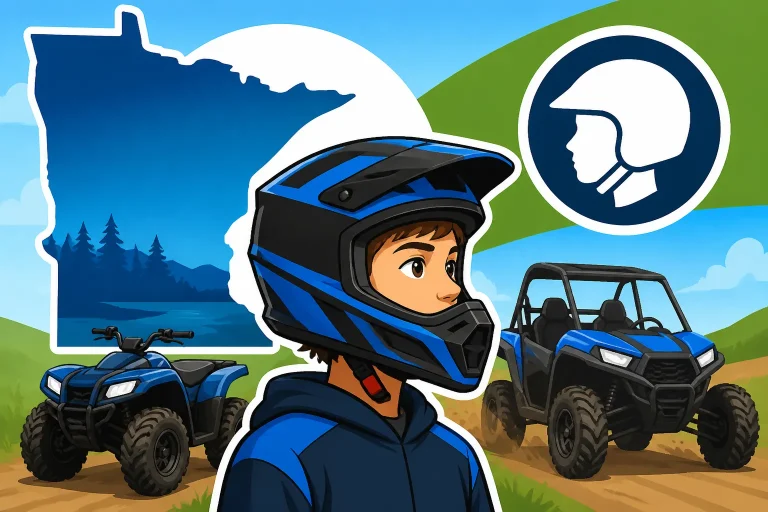
Goggles are often a practical option on an open ATV. They wrap around the eyes and can reduce gaps where dust or wind gets in. A strap helps keep them in place if the passenger turns their head or the machine hits a bump. For a full-face helmet, check that the goggles fit comfortably with the helmet and do not press painfully against the face.
Protective glasses can work when they fit securely and provide adequate coverage. They are less likely than goggles to seal out dust, so they may be a poor match for a dry, gravelly route or a ride with several machines close together. A regular pair of prescription glasses may improve vision but may not provide the impact protection or side coverage needed for off-road riding. Prescription safety eyewear or goggles designed to fit over glasses can be more suitable.
A helmet visor can offer useful protection, but it should not be treated as a universal substitute for separate eye protection. Some helmets have an open face, and some visors leave gaps around the sides or bottom. Dust can also enter through vents or around the visor. A scratched, fogged, or partly raised visor can interfere with clear vision at the moment the passenger needs it most.
When comparing eyewear, consider these features:
- Impact protection: Choose eyewear made for protective use, rather than relying on fashion sunglasses.
- Coverage: Look for a fit that protects the sides of the eyes as well as the front.
- Retention: A strap or secure arms can help prevent eyewear from shifting on a bumpy ride.
- Visibility: Lenses should be clear enough for the light and conditions, without scratches or distortion.
- Helmet compatibility: Check that the eyewear fits with the passenger’s helmet and does not create pressure points.
- Ventilation: Venting can reduce fogging, though very open designs may let more dust through.
Some riders look for eyewear marked to an impact-protection standard such as ANSI Z87.1. That can be a useful product-selection clue, but it is not a substitute for checking the current Minnesota rules that apply to the ride. Make sure the product’s markings and instructions match the intended use, and replace eyewear that is cracked, badly scratched, or no longer fits securely.
Keeping Eyewear Clear and Secure on a Ditch Ride
A pair of goggles that sits in a storage box does not protect anyone. Before starting, the passenger should put on their eyewear and helmet, adjust the strap or arms, and check that the fit stays comfortable when they turn their head. The operator should make sure the passenger can see clearly and is not fighting fogged lenses before the machine moves.
A few small checks can prevent problems during the ride:
- Inspect the lenses. Look for cracks, deep scratches, dirt, or anything that distorts vision.
- Check the fit with the helmet. Make sure the helmet does not push the eyewear out of place or create a painful pressure point.
- Test the strap or arms. The eyewear should stay put when the passenger turns their head and looks down.
- Clean lenses with suitable materials. Grit rubbed into a lens can scratch it; follow the manufacturer’s cleaning instructions.
- Carry a safe way to stop. If eyewear fogs or shifts, pull over somewhere safe rather than asking the passenger to adjust it while moving.
Fogging is more likely when warm breath or sweat meets a cool lens. A properly fitting helmet and eyewear designed with ventilation can help, but ventilation should not leave the eyes exposed to debris. Anti-fog products may help when they are compatible with the lens material. Do not use a household cleaner unless the eyewear maker says it is safe; some products can damage coatings.
Dust can become a group-riding problem. A passenger in the second or third machine may encounter more airborne grit than the lead rider, especially on a dry surface. Leaving more space between machines can reduce exposure and improve visibility for everyone. If dust becomes heavy enough that riders cannot see clearly, slow down or stop in a safe place until conditions improve. For other visibility concerns after dark, see Minnesota Headlight Rules After Dark.
The passenger should tell the driver promptly if something gets in an eye, a lens fogs, or the eyewear becomes loose. Continuing with impaired vision can make it harder to spot a rut, branch, or approaching vehicle. Stop in a safe location, clean or adjust the eyewear, and resume only when the passenger can see comfortably. Eye protection does not remove the need to ride at a speed suitable for the surface and visibility.
If you shop online, including through Amazon, compare the product’s intended use, fit details, and safety markings rather than choosing by appearance alone. Check whether it works with the passenger’s helmet and whether the seller provides enough information to identify the eyewear’s protective features. A low-cost pair that slips, fogs, or distorts vision may be a poor choice for a rough ride.
Make Eye Protection Part of Passenger Readiness
Before a ditch ride, treat the passenger’s readiness as a separate check—not something covered by the driver’s gear. Confirm the passenger has suitable eyewear, a properly fitting helmet when required, and a seat designed for a passenger. The operator should also confirm that the machine and route are appropriate for carrying someone. Minnesota Road Rules Riders Get Wrong covers other requirements that can affect a roadside ride.
Keep spare eyewear or a cleaning cloth in a protected place if the ride is long. Do not hand a passenger dusty goggles and expect them to wipe the lenses with a sleeve; grit can scratch the surface and make vision worse. If the passenger wears prescription glasses, test the protective option before the trip rather than discovering on the route that it pinches or will not fit beneath the helmet.
The best choice depends on the machine and the conditions. Open ATVs usually expose riders to more wind and debris than enclosed cabs. Dry gravel, close group spacing, and gusty conditions can increase the need for wraparound coverage. A windshield may help, but it does not guarantee that every passenger is protected from every angle.
Rules can change, and details may depend on the machine and where it is operated. Check current Minnesota DNR information before riding, especially if you are unsure whether the windshield or vehicle setup changes the eye-protection requirement. For the rest of the legal and safety picture, review Minnesota Road Rules for Riders Aged 12 to 15 if a young rider is involved, and Minnesota Liability Insurance for Riders for a separate consideration that eye protection does not address.
The practical takeaway is simple: do not leave the passenger’s eyes to chance. Choose protective eyewear that fits securely with the helmet, keeps debris away, and allows clear vision. Then make sure the route, machine, and passenger setup are suitable before the ride begins.
Disclaimer
This article is for general informational purposes only and does not constitute professional advice. Laws, prices and regulations vary by location and change over time. Consult a qualified professional for guidance on your specific situation.