Do You Need a Pass on Deeded Minnesota Ground?
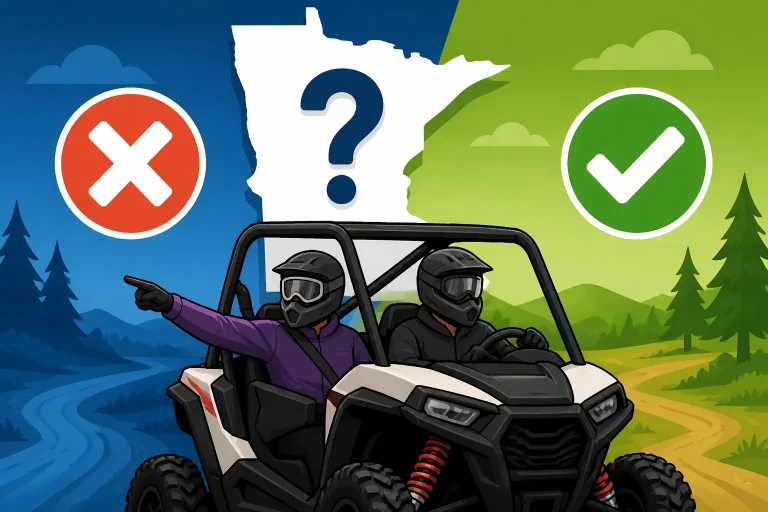
A deed to Minnesota land does not automatically answer whether an ATV or UTV needs a trail pass. The key questions are who is riding, where the machine will go, and whether that route is part of a public trail system. Here’s how to tell when private ground is enough—and when a ride crosses into pass-required territory.
When deeded land usually does not require a trail pass
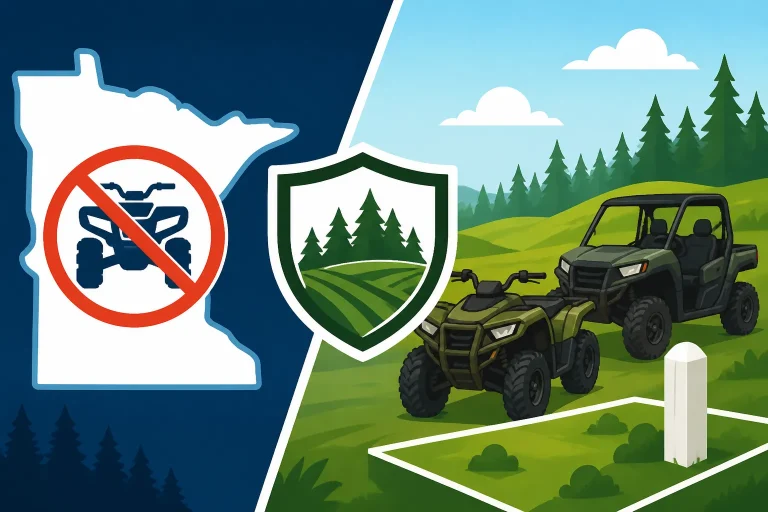
If you are riding only on private land, a Minnesota nonresident ATV trail pass generally is not required just because you are riding an ATV there. This includes land you own, provided the ride stays on private property and does not enter a public trail, public land, or another area where a pass is required.
The pass most people mean in this context is the nonresident ATV trail pass. It is for qualifying nonresident use of Minnesota’s public riding network; it is not a general permit for every ATV ride in the state. Minnesota residents do not buy that nonresident pass, though other requirements—such as machine registration—may apply when they ride in places open to public ATV use.
The word deeded describes ownership, not necessarily the land’s riding status. A parcel can be privately owned but crossed by a trail open to the public under an agreement or easement. A marked, signed route can therefore have different access rules from the rest of the parcel. The trail’s status and the route you actually ride matter more than the fact that the land has a private owner.
A useful starting point is to separate these three situations:
| Where you ride | Nonresident ATV trail pass | What to check |
|---|---|---|
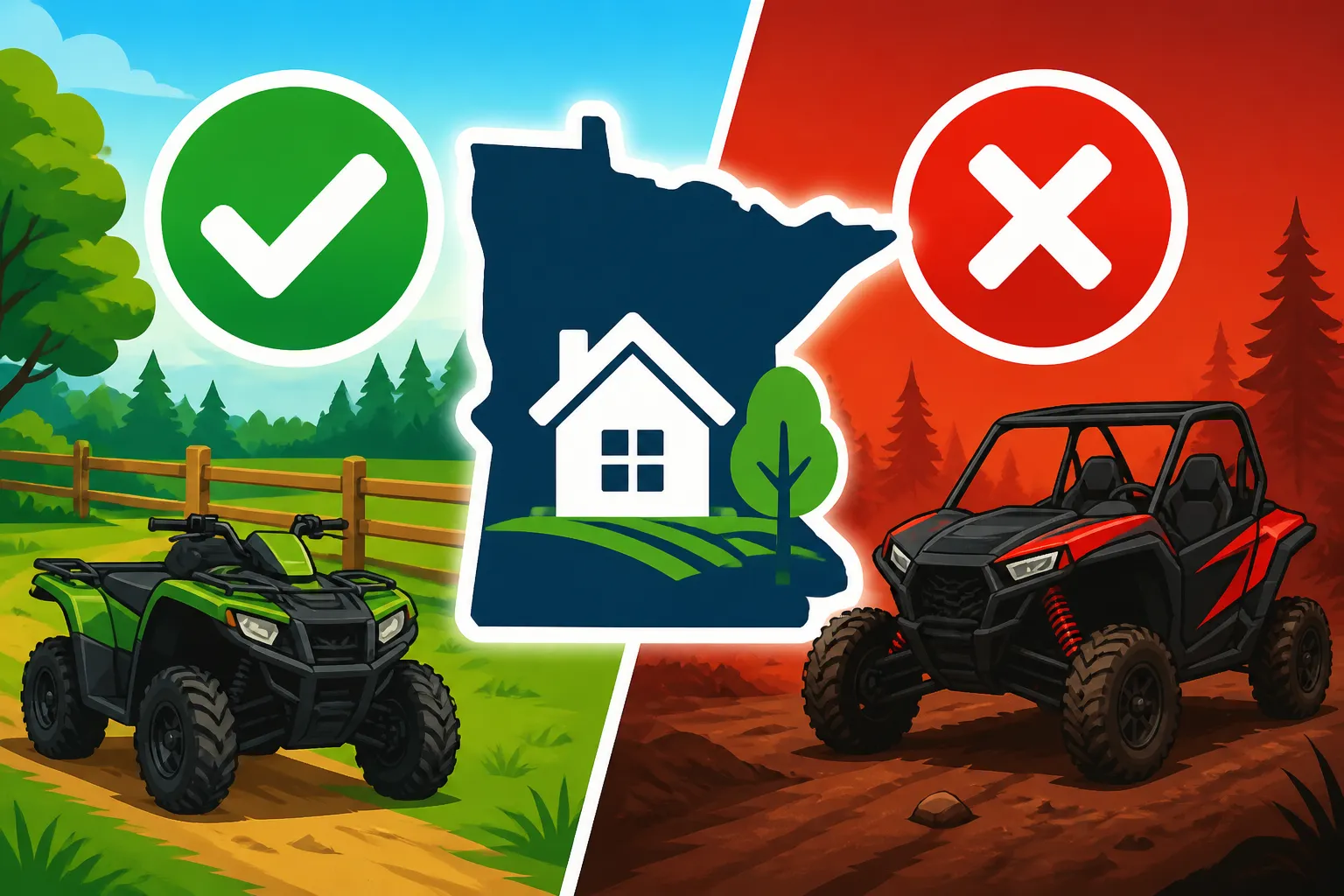
| Only on private land you own, with no public trail access | Generally not required | Registration and other rules that may apply to your machine or rider |
| On a public ATV trail or qualifying public riding area | Generally required for a nonresident rider | Current pass requirements, machine eligibility, and trail access |
| On private land that a public trail crosses | It depends on the route and trail designation | Whether the route is open to public ATV use and subject to pass rules |
If your route approaches a signed trail or public-land boundary, do not assume you can ride through because the trail is on your parcel. Check the route before heading out. Minnesota’s Non-Resident ATV Trail Pass explains the pass itself, while Minnesota Trail Pass Rules at a State Forest can help you understand how the rules apply in a public riding area.
Why private ownership does not always settle the question
Minnesota’s riding network can include routes that cross land owned by someone else. A trail may be available to the public by permission, easement, or a trail agreement. In that case, the land may still be privately owned, but the designated route is not simply the owner’s private riding area.
That distinction matters for two reasons:
- Public access can come with public-trail rules. A route designated for public ATV use may have pass, registration, safety, or operating requirements even when it crosses privately owned ground.
- A pass does not grant permission to ride anywhere. Buying a pass is not a substitute for landowner permission, and it does not make a closed or private route open to you.
Grant-in-aid trails are a good example of why land ownership alone can be misleading. These trails are part of a public riding system, but portions can cross private land with permission. If a route is signed or mapped as a public ATV trail, treat it as a public trail for planning purposes and confirm the applicable requirements. See Grant-in-Aid Trails and the Trail Pass for more on that distinction.
Before riding, look for trail signs and official route maps. Do not rely only on a property line map, an old GPS track, or a seller’s description of a route as “private.” Trail access can change, and a route may be closed seasonally or restricted to particular machines. Reading a Minnesota OHV Trail Map and Checking Minnesota Trail Status Before You Drive are useful next steps if you are planning a ride beyond your own private trails.
If a public trail crosses your property, follow the designated route rather than treating the whole parcel as open to public riding. If you are the owner, check the terms of any access agreement and contact the organization or agency responsible for the trail if the route or rules are unclear.
Other requirements may still apply on your own land
“No trail pass needed” does not mean “no rules apply.” A trail pass, vehicle registration, rider safety requirements, and landowner permission are separate issues. Depending on where and how the machine is used, one requirement may apply when another does not.
Registration is a common point of confusion. Minnesota’s rules distinguish between public-use and private-use riding, and a machine that stays on private property may be treated differently from one taken onto public riding areas. But the details can depend on the machine and its use. If you expect to leave your land, cross a public route, or ride on public land, check the registration category before the first trip. Minnesota Public Use Versus Private Use Registration explains the distinction.
Rider requirements can also depend on age, training, and where the ride takes place. Do not assume that staying on your own parcel automatically removes every safety or operating requirement. Check the current rules for the rider and the type of machine, especially if a young rider will be operating it. The related Minnesota ATV Safety Training Requirements article covers when certification may be needed.
And ownership is not the same as permission for everyone else. If a friend, relative, guest, or visiting rider uses your land, make the boundaries and allowed routes clear. Their permission to ride on your parcel does not extend to a neighbor’s property or a public route with separate requirements. Riding a Friend’s Land by Permission covers the permission side of the question.
A simple way to keep the issues straight is to ask four separate questions:
- Is this land private, public, or a public trail across private land?
- Does the rider need a nonresident trail pass for the route?
- Does the machine need registration for the places it will be used?
- Does the rider have permission and meet any applicable age or safety requirements?
Answering only the pass question can leave an important gap. For example, a nonresident may not need a pass for a private-only ride but may need one as soon as the route enters a qualifying public trail. Meanwhile, registration or safety rules may still matter independently.
How to check your route before riding
If your property borders a trail or includes a route used by other riders, verify the access details rather than guessing from the deed. A quick check before you ride can prevent a route mistake that is difficult to fix once you are out on the machine.
- Mark the exact route. Identify where you will start, where you will ride, and whether you plan to leave the parcel. “Staying on our land” is only useful if the actual route stays within the boundaries.
- Check official trail information. Use current Minnesota trail maps and status notices to see whether the route is designated for public ATV use, has seasonal restrictions, or connects to public land.
- Look for signs and access markers. Signs may identify a public trail or a boundary. If signage conflicts with an old map or informal local directions, pause and verify before proceeding.
- Confirm permission for private sections. A trail map does not grant access to private land outside an authorized route. Ask the owner or trail contact if permission is unclear.
- Check pass and registration rules for the rider and machine. A nonresident pass requirement is not the same as registration. Confirm each separately, particularly if the ride moves between private property and public trails.
- Recheck before later trips. Trail conditions, access agreements, and closures can change. A route that was open last season may not be open now.
For leased hunting ground or land used with a landowner’s permission, do not treat a lease or handshake as proof that a public trail pass is unnecessary. Your access may cover only certain areas or dates, and it may not cover a public route crossing the property. Minnesota Permit Rules on Leased Hunting Ground can help clarify how private access differs from public-trail access.
The practical rule is straightforward: if the ride stays entirely on private ground and does not use a public ATV trail or public riding area, a nonresident trail pass generally is not the issue. If the route enters a public trail system—even where the trail crosses privately owned land—check the pass rules before you go. For a route that mixes private land and public trails, plan for the public portion rather than assuming the deed settles the matter.
Disclaimer
This article is for general informational purposes only and does not constitute professional advice. Laws, prices and regulations vary by location and change over time. Consult a qualified professional for guidance on your specific situation.