Why Many Adults Skip the Helmet
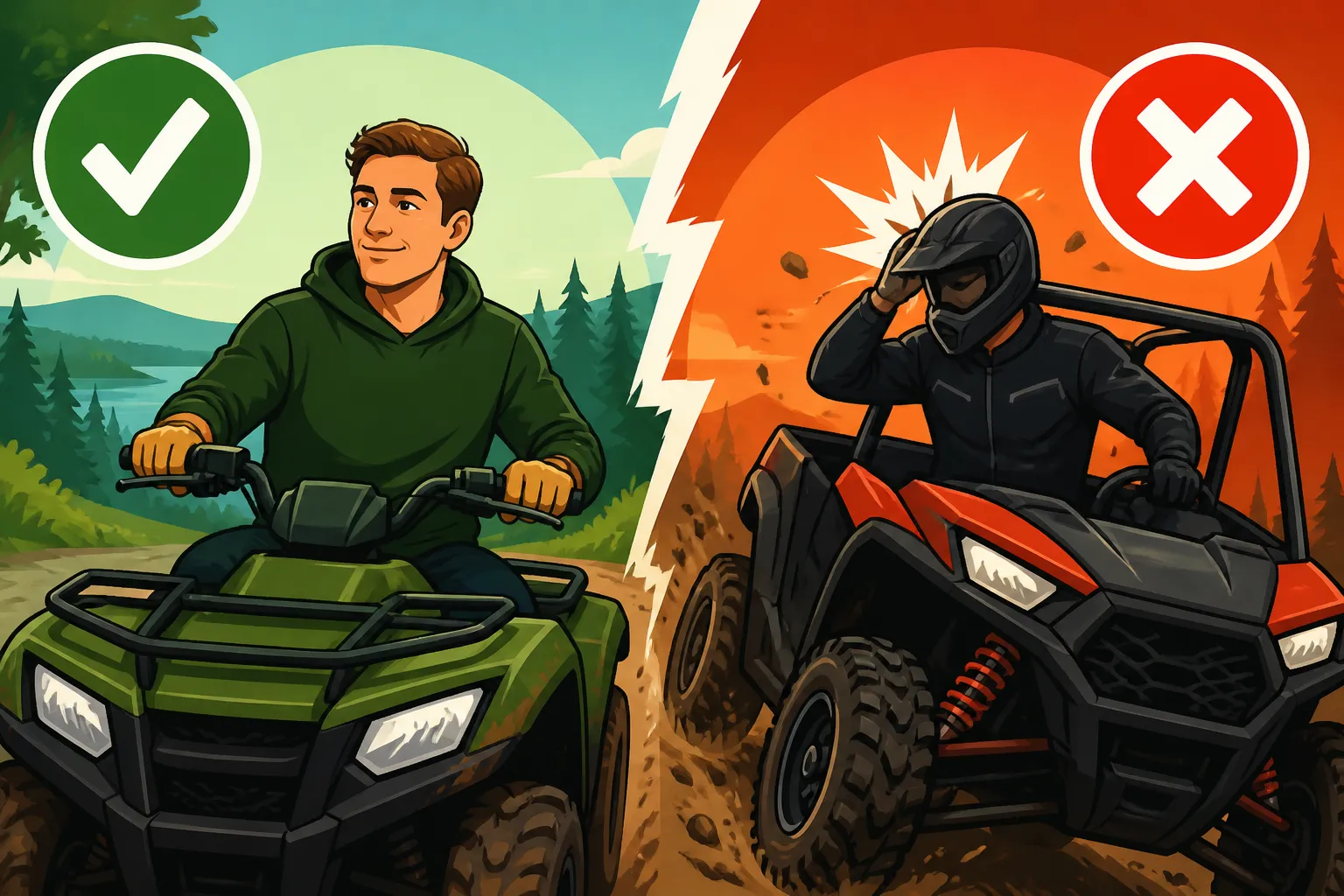
Many Minnesota adults ride ATVs without helmets because the law generally does not require one for riders 18 and older, and helmets can feel hot, heavy, or inconvenient. But legal permission is not the same as protection. Here’s why riders make that choice, what to check about the rules, and how to decide whether a helmet makes sense for your ride.
Why adults choose to ride without a helmet
For many adults, skipping a helmet comes down to comfort and habit. A helmet can feel warm on a slow ride, add weight around the neck, fog goggles, or make conversation harder. Riders may take it off for short trips around a property, especially if they are traveling at low speeds or believe they know the route well.
Some people also ride without one because they assume a familiar trail is a predictable trail. But even a routine route can bring sudden hazards: a rut, loose gravel, a low branch, a hidden stump, or another rider approaching from the opposite direction. A machine can tip or change direction faster than a rider can react.
The setting can make the choice feel less risky than it is. A short ride from a cabin to a nearby trail, for example, may seem unlike a fast or technical outing. Yet a fall can happen at modest speed, and a rider can hit the ground, the machine, or an obstacle. A helmet is intended to reduce the chance or severity of certain head injuries; it cannot make a crash harmless or protect every part of the body.
Adults may also assume that helmets are only important for young or inexperienced riders. Experience can help with judgment and machine control, but it does not remove the risk of mechanical problems, changing trail conditions, or someone else’s mistake. A seasoned rider can still be thrown from a machine or struck by a branch.
There are practical trade-offs. A helmet needs to fit, be maintained, and be comfortable enough that the rider will keep it on. A poorly fitting helmet can distract or move around; an old or damaged helmet may not offer the protection intended. Those concerns are reasons to choose carefully, not proof that riding bareheaded is safer.
What Minnesota rules mean for adult riders
Minnesota’s ATV helmet rules include age-based requirements. In general, riders under 18 must wear a helmet in settings covered by state law. Adults 18 and older are not generally required by Minnesota law to wear an ATV helmet simply because they are operating or riding an ATV. Rules can differ by vehicle type and location, however, and a trail operator, event organizer, or property owner may set additional conditions.
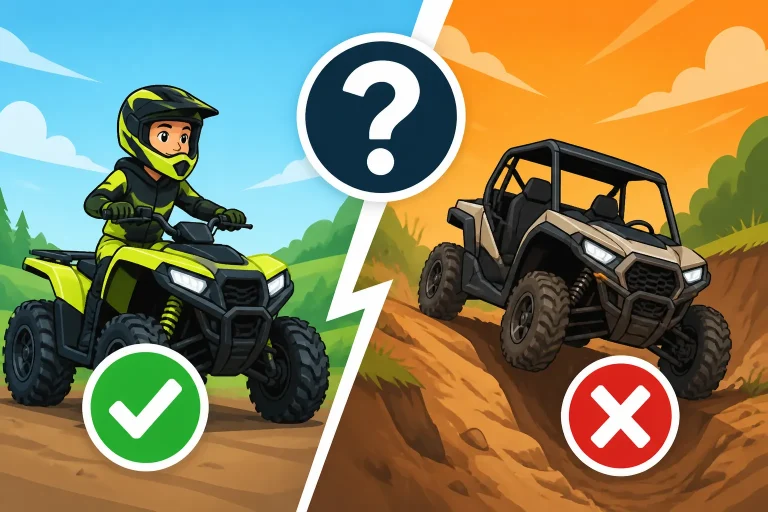
That distinction matters for UTVs and other off-highway vehicles. People often use “ATV” as a catch-all term, but legal categories and requirements are not always interchangeable. Check the rules for the machine you are using and the place where you plan to ride. For age-related details and exceptions, see Minnesota Helmet Law for Riders Over 18 and Minnesota Helmet Standards and Who Must Wear One.
A helmet rule is also only one part of legal riding. Registration, trail-pass, safety-training, and access requirements may apply separately. A rider can be legally allowed to ride without a helmet as an adult and still need to meet other requirements for the trail or public land. Minnesota ATV Safety Training Requirements explains the training rules, while Minnesota Rules for Visiting Riders can help visitors check what applies when riding in the state.
Before a trip, confirm current requirements with the relevant official source or land manager, especially if you will ride at an organized event or cross between different types of land. Do not assume that a rule for a private property ride also applies on public trails, or that a rule for an ATV automatically covers a UTV.
| Situation | What to keep in mind |
|---|---|
| Adult riding an ATV | A helmet is generally not required by Minnesota’s age-based ATV helmet rule for riders 18 and older, but it remains a protective choice. |
| Rider under 18 | Helmet requirements apply in covered settings; check the rule for the rider’s age, machine, and location. |
| UTV ride | Confirm the rules for the vehicle category and the place you are riding; do not assume every ATV rule applies identically. |
| Organized ride or managed property | The organizer or land manager may set conditions beyond the general state rule. |
| Public trail ride | Check helmet, registration, pass, training, and access requirements separately. |
Legal requirements can change, and the details can depend on where and how a machine is being operated. When uncertain, verify the rule before riding rather than relying on what another rider remembers.
The safety trade-off behind skipping a helmet
A helmet is most relevant when a crash could involve the head. That can happen in a rollover, a collision, a sudden stop, or a fall from the seat. Trees, rocks, hard ground, and the machine itself can all be part of an impact. A helmet does not prevent a crash, but it adds a layer between the head and some sources of injury.
It also has limits. A helmet cannot prevent every concussion or head injury, and it does not protect the face, neck, chest, or limbs in every situation. Safe speed, suitable riding conditions, proper passenger limits, and a machine that is maintained and used as designed all matter. For a UTV, seat belts and nets or doors, where equipped, are important parts of the safety system. A helmet should not be treated as a substitute for those protections.
The possible consequences of an unprotected impact are not limited to severe crashes. A branch can strike the forehead or face on a narrow trail; a rider can hit the ground after a low-speed tip; or debris can be thrown up by another machine. Eye protection helps address flying dust and debris, but it is not a substitute for a helmet. See Eye Protection on a Minnesota Ride for that separate part of protective gear.
Conditions change the calculation. A wide, familiar property with low-speed use is different from a muddy, rocky, crowded, or unfamiliar trail. Riding at dusk or in poor visibility may leave less time to respond to a hazard. A passenger, a loaded machine, or a trail shared with other riders can also make a ride less predictable. The risk is not always obvious from the distance traveled.
A useful way to decide is to ask what could happen if the machine suddenly stopped, tipped, or threw you off. If the answer includes a hard surface, a tree, a rock, or another machine, a helmet has a practical role even when the law does not require it. Some riders choose to wear one every time so they do not have to make a different judgment for each short trip.
Choosing a helmet you will actually wear
A helmet only helps as intended if it fits correctly, is in suitable condition, and is appropriate for the type of riding. Avoid choosing solely by appearance or by a claim that it is “protective.” Check its safety certification and the manufacturer’s instructions, and make sure it is designed for motorized off-road use.
For a basic fit check, follow the manufacturer’s directions and try the helmet on before relying on it for a ride. It should sit level, feel snug without creating painful pressure points, and remain secure when the chin strap is fastened. If it slides around, lifts at the back, or feels unstable when you move your head, it may be the wrong size or shape. A store that carries helmets may be able to help with fit. Online listings, including Amazon, can make it easy to compare models, but a size chart cannot replace a careful fit check.
Look at the helmet’s label and documentation rather than relying on a product photo or a seller’s brief description. For more on certification and labels, see DOT Helmet Ratings Minnesota Accepts. Follow the manufacturer’s guidance on inspection, cleaning, replacement, and storage. A helmet that has been in a significant impact may need replacement even if the outer shell looks intact; use the maker’s instructions to decide.
Comfort can affect whether a helmet gets used. Consider ventilation, weight, shape, and how it works with goggles or other eye protection. Try the combination together if possible. A helmet that causes pressure, blocks useful vision, or makes eye protection difficult to wear is a poor fit for your needs. Never modify a helmet in a way the manufacturer does not allow.
For UTV riders, check the machine manual and use its occupant-protection equipment as designed. A helmet does not replace a seat belt, and a seat belt does not turn a helmet into a legal requirement or eliminate the value of head protection. Follow the vehicle maker’s instructions and any rules set by the trail or event.
Ultimately, adults skip helmets for understandable reasons: comfort, convenience, habit, or a belief that a particular ride is low-risk. The choice is personal where the law leaves it open, but it is worth making with the actual riding conditions in mind. If you do ride without one, reduce other risks: keep speed appropriate, avoid riding impaired or fatigued, use the machine as designed, and make sure everyone follows the rules that apply to their age and vehicle.
Disclaimer
This article is for general informational purposes only and does not constitute professional advice. Laws, prices and regulations vary by location and change over time. Consult a qualified professional for guidance on your specific situation.