Minnesota Helmet Rules for a Passenger Under 18
A passenger under 18 on an ATV or side-by-side in Minnesota needs more than a helmet that looks protective: it must fit, meet the applicable standard and be worn correctly. The rules can also be confused with separate passenger, seat-belt and riding-age requirements. Here’s how to check the helmet and the rest of the setup before the ride.
The helmet rule for passengers under 18
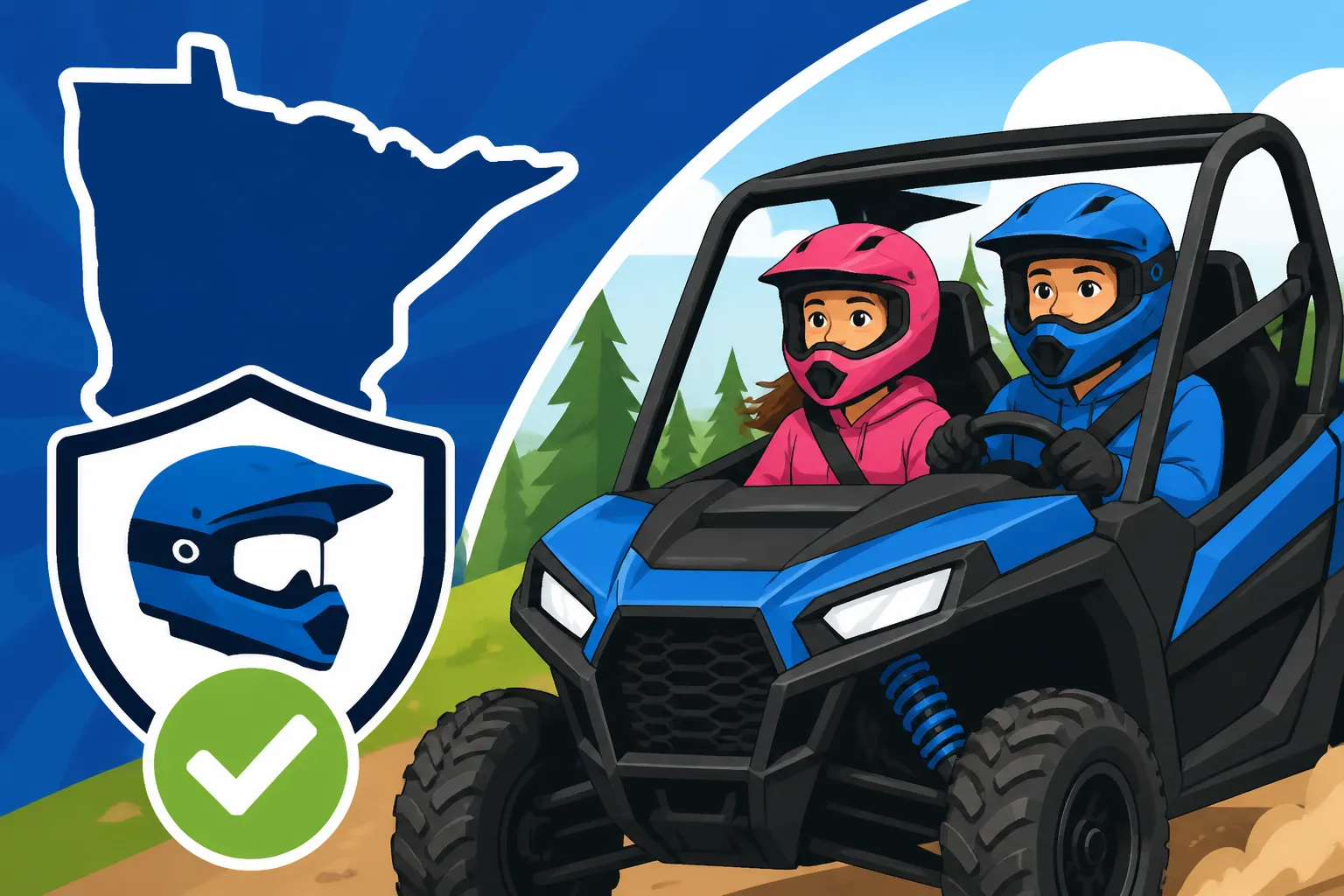
Minnesota requires a person under 18 who rides as a passenger on an ATV to wear protective headgear that meets the applicable standard. The practical takeaway is simple: if a passenger is a minor, have them wear a properly fitted helmet for the ride. Don’t treat a short trip, a slow trail or an adult’s decision to skip a helmet as a reason for a young passenger to go without one.
The helmet rule is only one part of riding legally and safely. A helmet does not make an otherwise unsuitable passenger seat legal, and it does not replace a seat belt in a side-by-side equipped with one. Check the machine’s passenger capacity and instructions, then make sure every rider uses the restraint system provided. For background on age-related requirements, see Minnesota Helmet Requirements Under 18 and Minnesota Rules for a Child Passenger.
ATVs and UTVs are not all built alike. A traditional ATV may have one seat intended for one rider, while a side-by-side may have designated seats, seat belts and a cab. A passenger should ride only in a seat designed for passengers, not on a rack, fender or cargo area. A helmet cannot compensate for being in the wrong place on the machine.
Also consider where and how the ride will take place. Rules may vary with the vehicle, location and circumstances, and additional requirements can apply on public trails or roads. Don’t assume that riding on private property automatically removes every safety obligation. If a particular situation is unclear, check current Minnesota DNR guidance before taking a minor passenger out.
| Before the ride | What to check |
|---|---|
| Passenger’s age | Anyone under 18 should wear a compliant helmet. |
| Helmet | Confirm the label, fit and condition; don’t use one with damage or an uncertain history. |
| Passenger seat | Use only a designated passenger seat and stay within the machine’s capacity. |
| Side-by-side restraints | Use the seat belt and any required doors, nets or other restraints. |
| Riding location | Check the rules for the trail, road right-of-way or private property involved. |
| Passenger readiness | Make sure the rider can sit securely, understand instructions and hold on as directed. |
For more detail on the overall standards and who must wear head protection, see Minnesota Helmet Standards and Who Must Wear One. Requirements can be easy to mix up when a machine is described as a UTV, side-by-side or ATV. Use the vehicle’s classification and the current rules that apply to it, rather than relying only on the name in an advertisement.
Choosing and fitting a helmet
A helmet needs to be both compliant and correctly fitted. A loose helmet can shift during a ride or come off in a crash; one that is too tight can be uncomfortable enough that a young rider keeps adjusting it or refuses to wear it. Fit the helmet to the passenger, not to a sibling who may use the same machine later.
Look for a recognized compliance label and check the helmet’s instructions. For road use, helmets meeting the U.S. Department of Transportation’s Federal Motor Vehicle Safety Standard are commonly identified by a DOT label. Avoid relying on vague claims such as “motorcycle style,” “youth size” or “off-road look.” Those descriptions do not tell you whether a helmet meets the required standard. For guidance on the standards Minnesota riders should look for, use Minnesota Helmet Standards and Who Must Wear One.
A practical fitting check includes these steps:
- Measure the passenger’s head. Use the helmet maker’s sizing instructions, and measure around the widest part of the head rather than guessing from age or clothing size.
- Try it on with the correct liner and padding. The helmet should sit level, with the front edge positioned as the maker directs. It should feel snug all around without creating painful pressure points.
- Check movement. With the chin strap fastened, gently move the helmet side to side and up and down. The skin should move with it; the helmet should not slide freely.
- Fasten the chin strap. The strap should be secure and adjusted according to the manufacturer’s instructions. An unfastened helmet may not stay in place when it matters.
- Have the passenger wear it for a few minutes. Discomfort, pressure or trouble seeing can be easier to notice before the ride than after the machine is moving.
A helmet that has been in a crash may need replacement even if the outside looks fine. Follow the maker’s guidance on impact damage, age and storage. Check for cracks, crushed areas, damaged straps, missing parts and a loose or altered liner. A secondhand helmet with no reliable history is a risky choice because hidden impact damage can be hard to spot.
If shopping online, including on Amazon, use the exact model information to confirm the standard and sizing details rather than choosing by appearance or a broad search result. Check the manufacturer’s fit chart and return conditions before ordering. A helmet that arrives in the right size on paper may still not fit the passenger’s head shape.
You may also need to think about goggles or other eye protection, especially on dusty trails. Eye protection is a separate consideration from the helmet itself; a face shield or goggles should work with the helmet without compromising fit or visibility. See Eye Protection on a Minnesota Ride for more on protecting a rider’s eyes.
Side-by-sides, seat belts and passenger readiness
A side-by-side’s cab can give riders a different sense of protection from an open ATV, but it does not remove the need to use proper protective equipment. A minor passenger should wear the required helmet and use the machine’s seat belt. Follow the owner’s manual for doors, nets and other restraints, and do not carry more people than the vehicle is designed to accommodate.
A passenger who is not restrained can be thrown from a cab or strike the interior during a sudden stop or rollover. The same issue applies when a child rides in a seat that is too large, cannot reach the restraint properly or cannot remain seated. A belt that is present but poorly positioned is not a substitute for the correct seating arrangement. Check the machine’s manual and make sure each passenger is seated and secured as intended. For further detail, see Belts and Nets in a Side-by-Side Cab.
For an open ATV, the passenger arrangement matters just as much. A one-person machine is not made safe for two riders by adding a helmet for the passenger. Don’t carry someone on a cargo rack or let them sit where they can interfere with steering, controls or the operator’s movement. If you are unsure whether the machine is designed to carry a passenger, check the manual or ask the manufacturer or dealer before riding.
Consider the passenger’s ability to follow basic instructions, too. Before starting, explain how to sit, where to hold on, when to keep hands and feet inside the machine and how to signal if they feel uncomfortable. Tell them not to lean unexpectedly or reach toward moving parts. Keep instructions simple, and stop somewhere safe if the passenger needs a break or the helmet shifts.
The operator remains responsible for choosing a suitable pace, route and conditions. Avoid rough terrain or maneuvers that are beyond the passenger’s experience. A helmet reduces some risks but cannot prevent every injury, and it does not make a ride appropriate for a child who cannot stay seated or understand directions.
A pre-ride check for adults
Before setting off with a passenger under 18, take a moment to check the complete setup rather than focusing on the helmet alone. This is especially worthwhile when borrowing a machine, switching passengers or moving between a trail and a road section.
Use this checklist:
- Confirm the passenger is allowed in that seat. Check the machine’s design and passenger capacity.
- Put on the helmet before the machine moves. Confirm its fit and fasten the strap.
- Secure restraints. In a side-by-side, have the passenger use the proper seat belt and any required cab restraints.
- Check visibility and comfort. Make sure the passenger can see, breathe and sit without the helmet pushing against the seat or headrest.
- Review the route and conditions. Mud, dust, steep terrain, traffic and poor visibility may change what is reasonable for a young passenger.
- Explain riding expectations. Agree on a simple signal for stopping and make sure the passenger knows not to unbuckle or move around while underway.
- Recheck after a stop. Helmets and belts can loosen or shift during a break, so check them again before continuing.
Keep the machine’s owner’s manual available, especially if it has a cab or adjustable restraints. If the passenger’s helmet does not fit with the seat or headrest, don’t try to force the combination. Resolve the fit problem before riding.
Registration, trail access and safety training are separate from the helmet requirement. A compliant helmet does not replace required paperwork, permits or training. If you are preparing for a public trail ride, Minnesota ATV Safety Training Requirements is a useful companion topic. For broader gear and riding preparation, use the rules for the specific machine and route, and confirm any uncertain requirement with the Minnesota DNR.
The safest decision is also the easiest to apply consistently: every passenger under 18 wears a properly fitted, compliant helmet, rides only in a designated passenger position and uses the machine’s restraints. If any part of that setup is uncertain, pause and check before the ride rather than trying to solve it on the trail.
Disclaimer
This article is for general informational purposes only and does not constitute professional advice. Laws, prices and regulations vary by location and change over time. Consult a qualified professional for guidance on your specific situation.