Belts and Nets in a Side-by-Side Cab
One of the trickiest things about owning a side-by-side in Minnesota is figuring out what safety gear you really need, especially when you venture off the trail and onto public roads or ditches. It's not always clear whether your machine is considered more like an ATV, a car, or something in between when it comes to things like seatbelts and safety nets. This guide is here to untangle those rules for you, focusing on the essential safety measures for side-by-sides in Minnesota, and how to make sure you and your passengers are as safe as possible on every ride.
Understanding Minnesota's Safety Gear Rules for Side-by-Sides
Navigating the various rules for side-by-sides in Minnesota can feel like a maze. You're trying to enjoy the ride, but also want to stay legal and, most importantly, safe. When it comes to safety gear like seatbelts and nets, the distinction between private land and public routes becomes incredibly important, and understanding those nuances is key.
The Basics of Seatbelt Requirements on Public Routes
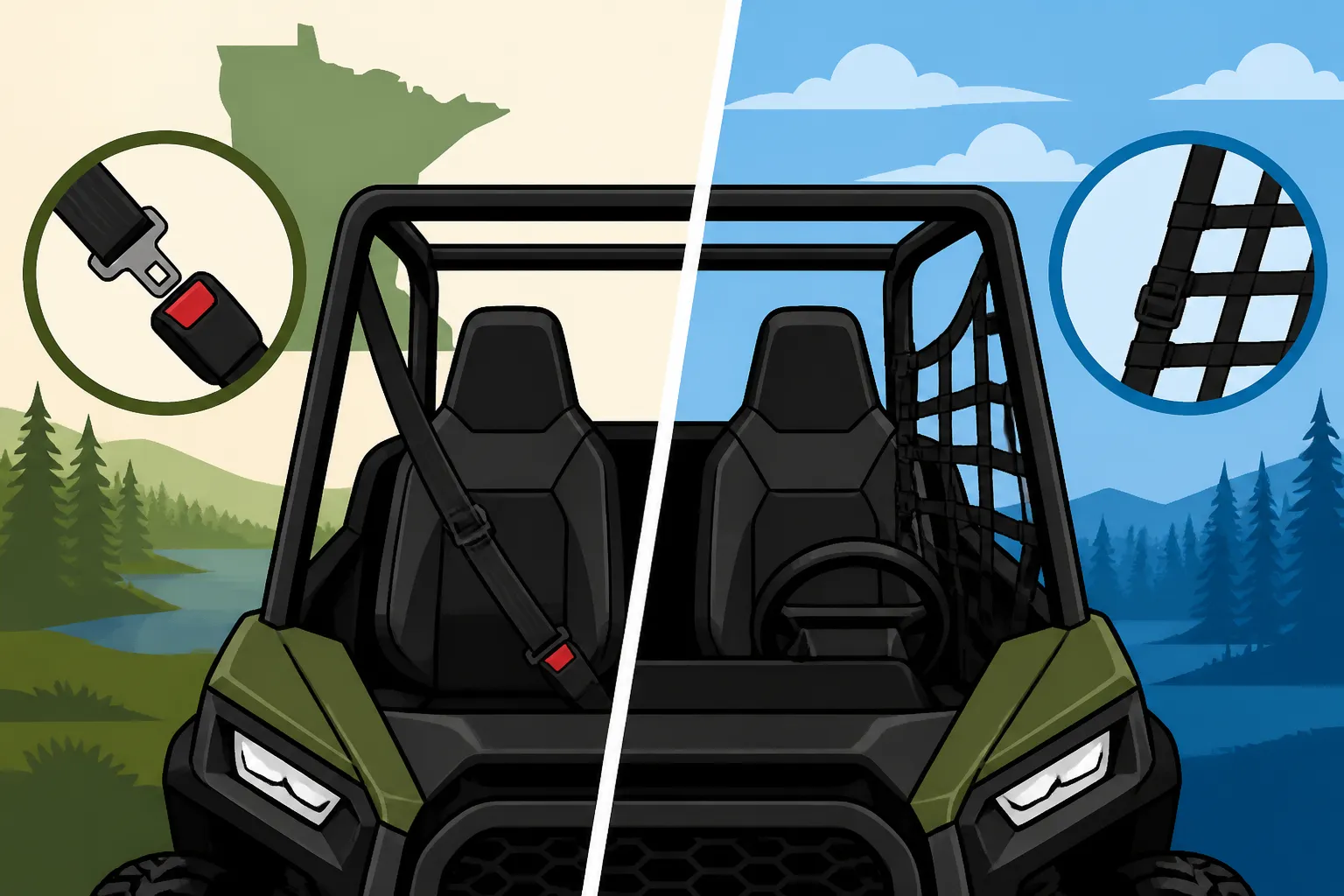
Let's start with the non-negotiable: seatbelts. In Minnesota, when you're operating your side-by-side on any public road, right-of-way, ditch, or designated ATV route where it's legally permitted, it is treated much like a conventional motor vehicle in terms of restraint systems. This means that if your side-by-side came equipped with seatbelts from the factory—which virtually all modern ones do—you and all your passengers are legally required to wear them. This isn't just a suggestion; it's a law designed to save lives and prevent serious injuries.
Think about it this way: the forces at play in a collision or even a sudden stop are immense, whether you're on a trail or a township road. Your side-by-side, while capable off-road, is still a heavy machine that can be involved in accidents with other vehicles or stationary objects. Wearing your seatbelt ensures you stay contained within the protective cage of the machine, dramatically reducing the risk of ejection, which is often the cause of the most severe injuries in off-highway vehicle accidents. The frustration many riders feel comes from this distinction—you might not feel like you need a belt for a quick hop across a county road, but the law doesn't differentiate between a short trip and a long one.
When and Where Nets Become Relevant
Now, let's talk about nets. This is where things get a little less black and white in terms of strict legal mandates, but no less critical for overall safety. While Minnesota state law does not typically mandate the use of safety nets for side-by-sides when operating on public roads, ditches, or designated routes, these accessories play a hugely important role in rider protection. Their primary purpose is to keep limbs, and sometimes even passengers, contained within the vehicle's cab during dynamic riding conditions, preventing arms or legs from flailing out and getting caught on obstacles or even contacting the ground during a rollover.
Manufacturers often design their side-by-sides with various levels of protection, and many offer nets as optional accessories or even standard features on certain trims. While the law might not require them for that brief jaunt down a gravel road, any seasoned off-road rider will tell you they are invaluable on the trails. They provide an added layer of security, especially if you're navigating tight turns, rough terrain, or unexpected bumps. For those looking to upgrade their machine's safety features, companies like SuperATV offer a wide range of aftermarket nets that can enhance the factory protection, providing peace of mind whether you're hitting the toughest trails or simply crossing a quiet country road.
Beyond Legal Mandates: Best Practices for Side-by-Side Safety
Just because something isn't legally required doesn't mean it isn't a smart choice, especially when it comes to your safety and the safety of your passengers. In the world of side-by-sides, embracing best practices for seatbelts and nets goes far beyond merely avoiding a ticket. It’s about creating a riding environment where you can focus on the fun and the scenery, knowing you’ve done everything possible to mitigate risks.
The Importance of Proper Seatbelt Usage
Wearing a seatbelt isn't just about clicking it; it's about wearing it correctly. An improperly worn seatbelt can be almost as dangerous as not wearing one at all. First and foremost, ensure the belt is snug against your body, with no slack. The lap belt portion should sit low across your hips, not your stomach, to properly distribute crash forces. The shoulder harness should cross your chest and shoulder, not your neck, and definitely not be tucked behind your back. Any slack in the system allows your body to build momentum before the belt catches you, increasing the impact forces and the likelihood of injury.
Many side-by-sides come with basic 3-point seatbelts, similar to what you’d find in a car. However, for those who engage in more aggressive trail riding or seek enhanced security, upgrading to a 4-point or even 5-point harness system is a significant improvement. These harnesses anchor in multiple places, providing a much more secure hold, preventing upper body sway, and greatly reducing the chance of submarining (sliding out from under the lap belt) in a severe impact. When you're considering such an upgrade, a brand like SuperATV is known for offering high-quality aftermarket harnesses designed to provide superior protection and comfort, often with better adjustability than stock options. Remember to regularly inspect your seatbelts for any signs of wear, fraying, cuts, or damage to the buckles. If a belt looks compromised, or if your machine has been involved in a significant impact, it's crucial to replace the belts immediately, as their integrity may be compromised.
Choosing and Maintaining Your Safety Nets
While often overlooked, safety nets offer an invaluable layer of protection, particularly in side-by-sides with open cab designs. These aren't typically for preventing full ejection in a high-speed collision, but rather for keeping arms, legs, and even smaller children securely inside the cab during bumps, sharp turns, or near-rollover situations. Imagine hitting an unexpected ditch or swerving to avoid an obstacle; without nets, an arm could easily extend outside the cage, leading to severe injury.
There are various types of nets available, from full door nets that replace or augment factory doors to smaller window nets designed to fill the upper portion of the door opening. When choosing nets, consider the material – durable, UV-resistant mesh is common – and how easy they are to open and close for entry and exit. Some nets use quick-release buckles, which are great for convenience, while others might involve more secure, permanent attachments. Regardless of your choice, proper installation is paramount to ensure they function as intended. Maintenance is straightforward: keep them clean, inspect them regularly for tears, loose stitching, or damaged attachment points. Even if [Minnesota's Ditch Riding Rules] don't specifically require them, installing and maintaining quality safety nets will undoubtedly make your riding experience safer and more comfortable, particularly if you have energetic passengers.
Minnesota Road Riding Scenarios and Your Safety Gear
It's easy to think of road riding in a side-by-side as distinct from trail riding, and in many ways, it is. But when it comes to safety gear, the line often blurs, especially in Minnesota where you might transition from a trail to a ditch, or even a designated city route, in a matter of minutes. Knowing how your safety gear applies in these varied scenarios is crucial for staying legal and safe.
Crossing a Road or Riding a Ditch
This is perhaps the most common situation where riders might get caught off guard. You're on a trail, need to cross a county road to get to the next section, or maybe you're using the road ditch as a connecting route between two trails. Even if it's just for a few hundred feet, Minnesota law typically requires all occupants of a side-by-side to be properly buckled into their seatbelts. This isn't just about getting a ticket – it's about the very real danger of a sudden stop or a collision with another vehicle.
Consider a hypothetical scenario: You're riding with a friend in the passenger seat, unbuckled, planning a quick dash across a quiet township road. Suddenly, a car appears over the crest of a hill much faster than you expected, forcing you to brake hard. Without a seatbelt, your friend could be thrown violently forward, potentially striking the dash, the windshield, or even being partially ejected. The fact that the road seems quiet or the distance is short offers no protection against the laws of physics. Always err on the side of caution: if your wheels touch a public road surface or right-of-way, buckle up. For more details on where you can and cannot ride, check out [Riding an ATV on the Road in Minnesota].
Riding Designated ATV Routes in Minnesota Cities
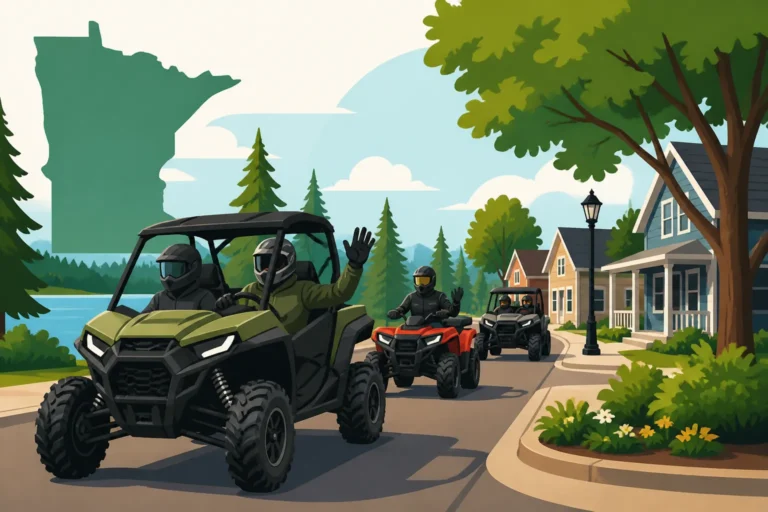
Some forward-thinking Minnesota cities, especially in popular trail towns, have created designated ATV routes on certain streets to allow riders to access services like gas stations, restaurants, or lodging. When you're on these routes, your side-by-side is operating in a mixed-traffic environment, and the rules about safety gear become even more pronounced. Here, seatbelts are absolutely non-negotiable; you are sharing the road with cars, trucks, and other vehicles, and the risks of a collision are heightened.
While safety nets might not be legally mandated on these city routes, they still offer a significant benefit. Imagine navigating a busy street in a town like Appleton, or one of the other ATV-friendly communities, with a child passenger. Even a minor swerve or sudden braking could cause a child's arm to flail out, potentially striking a parked car or traffic sign. Safety nets act as a physical barrier, keeping all body parts safely inside the vehicle's protective cage. Upgrading to aftermarket nets or adding accessories from a brand like SuperATV can provide that extra layer of security, making the ride through town less stressful and far safer for everyone in the cab.
Consequences of Neglecting Safety Gear and Smart Choices
Ignoring safety gear requirements, whether they're legal mandates or simply best practices, carries both legal and personal risks. It’s not just about potentially getting a ticket; it’s about understanding the profound impact that a lack of preparation can have on your health, your finances, and your overall peace of mind. Every rider in Minnesota, especially those operating side-by-sides, should prioritize safety above all else.
Penalties for Unbuckled Operation
Let's not beat around the bush: if you're caught operating your side-by-side on a public road, ditch, or designated route in Minnesota without a properly worn seatbelt (assuming your machine came equipped with one), you are likely to face a citation. Conservation officers and local law enforcement actively patrol these areas, and they are well-versed in off-highway vehicle regulations. The specific fine amount can vary, but it's an expense that could have been easily avoided with a simple click. Beyond the monetary penalty, repeated offenses or involvement in an accident while unbuckled could lead to more severe consequences, potentially impacting insurance claims or even your riding privileges.
However, the most significant penalty isn't what comes from law enforcement; it's the potential for severe injury or worse. Seatbelts are your primary restraint system. In a rollover, a collision with another vehicle, or even a sudden impact with a hidden obstacle in a ditch, being ejected from the side-by-side is often what turns a minor incident into a life-altering tragedy. It's a risk simply not worth taking, especially when the solution is so simple. For more context on potential fines, you can refer to [Minnesota Fines for Illegal Road Riding].
Making Informed Choices for You and Your Passengers
Ultimately, the decision to use safety gear, especially nets which are not always legally required, comes down to making informed choices. As the operator of a side-by-side, you are responsible not only for your own safety but also for the safety of any passengers you bring along for the ride. This responsibility becomes even more critical when children are involved. While your machine might offer thrills and excitement, it's also a powerful piece of equipment that demands respect and a commitment to safety.
By ensuring everyone is properly buckled, and by considering additional safety measures like high-quality door or window nets, you're not just complying with potential laws; you're actively mitigating risks. You're giving yourself and your passengers the best possible chance to walk away from an unexpected incident unscathed. It's about enjoying the vast beauty of Minnesota's trails and roads with the peace of mind that comes from knowing you've taken every reasonable precaution. Brands like SuperATV exist to help you make those smart choices, offering robust solutions for enhancing the inherent safety of your side-by-side, ensuring that your adventures are not only thrilling but also secure for everyone aboard.
| Feature / Scenario | Legal Requirement (Public Roads/Ditches) | Best Practice (Overall Safety) | Why It Matters |
|---|---|---|---|
| Seatbelts | Required for all occupants | Always use, inspect regularly, consider upgrade to 4/5-point | Prevents ejection, minimizes impact injury, keeps occupants within cage. |
| Safety Nets (Door/Window) | Not typically mandated | Highly recommended, especially for spirited riding or passengers | Keeps limbs inside, prevents minor ejection, adds debris protection. |
| Road Crossings | Seatbelts required | Both belts and nets are wise for any public road interaction | Accidents can happen quickly even over short distances; protects from other traffic. |
| Designated City Routes | Seatbelts required | Nets offer enhanced security in mixed-traffic environments | Protects occupants from internal and external hazards in urban settings. |
| Aggressive Trail Riding | Seatbelts required (if crossing roads) | Both belts (especially multi-point harnesses) and nets are crucial | High speeds, obstacles, and rollovers demand maximum restraint and containment. |
Disclaimer
This article is for general informational purposes only and does not constitute professional advice. Laws, prices and regulations vary by location and change over time. Consult a qualified professional for guidance on your specific situation.