Crossing a Minnesota State Highway
It's a common scenario for Minnesota ATV and UTV enthusiasts: you're out enjoying the trails or simply trying to get from one piece of private property to another, and suddenly, a busy state highway looms ahead. That moment can feel daunting, fraught with uncertainty about whether you're allowed to cross, how to do it safely, and what the law actually says. This guide aims to clear up that confusion, offering a comprehensive look at the rules for crossing a Minnesota state highway with your off-highway vehicle (OHV).
The Fundamental Rule: Stay Off the Pavement
Let's get this critical point out of the way first: in Minnesota, you are generally not allowed to operate your ATV or UTV on the maintained surface of a state highway. This isn't just a suggestion; it's a core principle of off-highway vehicle operation in our state, and it applies unequivocally to state highways. The rules are designed to keep everyone safe, especially considering the speed and volume of traffic often found on these major arteries. Trying to "just sneak by" on the shoulder for a short distance to avoid a crossing is never the answer, and it opens you up to significant risks and potential penalties.
When we talk about "the maintained surface," we're referring to the asphalt or concrete driving lanes, as well as the paved shoulders. These areas are dedicated to motor vehicle traffic, and off-highway machines, with their different handling characteristics, speeds, and visibility profiles, simply don't mix safely with cars and trucks traveling at highway speeds. [The Road Surface Minnesota Keeps Closed] explains more about which areas are off-limits. Conservation officers and local law enforcement are very clear on this rule, and infractions can lead to costly tickets and even loss of riding privileges. It’s a point of frustration for many riders who feel limited by these restrictions, but understanding the rationale behind them – public safety – can help put it into perspective.
When and How to Safely Cross a State Highway
While riding on a state highway is largely prohibited, crossing one is often a necessity, and Minnesota law does make provisions for it under very specific conditions. This isn't a free-for-all; it's a carefully regulated maneuver that demands your full attention and adherence to the rules. The key is to make the crossing as direct and quick as possible, minimizing your time exposed to highway traffic.
Identifying Legal Crossing Points
You can't just cross a state highway anywhere you please. Minnesota statutes specify that an ATV or UTV may cross a "trunk highway" (another term for a state highway) only at an intersection or at a designated crossing point. An intersection implies a crossing at another public road where traffic control devices might be present, like a stop sign or traffic light. Designated crossing points, on the other hand, are typically marked with specific signage indicating that OHV crossing is permitted. These might be found where a public trail system intersects with a highway. Always look for these signs; if you don't see one, and it's not a clear intersection with another public road, assume you cannot cross there.
It's tempting sometimes to cut across a highway to save time or to access a spot that looks closer, but deviating from a legal crossing point is not only illegal but incredibly dangerous. Imagine you're on a long trail ride, and your GPS shows a straight line across a highway to the next section. If there's no marked crossing or intersection, that "shortcut" isn't an option. You'll need to find an alternative route, perhaps following an adjacent township road or a more circuitous trail, to reach a legal crossing. Checking local maps or DNR resources before your ride can help identify these legal crossing points and prevent frustrating detours or risky maneuvers.
Performing the Crossing Safely
Once you've identified a legal crossing point, the actual act of crossing requires utmost caution and precision. This isn't the time to be distracted; your focus needs to be entirely on the highway traffic and the safe operation of your machine. Here’s a breakdown of the steps:
- Stop Completely and Look for Traffic: Before you even think about entering the highway right-of-way, bring your machine to a complete stop. Scan in both directions for oncoming traffic. State highways often have high-speed limits, meaning vehicles can appear very quickly. Pay particular attention to semi-trucks, which take longer to stop and create significant wind displacement. Make eye contact with any drivers you can, ensuring they see you.
- Yield to All Oncoming Traffic: This is non-negotiable. Vehicles on the highway have the right-of-way. Do not proceed until you have a clear, safe gap in traffic in both directions. Never assume a vehicle will slow down or stop for you. Even if a driver waves you on, you are ultimately responsible for your own safety and for not impeding traffic.
- Cross at a Right Angle: When you proceed, cross the highway at approximately a 90-degree angle to the road. This minimizes the distance you travel on the paved surface and makes your intentions clear to other drivers. Do not drive diagonally or merge onto the shoulder; aim directly for the opposite side.
- Use Your Signals (if equipped): If your UTV has turn signals, use them to indicate your intention to cross. While ATVs rarely have turn signals, extending your arm to signal your turn can still enhance visibility, though it's often more practical to rely on clear sightlines and waiting for a large gap. Some riders choose to add aftermarket accessories, like bright LED whips or additional mirrors from companies like SuperATV, to increase their visibility during these critical moments. These aren't legally required for crossing but can offer an extra layer of safety.
- Proceed Swiftly and Directly: Once you've confirmed it's safe, cross promptly without hesitation. Don't dally or change your mind mid-crossing. Your goal is to get off the highway surface as quickly and efficiently as possible.
Remember that these rules apply equally whether you're riding a powerful sport quad or a utility UTV. The size and type of machine don't change the fundamental safety principles of crossing a busy road. For more details on what officers expect, check out [What a Minnesota Conservation Officer Asks For].
Special Considerations for Bridges and Culverts
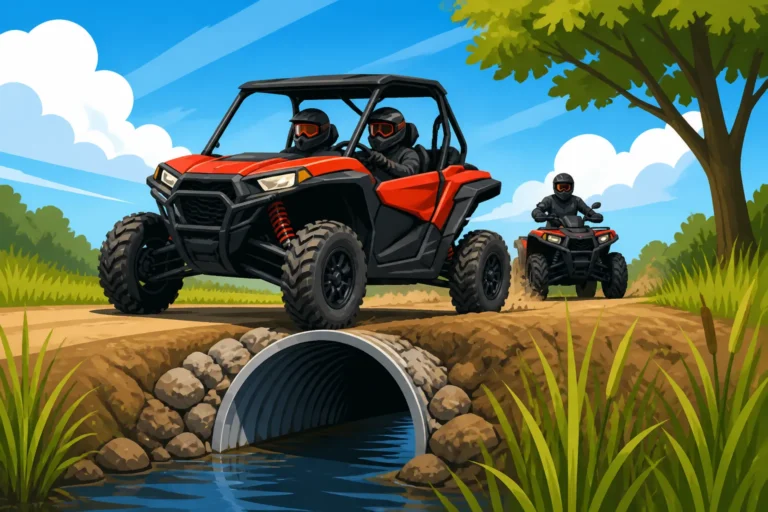
There’s a specific nuance when it comes to bridges and culverts on state highways. Minnesota law states that you may not operate an ATV or UTV on the paved surface of a bridge or an elevated grade. This means if the designated crossing point involves crossing a bridge that is part of the state highway, you're generally still expected to use the ditch or shoulder area adjacent to the bridge, if safe and passable, rather than the main driving lanes. However, depending on the specific structure and the presence of dedicated OHV pathways, common sense and local signage should always prevail.
Sometimes, a bridge might be too narrow or have no safe shoulder or ditch area to navigate. In such cases, if it's a designated crossing, you may need to briefly use the minimum necessary portion of the maintained surface to cross the bridge structure itself, only to immediately return to the ditch or off-road area on the other side. This is a very specific hazard exception, usually only permissible if there is absolutely no other way to safely cross at that location, and it still requires extreme caution. When in doubt, it's always safer to find an alternative crossing point, even if it means a longer detour. Understanding [Hazard Exceptions for Bridges and Culverts] can provide further clarity here.
Understanding Different Machine Classes and Their Impact
Minnesota classifies off-highway vehicles into different categories, mainly Class 1 and Class 2 ATVs. While the core rules for crossing a state highway remain largely the same regardless of your machine class, understanding these distinctions helps clarify some operational aspects, particularly concerning ditch riding, which often precedes or follows a highway crossing.
Class 1 Machines: Standard ATVs
A Class 1 ATV is generally what most people picture: an all-terrain vehicle weighing 1,000 pounds or less and having a total width of 50 inches or less. These are your traditional single-rider or two-up quads. For Class 1 machines, the rules for crossing a state highway are as outlined above: stop, yield, cross directly at an intersection or designated crossing point. The expectation is that these machines are agile enough to make quick, direct crossings.
Historically, much of Minnesota's OHV legislation was drafted with Class 1 machines in mind. Their narrower profile often makes them easier to maneuver in ditch lines and through certain tight crossing points. When discussing the general "ditch riding" rules that allow access to the right-of-way, Class 1 machines typically have broader allowances. For more on these distinctions, see [Minnesota ATV Classes and What They Mean].
Class 2 Machines: Side-by-Sides and Wider ATVs
Class 2 ATVs, on the other hand, include side-by-sides (SxS or UTVs) and ATVs exceeding 50 inches in width or 1,000 pounds in weight. These larger machines have become incredibly popular for their versatility, cargo capacity, and passenger comfort. While they offer many advantages for trail riding and utility work, their increased size can present additional challenges when it comes to navigating the narrow confines of a ditch line or making a quick highway crossing.
The legal requirements for crossing a state highway are identical for both Class 1 and Class 2 machines. However, the practical application can feel different. A wider UTV might feel more exposed during a crossing, and its longer wheelbase might require a slightly larger turning radius. Visibility can also be a concern, so ensuring your UTV is equipped with proper mirrors and perhaps additional lighting or safety flags (like those you might find at SuperATV) can be particularly beneficial for Class 2 operators. While not explicitly mandated for crossings, these enhancements contribute to overall safety. When you pull up to a busy intersection, the sheer presence of a wider machine might make you feel more conspicuous, which is a good thing if it encourages extra caution. [Why Class 2 Machines Are Treated Differently] provides more context on their general road rules.
Beyond the Crossing: Related Road Rules to Keep in Mind
Successfully crossing a state highway is just one piece of the puzzle when operating your OHV on or near public roads in Minnesota. There are other related rules and best practices that are crucial for staying legal and safe, whether you're riding a short distance in a ditch to get to a trail or just navigating around your local area.
Ditch Riding Rules Adjacent to Highways
While you can't ride on the maintained surface of a state highway, Minnesota law does allow for operation in the ditch or shoulder right-of-way, under certain conditions. This is a common practice for accessing trails or connecting private properties. However, these "ditch riding" rules are specific:
- Distance from the Road: Generally, you must operate your machine as far to the right as possible in the ditch or on the shoulder, and always at a reasonable distance from the main traveled portion of the highway.
- Direction of Travel: You must travel in the same direction as the adjacent highway traffic.
- No Operation on Berms or Slopes: Don't ride on the top of banks or steep slopes of the ditch that might reduce visibility or cause erosion.
- Speed Limits: Keep your speed reasonable and appropriate for the conditions, often limited to a maximum speed, especially near residences or other sensitive areas.
- Daylight Hours: Ditch riding is typically restricted to daylight hours, though there can be exceptions for local ordinances or specific trail connections.
- Road Right-of-Way: The right-of-way extends beyond the pavement, encompassing the ditch, shoulder, and sometimes a strip of land beyond. It's crucial to understand where this boundary lies to avoid trespassing. You can find more detail on [Riding the Ditch of a Minnesota Right of Way].
These rules exist because even though you're not on the main road, you're still in an area where visibility for both you and highway traffic can be compromised. Always be prepared to yield to pedestrians, cyclists, or anyone else legitimately using the ditch line.
Driver's License and Safety Training Requirements
To operate an ATV or UTV on any public land or public road right-of-way in Minnesota, including for highway crossings, you must meet certain requirements:
- Driver's License: If you are 16 years of age or older, you must possess a valid driver's license (any class) to operate an ATV or UTV on a public road right-of-way. This is a critical point that many riders, especially those new to the sport, sometimes overlook.
- Safety Training: Riders born after July 1, 1987, must complete an approved ATV safety training course. This course covers not only safe riding techniques but also the laws and regulations for operating OHVs in Minnesota. For more details, see [Minnesota's ATV Safety Training Requirement]. This training is designed to instill the knowledge needed for responsible operation, including how to handle scenarios like highway crossings safely.
These requirements ensure that operators have a basic understanding of traffic laws and safe operating procedures, which is absolutely essential when interacting with busy public roads.
Penalties for Non-Compliance
The Minnesota DNR and local law enforcement take violations of OHV laws seriously. Operating an ATV or UTV improperly on or across a state highway can lead to several penalties:
- Fines: You can expect significant fines for illegal operation, such as riding on the main road surface, failing to yield, or crossing in an unauthorized area. These can vary based on the specific violation and local jurisdiction.
- Machine Impoundment: In severe cases, especially repeat offenses or reckless operation, your machine could be impounded.
- Loss of Riding Privileges: Serious violations can also lead to the suspension or revocation of your OHV riding privileges.
- Safety Risks: Beyond legal penalties, the greatest risk is, of course, a collision with highway traffic. This can result in severe injury or death for yourself, your passengers, or others.
It’s never worth the risk to disregard these rules. The penalties and potential for serious accidents far outweigh any perceived convenience of bending the rules. Always prioritize safety and legal compliance. You can learn more about consequences in [Minnesota Fines for Illegal Road Riding].
| Action | Allowed on MN State Highway Pavement | Allowed in MN State Highway Ditch/Shoulder | Crossing MN State Highway at Intersection/Designated Point |
|---|---|---|---|
| Riding for distance | No | Yes (under conditions) | No (this is for crossing, not riding on) |
| Crossing (direct) | No (only minimum required pavement) | N/A | Yes (stop, yield, perpendicular, quick) |
| Operating on bridges | No | Often restricted (use caution, check local) | Use adjacent area if safe, minimize pavement use |
| Without license (16+) | No | No | No |
| Without safety training | No (if born after 7/1/87) | No (if born after 7/1/87) | No (if born after 7/1/87) |
Disclaimer
This article is for general informational purposes only and does not constitute professional advice. Laws, prices and regulations vary by location and change over time. Consult a qualified professional for guidance on your specific situation.