Can a 12-Year-Old Ride a Minnesota Ditch?
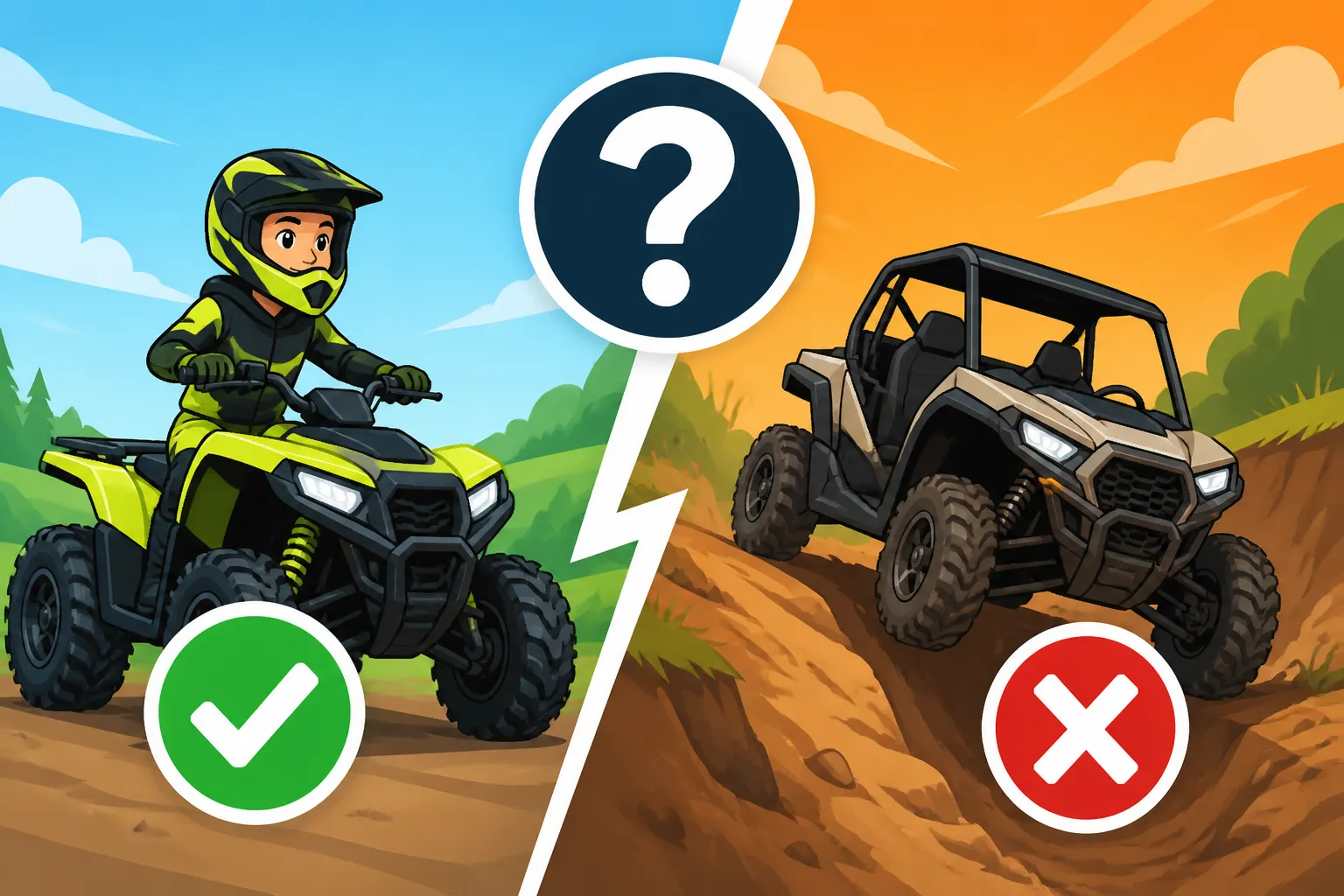
A 12-year-old may be able to ride an ATV in a Minnesota road ditch, but turning 12 does not make every ditch, machine, or ride legal. The answer depends on safety certification, adult supervision, the ATV’s class, and whether riding is allowed on that particular road’s right-of-way. Here’s how to check those conditions before a young rider heads out.
The short answer: sometimes, with conditions
A 12-year-old is no longer in the under-12 age group for Minnesota’s youth ATV rules. But that does not mean a 12-year-old can ride alone wherever an adult can. Public-road rights-of-way have specific requirements for young riders, and a road ditch is part of the right-of-way—not a separate area where ordinary road rules automatically stop applying.
For a 12- to 15-year-old, plan on the rider needing a valid ATV safety certificate and an adult at least 18 years old accompanying them. For riding a public-road right-of-way, the adult generally needs to be on a separate ATV. Check the current rule with the Minnesota DNR before the ride, especially if you’re unsure what counts as adequate accompaniment for the road or route involved. The details are covered in Minnesota Road Rules for Riders Aged 12 to 15.
The machine matters, too. A youth rider should not assume that any ATV or side-by-side is permitted simply because they can reach the controls. Minnesota’s rules distinguish between machine classes, and age restrictions can apply to riding a larger Class 2 ATV in public settings. Confirm the registered class and any age limits before taking a machine into a ditch. Minnesota ATV Classes and What They Mean explains the distinction.
| Question | What to check before the ride |
|---|---|
| Is the rider 12 or older? | A 12-year-old is no longer covered by the under-12 age category, but youth restrictions still apply. |
| Does the rider have a safety certificate? | Check the training and certification requirement for the rider’s age and riding location. |
| Is an adult accompanying the rider? | Confirm the age and supervision requirements; public-road right-of-way riding has specific conditions. |
| Is the machine suitable for the rider’s age? | Check its registered class and the rules for young operators. |
| Is this road’s right-of-way open to ATV riding? | Check road type, local restrictions, signs, and any designated route rules. |
So the practical answer is yes, a 12-year-old may be able to ride in a Minnesota ditch, but only when the rider, adult, machine, and route all meet the applicable rules. If any one of those conditions is unclear, don’t treat the ditch as open by default.
What the age, training, and supervision rules mean
Turning 12 is a threshold, not a free pass
The age threshold is only one part of the decision. Riders aged 12 to 15 remain subject to youth requirements on public land and public-road rights-of-way. That is why an adult should not assume that a child who has ridden safely on family land is automatically ready—or authorized—to ride a ditch.
The rules can also differ depending on what the rider is doing. A ride on private property with the owner’s permission is not the same as a ride on a public road right-of-way. A designated trail may have its own requirements, and crossing a road is different from riding along it. For a broader overview of the training requirement, see Minnesota ATV Safety Training Requirement.
Before the ride, confirm that the rider’s certificate is valid for the activity and that the rider can show proof if asked. Keep the certificate information accessible, and make sure the supervising adult knows where it is. Don’t rely on the rider’s age alone as proof that training requirements are satisfied.
An adult should be part of the ride plan
For a young rider using a road right-of-way, adult accompaniment is a key part of the plan. The adult should be present and attentive—not following far behind in a truck, waiting at the next intersection, or treating the ride as independent practice. Minnesota’s youth rules may specify how accompaniment must work, including whether the adult must ride a separate machine. Check the current wording before setting out rather than assuming that being nearby is enough.
Even when the rules are met, supervision needs to suit the conditions. A ditch may have steep banks, hidden culverts, soft shoulders, standing water, blind driveways, or sudden changes in depth. A responsible adult should be close enough to see what is ahead and respond to a problem. If the route is unfamiliar or busy, scout it first without the young rider.
A 12-year-old should also be able to follow basic instructions consistently: ride at a controlled speed, stay in the permitted part of the right-of-way, stop when asked, and avoid trying to keep up with a faster group. If those skills aren’t dependable yet, choose a simpler, legal place to practice.
Check the machine’s class and fit
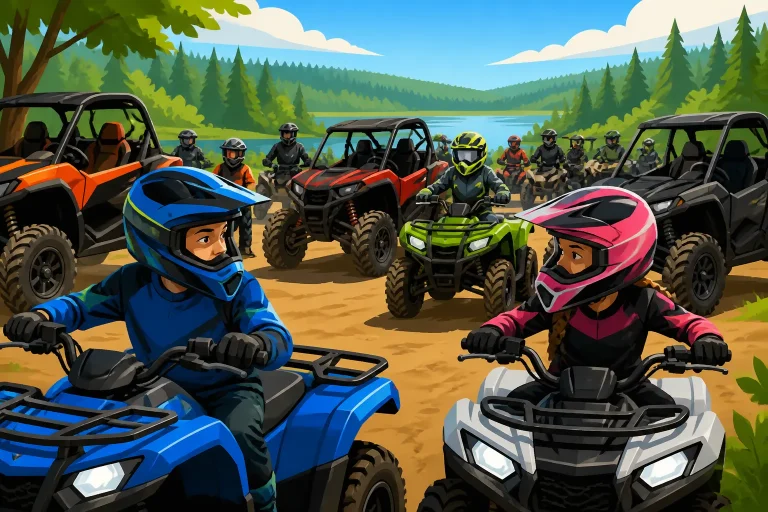
An ATV that looks manageable in a driveway can feel very different on uneven ground. The rider needs to reach the controls comfortably, steer and brake reliably, and handle the machine without struggling to hold it upright. A machine that is too large or powerful can be a poor choice even if someone can technically operate it.
Pay particular attention to whether the ATV is Class 1 or Class 2. Minnesota’s rules treat machine classes differently, and a young rider’s access to public areas can depend on that classification. A side-by-side is not automatically suitable for a 12-year-old just because it has seat belts or a passenger seat. Check the machine’s registration details and the current rules before using it in a ditch.
For gear, use a helmet that fits the rider properly and eye protection suited to the conditions. Minnesota has helmet rules for young riders; Minnesota Helmet Rules for Riders Under 18 is a useful place to check who must wear one. A helmet that is loose, too large, or unfastened is not a good substitute for a properly fitted helmet. If buying gear through Amazon, check the helmet’s certification information and fit carefully rather than choosing by appearance or price alone.
The ditch is a right-of-way, and not every road is open
A ditch ride is still road-right-of-way riding. That means the route may be restricted by the kind of road, local rules, signs, or a specific closure. Permission to ride on one township road does not establish permission on a nearby county road or highway.
Minnesota road rules generally distinguish the road surface from the right-of-way beside it. Riding along the road surface is not the same as riding in a permitted ditch area, and an ATV should not use the traffic lane simply because the ditch is rough or blocked. The rules for a specific road can be more restrictive than a rider expects. Review Minnesota’s Ditch Riding Rules and Minnesota Rules on County Roads when planning a route.
Before riding, check:
- Who controls the road. It may be a township, county, or state road. The responsible road authority can help clarify local restrictions.
- Whether signs or local rules prohibit riding. A route that is legal in one area may be restricted in another.
- Whether the right-of-way is safe and passable. Deep water, soft ground, a steep bank, construction, or a culvert can make a legal route unsafe.
- Whether the ride involves crossing a road. Crossing has its own requirements and is not permission to travel along the road surface. See Crossing a Minnesota Road on an ATV.
- Whether the route changes along the way. A ditch may end, become obstructed, or pass into a road segment with different restrictions.
If the road’s classification or local permission is uncertain, ask the relevant road authority before the ride. Don’t rely on a neighbor’s recollection, an old online map, or the fact that other riders use the route. Those are not a substitute for checking the rules that apply to that road today.
A safe route may still be an illegal route
It is tempting to treat safety and legality as the same question. They are not. A quiet, dry ditch may still be closed to ATV use. And a route that is legally open may be a poor choice for a 12-year-old if it has traffic exposure, blind approaches, steep banks, or frequent driveway crossings.
For a first ditch ride, choose a short, familiar stretch with good visibility and an easy place to stop. Avoid routes where the rider would have to enter the road to get around an obstacle. Do not ride through private land without permission, even if the right-of-way appears to continue beside it. If a ditch ends or becomes impassable, stop and reassess rather than improvising a route across a road or private property.
The broader checklist in What Minnesota Requires Before You Ride the Ditch can help identify other requirements to confirm before departure.
How to decide before a 12-year-old rides
Use this process to make the decision without guessing:
- Confirm the rider’s age and training status. Check the applicable youth safety certification requirements and have the proof available.
- Confirm adult accompaniment. Check the current rule for young riders on a public-road right-of-way, including any requirement for the adult to use a separate ATV.
- Identify the machine’s class. Use its registration information rather than guessing from its size or model name. Check whether the class is allowed for a rider of that age in the planned location.
- Identify the road authority and route. Determine whether it is a township, county, or state road, then check applicable restrictions and signs.
- Inspect the ditch. Look for water, soft ground, steep slopes, culverts, driveways, construction, and other hazards. Turn around if the route cannot be ridden without entering the road surface or leaving the permitted right-of-way.
- Fit the rider with proper gear. Use a correctly sized helmet and eye protection, and make sure the rider can operate the machine safely.
- Set a short, clear plan. Agree on the route, speed, stopping points, hand signals, and what to do if the adult and young rider become separated.
If one answer is uncertain, delay the ditch ride until it’s clear. A suitable practice area on private property, with the owner’s permission and appropriate supervision, may be a better starting point. Private-property riding does not remove the need to match the machine to the rider or use protective gear, but it avoids assuming that a public road right-of-way is open.
The main takeaway is simple: age 12 can make a Minnesota ditch ride possible, but it does not make it automatically legal. Confirm training, adult supervision, machine class, and road access before heading out. For a young rider, the right combination of legal route and manageable conditions matters just as much as the birthday.
Disclaimer
This article is for general informational purposes only and does not constitute professional advice. Laws, prices and regulations vary by location and change over time. Consult a qualified professional for guidance on your specific situation.