Minnesota Road Rules for Riders Aged 12 to 15
For parents of aspiring young ATV and UTV riders in Minnesota, the excitement of seeing your 12- to 15-year-old take the controls can quickly turn to confusion when trying to decipher the rules for riding on public roads. It feels like a maze of age limits, supervision requirements, and specific allowances, and the fear of getting it wrong and risking a fine or, worse, an accident, is very real. This comprehensive guide is here to untangle Minnesota's road rules specifically for riders aged 12 to 15, ensuring both their safety and your peace of mind.
Understanding Minnesota's Age-Based Riding Restrictions
Minnesota has put a lot of thought into how and where young people can operate ATVs and UTVs, especially when it comes to public roads and rights-of-way. It's not just about what they can do, but also the crucial safety nets in place to protect them. For those budding riders between the ages of 12 and 15, there are specific stipulations that set them apart from older operators. It's a system designed to balance the thrill of riding with the paramount need for safety and responsible operation.
The Core Age Rule: What 12-15 Means for Road Rights
When your child hits that twelfth birthday, a new world of riding opportunities opens up, but it comes with a strict set of guidelines, particularly for road access. For someone aged 12 to 15, riding an ATV or UTV on a public road right-of-way in Minnesota is generally limited to certain areas, primarily the ditch. You won't see these young operators cruising down the paved surface of a county road like an adult might, and there's a good reason for that: the difference in experience, judgment, and physical capability. The state recognizes that while these kids are certainly capable of operating a machine, they're still developing the situational awareness and hazard perception needed for complex road environments. This means the default expectation is that any road riding for this age group will occur safely off the main travel lanes, typically within the road's ditch or shoulder area. [Minnesota's Ditch Riding Rules] elaborates further on this.
Accompanied Riding: The Adult Supervision Requirement
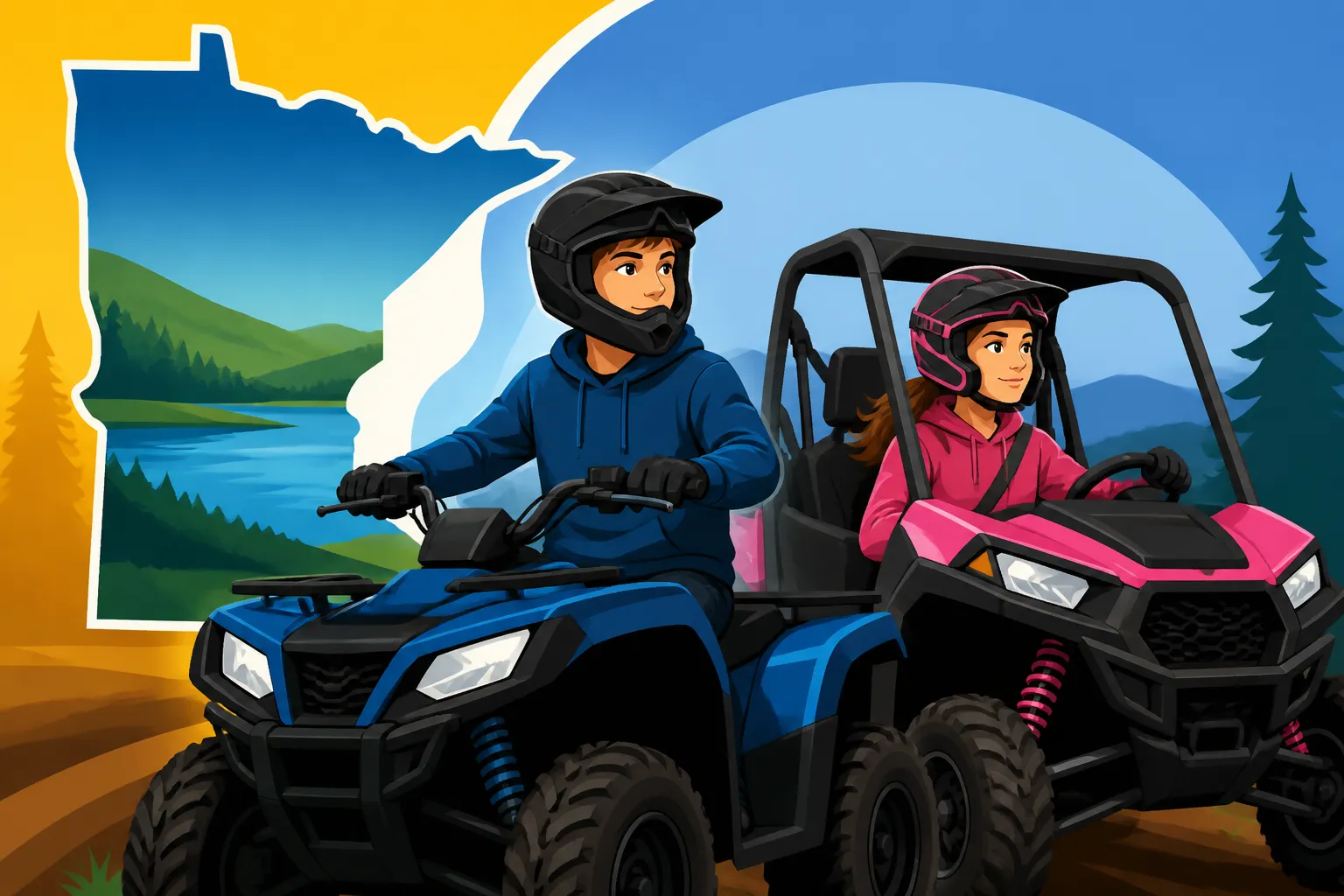
Perhaps the most critical rule for riders aged 12 to 15 is the requirement for direct adult supervision. This isn't just a suggestion; it's a legal mandate. If your child falls into this age bracket and is riding an ATV or UTV on a public road right-of-way, they must be accompanied by someone who is at least 18 years old. But it's not enough for the adult to simply be "around." This adult supervisor must also possess a valid driver's license and be riding on a separate ATV or UTV. The idea here is that the adult can provide immediate guidance, intervene if necessary, and lead by example. They're not just a passenger; they're an active participant in ensuring the young rider's safety and adherence to the rules. This rule highlights the state's emphasis on mentorship and direct oversight during these formative years of riding. You can find more details on this aspect in [Accompanied Riding for Minnesota Minors].
Safety Training: A Non-Negotiable Step for Young Riders
Before any young rider aged 12 to 15 can even think about operating an ATV or UTV on public land or road rights-of-way in Minnesota, they absolutely must complete an approved ATV safety training course. This isn't optional; it's a foundational requirement designed to instill critical knowledge and skills from the outset. These courses cover everything from basic machine operation and maintenance to trail etiquette, environmental considerations, and, of course, the specific laws and regulations for riding in Minnesota. Passing this course demonstrates a baseline understanding of safe operation and responsible riding practices. It’s a significant milestone for young riders, giving them the confidence and the certified knowledge needed to navigate the trails and, under supervision, the road rights-of-way safely. Without this certification, even with adult supervision, a young rider is not legally permitted to operate on these public spaces. For a deeper dive into these requirements, see [Minnesota Safety Training for Riders Twelve and Over].
Where 12-15 Year Olds Can Ride on Minnesota Roads
It’s easy to feel overwhelmed by the restrictions, but it’s important to understand that Minnesota does provide legitimate, legal avenues for young riders to enjoy their machines on public lands, including specific portions of roads. These allowances are carefully carved out to minimize risk while still fostering a love for the sport. Knowing exactly where these young riders are permitted to operate helps parents and guardians plan safe and legal routes for their adventures. It’s all about understanding the nuances of the "road right-of-way" and how it differs from the actual paved surface.
Ditch Riding: The Primary Avenue for Young Riders
For riders aged 12 to 15, the ditch or shoulder of a public road is typically their designated riding area when they need to utilize a roadway. This isn't a free-for-all; there are still rules that apply to ditch riding, such as riding on the far right-hand side, with the flow of traffic, and being mindful of conditions and other users. The ditch provides a buffer zone, keeping ATVs and UTVs away from the faster-moving vehicular traffic on the main road surface. It's a common sight in rural Minnesota to see ATVs and UTVs utilizing these areas to get from one section of trail to another, or even to access a local gas station or small business in a trail-friendly town. This is often the safest and most legally sound option for young riders to gain road access. However, it's crucial to remember that not all ditches are created equal; some might be too narrow, steep, or obstructed, making them unsafe, and common sense should always prevail.
Crossing Roads: Navigating Intersections Safely and Legally
While extended riding on the paved surface is largely prohibited, 12-15 year olds, under adult supervision, are typically allowed to cross public roads. This is a critical provision, as many trails and riding areas are intersected by roads, making crossings unavoidable. When crossing, the rules are very clear: riders must come to a complete stop, yield to all approaching traffic, and cross the road at a 90-degree angle to the surface. It's about minimizing the time spent on the main roadway and ensuring maximum visibility. The accompanying adult plays a crucial role here, scouting for traffic and guiding the young rider through the maneuver. It’s a moment that demands heightened awareness and communication between the rider and supervisor. This ability to cross roads is what makes many trail networks viable, connecting different sections of riding land that would otherwise be isolated. Detailed guidance on this can be found in [Crossing a Minnesota Road on an ATV].
Designated Trail Access: Connecting Roads to Recreation
Minnesota’s extensive network of ATV and UTV trails often requires riders to use portions of public roads to connect different segments or to reach a trailhead. For young riders, this means they can use road rights-of-way specifically to access designated trails. These "road routes" or connector segments are usually clearly marked and are often on less-trafficked county or township roads. The key here is "designated." Riders aren't simply allowed to pick any road to ride on; they must be using a road that is part of an approved route connecting to an established trail system. This provides a structured and often safer way for young riders to get to the core of their off-road adventure without having to trailer their machine for every short distance. It's another example of how Minnesota tries to integrate ATV use responsibly into its landscape, ensuring access points for all eligible riders, including the supervised youth.
What's Prohibited for Riders Aged 12-15
While we’ve discussed where young riders can go, it's equally, if not more, important to understand the places they absolutely cannot. The prohibitions are in place for safety, and ignoring them can lead to significant penalties, not to mention putting the rider and others at risk. For parents supervising riders aged 12 to 15, these "no-go" zones are non-negotiable and demand strict adherence. Understanding these limits will help prevent accidental violations and ensure a safer riding experience for everyone involved. [Minnesota Road Rules Riders Get Wrong] often highlights these very issues.
The Road Surface: Why It's Generally Off-Limits
For riders aged 12 to 15, the paved or graveled surface of most public roads is off-limits. This is one of the most fundamental distinctions between how adults and supervised minors can use ATVs and UTVs on Minnesota roads. While adults with a valid driver's license might, in some specific circumstances, be allowed to ride on certain road surfaces (often county or township roads), this privilege does not extend to supervised youth. The reasoning is clear: the road surface is where cars, trucks, and other vehicles travel at higher speeds, requiring a level of experience and quick decision-making that is still developing in younger riders. Operating an ATV or UTV directly in traffic flow is inherently more dangerous, and Minnesota law reflects this by keeping supervised young riders to the safer confines of the ditch or shoulder. This rule is designed to protect them from situations they may not be equipped to handle.
State Highways and High-Speed Roads: Clear Restrictions
Beyond just the general road surface, specific types of roads are almost universally prohibited for ATV and UTV use by riders of any age, and certainly for those aged 12 to 15. This primarily includes state highways and other high-speed, high-traffic thoroughfares. These roads are designed for rapid transit, and mixing ATVs and UTVs with such traffic, especially with a young operator at the controls, creates an unacceptable safety hazard. The speed differentials, the volume of traffic, and the often complex intersections make these environments entirely unsuitable for ATV or UTV operation, regardless of the rider's age or whether they are accompanied by an adult. These prohibitions are firm and without exception for young riders, underscoring the state's commitment to preventing serious accidents. For more on these distinctions, refer to [Minnesota Rules on State Highways].
Passenger Rules: When a Young Rider Can't Double Up
This is a point of frequent misunderstanding: even if a young rider aged 12-15 is legally operating a two-up ATV or a multi-passenger UTV, they generally cannot carry a passenger when riding on a public road right-of-way. The rule for carrying passengers on an ATV or UTV in Minnesota is quite specific: to carry a passenger, the operator must be at least 18 years old. This means that while a 12- to 15-year-old might be supervised by an adult on a separate machine, they cannot have a friend or sibling riding with them on their own machine if they are on a public right-of-way. This restriction is another layer of safety, ensuring that the young operator's focus remains solely on controlling their machine and navigating the environment, without the added distraction or responsibility of a passenger. It ensures that the accompanying adult is responsible for the safety of all parties and can keep a clear eye on the young operator's performance.
Essential Gear and Equipment for Young Riders
Riding an ATV or UTV is an exhilarating experience, but it comes with inherent risks. For young riders, these risks are amplified due to their developing coordination, judgment, and physical size. This is why proper safety gear and ensuring the machine itself is in top condition aren't just good ideas; they're legal requirements in many cases, and always a matter of common sense. Equipping your 12-15 year old with the right gear and making sure their machine is ready for the road environment is a parental responsibility that cannot be overlooked.
Helmet Requirements: It's the Law for Minors
In Minnesota, the helmet law is very clear for young ATV and UTV operators: if you are under the age of 18, you must wear a U.S. DOT-approved helmet when operating an ATV or UTV. This applies universally, whether you're on a trail, private land, or, crucially, on a public road right-of-way. There are no exceptions for accompanied riding or for the specific environment. A helmet is a non-negotiable piece of safety equipment that dramatically reduces the risk of head injury in the event of a crash or tip-over. Ensuring the helmet fits properly and is securely fastened is just as important as wearing it. It’s a vital piece of personal protective equipment that provides a critical line of defense. [Minnesota Helmet Rules for Riders Under 18] provides all the details you need on this.
Eye Protection: Seeing Clearly and Staying Safe
While often overlooked, adequate eye protection is just as critical as a helmet, especially when riding on a public right-of-way where dust, debris, insects, or even small rocks kicked up by other vehicles are a constant threat. Minnesota law also requires ATV and UTV operators and passengers under the age of 18 to wear eye protection when riding. This means goggles or a face shield that is integrated into a helmet. Regular sunglasses, while offering some glare protection, generally don’t provide the impact resistance or full coverage needed for ATV riding. The ability to see clearly and without obstruction is paramount for safe operation, especially for young riders who are still honing their reaction times and observational skills. Investing in a good pair of riding goggles that fit comfortably with the helmet is essential for preventing distractions and injuries. For more on this, check out [Eye Protection on a Minnesota Ride].
Machine Readiness: Lights, Brakes, and Spark Arresters
Beyond personal protective gear, the ATV or UTV itself must be properly equipped and maintained for safe operation on public road rights-of-way. This includes functional headlights and taillights, which are essential for visibility, especially during dawn, dusk, or in inclement weather. Even if you're only planning to ride during the day, unexpected conditions can arise, and being seen by others is a fundamental safety measure. Furthermore, the machine must have fully functional brakes, a horn or other warning device, and a spark arrester. A spark arrester is crucial for preventing wildfires, particularly when riding in dry conditions, and is a legal requirement on public lands. Regular maintenance checks, like ensuring tires are properly inflated and the steering is responsive, are vital. You might even consider upgrading certain components for added safety and utility. For instance, aftermarket lighting from brands like SuperATV can significantly improve visibility for both the rider and other road users, making a tangible difference in safety, especially in low-light conditions or dusty environments. It’s about ensuring the machine itself is a safe and reliable vehicle for public use.
Parental Responsibilities and Supervision
Being the parent or guardian of a young ATV or UTV rider carries significant responsibility, especially when they are operating on public road rights-of-way. It's not just about knowing the rules; it's about actively enforcing them, providing guidance, and setting a strong example. The state places a high degree of accountability on the supervising adult, acknowledging that young riders need consistent oversight and mentorship to navigate the complexities of shared public spaces safely and legally.
Direct Supervision: Keeping an Eye on Young Operators
As we’ve touched upon, direct supervision is a legal mandate for 12-15 year old riders on public road rights-of-way. This means the supervising adult (at least 18 years old with a valid driver's license) must be actively accompanying the young rider on a separate machine. It’s not enough to be in the general vicinity or to simply meet up at the destination. The adult needs to be close enough to observe the young rider's actions, provide immediate instructions, and react quickly to any potential hazards. This constant presence allows for real-time coaching and intervention, helping the young rider develop their skills and judgment in a controlled environment. It’s an invaluable opportunity to teach defensive riding, hazard recognition, and adherence to traffic laws in a practical setting.
Understanding Local Ordinances: The "City Limits" Factor
One of the trickiest aspects of ATV and UTV riding in Minnesota is the patchwork of local ordinances. While state law provides a general framework, individual counties and even specific municipalities can (and often do) enact their own rules regarding ATV and UTV access within their boundaries. This is especially true when it comes to riding within city limits or on specific township roads. For a 12-15 year old rider, even with adult supervision, what might be legal in one rural township could be strictly prohibited just a few miles down the road in a different municipality. It’s the supervising adult's responsibility to research and understand these local rules before riding. Many trail-friendly towns in Minnesota have designated ATV routes and specific rules for entering and exiting. A quick call to the local sheriff's office or city hall before a trip can save a lot of headaches and potential fines. [Minnesota Cities That Allow ATVs on Streets] can be a helpful starting point, but always double-check local specifics.
Leading by Example: Teaching Safe Riding Habits
Perhaps the most powerful tool a supervising adult has is the ability to lead by example. Young riders are sponges, absorbing not just explicit instructions but also the unspoken habits and attitudes of those they look up to. If the adult supervisor consistently adheres to speed limits, stays in the designated riding areas, yields to other traffic, uses proper hand signals, and refrains from risky maneuvers, the young rider is far more likely to adopt these safe practices. This includes wearing all appropriate safety gear, always having the machine properly registered, and never operating under the influence of alcohol or drugs – [Minnesota Alcohol Limits for ATV Operators] are strict for all operators. Demonstrating responsible riding is a long-term investment in the young rider's safety and the future of the sport. It's about instilling a culture of respect for the land, the laws, and other users, ensuring that their passion for riding grows hand-in-hand with their commitment to safety.
Navigating Common Scenarios for Young Riders
Understanding the rules in theory is one thing, but applying them to real-world situations can sometimes feel daunting. Many families want to incorporate their ATVs and UTVs into their everyday activities, whether it's visiting neighbors or accessing recreational spots. For riders aged 12 to 15, these common scenarios come with specific legal considerations that parents need to be aware of.
Riding to a Friend's House on Township Roads
Imagine your 14-year-old wants to ride their ATV to a friend’s house just a few township roads away. This is a common desire, and in many rural parts of Minnesota, it’s a perfectly feasible (and legal) activity, provided all the rules are followed. The key here is "township roads" and ensuring the route primarily utilizes the ditch or shoulder. The 14-year-old must have their ATV safety certificate and be accompanied by an 18+ adult on a separate machine with a valid driver's license. They would stick to the far right of the ditch, traveling with the flow of traffic, and cautiously cross any intersecting roads after coming to a complete stop and yielding. If the route briefly takes them through a small town, the adult would need to confirm that the specific municipality allows ATV use on its streets for these connectors and if any specific speed limits or routes apply. This scenario perfectly illustrates the interplay of state law, local ordinances, and direct supervision.
Getting to the Fishing Spot on a Frozen Lake
Minnesota winters bring a unique riding environment: frozen lakes. For many families, an ATV or UTV is the ideal machine to get out to a favorite ice fishing spot. If your 12- to 15-year-old wants to operate the machine out on the lake, the rules regarding supervision and safety training still apply. While a frozen lake isn't technically a "road," it's considered public land, and therefore the safety training requirement holds true. The accompanying adult would still need to be present and riding their own machine. It's important to remember that general road right-of-way rules about ditch riding don't apply on the open ice, but fundamental safety considerations like checking ice thickness and being aware of other users become paramount. Safety gear, especially helmets, is still essential, as even a seemingly innocuous fall on ice can cause serious injury. [Minnesota Rules on Frozen Lakes] provides more details about this unique riding environment.
Using an ATV for Farm Chores Near a Roadway
For many rural families, ATVs and UTVs aren't just for recreation; they're vital tools for farm work. A 15-year-old might be tasked with checking fences, moving feed, or performing other chores that require operating the machine near or even briefly on a public road right-of-way. Minnesota law offers specific exemptions for agricultural purposes, but these are often narrowly defined. When a young rider is using an ATV or UTV for farm work, particularly when it involves crossing or running alongside a public road, the safety training requirement still stands. While some agricultural exemptions might adjust the need for full registration in specific contexts, the core safety rules, including helmet use for minors and the need for a safe operating environment, remain critical. If the machine is used more broadly for non-farm purposes on public land, then full registration, safety training, and adult supervision are all back in full effect. For heavy-duty farm tasks, ensuring the machine is well-equipped with accessories like a sturdy winch or cargo boxes, many of which can be found from a supplier like SuperATV, not only makes the job easier but also contributes to safer operations, especially when working alone or in remote areas.
Minnesota ATV Road Rules for 12-15 Year Olds at a Glance
Navigating the rules for young riders can be complex, so here's a quick summary of the key points for Minnesota ATV and UTV operators aged 12 to 15 when riding on public road rights-of-way.
| Requirement/Action | Status for 12-15 Year Olds on Road Right-of-Way | Notes |
|---|---|---|
| ATV Safety Training | REQUIRED | Must complete an approved course before riding on public land or road rights-of-way. |
| Adult Supervision | REQUIRED | Must be accompanied by an 18+ adult (with a valid driver's license) riding on a separate ATV/UTV. |
| Helmet Use | REQUIRED | Must wear a U.S. DOT-approved helmet. Applies universally to all riders under 18. |
| Eye Protection | REQUIRED | Must wear appropriate eye protection (goggles/face shield). Applies universally to all riders under 18. |
| Riding on Paved Surface | GENERALLY PROHIBITED | Except for direct crossings (at 90 degrees, yielding to traffic) or very specific, locally designated routes. Primary riding area is the ditch/shoulder. |
| Riding in the Ditch | ALLOWED | Must ride on the far right, with the flow of traffic, and adhere to ditch-specific rules and conditions. |
| Crossing Roads | ALLOWED | Stop, yield, cross at a 90-degree angle. Requires heightened vigilance by both the young rider and supervising adult. |
| Riding on State Highways | PROHIBITED | Generally prohibited for all ATVs/UTVs, and strictly for young riders. |
| Carrying Passengers | PROHIBITED | Operators under 18 cannot carry passengers on public road rights-of-way, even if the machine is designed for multiple riders. |
| Machine Registration | REQUIRED | The machine itself must be properly registered for public use, unless a specific agricultural or private land exemption applies. [Registering an ATV in Minnesota] has more. |
| Local Ordinance Check | CRUCIAL | Always check county and municipal ordinances for specific rules on ATV access within local jurisdictions, as these can vary. |
| Lights & Equipment | REQUIRED | Machine must have working headlights, taillights, brakes, horn, and a spark arrester. Upgrades like those from SuperATV can enhance safety. |
Disclaimer
This article is for general informational purposes only and does not constitute professional advice. Laws, prices and regulations vary by location and change over time. Consult a qualified professional for guidance on your specific situation.