Driver’s License Rules for Minnesota Road Riding
There's a lot of confusion out there among Minnesota ATV and UTV riders when it comes to hitting the road – or even just the ditch alongside it. Many of us think that if we're not in a car, the same driver's license rules don't apply, or that certain exemptions magically cover us. But the truth is, operating an off-highway vehicle (OHV) on public roads or rights-of-way in Minnesota absolutely comes with specific requirements, and if you're not careful, you could find yourself facing a hefty fine or worse. This guide is here to untangle all those rules, helping you understand exactly what kind of driver's license you need, if any, when you decide to take your machine beyond the private property lines.
The Core Question: Do You Even Need a Driver's License?
This is often the first question that pops into a rider's head, and honestly, it's not always a straightforward "yes" or "no." The answer largely hinges on where you're planning to ride. It’s a common misconception that because an ATV isn’t a car, the rules of the road don’t quite apply, especially when you’re just in the ditch. But Minnesota law is pretty clear: if you’re operating your machine on any public land, including road rights-of-way, there are expectations for operator licensing and training.
The General Rule: It Depends Where You're Riding
If you're out on your own private land, tearing up trails you've built on your eighty acres, then no, you don't typically need a driver's license to operate your ATV or UTV. Your land, your rules (within reason, of course, and always prioritizing safety). This is where many riders get comfortable, and that comfort can sometimes lead to assumptions that don't hold up once you cross your property line. You can ride all day long without a driver's license on private property that you own or have permission to use. This freedom is one of the joys of owning an off-highway vehicle, allowing families to enjoy their machines without the immediate pressure of public land regulations.
However, the moment your wheels touch public ground – even if it's just the ditch by the county road – you've entered a different legal landscape. It's similar to how you can drive a car without a license on your own driveway, but not on the street. The state has an interest in regulating activity on public property to ensure safety for all users, and that includes you on your ATV. Failing to recognize this distinction is one of the quickest ways to find yourself in hot water with local law enforcement or a Minnesota Conservation Officer. Understanding this fundamental difference is the first step to riding responsibly and legally in Minnesota.
When the Pavement or Ditch Comes Into Play
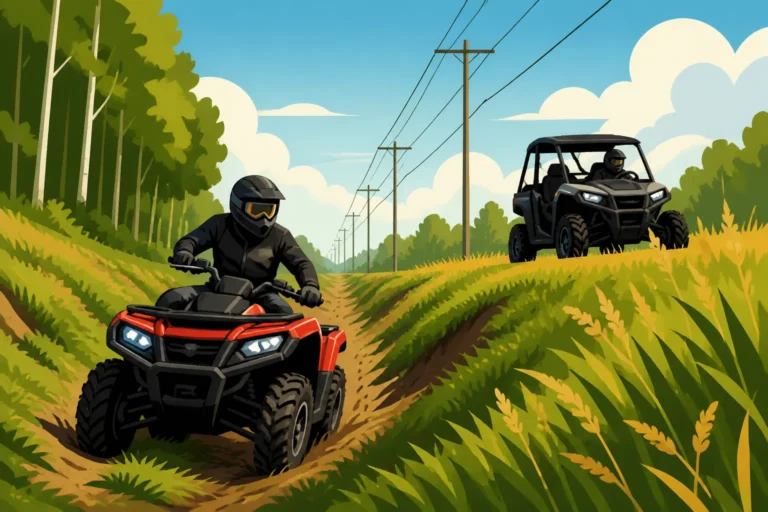
Minnesota's regulations are quite specific about what constitutes "road riding" for ATVs and UTVs. It's not just about cruising down the blacktop like a car. The rules often encompass the shoulder, the ditch, and even the right-of-way adjacent to a public road. Many folks assume that as long as they stay in the ditch, they're not on the "road" and therefore exempt from certain rules. This is a common and dangerous misunderstanding. Minnesota law views the road right-of-way as an extension of the public road itself, meaning that if you're operating your machine within that area, you're generally subject to the same licensing and training requirements as if you were on the paved or graveled surface.
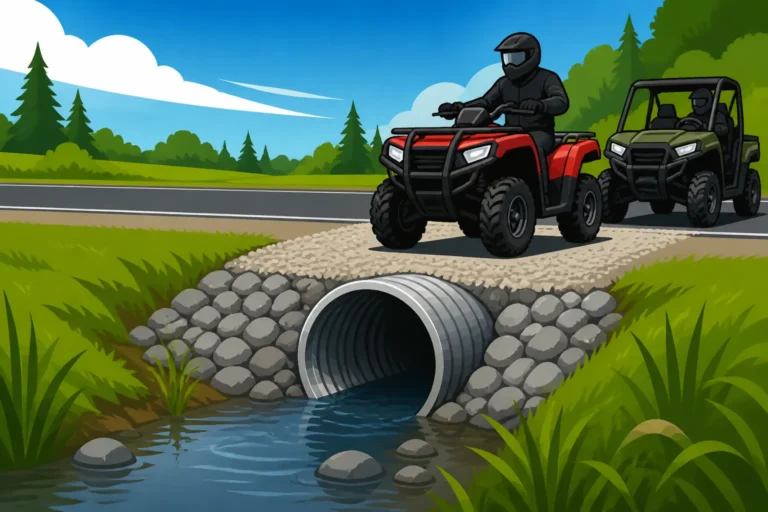
This includes designated ATV routes on township or county roads, as well as situations where you're simply riding a ditch to get from one section of trail to another. Even on a quiet gravel road where you barely see another vehicle all day, the expectation is that operators meet the necessary licensing criteria. The state wants to ensure that anyone operating a motorized vehicle in these shared spaces has at least a baseline understanding of traffic laws and safe operation. Ignoring these rules isn't just a legal risk; it's a safety one, as you're sharing space with cars, trucks, and other road users who may not be expecting you. For more on what's allowed and what's not, check out [Minnesota's Ditch Riding Rules].
The Grey Areas: Field Access and Short Crossings
While the general rule is to have a license for public road access, there are some specific scenarios that can feel like grey areas. For instance, what if you're a farmer needing to quickly cross a county road to get from one field to another? Or what if you're just trying to access a hunting shack, and the only reasonable way involves a very short stretch of a township road? Minnesota law does include some specific exemptions for farm and utility machines, but these are often narrowly defined and come with their own set of rules. For example, a machine being used strictly for agricultural purposes on a farm may have different requirements when moving between parcels of land.
However, don't assume your weekend pleasure ride falls under a "utility" exemption just because you're carrying a cooler. The intent and primary use of the machine in that specific moment are key. A recreational rider taking their side-by-side to a fishing spot, even if they're carrying gear, is generally not considered a "utility" operation in the same way a farmer hauling feed might be. It's crucial to understand these distinctions because misinterpreting them can lead to tickets. Always err on the side of caution: if you're on a public road or right-of-way and not explicitly covered by a clear agricultural exemption, assume standard driver's license rules apply. You can learn more about these exceptions in [Minnesota Rules for Farm and Utility Machines].
Minnesota's Age-Based Licensing Requirements
Minnesota’s approach to ATV and UTV operation on public roads and rights-of-way is heavily influenced by the operator’s age. It's not a one-size-fits-all rule, and what's perfectly legal for an adult could be a serious infraction for a younger rider. This tiered system aims to balance access for various age groups with safety, requiring more training and supervision for younger, less experienced operators. It's designed to gradually introduce riders to the responsibilities of operating a motorized vehicle in shared public spaces.
Riders 16 and Older: The Standard Driver's License Expectation
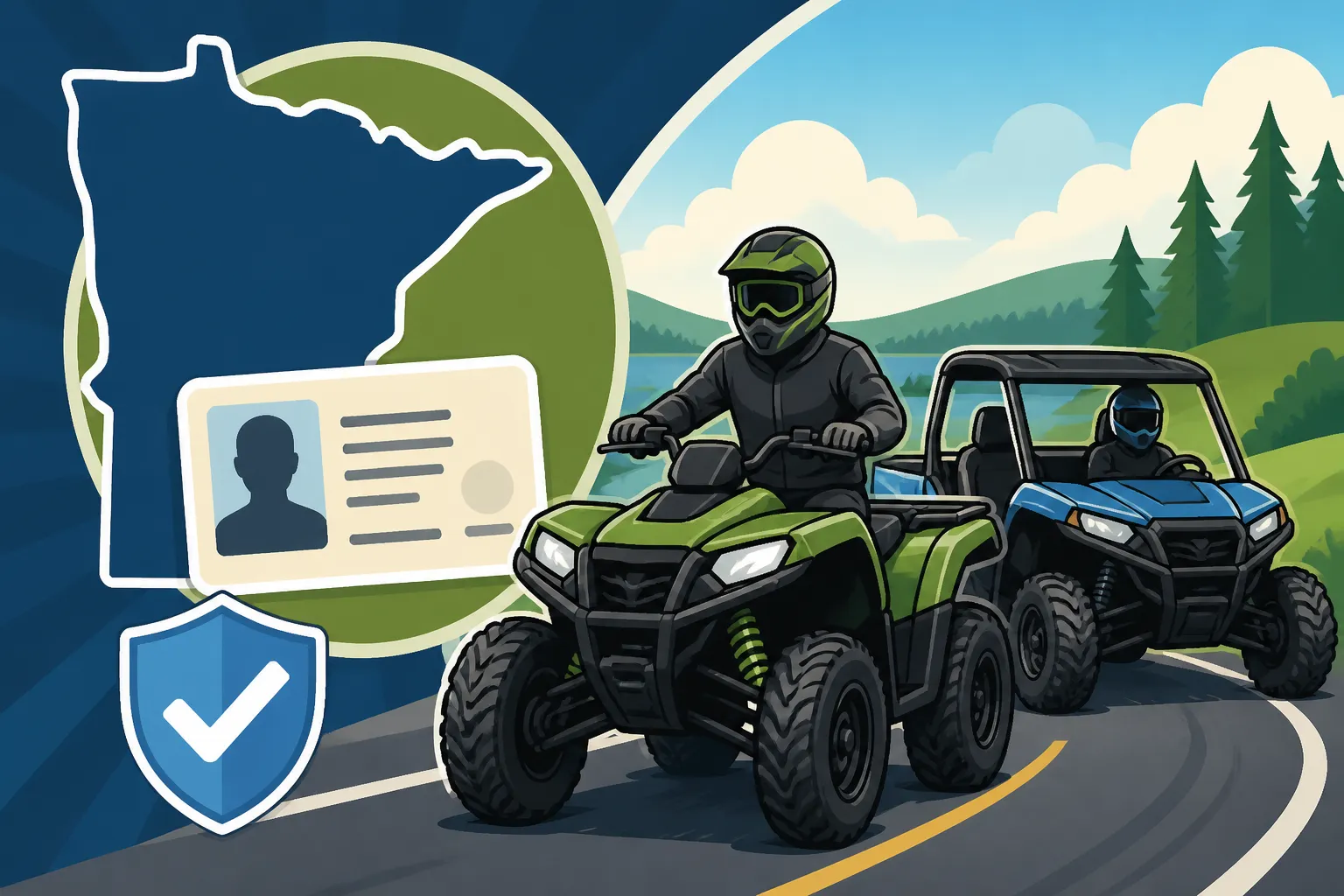
For operators who are 16 years of age or older, the expectation is pretty straightforward: you need a valid driver's license. This means a license that permits you to operate a motor vehicle on public roads, such as a standard Class D driver's license. If you have a permit, a probationary license, or a full driver's license for a car, you're generally covered from the licensing perspective when riding an ATV or UTV on a public road or right-of-way where it's legally permitted. The logic here is that if you're deemed competent enough to operate a car on the road, you're also expected to have the necessary skills and knowledge of traffic laws to safely operate an OHV in similar public spaces.
It's not just about having the piece of plastic in your wallet; it's about the implied responsibility that comes with it. A licensed driver is presumed to understand right-of-way rules, signaling, speed limits, and other regulations that keep everyone safe. If you've had your driver's license revoked or suspended for any reason, those restrictions generally extend to operating an ATV or UTV on public roads as well. You cannot simply hop on your quad and ignore the conditions of your driver's license. This is a crucial point that many riders overlook, often to their detriment.
The 12 to 15-Year-Old Window: Training and Supervision
This age group has a different set of requirements, highlighting Minnesota's emphasis on youth safety and education. A rider who is 12, 13, 14, or 15 years old can operate an ATV or UTV on public roads or rights-of-way only if they meet specific criteria. First, they must possess a valid ATV safety training certificate. This isn't just a suggestion; it's a legal requirement designed to equip young riders with essential safety knowledge and operating skills before they enter public spaces. The state has invested in these programs to reduce accidents and ensure a foundational level of competency.
Second, and equally critical, they must be accompanied by a person 18 years of age or older who holds a valid driver's license. This accompanying adult must be riding on a separate ATV or UTV and be in a position to adequately supervise the younger rider. It's not enough for the adult to simply be in the general vicinity; they must be actively engaged in supervising the youth. This two-pronged approach ensures that young riders not only have the theoretical knowledge from their safety course but also the practical guidance and immediate oversight of an experienced adult. It's a system designed to create a safer environment for our younger riders as they gain experience. You can find more information about youth rules in [Minnesota Rules for a Rider Turning 16] and [Accompanied Riding for Minnesota Minors].
What About Riders Under 12?
For children under the age of 12, the rules are significantly more restrictive when it comes to operating an ATV or UTV on public lands, including road rights-of-way. Generally, riders under 12 years old are not permitted to operate an ATV or UTV on public roads, shoulders, or ditches. Their access is largely limited to private property. This strict rule reflects the state's recognition that very young children lack the physical development, judgment, and experience necessary to safely navigate the complexities and potential dangers of operating a motorized vehicle in a public environment, even one as seemingly innocuous as a ditch.
There are specific size and engine displacement restrictions for youth machines, and even with those smaller machines, public road use for riders under 12 is generally off-limits. The goal is to protect these youngest enthusiasts by confining their riding to controlled, private environments where the risks are significantly lower. While they can certainly enjoy riding on private land with appropriate supervision and proper safety gear (including a helmet, which is mandatory for all riders under 18 in Minnesota, as discussed in [Minnesota Helmet Rules for Riders Under 18]), public road access is reserved for older, more experienced, and certified operators. Parents and guardians must be extremely diligent in adhering to these age restrictions to prevent accidents and legal repercussions.
Here's a quick overview of Minnesota's driver's license rules for public road/ditch ATV/UTV operation:
| Age Group | Driver's License Required? | ATV Safety Certificate? | Adult Supervision Required? | Notes |
|---|---|---|---|---|
| Under 12 years | No | No | Yes (on private land) | Generally prohibited on public roads/ditches. Limited to private land, with adult supervision. |
| 12-15 years | No | Yes | Yes (licensed, 18+ adult on separate machine) | Permitted on public roads/ditches only with safety cert AND accompanied by supervising adult. |
| 16 years and older | Yes (valid Class D or higher) | No (if 16+) | No | Must possess a valid driver's license. No safety certificate required if 16+. |
Note: This table summarizes driver's license requirements. Other rules (registration, helmet, etc.) still apply.
The Nuances of Accompanied Riding and Supervision
When we talk about young riders hitting the ditches or designated ATV routes, the concept of "accompanied riding" is absolutely critical. It’s not just about an adult being somewhere in the general vicinity; the law has specific expectations about what proper supervision looks like. As a parent or guardian, understanding these nuances isn't just good advice, it's a legal obligation that could have serious consequences if ignored.
Who Qualifies as an "Accompanying" Adult?
For a 12- to 15-year-old rider to legally operate an ATV or UTV on public roads or rights-of-way, they must be "accompanied" by a qualified adult. But what exactly does "accompanied" mean in the eyes of Minnesota law? It means more than just having an adult at the same trailhead or even in the same group of riders. The accompanying adult must be 18 years of age or older, possess a valid driver's license, and be riding on a separate ATV or UTV. This last point is really important – the adult cannot be a passenger on the youth's machine, nor can they be driving a car while the youth is on an ATV. They need to be right there, on their own off-highway vehicle, able to respond immediately if needed.
Furthermore, the spirit of the law implies that this adult needs to be actively supervising the youth. They should be in a position to see, hear, and direct the younger rider, offering guidance on safe operation and navigating road conditions. This isn't just about ticking a box for the law; it's about providing real-time mentorship and ensuring the safety of a less experienced operator. It’s about teaching them proper trail etiquette and how to react to unexpected situations, whether it's another vehicle approaching or a sudden change in terrain.
Riding on a Separate Machine Versus as a Passenger
Let's emphasize this point again because it's so frequently misunderstood: the accompanying adult must be on a separate machine. You cannot, under Minnesota law, have a 12- to 15-year-old operating an ATV on a public road or ditch if you, as the supervising adult, are riding as a passenger on their machine. Nor can you be a passenger on another machine in the group while your child operates their own. This rule ensures that the adult has their own machine's controls, allowing them to maintain their own safety and better react to any situation involving the youth rider.
There's also a clear distinction between riding as an operator and riding as a passenger. While an adult may not need a driver's license to be a passenger on an ATV (assuming the machine is designed for a passenger and other rules are followed), they absolutely need one to be the accompanying supervisor for a young rider who is operating their own machine on public property. The law focuses on the operator's responsibilities and the supervisor's ability to effectively guide that operator. Any deviation from these specifics could render the "accompanied" status invalid, potentially leading to citations for both the youth and the supervising adult.
The Responsibility of the Supervising Adult
The role of the accompanying adult extends far beyond merely being present. They carry a significant legal and moral responsibility for the safety and compliance of the younger rider. If a 12- to 15-year-old rider is found to be in violation of ATV laws while operating on public property, the supervising adult can also face penalties. This might include fines, and in some cases, even more serious consequences, especially if an accident occurs due to negligence or a failure to properly supervise. It’s not just about the child getting a ticket; the adult is liable as well.
This responsibility includes ensuring the youth has completed the required safety training, wears appropriate safety gear (including a helmet, which is always mandatory for riders under 18), and understands and adheres to all operating laws, including speed limits, right-of-way rules, and passenger restrictions. It's a proactive role, not a passive one. You, as the supervising adult, are essentially vouching for that young rider's readiness and ongoing compliance. It's a fantastic opportunity to instill good riding habits, but it's also a serious commitment. Make sure you're up to the task and fully aware of what's expected of you when taking a minor out on public lands.
Specific Rules for Different Machine Types on Roads
Minnesota law isn't just concerned with who is driving; it also pays close attention to what they are driving. ATVs and UTVs, while both off-highway vehicles, are categorized differently, and these distinctions can significantly impact where and how they can be legally operated on public roads and rights-of-way. It's not as simple as "if it has four wheels, it's all the same."
Class 1 Machines on the Right of Way
Class 1 ATVs are generally defined as machines 50 inches wide or less, with a dry weight of 1,000 pounds or less. This category typically includes most traditional single-rider ATVs and some smaller, narrower side-by-sides. These machines usually have more flexibility when it comes to ditch riding or using designated ATV routes on public roads. Many [Minnesota Cities That Allow ATVs on Streets] will define routes that are open to Class 1 machines.
When operated on public road rights-of-way (including ditches), Class 1 machines are subject to specific speed limits and operational rules. For example, they often have a maximum speed limit, such as 20 miles per hour, when operating within the right-of-way of a paved or graveled road. They are typically expected to stay on the extreme right side of the maintained portion of the road or in the ditch, avoiding the actual traveled surface as much as possible. These rules are in place to minimize interference with traditional vehicle traffic and to enhance safety for everyone. A driver's license is still required for operators 16 and older, and safety training/supervision for younger riders, as outlined earlier. It's about blending into the existing traffic flow in the safest way possible without disrupting it. See [Minnesota Class 1 Machines on the Right of Way] for more details.
Why Class 2 Machines Are Treated Differently
Class 2 machines are a broader category, encompassing wider and heavier side-by-sides and multi-passenger UTVs. These machines exceed the 50-inch width or 1,000-pound dry weight limits of Class 1 machines. Because of their larger size and often greater speed capabilities, Class 2 machines typically face more restrictions when it comes to road access. Many local ordinances and state statutes are more cautious about allowing these larger vehicles into road rights-of-way, especially on busier roads.
The primary reason for stricter rules for Class 2 machines is safety and road wear. A wider UTV takes up more space and can be harder for other motorists to pass safely in a ditch or on a narrow shoulder. Their increased weight can also contribute to more significant wear and tear on shoulders and ditches. Consequently, you'll often find that certain designated ATV routes or city ordinances explicitly exclude Class 2 machines, or impose even stricter conditions on their use. Before heading out on your larger side-by-side, it's absolutely crucial to verify that your specific machine is permitted on the intended route. Don't assume that because your friend's ATV is allowed, your UTV will be too. [Why Class 2 Machines Are Treated Differently] delves deeper into these distinctions.
Exemptions for Farm and Utility Machines
Minnesota law does offer some specific exemptions for ATVs and UTVs when they are being used strictly for agricultural or utility purposes. These exemptions are designed to allow farmers and those performing essential work to use their machines efficiently without being bogged down by every single recreational riding rule. For instance, a farmer might be able to operate their UTV on a public road to move between fields without requiring all the same recreational registration or licensing, provided the machine is being used for its defined agricultural purpose.
However, these exemptions are not a blanket "get out of jail free" card. They are often contingent on several factors, including the actual use of the machine at the time, how it's equipped, and whether it's traveling the shortest distance necessary for its work. Attaching a plow to your side-by-side for your driveway snow removal might make it a "utility" machine for your property, but it doesn't automatically grant it a farm exemption to ride on public roads for non-farm purposes. It's vital to read the specific language of these exemptions very carefully, as misinterpreting them could lead to fines. If you're using your machine for farm work, understanding [Minnesota Rules for Farm and Utility Machines] is essential.
Driver's License Rules for Crossing Roads and Ditches
There’s a world of difference between legally crossing a public road or ditch and legally riding one. Many riders, especially those new to Minnesota, often blur these lines, which can lead to unnecessary trouble. It’s a subtle but critical distinction that the law takes seriously, and understanding it is key to staying legal and safe. Even if you're just trying to get from one section of trail to another, how you do it matters.
Quick Crossings: A Different Set of Rules
Minnesota law generally acknowledges that ATVs and UTVs might need to cross public roads to access trails or other private property. These are typically short, direct movements across the traveled portion of a road. When performing such a crossing, the operator is usually expected to yield to all oncoming traffic, come to a complete stop, and cross as directly and quickly as possible at a 90-degree angle to the road. The goal is to minimize the time the OHV is on the actual road surface and to ensure it’s done safely.
For these quick crossings, the driver's license requirements can sometimes be less stringent than for sustained road or ditch riding, especially for youth. For example, a youth rider who is permitted to operate on public land (meaning they have their safety certificate and are accompanied) might be allowed to make a direct road crossing even if full "road riding" might be more restricted for their age group. However, this is not an invitation to treat every short trip on the road as a "crossing." The intent and duration are key factors. Always assume the most restrictive rules apply if you're unsure, and always prioritize yielding to road traffic.
When a Crossing Becomes "Riding"
The line between a permissible "crossing" and illegal "riding" on a road right-of-way can feel blurry, but state law and local enforcement often draw a clear distinction. A crossing is typically a swift, perpendicular movement from one side of the road to the other. If you start traveling along the road, even for a short distance, or in the ditch for more than what's immediately necessary to facilitate a direct crossing, it quickly transitions from a "crossing" to "riding" the right-of-way.
This distinction triggers all the other regulations we've discussed, including the need for a valid driver's license for operators 16 and older, or proper safety certification and adult accompaniment for 12- to 15-year-olds. A good rule of thumb: if you're moving parallel to the road for more than a few yards, or if you're not trying to get to the other side of the road, you're likely "riding," not "crossing." Conservation officers are well-versed in this distinction and will often issue citations to riders who stretch the definition of a "crossing." Understanding this nuance is critical to staying on the right side of the law.
Intersections and Right-of-Way Considerations
Whether you're making a quick crossing or legitimately riding a designated ditch route, intersections present unique challenges and legal obligations for ATV and UTV operators. Just like in a car, when you approach an intersection, you must yield to traffic, obey stop signs, traffic lights, and other control devices. Ignoring these can be incredibly dangerous and will certainly lead to a citation. You are a vehicle operator, and standard traffic laws apply, even if you're on two wheels or four in the ditch.
This means exercising extreme caution, making eye contact with drivers of other vehicles, and clearly indicating your intentions when possible. Don't assume that because you're on an ATV, other drivers will see you or anticipate your movements. Many drivers of cars and trucks are simply not looking for OHVs at intersections, especially in rural areas. Always assume you are invisible and ride defensively. The right-of-way rules are designed to prevent collisions, and as an ATV or UTV operator, you are expected to know and follow them, especially at these critical junctures. This is where your driver's license knowledge really comes into play.
The Impact of a DWI or License Suspension on ATV Road Use
This is a serious topic, and one that often catches riders off guard. The idea that "it's just an ATV, not a car" can lead to dangerous assumptions about alcohol consumption and license status. Let me be absolutely clear: Minnesota law takes impaired operation of any motorized vehicle very seriously, and that includes your ATV or UTV, especially when operating on public lands or rights-of-way.
Operating an ATV While Impaired: The Same Consequences
If you have a few beers at the cabin and then decide to take your ATV down the road to a friend's place, you are putting yourself at extreme risk, both legally and physically. In Minnesota, operating an ATV or UTV while under the influence of alcohol or drugs (DWI/DUI) carries essentially the same penalties as operating a car while impaired. This means you can face significant fines, loss of your driver's license (yes, your car driver's license), potential jail time, and the impoundment of your machine. The legal limit for blood alcohol concentration (BAC) is the same for ATVs as it is for cars.
Many riders mistakenly believe that because ATVs are not "street legal" in the traditional sense, the full weight of DWI laws doesn't apply. This is a dangerous misconception. Conservation officers and local law enforcement are vigilant about impaired operation on trails, in ditches, and on any public land where ATVs are permitted. They know these laws well, and they will enforce them. A DWI on an ATV is a very real thing, and it can dramatically impact your ability to drive your car, not just your off-highway vehicle. Read [Minnesota Alcohol Limits for ATV Operators] and [A DWI on an ATV in Minnesota] for crucial details.
Driving with a Suspended or Revoked License
Just as you can't drive your car on public roads if your license is suspended or revoked, you generally cannot operate an ATV or UTV on public roads or rights-of-way under the same circumstances. If your privilege to drive a motor vehicle has been suspended, canceled, or revoked, that typically extends to operating an off-highway vehicle in any public space where a driver's license is required. Trying to circumvent this by hopping on your quad will only compound your legal problems, potentially leading to additional charges, extended suspension periods, and even more severe penalties.
The state views the operation of a motorized vehicle on public land as a privilege, and that privilege is tied to your driver's license status. If that privilege has been taken away for any vehicle, it's usually taken away for all. This means if you lost your license for speeding in your car, you can't just switch to your UTV to get around town via the ditch. The law is designed to prevent individuals deemed unsafe or irresponsible on the road from operating any vehicle that could pose a risk to the public. Don't test this rule; the consequences are severe and long-lasting.
What About Private Land if Your License is Suspended?
This is where a small distinction might arise, though it's still prudent to be cautious. If your driver's license is suspended or revoked, you are generally prohibited from operating an ATV or UTV on public roads and rights-of-way in Minnesota. However, if you are strictly operating your machine on private property (your own land, or land you have permission to ride on), the direct requirement for a driver's license typically does not apply.
That said, operating any vehicle on private land while significantly impaired by alcohol or drugs can still lead to legal trouble, especially if an accident occurs, or if you're found to be a danger to others on that property. While the specific DWI statutes related to public roads might not directly apply, other laws regarding public intoxication, reckless endangerment, or disorderly conduct could still be invoked. The spirit of the law, and certainly the spirit of safe operation, suggests that anyone impaired should not be operating any motorized vehicle, regardless of where they are. Always prioritize safety and good judgment, even when on private land.
Out-of-State Riders: What License Do You Need in Minnesota?
Minnesota is a fantastic state for ATV and UTV riding, drawing enthusiasts from all over. If you're visiting from Wisconsin, Iowa, North Dakota, or any other state, you might be wondering how Minnesota's driver's license rules apply to you when riding on our public trails and road rights-of-way. The good news is that Minnesota generally honors valid driver's licenses from other jurisdictions, but there are still a few things visitors need to keep in mind.
Honoring Your Home State's Driver's License
For adult riders (16 and older) visiting Minnesota, a valid driver's license from your home state is generally accepted. So, if you're from South Dakota and have a valid driver's license there, you can operate your ATV or UTV on Minnesota's public roads and rights-of-way where allowed, provided you're 16 or older. The state understands that people travel, and it's not practical to expect every visitor to obtain a Minnesota driver's license. The reciprocity of driver's licenses means that if you're legally licensed to drive in your home state, Minnesota recognizes that privilege for OHV operation on its public lands.
However, this doesn't exempt you from Minnesota's other rules. You still need to abide by all the state's ATV laws regarding registration (which may require a [Minnesota Registration for an Out-of-State Machine] or a [Minnesota Non-Resident ATV Trail Pass]), helmet use (mandatory for all riders under 18, regardless of home state), speed limits, and permissible riding areas. Your out-of-state license ensures you meet the licensing requirement, but it doesn't waive any other operational laws specific to Minnesota.
The Importance of Minnesota's Safety Training
While adult out-of-state riders benefit from driver's license reciprocity, the rules regarding youth safety training are universal for anyone operating on Minnesota public lands. If you're bringing a 12- to 15-year-old rider from another state, they must still have a valid ATV safety training certificate that Minnesota recognizes. This could be a certificate issued by Minnesota, or one from another state that meets Minnesota's standards and is recognized through reciprocity agreements.
Many states have similar youth safety training programs, and Minnesota generally accepts certificates from states with comparable requirements. However, it's always a good idea to check with the Minnesota DNR beforehand to ensure your child's out-of-state certificate will be honored. If not, they may need to complete Minnesota's online safety training course before riding on public lands. This isn't about being punitive; it's about ensuring a baseline level of safety knowledge for all young operators, regardless of their home state. More information can be found in [Minnesota ATV Safety Training Requirement].
When Minnesota Registration and Trail Passes Apply
Beyond driver's license rules, visitors to Minnesota also need to be aware of the state's registration and trail pass requirements. If your ATV or UTV is registered in another state, you might need to purchase a non-resident trail pass to legally ride on Minnesota's grant-in-aid trails and other public lands where a pass is required. This is separate from your driver's license.
The fees collected from these registrations and passes directly support the maintenance and development of Minnesota's extensive trail system, which benefits all riders, residents and visitors alike. It's an investment in the riding experience. So, while your home state driver's license is likely valid, don't forget to look into whether your machine needs a Minnesota trail pass or temporary registration for your visit. It’s better to arrive prepared than to face a fine for an unregistered machine, which can be significant as highlighted in [Minnesota Penalties for an Unregistered ATV in Minnesota]. SuperATV, for example, offers various accessories that can make carrying your registration and trail pass easy to access, such as storage bags or mounts for your machine.
Common Misconceptions and Risky Behaviors
Even with all the rules laid out, certain myths and risky habits persist among ATV and UTV riders. It’s easy to fall into these traps, especially if you hear anecdotal advice from friends or haven't personally delved into the specifics of Minnesota law. Let's tackle some of the most common pitfalls and set the record straight to help you ride smarter and safer.
The "Ditch Riding is Always OK" Myth
This is perhaps one of the most pervasive myths among Minnesota riders. The idea that "you can always ride in the ditch" is simply not true. While Minnesota law does permit ditch riding under certain conditions – often along township and county roads – it is heavily regulated and comes with numerous restrictions. It's not a free-for-all. As we've discussed, ditch riding still requires appropriate driver's licensing or youth certification and supervision. You also need to adhere to specific speed limits, yield to traffic, and generally stay as far to the right as possible.
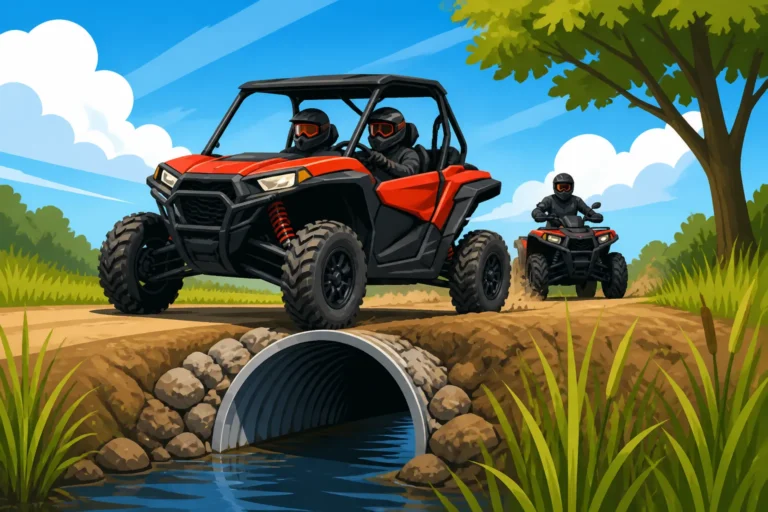
Furthermore, not all ditches are created equal. Some municipalities or counties may have specific ordinances that restrict or prohibit ditch riding entirely. Ditches might also be on private property, and riding without permission is trespassing. Also, ditches often include culverts, mailboxes, and hidden obstacles that can be extremely dangerous. Relying on the "ditch riding is always okay" myth can lead to accidents, fines, and property damage. Always consult local regulations and maps, and remember that even where permitted, safe and responsible operation is paramount. You can get a deeper dive into these rules by reviewing [Minnesota's Ditch Riding Rules].
Assuming Farm Exemptions Cover Everything
Another common misconception revolves around the agricultural and utility exemptions. Many riders mistakenly believe that if they attach a small trailer or use their UTV to haul some firewood, it automatically qualifies as a "utility" machine and is therefore exempt from standard road-riding rules. This is a dangerous oversimplification. Minnesota's farm and utility exemptions are typically very specific and narrow in their application. They are primarily intended for genuine agricultural operations or specific work tasks that require the use of an OHV on a road for a limited purpose and distance.
Using your machine to get to your hunting stand, even if you're carrying gear, is generally not considered a farm or utility exemption. Similarly, plowing your own driveway with a UTV doesn't suddenly make it an "agricultural implement" for road use. Enforcement officers are trained to distinguish between legitimate utility use and recreational riding that's simply trying to leverage an exemption. If your primary purpose isn't direct agricultural production or a clearly defined utility task as described in the statutes, assume standard recreational riding rules apply. When in doubt, it’s always better to confirm with the DNR or local authorities.
The "Nobody Will Know" Mentality
This is the riskiest behavior of all. The idea that you can operate an ATV or UTV illegally – whether it's without a proper license, while impaired, or in a prohibited area – and simply "get away with it" because nobody will see you, is a gamble that rarely pays off. Minnesota's Conservation Officers, county sheriffs, and local police departments actively patrol popular riding areas, including ditches and designated routes. They are well-trained in ATV laws and often conduct targeted enforcement to ensure compliance and promote safety.
Moreover, members of the public, including homeowners along rural roads, are often vigilant and quick to report illegal or unsafe ATV operation. You might think you're out of sight, but it only takes one phone call for an officer to be on their way. The consequences of getting caught can range from significant fines to vehicle impoundment, loss of driving privileges, and even criminal charges, especially in cases of impaired operation. It's simply not worth the risk. Operating your ATV or UTV responsibly, legally, and with the proper driver's license or certification is not just about avoiding penalties; it's about contributing to a positive image for all riders and ensuring the safety of yourself and everyone else who shares Minnesota's beautiful outdoors and roadways.
Disclaimer
This article is for general informational purposes only and does not constitute professional advice. Laws, prices and regulations vary by location and change over time. Consult a qualified professional for guidance on your specific situation.