Doubling Up on a One-Seat Machine in the Ditch
We've all been there: you're heading out for a fun day of ditch riding in Minnesota, maybe with a friend who doesn't have their own machine, or a spouse who just wants to tag along and enjoy the scenery. Your buddy's ATV is a single-seater, but you think, "It's just for a short bit, what's the harm?" This guide dives deep into why doubling up on a one-seat machine, especially in Minnesota's roadside ditches, is a risky move both legally and for your safety, and what you should consider instead.
Why Minnesota Restricts Passenger Riding on Single-Seat ATVs
It might seem overly cautious, but the regulations around carrying passengers on ATVs, especially single-seat models, are deeply rooted in safety and the fundamental design of these machines. It's not about spoiling your fun; it's about preventing serious accidents.
Safety First: The Design Limitations of One-Seaters
Think about how a typical sport quad or even a smaller utility ATV is built. It's engineered specifically for a single rider. That means the suspension, the balance, the steering geometry, and the braking system are all calibrated for one person's weight distributed centrally over the machine. When you add a second person, even a lightweight one, you're introducing variables that the manufacturer never intended. The weight distribution shifts, often making the machine top-heavy or front/rear biased, which severely impacts its stability.
Imagine trying to navigate a rutted ditch, cross a small culvert, or make a sudden turn with that extra weight. The machine becomes much harder to control, increasing the risk of a rollover. The braking distance can be extended, and the ability to react quickly to obstacles is compromised. It's not just uncomfortable for the passenger; it fundamentally alters the handling characteristics in a way that can be dangerous for both the operator and anyone riding along.
Legal Interpretations and Manufacturer Guidelines
Minnesota law, much like in many other states, takes its cues from these fundamental engineering realities and manufacturer recommendations. When you look at the warning labels on virtually any single-seat ATV, you'll see a clear directive: "Operator Only. No Passengers." This isn't just a suggestion; it's a safety standard. Lawmakers and enforcement agencies, like the Minnesota DNR and local conservation officers, interpret these guidelines strictly because they're based on preventing injuries and fatalities.
The law typically states that to carry a passenger, an ATV must be "designed and equipped for passenger use." This means it needs a separate, securely mounted seat for the passenger, dedicated handholds for them to grip, and footrests or footwells for their feet. A machine with only a driver's seat and no additional provisions simply doesn't meet this standard. Trying to squeeze two people onto a seat designed for one, or having a passenger stand on the footpegs, directly violates these safety principles and, by extension, the legal requirements for riding on public land or road rights-of-way in Minnesota.
What Minnesota Law Says About Carrying Passengers
Navigating Minnesota's ATV laws can sometimes feel like a maze, especially when it comes to specific scenarios like passenger rules. However, the regulations are quite clear on carrying extra riders on machines not designed for them.
The Letter of the Law: Passenger Restrictions
Minnesota statutes are quite specific regarding passenger transport on ATVs. Generally, the law states that "an all-terrain vehicle may not be operated on public lands or waters or on the road right-of-way of a street or highway with more than the number of persons for whom the all-terrain vehicle was designed and equipped." This means if your ATV left the factory with only one seat, it's a one-person machine, plain and simple. It's not about how comfortable you think two people might be, or how short the ride is. It's about the machine's intended capacity.
This rule applies universally across Minnesota's public riding areas, including state trails, forest roads, and particularly those roadside ditches that many riders frequent. An ATV designed for a single operator does not magically transform into a two-seater just because you're riding with someone. Law enforcement officers, from local deputies to Minnesota Conservation Officers, are trained to spot these infractions. They're not just looking for registration stickers; they're also ensuring safe operating practices.
The "Ditch Riding" Nuance
When it comes to riding in Minnesota's ditches, it's easy to assume the rules might be a little looser since you're not on a designated trail. But that's a common misconception. The "road right-of-way of a street or highway" includes those ditches, and thus, all the same ATV laws apply there as they would on a formal trail. Doubling up on a single-seat ATV in a ditch is just as illegal as doing it on a state-managed trail system. You can learn more about the specific rules for riding in these areas in our article [Minnesota's Ditch Riding Rules].
Conservation officers often patrol these areas, especially during peak riding seasons, and they are diligent about enforcing safety regulations. They understand that ditches, with their varying terrain, hidden culverts, and proximity to traffic, can be particularly hazardous. An overloaded, unstable single-seat ATV is a recipe for disaster in such an environment. The risks aren't just legal; they're very real for the safety of both the operator and the passenger.
The Risks and Realities of Doubling Up
Beyond the letter of the law, there are significant practical dangers and financial implications that come with carrying an unauthorized passenger on a single-seat ATV. It's not just about getting a ticket; it's about putting lives and your financial well-being at risk.
Increased Risk of Accidents and Injury
Let's get real about the physics involved. An ATV is a dynamic machine, constantly shifting its weight and balance as you ride. When you have two people on a machine designed for one, the center of gravity is significantly altered, making it inherently unstable. This instability becomes acutely dangerous in the unpredictable terrain of a Minnesota ditch.
Imagine hitting an unseen culvert or a deep rut. With two people on board, the machine is much more likely to lose control, tip, or even roll over. The driver's ability to shift their weight and body to respond to changing conditions, a crucial skill for ATV operation, is severely hampered. For the passenger, who often lacks proper handholds or footrests, the risk of being thrown from the machine is extremely high. Injuries can range from sprains and broken bones to far more serious head and spinal trauma, especially if neither rider is wearing appropriate safety gear. These aren't just abstract possibilities; they are unfortunate realities that happen all too often.
Insurance and Liability Implications
This is where things can get incredibly complicated and expensive. If you're involved in an accident while carrying an unauthorized passenger on a single-seat ATV, your insurance policy could very well be deemed void. Most ATV insurance policies are written with the understanding that the machine will be operated according to manufacturer guidelines and state laws. Carrying a passenger when the machine is explicitly designed for one operator, and when state law prohibits it, gives the insurance company a legitimate reason to deny coverage. Our guide on [Minnesota ATV Insurance Cost] can give you an idea of what typical coverage entails, but those protections might not apply in illegal operating scenarios.
Without insurance coverage, you, as the operator, could be personally liable for all damages and medical expenses. This means if your passenger is injured, you could be on the hook for their hospital bills, lost wages, and pain and suffering. If you hit another vehicle or damage property, those costs would also fall squarely on you. A severe injury could easily lead to hundreds of thousands of dollars in medical costs, not to mention potential lawsuits. This financial risk alone should make any rider think twice. Understanding [Minnesota Liability Coverage for Riders] is crucial, but remember, the terms and conditions always apply.
Fines and Penalties for Non-Compliance
While the safety and liability risks are paramount, the immediate consequence you might face is a citation. Minnesota Conservation Officers and other law enforcement agencies are out there enforcing these rules, and they don't take passenger violations lightly. The fines for illegal operation, including carrying unauthorized passengers, can add up quickly.
These aren't just slap-on-the-wrist tickets; they can be substantial, often ranging into the hundreds of dollars. On top of the fine, you might incur court costs, and a violation could even impact your riding privileges. Consider our article [Minnesota Fines for Illegal Road Riding] for an overview of what you might face for other types of violations, which often have similar penalty structures. Enforcement officers prioritize safety, and if they see you operating a machine unsafely with an unauthorized passenger, they will act to ensure compliance. It's simply not worth the financial penalty or the potential for much more severe consequences.
Safer Alternatives for Riding with More Than One Person
So, what's a group of friends or a family to do if they want to hit the ditches or trails together? The good news is that there are much safer and perfectly legal ways to share the off-road experience in Minnesota.
The Side-by-Side Solution
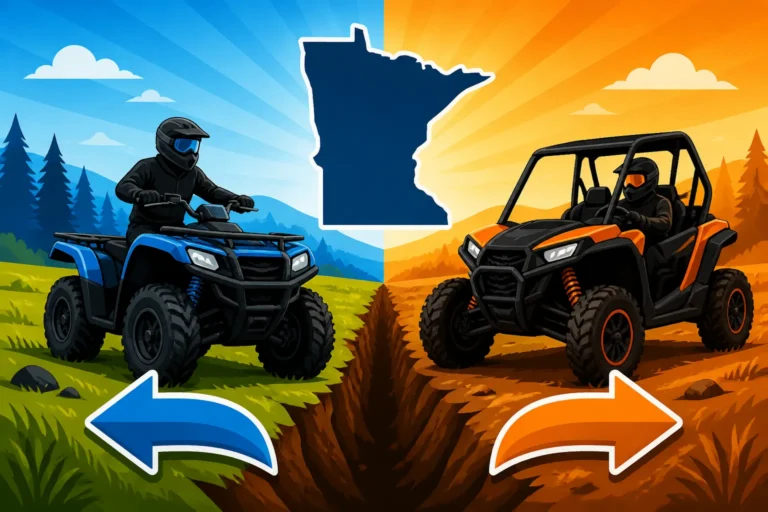
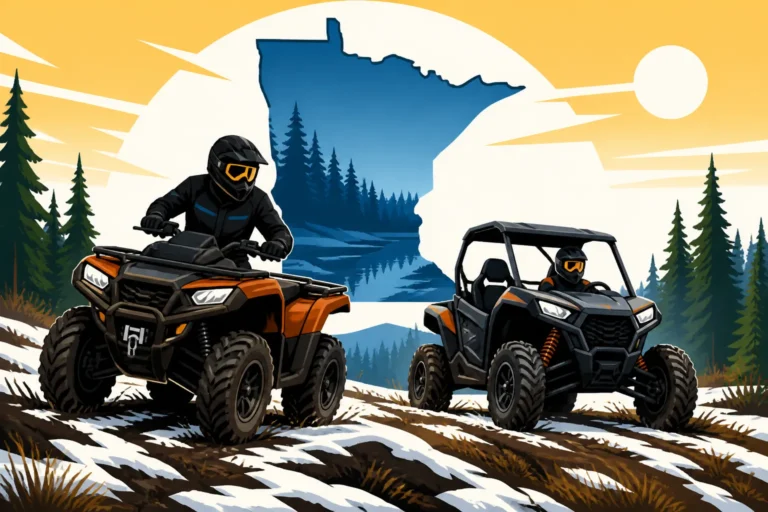
If riding with passengers is a regular occurrence or a primary reason you want to hit the trails, then a side-by-side (UTV) is truly the way to go. These machines are purpose-built for multiple occupants, offering comfortable seating, often with bucket seats, proper seatbelts, and a full roll cage for enhanced protection. They handle the extra weight of passengers much more gracefully, with wider stances and suspensions designed for heavier loads. When you're looking at a UTV, you're investing in a machine that prioritizes passenger safety and comfort, which means everyone can relax and enjoy the ride. Many models, like those from Polaris, Can-Am, or Honda, are designed from the ground up to carry two, three, or even four people safely.
Not only are they safer, but UTVs also offer a much more communal experience. Passengers can talk to each other, enjoy the same views, and share in the adventure in a way that's just not possible (or safe) on a single-seat ATV. Plus, with the abundance of aftermarket accessories available from reputable companies like SuperATV, you can enhance the comfort and utility of your side-by-side even further. Imagine adding a better roof, more comfortable seating, or cargo solutions designed specifically for group outings. These accessories are built to integrate seamlessly with multi-passenger machines, improving an already safe platform. For more on these machines, check out [Buying Your First Side-by-Side in Minnesota].
The "Two Machines" Approach
Sometimes the simplest solution is the best. If you have two single-seat ATVs, or if your friend has their own machine, the safest and most enjoyable way to ride together is for everyone to have their own ATV. This allows each rider to operate their machine independently, maintaining proper balance and control, and ensuring everyone's safety. The shared experience isn't diminished just because you're on separate machines; in fact, it can often be enhanced. You can still ride together, stop and chat, and explore the same beautiful Minnesota landscapes.
Riding your own machine provides a sense of freedom and control that a passenger simply doesn't get. It also means less strain on your equipment, potentially extending its lifespan and reducing maintenance issues. While it might require an initial investment in a second machine, or coordinating with a friend who has one, the benefits in terms of safety, compliance with the law, and pure riding enjoyment far outweigh the risks of trying to squeeze two people onto one ATV.
Aftermarket Accessories and What They Don't Do
It's tempting to look at aftermarket solutions that claim to convert a single-seat ATV into a passenger-capable machine. You might see "passenger seats" or "buddy seats" that strap onto the rear rack. While these might provide a cushioned place for a passenger to sit, it's critical to understand that they do not magically make your single-seat ATV legally or safely equipped for two people in Minnesota.
These accessories do not alter the fundamental design of the ATV's suspension, braking, or weight distribution. They don't add the necessary handholds or footrests in the right places, and crucially, they don't change how Minnesota law defines a passenger-ready machine. Even if you install a well-made accessory from a reputable brand, the core issue remains: the ATV itself isn't certified for two riders. In the eyes of the law, and more importantly, in terms of safety, adding a passenger seat to a single-seat ATV still constitutes illegal and unsafe operation. It's a key distinction that riders need to understand to avoid putting themselves and their passengers at risk of injury or fines. Stick to enhancing machines already designed for passengers, like adding quality gear to your UTV from a company like SuperATV, rather than trying to circumvent safety standards on a single-seat quad.
| Feature / Aspect | Single-Seat ATV (Designed for One) | Multi-Passenger UTV (Side-by-Side) |
|---|---|---|
| Legal for Passengers | Generally No (illegal in MN ditches/trails) | Yes (within manufacturer capacity) |
| Safety Design | Optimized for single rider balance/control | Multiple seats, seatbelts, roll cage, wider stance |
| Handling with Extra Weight | Dangerously compromised, unstable | Designed for multiple occupants, stable |
| Insurance Coverage | Risk of voided coverage in an accident | Typically covered for authorized passengers |
| Comfort for Passenger | None, unsafe, awkward, no proper restraints | Dedicated ergonomic seating, handholds, footrests |
| Typical Use Case | Solo recreation, specific work tasks | Group recreation, family outings, work crews |
| Common Accessories | Winches, plows, cargo racks | Roofs, windshields, doors, additional seating, SuperATV cargo solutions |
Disclaimer
This article is for general informational purposes only and does not constitute professional advice. Laws, prices and regulations vary by location and change over time. Consult a qualified professional for guidance on your specific situation.