Minnesota Trespass Rules Along Ditches
Riding an ATV or UTV in Minnesota's roadside ditches can be a fantastic way to access trails or simply enjoy a ride, but the confusion around where public property ends and private land begins often leaves riders feeling anxious about inadvertently trespassing. This guide aims to clear up those murky waters, providing a comprehensive look at Minnesota's trespass rules along ditches so you can ride with confidence and respect for landowners.
Understanding Minnesota's Road Right-of-Way
Before we can even talk about ditch riding, we need to understand what a "road right-of-way" actually is in Minnesota. It's not just the paved surface you drive your car on; it's a much broader area that extends beyond the road itself. This public easement is crucial because it defines the legal space where you might be allowed to operate your off-highway vehicle (OHV).
What Defines the Right-of-Way in Rural Areas?
In many rural parts of Minnesota, especially on county and township roads, the right-of-way can extend quite a distance from the center of the road. It typically includes the driving lanes, shoulders, and the ditches on either side. The exact width can vary, often from 66 feet (four rods) to 100 feet or more, depending on how the road was originally established or acquired. This isn't always marked with clear signs, which is a major source of frustration for riders trying to stay on the right side of the law. You might see a fence line or a tree line that looks like a property boundary, but it might still be within the public right-of-way.
The right-of-way is designed for public travel and utility access, which is why, under certain conditions, ATVs and UTVs are permitted to operate within it. However, the ditch itself is still part of this larger public space, even though it's not the primary travel lane. This distinction is incredibly important because just because you're in a ditch doesn't automatically mean you're on private land – but it also doesn't automatically mean you're safe from trespassing if you go too far.
The Role of County and Township Roads
County and township roads are often the arteries of Minnesota's ditch riding network. These roads, by their very nature, typically have established public rights-of-way that include the ditches. Unlike state highways, which have much stricter rules, county and township roads often provide more flexibility for ATV and UTV operation within their ditches. [Minnesota Rules on County Roads] go into more detail on this.
However, it's essential to remember that while the ditch may be part of the public right-of-way, the adjacent land is almost always private. This is where the line gets fuzzy and where accidental trespass can occur. Local ordinances can also play a huge role, with some counties or townships designating specific ditches or even entire road sections as open or closed to OHV use. Always check with local authorities or consult a county map if you're unsure about the local rules in a specific area.
Where Does the Ditch End and Private Land Begin?
This is the million-dollar question for many ATV and UTV riders in Minnesota. Knowing the exact boundary between the public ditch and private property is critical to avoid accidentally trespassing. It's often not as clear-cut as a fence line or a "No Trespassing" sign, leading to considerable anxiety for riders trying to do the right thing.
Understanding Property Lines Adjacent to Ditches
The property line adjacent to a road right-of-way can be surprisingly close to, or even within, what appears to be a ditch. In many cases, especially older rural roads, property lines extend to the center of the road, with the public holding an easement for the road and its associated right-of-way over that land. This means the actual ownership of the land under the ditch might technically belong to the adjacent landowner, even if the public has the right to use it for specific purposes.
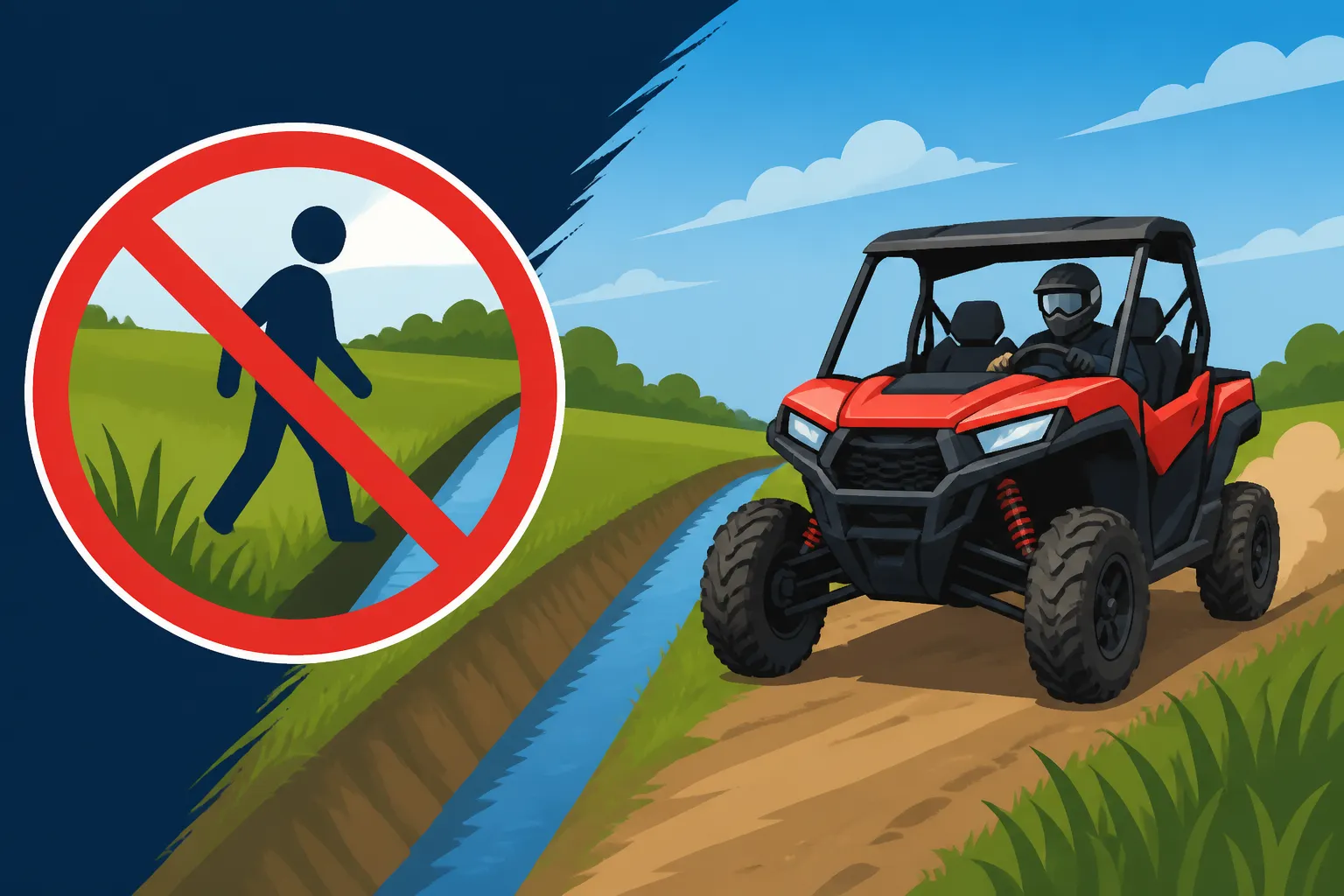
The critical distinction for riders is whether their machine is operating within the public easement (the right-of-way) or whether they have crossed that invisible line onto the private land beyond the easement. The ditch itself usually falls within the public right-of-way, but if you venture too far up the bank, especially into fields or wooded areas, you've likely crossed into private property. This is why sticking to the bottom or lower slope of the ditch is generally the safest bet when riding.
Identifying Unmarked Boundaries
Identifying unmarked boundaries is where it gets really tricky, and it's a common frustration for riders. Many rural areas lack clear markers like fences, survey stakes, or signs indicating where the public right-of-way ends. What looks like an obvious boundary, such as the edge of a cultivated field, might actually be several feet or even yards inside the true private property line. Conversely, a seemingly wild, unkempt area might still be part of the public easement.
This ambiguity means riders often have to make educated guesses, which isn't ideal when facing potential legal consequences. One of the best strategies, though not always practical, is to consult county plat maps or online geographic information system (GIS) tools, which can show property lines relative to road rights-of-way. However, most riders aren't pulling up a map on their phone mid-ride. The general rule of thumb when unsure is to err on the side of caution: if it looks like anything other than the immediately defined ditch, stay out.
The Impact of Private Driveways and Field Approaches
Private driveways and field approaches are another common area of confusion. When you're riding a ditch, and you come across a culvert or a flattened area that leads into a private drive or a farm field, what are the rules? Generally, these areas are also part of the public right-of-way, designed to allow access to the private property. However, riding up a private driveway or into a private field, even for a short distance, is almost certainly trespassing. [Crossing a Driveway on a Minnesota ATV] is a related topic.
The goal when encountering these points is to continue your ditch ride across the access point, remaining within the public right-of-way, and not to enter the private land. It requires careful navigation and a keen eye to differentiate between merely crossing an access point and actually entering private property. This is especially true for farm fields where the ditch might blend seamlessly into the cultivated land – you need to be acutely aware of that transition point.
Legal Definition of Trespass for OHVs in Minnesota
Trespass isn't just a polite suggestion; it's a legal offense with real consequences in Minnesota. For ATV and UTV riders, understanding the specific legal definitions is paramount to staying out of trouble. It often boils down to being on someone else's property without permission.
What Constitutes Trespassing with an ATV or UTV?
In Minnesota, trespassing with an ATV or UTV generally occurs when you operate your machine on private land without the express or implied permission of the landowner. This includes venturing beyond the public right-of-way into fields, wooded areas, or even just the upper bank of a ditch that is clearly part of private property. It doesn't matter if there's no "No Trespassing" sign; if the land isn't public, it's considered private unless you have permission.
The intent often doesn't matter as much as the act itself. Even if you genuinely didn't know you were on private land, you could still be cited for trespass. This is why the ambiguity of ditch boundaries is such a problem for riders. The law aims to protect landowners' rights to their property, and operating an OHV can be particularly disruptive, leading to damage to crops, fences, or natural habitat, which is why landowners are often quick to enforce these rules.
Penalties and Fines for Trespass
The penalties for trespassing with an ATV or UTV in Minnesota can range from a warning to significant fines, and in some cases, even jail time, especially if property damage occurs or if it's a repeat offense. A first-time offense typically results in a petty misdemeanor or misdemeanor charge, carrying a fine. However, if you cause damage to property, such as riding through a planted field or damaging fences, the penalties can escalate to gross misdemeanor charges, which come with much higher fines and potential restitution payments to the landowner. [Fines for Riding Minnesota Unregistered] can also compound these issues if your machine isn't properly registered.
Beyond the legal penalties, there's also the social cost. Trespassing erodes trust between landowners and the riding community, potentially leading to more restrictions on public ditch and trail access for everyone. It's a lose-lose situation that responsible riders work hard to avoid, often by taking extra precautions or seeking permission.
"No Trespassing" Signs and Their Legal Weight
While you technically don't need a "No Trespassing" sign for land to be considered private, these signs definitely amplify the legal consequences if you ignore them. In Minnesota, a clearly posted "No Trespassing" sign serves as explicit notice that entry is forbidden. If you proceed onto land marked with such signs, it can demonstrate a greater disregard for the law and the landowner's wishes, potentially leading to harsher penalties than if the property was unmarked.
Landowners often post these signs precisely because they've had issues with trespassers, including OHV riders. They are a clear warning that you are entering private domain. Always respect these signs; they are not merely suggestions but direct legal commands. If you see one, it's a definite signal to turn back or find an alternative route that stays strictly within the public right-of-way.
Obtaining Permission for Ditch Riding on Private Land
The easiest and most legally sound way to avoid trespassing is to simply obtain permission. While you generally won't need permission to ride in a legal public right-of-way ditch, if you even think you might stray onto private land, seeking permission is always the best course of action. It fosters goodwill and ensures you're riding legally.
How to Ask for Landowner Permission
Asking for permission might seem daunting, but it's usually quite straightforward. The best approach is to be polite, respectful, and upfront. Start by identifying yourself and your purpose. Explain that you enjoy riding your ATV or UTV and are looking for areas where you can ride legally and safely. Specifically ask if you can ride the ditch adjacent to their property, emphasizing that you understand it's their land and want to respect their boundaries.
It's helpful to be able to point out exactly where you intend to ride, perhaps by using a map or showing them the specific section of the ditch. Offer to provide your contact information, and assure them you will stick to the agreed-upon areas and will leave no trace. Building a positive relationship can open doors not just for you but for other riders as well. Remember, a polite "no" is always better than a citation for trespass. [Riding a Friend's Property in Minnesota] is a related resource for broader private land access.
The Importance of Written Permission
While verbal permission is legally valid, written permission is always preferable. It eliminates any ambiguity and provides a clear record for both you and the landowner. A simple written agreement could include:
- The names of the landowner and rider.
- A description of the property where permission is granted (e.g., "the ditch along the north side of Elm Road, bordering my property at 123 Maple Lane").
- The dates or duration for which permission is granted.
- Any specific conditions or restrictions (e.g., "stay out of cultivated fields," "no riding after dark," "only operate Class 1 machines").
- Signatures of both parties.
This simple document can protect everyone involved. If a conservation officer or sheriff's deputy questions you, having written permission in hand can quickly resolve the situation. A quick note, a signed map, or even an email exchange can serve this purpose. Make sure you have [Do You Carry Papers on a Minnesota Trail?] with you while riding.
Respecting Landowner Decisions (Yes or No)
Whether a landowner grants or denies permission, it's absolutely crucial to respect their decision. Their land is their private domain, and they have every right to control who accesses it and under what conditions. If they say no, accept it gracefully. Arguing or trying to persuade them will only create animosity and likely harden their stance against all riders.
If permission is granted, treat their land with the utmost respect. Stick to the agreed-upon areas, ride responsibly, and leave no trash. Damage to property, excessive noise, or disrespect for their privacy can quickly lead to revoked permission and a negative reputation for the riding community. Companies like SuperATV offer products such as quiet mufflers and exhaust systems that can help reduce noise pollution, which is often a concern for landowners. Being a good neighbor is key to maintaining access and fostering positive relationships.
Common Misconceptions About Ditch Riding and Trespass
There are many myths and misunderstandings floating around about ditch riding rules in Minnesota. Clearing these up can help riders make more informed decisions and avoid unintentional trespass.
"If There's No Fence, It's Fair Game"
This is one of the most dangerous and inaccurate misconceptions out there. The absence of a fence does not mean the land is public or open for riding. Property lines are legal boundaries, not necessarily physical ones. Many rural properties, especially those adjacent to ditches, do not have fences for various reasons, but they are still private land. As discussed earlier, the public right-of-way is a specific, legally defined corridor, and anything beyond it is private unless otherwise designated.
Relying on the "no fence, no problem" logic is a surefire way to find yourself facing a trespass citation. Always assume land is private unless you have clear information or signage indicating it's public or you have specific permission from the landowner. A good rule of thumb: if it's not clearly part of the established road ditch and you don't know who owns it, stay off.
"I'm Just Passing Through, So It's Not Trespassing"
Another common misconception is that if you're only on private land for a short period or just "passing through," it doesn't count as trespassing. This is simply not true. Any unauthorized entry onto private property, no matter how brief, constitutes trespass. Whether you're cutting across a field corner to bypass an obstacle in the ditch or just briefly pulling off the ditch onto private property to adjust your gear, you are technically trespassing.
The legal definition of trespass doesn't differentiate based on duration or intent to cause harm. The act of being on private property without permission is the offense. It's crucial for riders to maintain vigilance and understand that even a momentary deviation from the public right-of-way can lead to legal issues.
"It's Agricultural Land, So It's Less Strict"
This couldn't be further from the truth. In fact, riding on agricultural land can sometimes lead to more severe penalties due to potential damage to crops, soil, or livestock. Farmers and landowners rely on their land for their livelihood, and unauthorized vehicle traffic can cause significant financial losses and damage that takes time and effort to repair. [Minnesota Rules for Farm and Utility Machines] exist, but they apply to the owner's use, not public access.
Many landowners are particularly protective of their fields and pastures. Operating an ATV or UTV in these areas, even when unplanted, can compact soil, spread invasive weeds, or disturb livestock, leading to legitimate complaints and swift enforcement actions. Never assume that because land is used for agriculture, the rules are relaxed. If anything, they are often more strictly enforced.
Practical Tips for Staying Legal and Respecting Landowners
Navigating Minnesota's ditch riding rules requires diligence and a proactive approach. Here are some practical tips to help you stay legal and maintain good relationships with the rural community.
Utilize Available Mapping Resources
Before you head out, do a little homework. County GIS websites often have interactive maps that show property lines, public land, and sometimes even right-of-way widths. Apps like onX Offroad or other GPS mapping tools can be invaluable for identifying property boundaries in real-time while you're out riding. While these apps aren't always 100% accurate down to the inch, they provide a much better visual guide than relying solely on guesswork. [Finding a Minnesota DNR Trail Map] is also helpful for identifying designated public riding areas.
Having a general idea of the property layout in the area you plan to ride can help you anticipate potential boundary issues and plan your route to stay within legal riding areas. It's an investment of time that can save you a lot of hassle and potential legal trouble.
Stay Within the Defined Ditch Area
When riding in roadside ditches, make a conscious effort to stay within the clearly defined ditch channel and its immediate lower slopes. Avoid climbing too high up the bank or venturing into adjacent fields or wooded areas. The "defined ditch area" typically means the depressed area designed to carry water, along with the graded slopes immediately bordering the road.
If the ditch becomes indistinct or merges with a field, this is your cue to be extra cautious. In such cases, if you can't clearly see where the public right-of-way ends and private land begins, it's best to turn around or find another route that provides clearer boundaries. This is where a company like SuperATV, with its focus on off-road accessories, provides products like brush guards or rock sliders that might encourage a sense of invincibility – but remember, even with the best protection, you must still respect property lines!
When in Doubt, Turn Around
This is arguably the most important rule of all. If you are unsure whether you are on public or private land, or if you suspect you might be approaching a private property line, the safest and most responsible action is to turn around. It's better to miss a section of a ride than to face a trespassing charge, damage a landowner's property, or sour relationships within the community.
Your caution will be appreciated by landowners, and it helps maintain the positive image of responsible ATV and UTV riders. Eroding trust by pushing boundaries only leads to more restrictions for everyone. When in doubt, always default to respecting private property rights and seeking alternative routes.
| Scenario | Trespass Risk | Action to Take |
|---|---|---|
| Riding in a clear ditch | Low | Stay in the channel, respect local ordinances. |
| Ditch blends into field | High | Turn back, consult map, or seek permission. |
| "No Trespassing" sign visible | Very High | Do not proceed past the sign. |
| Unmarked property line | Medium | Assume private; if unsure, turn around or verify with map/landowner. |
| Crossing private driveway | Low (if crossing) | Ensure you do not ride up the driveway or enter the private property. |
| Riding off the ditch into woods | High | Do not enter; this is almost always private land. |
| Verbal permission only | Medium | Try to get written permission for clarity and proof. |
Disclaimer
This article is for general informational purposes only and does not constitute professional advice. Laws, prices and regulations vary by location and change over time. Consult a qualified professional for guidance on your specific situation.