Golf Carts and Low-Speed Vehicles in Minnesota
Navigating the rules for golf carts and low-speed vehicles (LSVs) on Minnesota roads can feel like trying to solve a particularly frustrating puzzle after a long week. You see neighbors zipping around in their golf carts, maybe heading to the lake or a local ice cream shop, and you think, "Hey, that looks convenient!" But then you hear stories about tickets or insurance nightmares, and the whole idea starts to feel like a legal minefield. It's a common struggle for folks who just want to understand what's legal, what's safe, and what might land them in hot water. This guide is designed to cut through that confusion, giving you a clear, realistic picture of where golf carts and LSVs fit into Minnesota's complex road rules.
The Core Distinction: Golf Carts vs. Low-Speed Vehicles (LSVs) in Minnesota
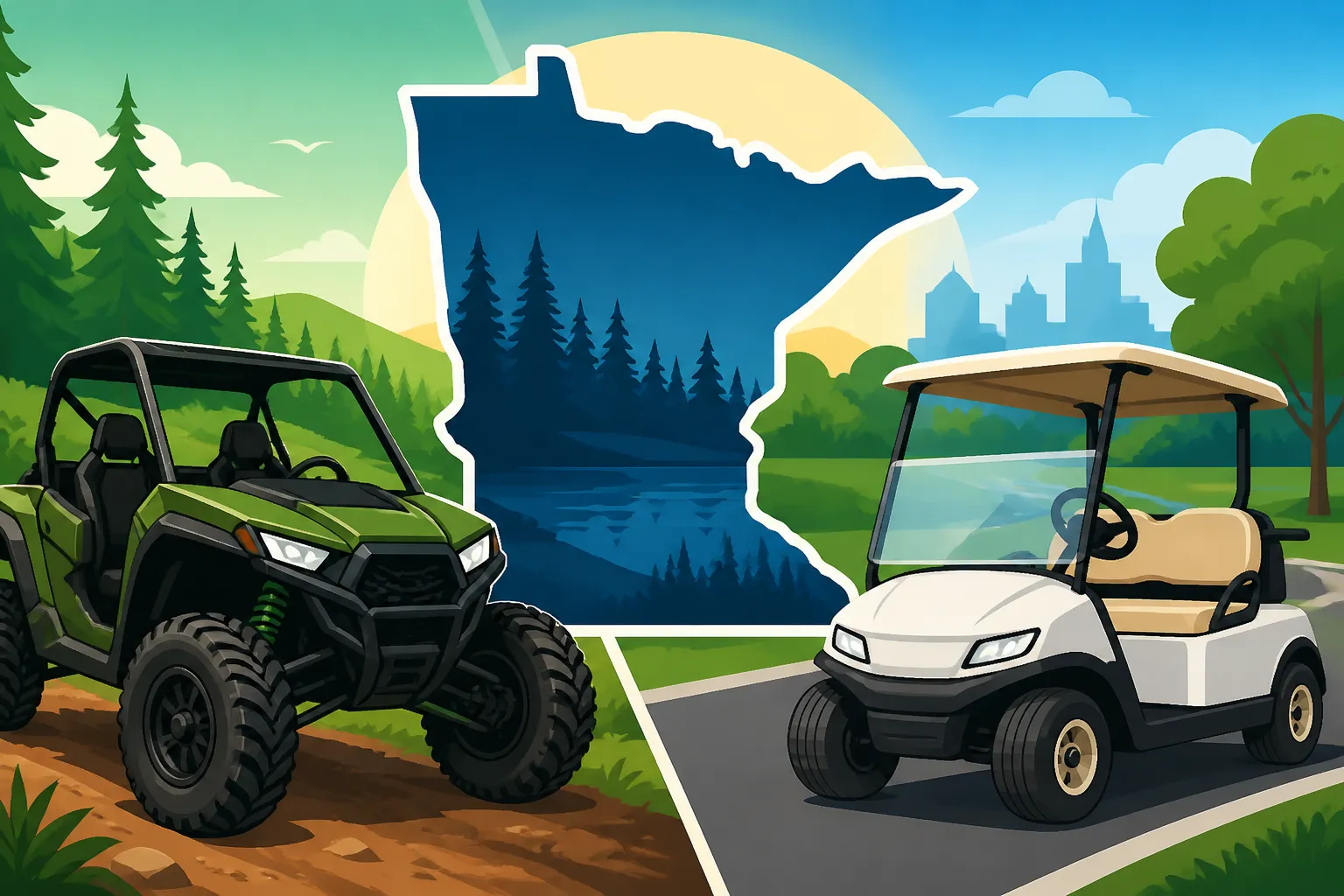
Before we dive into where you can drive these machines, it's absolutely crucial to understand that Minnesota law sees golf carts and low-speed vehicles (LSVs) as two fundamentally different beasts. This isn't just a matter of semantics; it dictates everything from where you can drive to what kind of safety equipment is required. Mixing these two up is one of the quickest ways to find yourself in a sticky situation with local law enforcement, or worse, in an unsafe predicament. It's a distinction many riders, even experienced ones, often get wrong, leading to avoidable headaches.
What Exactly is a Golf Cart in Minnesota Law?
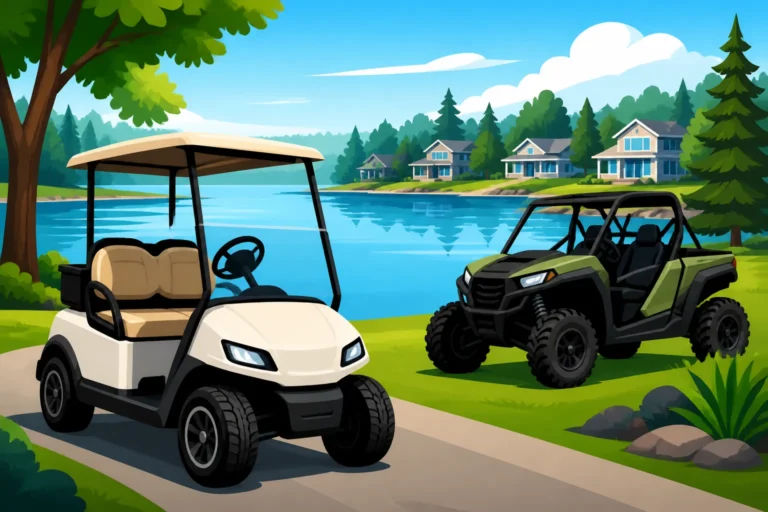
When Minnesota statutes talk about a "golf cart," they're generally referring to a vehicle that was originally manufactured for operation on a golf course. Think about it – the design prioritizes carrying a few clubs and people over manicured greens, not navigating busy intersections. These vehicles are typically built to travel at a leisurely pace, usually topping out somewhere around 15 to 20 miles per hour, sometimes even less. They're often open-sided, lack many of the safety features we take for granted in a standard passenger car, and have a relatively low center of gravity suited for flat terrain, not high-speed turns or sudden braking.
The key here is their intended purpose and design limitations. They're not built with robust crash protection, advanced lighting systems, or sophisticated braking mechanisms designed for road speeds. While they might be perfectly safe on a golf course or a large private property, their inherent design doesn't lend itself to the demands of public streets where they'd be interacting with heavier, faster traffic. This distinction forms the very foundation of why their use on public roads is so restricted in our state, acknowledging their recreational rather than transportation-oriented design.
Understanding Low-Speed Vehicles (LSVs) and Their Designations
In stark contrast, a Low-Speed Vehicle, or LSV, is a different creature entirely. These are vehicles that are explicitly manufactured and certified to meet federal safety standards for use on public roads, albeit with specific speed limitations. In Minnesota, an LSV is generally defined as a four-wheeled vehicle with an enclosed or open cab, designed to be operated at speeds greater than 20 miles per hour but not greater than 25 miles per hour. This speed range makes them suitable for local streets where traffic moves at a slower pace, but still keeps them off high-speed thoroughfares.
What really sets an LSV apart are the required safety features, which are much more aligned with conventional automobiles. We're talking about seat belts for all seating positions, proper headlights, taillights, brake lights, turn signals, reflective tape, a rearview mirror (and often side mirrors), a windshield, and a vehicle identification number (VIN). Many LSVs even come equipped with automotive-style steering and braking systems. These aren't just suggestions; they are federal requirements that ensure the vehicle can safely share the road with other traffic, within its designated speed envelope. This rigorous manufacturing and equipment standard is why LSVs have a much clearer, albeit still limited, legal pathway to public road use compared to their golf cart cousins.
Where Can You Actually Drive Them? Minnesota's Road Rules
This is often the million-dollar question, and the answer, frustratingly, isn't a simple "yes" or "no" across the board. Minnesota's laws for golf carts and LSVs on public roads are nuanced, designed to balance convenience with public safety. It's easy to look at a golf cart puttering down a city street in another state or even a neighboring town and assume the rules are universal, but that's a dangerous assumption to make here in the Land of 10,000 Lakes. Our state has clear guidelines, but also empowers local municipalities to add their own layers of regulation, which can make things feel like a patchwork quilt.
Golf Carts and the Limited Public Road Access
Generally speaking, golf carts are not permitted on state or county roads in Minnesota. The state's stance is pretty clear: vehicles not designed or equipped for road use, traveling at significantly lower speeds than other traffic, pose a safety hazard. This prohibition is in place to protect not only the golf cart operators but also other motorists who might not anticipate such a slow-moving, less visible vehicle. Imagine a golf cart pulling out onto a county road with a 55 mph speed limit; the speed differential alone creates an incredibly dangerous situation.
However, there are critical exceptions. Local municipalities – cities and townships – have the authority to create ordinances allowing golf carts on specific public roads within their jurisdiction. This is where the confusion often comes in. You might see golf carts on the streets of a small town and assume it's legal everywhere, but that town has likely passed a specific ordinance. These ordinances often come with stipulations: designated routes, specific hours of operation, requirements for additional safety features like a slow-moving vehicle sign, flags, or even enhanced lighting. For example, some cities near popular lakes might have routes specifically marked for golf cart use to allow residents to access the lake or local businesses. It's a completely different situation than using them on a wider county road. [Minnesota Cities That Allow ATVs on Streets] often have similar local ordinances for other recreational vehicles, underscoring the importance of checking with local authorities.
LSVs and Their Broader Road Privileges (With Caveats)
Low-Speed Vehicles, because they meet federal safety standards and have more robust equipment, enjoy a wider range of access to Minnesota roads than golf carts. An LSV is legally considered a motor vehicle and can be operated on roads with a posted speed limit of 35 miles per hour or less. This opens up many local streets, residential areas, and some collector roads, making them practical for short errands, commuting within a neighborhood, or getting to local amenities.
However, this access comes with significant caveats. LSVs are strictly prohibited from operating on highways, interstates, or any road with a posted speed limit exceeding 35 mph. This is primarily due to their maximum design speed of 25 mph. Mixing a 25 mph vehicle with 60+ mph traffic is inherently unsafe and therefore disallowed. Furthermore, like any other motor vehicle, LSVs must be properly registered with the state, the operator must hold a valid driver's license, and the vehicle must be insured. So, while an LSV offers more freedom than a golf cart, it also comes with more responsibilities and regulatory hoops to jump through, ensuring it integrates safely into the existing traffic flow. [Registering a Low-Speed Vehicle in Minnesota] outlines the process in detail.
Registration, Licensing, and Equipment Requirements
This section is where the rubber meets the road, quite literally. If you're planning to operate either a golf cart (where permitted) or an LSV on any public thoroughfare in Minnesota, you're going to encounter a series of rules regarding how your vehicle is documented, who can drive it, and what safety features it absolutely must possess. Ignoring these requirements isn't just a minor oversight; it can lead to fines, legal headaches, and critically, compromise your safety and liability in the event of an incident.
The Lowdown on Golf Cart Permits and Local Ordinances
When it comes to golf carts, Minnesota does not have a statewide registration process. You won't be heading to the Department of Motor Vehicles to get plates for your golf cart like you would for a car or even an ATV. This is a common point of confusion, as many people assume all vehicles on public roads require state registration. Because golf carts are generally considered recreational equipment designed for private property, the state doesn't mandate their registration for general road use.
However, as we discussed, if a city or township has an ordinance allowing golf carts on its streets, that ordinance will almost certainly stipulate a local permit process. This means you'll need to contact your specific city hall or township office to inquire about their rules. These local permits might involve an application fee, a brief inspection to ensure the golf cart meets local safety requirements (like a slow-moving vehicle sign, perhaps even enhanced lighting or a horn), and an agreement to operate only on designated routes. For instance, in a charming lake community, the town council might have decided that golf carts are essential for local commerce and access, but they'll want to make sure you're not driving around after dark without lights or zipping through the town square during peak hours. [Golf Carts in a Lake Community] often have specific ordinances you'll need to research. You might receive a sticker or a small placard to display on your cart to show compliance with local rules, but it won't be a state-issued license plate.
Full Compliance for Low-Speed Vehicles (LSVs)
For Low-Speed Vehicles, the rules are much more robust and are administered at the state level, much like any other motor vehicle. If you own an LSV and intend to use it on Minnesota roads with a speed limit of 35 mph or less, you must register it with the state. This process involves proving ownership, paying registration fees, and receiving a license plate. It's a clear-cut requirement, no different than what you'd do for your car or truck.
Beyond registration, the operator of an LSV must possess a valid Minnesota driver's license. This isn't a suggestion; it's a legal mandate, reinforcing the fact that LSVs are treated as road-worthy vehicles within their operating parameters. Furthermore, Minnesota law requires that all registered motor vehicles, including LSVs, carry liability insurance. This is incredibly important for financial protection in case of an accident. From an equipment standpoint, an LSV must come from the factory (or be certified by the manufacturer) with specific safety features: seat belts for all passengers, headlights, taillights, brake lights, turn signals, mirrors (rearview and potentially side mirrors), a windshield, and a vehicle identification number (VIN). These are non-negotiable and are what allow the LSV to be legally classified and operated on public roads. If you're looking to enhance an LSV with additional safety or utility features, perhaps for better visibility or cargo solutions, companies like SuperATV offer a range of accessories that can improve your riding experience and compliance, though remember, original factory certification is key for the LSV designation.
Essential Safety Features for Both
While the legal requirements differ significantly between golf carts and LSVs, there are universal safety considerations that every responsible operator should keep in mind. For golf carts, especially if you're lucky enough to live in a community with an ordinance allowing their use, it's wise to go above and beyond the minimum local requirements. Adding a slow-moving vehicle triangle, bright orange flags, and ensuring you have functional headlights and taillights (even if not strictly mandated by your local permit) can drastically improve your visibility to other drivers, particularly during dawn, dusk, or in inclement weather. Extra mirrors can also make a huge difference in your ability to monitor traffic around you.
For LSVs, while the equipment list is legally mandated, regular checks are crucial. Ensure all your lights are working, your seatbelts are in good condition, and your tires are properly inflated. An LSV's safety features are only effective if they are maintained and functional. Thinking proactively about visibility, whether through LED light bars for added brightness (where legal and appropriate) or simply keeping your mirrors clean, can prevent accidents. Always remember that even with full compliance, you're operating a vehicle that's smaller and slower than most other traffic, demanding extra vigilance and a defensive driving mindset. [Minnesota Headlight Rules After Dark] might not apply directly to golf carts, but the principles of visibility are universal for any night driving.
| Feature | Golf Cart (where permitted) | Low-Speed Vehicle (LSV) |
|---|---|---|
| Primary Use | Golf courses, private property | Short-distance public road transport |
| Maximum Speed | Typically 15-20 mph | 20-25 mph (by federal definition) |
| Road Access | Generally prohibited; local ordinances apply | Roads with speed limit ≤ 35 mph |
| State Reg. | No state registration required | Required: State vehicle registration |
| Local Permit | Often required by local ordinance | Not required (state registered) |
| Driver's License | Varies by local ordinance; often none | Required: Valid driver's license |
| Insurance | Often covered by homeowner's (private use) | Required: Motor vehicle liability |
| Required Equip. | Varies by local ordinance; minimal (e.g., SMV sign) | Headlights, taillights, brake lights, turn signals, mirrors, windshield, seatbelts, VIN |
Common Misconceptions and Local Variances
The landscape of rules for golf carts and LSVs in Minnesota is a tricky one, and it's rife with misunderstandings. What seems intuitive often isn't, and what's true in one town might be completely false just a few miles down the road. This variability is a major source of frustration for owners who simply want to enjoy their machines without breaking the law. It's easy to fall into traps of assumption, and that's precisely where many people get into trouble, either with law enforcement or, more critically, by putting themselves and others at risk.
The "It's Just a Small Car" Fallacy
One of the biggest misconceptions surrounding both golf carts and LSVs, especially the latter, is viewing them as simply "smaller cars" with all the same rights and protections. While LSVs are designed for road use, and indeed mimic many car features, they are not built to withstand the same forces as a full-sized automobile. Their lighter construction, lower top speeds, and typically open designs mean they offer significantly less protection in a collision. You might feel perfectly comfortable zipping along a 30 mph residential street, but that feeling of security can be deceptive if a larger vehicle fails to see you or misjudges your speed.
This fallacy often leads to riders taking liberties that they wouldn't with a regular car – maybe driving a bit too close to faster traffic, or assuming other drivers will always see and accommodate them. The reality is that the speed differential, even on a 35 mph road, makes LSVs much more vulnerable. While they have brake lights and turn signals, their size and less imposing presence can make them less noticeable in a busy traffic environment. Always remember that you're in a smaller, slower vehicle, and drive defensively, anticipating that others might not perceive you as readily as a larger car or truck. It's a matter of physics, not just legality.
Navigating City-Specific Rules and Exceptions
As we've touched on, Minnesota's approach to golf carts (and to a lesser extent, LSVs) is a patchwork of state law and local control. This means that while the state sets baseline regulations, individual cities and townships have the power to enact their own ordinances, which can significantly alter where and how these vehicles can be operated within their boundaries. This local variance is often confusing, and it means that a golf cart perfectly legal on the streets of one town might be strictly prohibited just across the city limits in another.
These local rules are typically created to address the unique needs and characteristics of a community. For instance, [Golf Carts in a Lake Community] might be allowed on specific routes to access boat launches or local shops, recognizing their utility in a resort-like setting. Other cities, perhaps with busier main roads or higher traffic volumes, might decide that golf carts pose too great a risk and forbid them entirely. The absolute best advice anyone can offer here is: do your homework. Before you ever take your golf cart onto a public road, even what seems like a quiet residential street, contact the city clerk or local police department in that specific municipality to confirm their current ordinances. Don't rely on what your neighbor said or what you saw someone else doing. Laws change, and enforcement can vary. Just because Appleton might have ATV-friendly streets, as discussed in [Appleton and Other ATV-Friendly Minnesota Cities], doesn't mean your specific town has the same leniency for golf carts.
Why Minnesota's Rules Exist: Safety First
It can feel like Minnesota's rules for golf carts and LSVs are overly restrictive, designed to make life harder for owners. However, these regulations are rooted in a very practical and critical concern: safety. The state's transportation agencies and lawmakers consider several key factors when crafting these laws, and at the top of the list is preventing accidents and protecting lives.
The primary reason for restricting golf carts from most public roads is the immense speed differential with other traffic. A golf cart traveling at 15 mph on a 45 mph road is essentially a stationary object in the eyes of an oncoming driver, leaving very little reaction time. Furthermore, golf carts lack crumple zones, airbags, and reinforced frames that provide even basic protection in a crash. LSVs, while better equipped, still face these challenges to a lesser degree. The rules also consider driver visibility – smaller vehicles are harder to see, especially in complex traffic environments or poor lighting. Finally, the ability to enforce traffic laws and ensure accountability (through registration and insurance) plays a significant role. These aren't arbitrary hurdles; they are considered necessary safeguards to mitigate the inherent risks of mixing these specialized vehicles with the broader road-going public.
Insurance, Penalties, and Responsible Operation
Understanding the legal framework for golf carts and low-speed vehicles in Minnesota is only half the battle. Just as crucial is knowing the practical implications of operating these machines, particularly when it comes to insurance coverage and the potential penalties for non-compliance. Beyond the letter of the law, there's also the overarching principle of responsible operation, which is paramount for your safety and the safety of everyone else sharing the road. Neglecting these aspects can turn a convenient ride into a financial disaster or, even worse, a tragic accident.
Insuring Your Golf Cart or LSV
When it comes to insurance, the distinction between a golf cart and an LSV really shines through, and understanding your coverage is critical. For golf carts used primarily on private property, such as a golf course, a large estate, or even a local permit-approved street, your homeowner's insurance policy might offer some limited liability coverage. This is a big "might," and it's absolutely vital to check with your specific insurer to understand the exact scope of coverage, any exclusions, and what happens if you take the golf cart off private land onto a public road. Many homeowner's policies will explicitly exclude coverage for vehicles operated on public roads, regardless of local ordinances. If you're using a golf cart on public roads, even with a local permit, you might need to seek out a specialized recreational vehicle policy to ensure adequate liability coverage.
For Low-Speed Vehicles (LSVs), the insurance picture is much clearer: you must have dedicated motor vehicle liability insurance. Since LSVs are registered with the state as motor vehicles, they fall under the same insurance requirements as cars, trucks, and motorcycles. This means carrying at least the minimum liability coverage mandated by Minnesota law. This insurance protects you financially if you're at fault in an accident, covering property damage and bodily injury to others. Without this coverage, you could be personally responsible for hundreds of thousands of dollars in damages, which is a risk no one should take. While the specific costs will vary, it's worth noting that [Minnesota ATV Insurance Cost] can give you a ballpark idea of what similar recreational vehicle insurance might run, though LSV insurance will likely be more akin to a small car policy. Don't skip this step – it's a non-negotiable part of responsible LSV ownership.
What Happens If You Break the Rules?
Operating a golf cart or LSV on Minnesota public roads outside of the established legal framework can lead to a host of unpleasant consequences. For golf carts, if you're caught operating one on a state or county road where it's explicitly prohibited, or on a city street without the proper local permit, you could face citations and fines. These fines can add up quickly, especially if you're considered a repeat offender. Depending on the severity and local ordinances, your golf cart could even be impounded. It's a costly lesson to learn, often outweighing the convenience you sought by using the cart in the first place.
For LSVs, the penalties can be more severe because they are classified as motor vehicles. Operating an unregistered LSV, or one without proper insurance or a valid driver's license, is akin to driving an unregistered, uninsured car – and the penalties reflect that. You could face significant fines, points on your driving record, suspension of your driving privileges, and even impoundment of your vehicle. In the event of an accident while operating an unregistered or uninsured LSV, the financial and legal ramifications can be devastating, far beyond a simple traffic ticket. This is why understanding [Minnesota Fines for Illegal Road Riding] is crucial, as the state treats such infractions seriously, whether on an ATV or an LSV.
Being a Responsible Operator
Beyond simply adhering to the letter of the law, responsible operation of a golf cart or LSV in Minnesota demands a heightened sense of awareness and caution. These vehicles, by their nature, are different from standard cars, and operating them safely requires a specific mindset. Always prioritize visibility: consider adding extra reflective tape, bright flags, or even an aftermarket horn if your golf cart doesn't have one. SuperATV offers a variety of products, from mirrors to enhanced lighting kits, that can greatly improve your visibility and awareness, making your ride safer for everyone.
Always obey posted speed limits, even if you feel you could go faster. Remember, the 25 mph limit for LSVs is there for a reason. Adhere to all traffic laws – stop signs, traffic lights, and right-of-way rules apply to you just as much as to any other driver. Avoid distractions, both from within your vehicle (passengers, phones) and from the surrounding environment. Be courteous to other drivers and pedestrians, signaling your intentions clearly and giving way when appropriate. Driving defensively means anticipating potential hazards and assuming other drivers might not see you. By being a vigilant, prepared, and law-abiding operator, you not only ensure your own safety but also help maintain a positive image for golf cart and LSV use in Minnesota communities. [Minnesota Road Rules Riders Get Wrong] highlights common pitfalls that can easily apply to LSV and golf cart operators who aren't careful.
Disclaimer
This article is for general informational purposes only and does not constitute professional advice. Laws, prices and regulations vary by location and change over time. Consult a qualified professional for guidance on your specific situation.