Minnesota Rules on Frozen Lakes and Ice Roads
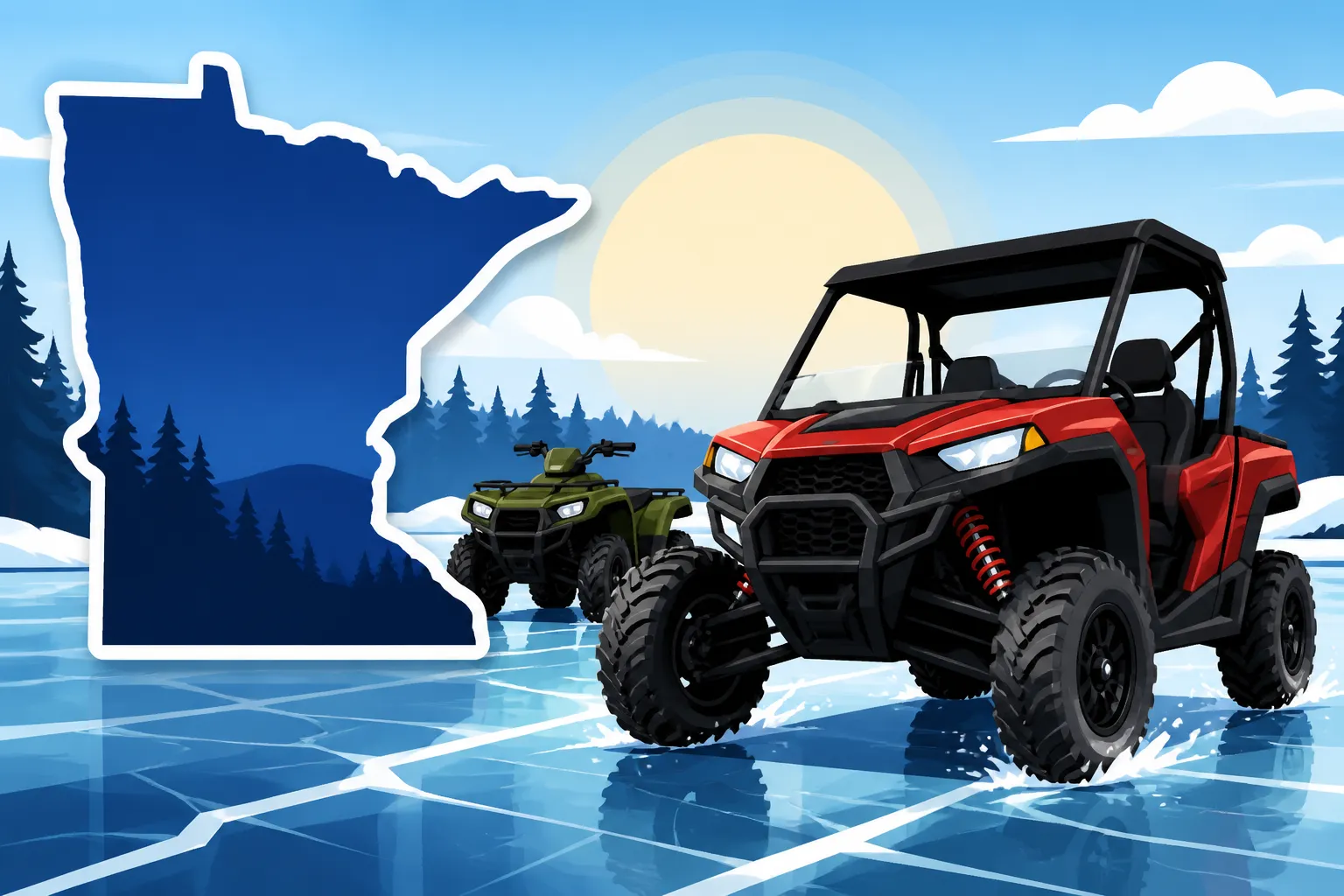
The appeal of Minnesota's frozen lakes in winter is undeniable. Miles upon miles of shimmering, white expanse stretch out, offering a unique playground for recreation, especially for those of us who love our ATVs and UTVs. But here’s the thing: while the ice might feel like a wild frontier, it’s not a lawless one. Many riders get out there thinking basic rules are suspended, only to find themselves in dangerous situations or, worse, facing a conservation officer with a ticket book. This guide is here to unravel the specific Minnesota rules and crucial safety protocols for operating your off-highway vehicle on frozen lakes and designated ice roads, helping you enjoy the season safely and legally.
The Allure and Risks of Riding Minnesota's Frozen Waters
There's nothing quite like the feeling of piloting your ATV or UTV across a vast, frozen Minnesota lake. The crisp air, the endless horizon, the sense of freedom as you zip toward your favorite fishing spot or simply explore the winter landscape. It's a fundamental part of the Minnesota winter experience for so many of us, offering access to places that are otherwise unreachable, or just a whole new perspective on familiar terrain. This unique environment, however, comes with its own set of challenges and profound risks that demand respect and preparation.
Why We Love the Ice (and Why It's Tricky)
The sheer expanse of a frozen lake opens up a world of possibilities for off-highway vehicle enthusiasts. For ice anglers, it means being able to quickly cover ground, haul heavy ice houses, augers, and gear, and scout new fishing locations with ease. For recreational riders, it's a chance to enjoy wide-open spaces, experience the exhilaration of speed on a smooth surface, or simply take in the serene beauty of a snow-covered lake. It's an integral part of our winter culture, connecting friends and families to Minnesota's incredible natural resources.
However, this freedom comes with a significant caveat: the unpredictable nature of ice. Unlike solid ground, ice is a dynamic and constantly changing surface, subject to temperature fluctuations, currents, snow cover, and hidden hazards. What looks like solid, uniform ice can hide pockets of thin ice, slush, or dangerous pressure ridges. The cold water beneath presents a real and immediate danger if you do break through, and the vastness of many lakes means help can be a long time coming. This inherent unpredictability is precisely why specific rules and a healthy dose of caution are not just recommendations, but absolute necessities.
Minnesota's long winters and countless lakes create this vibrant ice-riding culture, but they also amplify the need for awareness. From the massive Lake of the Woods to the smaller, more intimate fishing lakes, each body of water presents its own character and potential hazards. Understanding these nuances, and knowing that the state has established clear guidelines for your safety, is the first step toward a successful and enjoyable ice season. It’s about embracing the adventure responsibly, not recklessly.
General Principles for Safe Ice Operation
Operating any off-highway vehicle on ice starts with a common-sense approach that prioritizes safety above all else. This isn't just about avoiding a ticket; it's about coming home safe. The most fundamental principle is to always assume there's a risk, no matter how good the ice looks or how many other people are out there. Conditions can change rapidly, and what was safe an hour ago might not be now. Always check local ice conditions, talk to bait shops, resorts, and fellow anglers, and never venture out alone, especially on unfamiliar bodies of water. Having a buddy system means someone is there to help if something goes wrong, or at least to call for help.
Beyond personal safety, there's a shared responsibility to respect others enjoying the ice. Frozen lakes are essentially multi-use recreational areas, shared by snowmobilers, ice anglers in various types of shelters, cross-country skiers, and even brave ice skaters. Being mindful of your speed, noise, and wake (yes, even on ice, passing too close can shake an ice house or startle someone) contributes to a positive experience for everyone. Loud exhausts, excessive speed near ice fishing communities, or buzzing too close to quiet areas can quickly turn a peaceful day into a frustrating one for others. It's a tight-knit community on the ice, and courtesy goes a long way. This is particularly true concerning [Minnesota Noise Rules Near Lake Homes], where residential areas might be close to lake access points.
Finally, environmental awareness is just as crucial on ice as it is on a dry trail. Avoid sensitive shoreline areas, dispose of all trash properly (including fishing line and bait containers), and make sure your machine isn't leaking fluids onto the ice. The "leave no trace" ethic extends to frozen waters. It ensures that these pristine environments remain beautiful and accessible for generations to come. When you retrieve your ice house or fishing gear, always do a quick sweep of your area to ensure nothing is left behind that could become litter once the ice melts.
Deciphering Minnesota's Regulations for ATVs and UTVs on Ice
When you take your ATV or UTV out onto a frozen lake in Minnesota, you're not entering an unregulated wild zone. Far from it. The Minnesota Department of Natural Resources (DNR) and other state agencies have clear guidelines in place to ensure safety and preserve the environment. These rules are designed to protect both the riders and the fragile ecosystems of our lakes. Ignoring them isn't just risky; it's illegal.
The Law's View: Ice as a Public Right-of-Way
In Minnesota, once a lake is sufficiently frozen, it generally falls under the umbrella of public lands, meaning state laws that apply to off-highway vehicles on trails, ditches, or roads also extend to the ice. This isn't some obscure legal technicality; it’s a critical aspect of responsible riding. It means that your ATV or UTV needs to be properly registered and display current decals, just as it would if you were riding a designated trail system. While it might seem counterintuitive to think of a frozen lake as a "road right-of-way," the legal framework often treats it as such to ensure consistent regulation and safety standards.
This interpretation means that general ATV laws like those governing equipment requirements are in full effect. For instance, your machine must have functional headlights and taillights, especially given the low light conditions often encountered during winter days or if you're riding after sunset. [Minnesota Headlight Rules After Dark] are not just for land trails; they're vital on the ice, where visibility can quickly diminish due to snow squalls or blowing snow. Your muffler must meet state noise requirements, and spark arresters are mandatory to prevent fires, even on a frozen surface where dry grass might be exposed along the shoreline or near access points.
Furthermore, specifically designated "ice roads" are often managed with even more stringent guidelines, mimicking temporary public roads on land. These are often plowed and maintained by resorts or local associations to provide access for ice fishing and other activities. When you're on a marked ice road, you should expect to follow traffic laws similar to those on a regular road, including speed limits, yielding to oncoming traffic, and staying on the designated path. These roads often have depth limitations or specific weight restrictions, making them quite distinct from simply traversing open ice. Understanding that these legal frameworks apply helps ensure everyone's safety and prevents conflicts with other ice users.
Ice Thickness: The Golden Rule of Safety
There is perhaps no rule more critical for ice safety than understanding and respecting ice thickness. The Minnesota DNR provides clear, life-saving guidelines, and these are not suggestions—they are minimums. The general rule of thumb is "4 inches for ice fishing or other foot travel, 5-7 inches for a snowmobile or ATV, 8-12 inches for a small car, and 12-15 inches for a medium truck." But even these are generalities. The reality is that ice thickness can vary dramatically within a few feet, making constant vigilance and checking multiple spots absolutely essential. It only takes one thin spot to turn a fun day into a life-threatening emergency. Knowing the specific recommended [Ice Thickness a Machine Needs] before venturing out is not just smart; it's mandatory for your survival.
It's important to differentiate between clear, newly formed ice, which is generally strong, and "white" or "snow" ice. Snow ice, formed from frozen slush or snow, can be half as strong as clear ice. This means if the guideline calls for 5-7 inches of clear ice for your ATV, you might need double that for snow ice. Always be suspicious of ice that looks opaque, slushy, or discolored. If you see areas where the ice has buckled or pressure ridges have formed, avoid them entirely. These are unstable areas where ice is constantly moving and cracking, creating dangerous weak spots that are invisible from the surface.
Numerous factors can affect ice thickness and strength. Strong currents from rivers or inlets, underwater springs, and even large schools of fish can thin ice from below. Snow acts as an insulator, preventing ice from thickening as quickly, and can also hide dangerously thin spots. Warm spells, even just a few days above freezing, can degrade ice rapidly, especially near shorelines or points. Never rely solely on observations of other riders; what might have been safe for a light snowmobile could be disastrous for a heavy UTV. Always carry a spud bar or an auger to check the ice as you go, particularly when venturing into new areas or if conditions feel uncertain. Your life, and the lives of anyone riding with you, literally depend on it.
Visibility, Lighting, and Communication Requirements
When you're out on a frozen lake, visibility can be a major challenge, sometimes even more so than on land. Low winter sun angles, whiteout conditions from blowing snow, fog, or simply the vast, featureless expanse can make it difficult to see other machines, ice shelters, or hazards. That's why Minnesota's requirements for lighting are so crucial and apply fully to ice riding. Your ATV or UTV must be equipped with functional headlights, taillights, and reflectors. For riding in any conditions other than bright daylight, your headlights must be on. This isn't just so you can see; it's so others can see you. [Lighting Rules for Minnesota Night Riding] specifically outline these requirements, and they are rigorously enforced on the ice.
Beyond basic machine lighting, additional visibility measures are often a good idea, especially if you're pulling a trailer or an ice house. Many seasoned ice riders attach a brightly colored flag to their machine or their ice house, particularly if it's set up in a high-traffic area. A whip flag that extends above your machine, similar to those used in dune riding, can make you much more noticeable to other riders, especially in flat light conditions or when cresting a small snowdrift on the ice. These simple, inexpensive additions can prevent collisions and dramatically increase your safety profile.
Finally, while not a "requirement" in the same way lights are, effective communication is paramount on the ice. Cell service can be spotty or nonexistent on many of Minnesota's larger, more remote lakes. Always carry a fully charged cell phone, but don't rely on it as your sole means of communication. Consider a satellite messenger or a two-way radio, especially if you're venturing far from shore or into less populated areas. Letting someone know your plans—where you're going, when you expect to return—is a non-negotiable safety practice. In the event of a breakdown, getting stuck, or, worst-case, falling through, being able to call for help is your lifeline. The extreme cold means that even a minor issue can quickly escalate into a life-threatening situation if you can't communicate your predicament.
Essential Gear and Practices for a Successful Ice Season
Taking to Minnesota's frozen lakes isn't just about knowing the rules; it's about being prepared. The unique demands of the winter environment require specific gear and practices to ensure both your machine's performance and your personal safety. From specialized tires to survival kits, every item and every habit plays a role in a successful ice adventure.
Outfitting Your Machine for Ice Adventure
Your ATV or UTV needs to be ready for the unique challenges of ice and snow. One of the most critical upgrades for improved safety and control on frozen surfaces is tire choice. While standard ATV tires might work in light snow, they offer minimal grip on glare ice. This is where studded tires come into their own. [Studded Tires for Lake Ice] provide dramatically increased traction, allowing for better acceleration, braking, and steering control on slick surfaces. When you're looking for robust, aggressive tires designed for superior traction on slippery surfaces, or a powerful winch that can pull your UTV out of a sticky situation, brands like SuperATV offer a range of options that can truly make a difference in your ice riding confidence. Their heavy-duty suspension components or plow systems can also make navigating icy terrain or clearing a path significantly easier, adding another layer of versatility to your machine.
Beyond tires, a winch is not just a luxury; it's a necessity. Getting stuck in deep snow, slush, or even just high-centered on a pressure ridge is common on the ice. A reliable winch, properly installed and maintained, can be your best friend for self-recovery or for helping another stranded rider. Make sure you have all the necessary winch accessories: a tree saver strap (even though there aren't trees on the lake, it can be used on other machines or solid objects), a snatch block, and heavy-duty shackles. It’s also wise to carry a shovel, a tow strap, and perhaps even traction mats, especially if you plan on traversing areas with deep snowdrifts.
Proper machine maintenance is even more critical in extreme cold. Check your battery regularly, as cold temperatures drastically reduce battery efficiency. Ensure your fluids (oil, coolant, brake fluid) are all at appropriate levels and rated for cold weather. Belts can become brittle in the cold, so inspect them for cracks or wear. A breakdown far from shore on a frozen lake can turn dangerous quickly, so a pre-ride inspection of all critical components is essential. Consider carrying a small tool kit with basic wrenches, a spark plug wrench, and any specific tools needed for your machine's common issues.
Personal Safety and Survival Gear
When you head out onto the ice, what you carry on your person and in your machine is just as important as the machine itself. The absolute essentials for personal safety include a set of ice picks worn around your neck, easily accessible if you fall through. A throw rope in a bag, capable of floating, is another critical item for assisting someone who's gone through or for being rescued yourself. A whistle can be invaluable for signaling for help if you're disoriented or in distress, especially in whiteout conditions where shouting might be ineffective against the wind. And, of course, a well-stocked first-aid kit is a must for any outdoor adventure, but particularly so in the cold, where minor injuries can quickly become serious.
Dressing appropriately for the extreme cold is non-negotiable. Layering is key, allowing you to add or remove clothing as your activity level and the ambient temperature change. A good quality, waterproof, and windproof outer layer is essential. Many ice anglers and riders opt for a floatation suit, which not only provides warmth but also offers buoyancy if you do break through the ice, significantly increasing your chances of survival until help arrives. Always wear warm, waterproof boots, gloves or mittens, and a warm hat. Even if you're riding a UTV with an enclosed cab, you still need to be prepared for exposure should you need to exit the vehicle or if it becomes disabled.
Finally, always have an emergency survival kit. This should include items like a fire starter (waterproof matches or a lighter), emergency blankets or a bivvy, high-energy snacks, a thermos of hot beverage, and potentially a hand-crank or battery-powered weather radio. Signaling devices, such as flares or a signal mirror, can also be invaluable if you're in a remote area and need to attract attention. It’s a sad reality, but many accidents on the ice could have had better outcomes if riders were adequately prepared with basic survival gear.
Navigating Ice Roads and Designated Access Points
For many, the most common way to access vast stretches of ice is via designated ice roads. These are often plowed and maintained by local resorts, ice fishing outfitters, or community groups, making them the safest routes onto the lake. The beauty of these roads is their relative predictability; they're generally established where the ice is known to be thickest and safest. However, even on these maintained routes, vigilance is key. Always stick to the marked path, as venturing off it could lead you into thinner, unmonitored ice. Pay close attention to posted signs regarding speed limits, weight restrictions, and any temporary closures due to changing conditions.
Accessing the ice also involves navigating public landings or private property. When using public boat landings, ensure your vehicle and trailer are parked legally and safely, not obstructing access for others. If you're using an access point that crosses private land, ensure you have permission. [Minnesota Trespass Rules Along Ditches] apply to accessing public waters across private land, and the same principles extend to lake access points. Respect property owners, drive slowly and courteously, and leave no trash behind. Losing a valuable access point due to irresponsible behavior hurts the entire riding community.
While ice roads offer convenience, they don't eliminate all hazards. You must still be aware of pressure ridges—cracks or upheavals in the ice where two large sheets meet and push against each other. These can be significant obstacles, sometimes requiring slow, careful navigation or even presenting impassable barriers. Slush zones, often hidden under a layer of snow, can bog down even a powerful machine, so learning to identify and avoid them is crucial. Local knowledge is invaluable here; ask resort owners or experienced anglers about current conditions, known hazards, and the best routes to your destination. Remember, the ice is constantly changing, so what was safe yesterday might not be today.
| Activity/Machine | Minimum Safe Ice Thickness (Clear, New Ice) | Notes |
|---|---|---|
| Foot Travel | 4 inches | Always double check for white/snow ice; it's much weaker. |
| Snowmobile, ATV | 5-7 inches | Single machine, no heavy load. Increase for groups or cargo. |
| Small Car | 8-12 inches | Spread out vehicles; avoid driving close together. |
| Medium Truck | 12-15 inches | Including heavy UTVs with significant cargo or multiple passengers. |
| Heavy Truck | 16-20+ inches | For designated, monitored ice roads. Always verify local reports. |
Avoiding Common Traps and Legal Pitfalls on Minnesota's Ice
It’s easy to get caught up in the excitement of ice riding, but a false sense of security can lead to dangerous situations and legal trouble. Many riders mistakenly believe that once they're on the wide-open ice, the rules somehow become more lenient. This simply isn't true. Minnesota's laws for off-highway vehicles remain in effect, and conservation officers patrol our frozen lakes to ensure compliance and safety.
The Consequences of Reckless Behavior
One of the most dangerous myths circulating among some riders is that "anything goes" on the ice because "no one is watching." This couldn't be further from the truth. Minnesota's Conservation Officers actively patrol lakes, both visibly and sometimes undercover, to enforce all state regulations pertaining to ATVs and UTVs. They are well-versed in ice conditions and safety, and they have the authority to issue citations for violations. Thinking you can get away with reckless driving, excessive speed, or other dangerous behaviors is a surefire way to ruin your day and lighten your wallet.
The penalties for violating ATV regulations on the ice are the same as they would be on land. This includes fines for operating an unregistered machine, which can easily be checked by an officer on patrol. [Minnesota Penalties for an Unregistered ATV in Minnesota] are no small matter and certainly outweigh the cost of proper registration. Reckless driving, causing damage to the ice or shoreline, or operating in restricted areas can lead to significant fines and even loss of riding privileges. These aren't just minor inconveniences; they can impact your ability to enjoy winter recreation for years to come.
Beyond the legal ramifications, reckless behavior affects the safety and enjoyment of everyone else on the ice. Speeding through an ice fishing village, performing donuts near families, or driving too close to other machines creates unnecessary hazards and tension. It gives all ATV and UTV riders a bad name and can lead to increased restrictions or reduced access in the future. Part of being a responsible rider is understanding that your actions reflect on the entire community. The vastness of the ice should be an invitation to enjoy the freedom, not an excuse to act without consideration for others or the law.
Alcohol and Off-Highway Vehicles: A Dangerous Mix
This can't be stressed enough: the rules against operating an ATV or UTV while under the influence of alcohol apply fully on Minnesota's frozen lakes. Just as with a car on a road, a snowmobile on a trail, or a boat on open water, a DWI on an ATV carries serious legal consequences. [Minnesota Alcohol Limit on an ATV] is the same as for other motor vehicles, and conservation officers are equipped and authorized to conduct sobriety tests. Many people mistakenly believe that because they're "just out on the ice," the rules are different. They are not.
Operating any off-highway vehicle while impaired is incredibly dangerous under normal circumstances, but on the ice, the risks are compounded exponentially. Judgment, reaction time, and coordination are all impaired, making it far more likely you'll misjudge ice conditions, hit a pressure ridge, or fall through a thin spot. The extreme cold further exacerbates the effects of alcohol, increasing the risk of hypothermia and making any emergency situation far more perilous. A moment of impaired judgment could lead to your machine breaking through, and your chances of survival in freezing water while intoxicated are minimal.
The consequences of an ATV DWI are severe, including hefty fines, loss of driving and riding privileges, potential jail time, and a lasting mark on your record. But the true cost extends far beyond legal penalties. It puts your life, and the lives of any passengers or other ice users, at grave risk. There is zero tolerance for impaired operation on Minnesota's frozen lakes, and for good reason. Save the celebrations for when you're safely back on shore, or better yet, in the warmth of your cabin.
Insurance and Liability: What You Need to Know
While Minnesota does not mandate liability insurance for ATVs or UTVs used exclusively on private property, it is absolutely crucial for any machine operated on public lands, including frozen lakes. In the event of an accident, if your machine is involved in a collision with another ATV, snowmobile, ice house, or person, you could be held liable for significant damages. [Minnesota ATV Insurance Cost] can vary, but the peace of mind it provides, especially when facing the unpredictable environment of a frozen lake, is priceless. It's not just about covering your own machine; it's about protecting yourself from potential lawsuits and financial ruin.
If your machine falls through the ice, you could face not only the loss of your ATV or UTV but also potential costs associated with environmental cleanup and recovery operations. While this might be rare, it does happen, and the expenses can be substantial. Check with your insurance provider to understand exactly what your policy covers in an incident on a frozen lake. Does it cover recovery? Does it cover damage to your machine from water submersion? Does it cover liability if your machine, once submerged, causes damage to the environment or other property?
Understanding your liability is particularly important if you're pulling a valuable ice house or have passengers. If an accident occurs and you are deemed at fault, your insurance will be your primary defense. Having adequate coverage means that if, for example, your machine collides with an expensive portable ice house or injures another angler, you won't be personally responsible for the entire cost of repairs or medical bills. It’s a simple fact that a well-insured rider is a responsible rider, ready for the unexpected challenges that ice riding can present.
Enhancing Your Winter Wonderland Experience
For many, riding an ATV or UTV on a frozen lake isn't just about getting from point A to point B; it's an integral part of the larger winter experience. From ice fishing to exploring remote landscapes, these machines unlock unique opportunities that make the long Minnesota winter not just bearable, but truly enjoyable.
The Angler's Advantage: ATVs for Ice Fishing
For the dedicated ice angler, an ATV or UTV is an absolute game-changer. These machines provide unparalleled access to remote fishing spots that would be grueling to reach on foot or even by snowmobile with heavy gear. Imagine being able to scout multiple locations across a vast lake, quickly setting up your portable shelter, and then moving again if the bite isn't on. This mobility drastically increases your chances of finding fish and makes the entire experience more efficient and enjoyable. [Riding Out to a Fish House] becomes an adventure, not a slog, when you have the right machine.
The utility of an ATV or UTV for ice fishing extends beyond just transportation. They're perfect for hauling everything from heavy power augers and sonar units to propane tanks and all the comforts of a heated ice house. Many anglers attach tow-behind sleds or specialized hitches to pull their portable or permanent ice shelters. Whether it's a heavy-duty storage box to keep your auger bits secure, a tow bar designed for ice houses, or a durable windshield to cut the biting wind, the right accessories can make all the difference. Companies like SuperATV offer a wide selection of utility-focused gear that can withstand the harsh Minnesota winter, making your ice fishing expeditions more comfortable and efficient. The ability to bring more gear—warm chairs, extra food and drink, even a portable heater—means you can stay out longer, more comfortably, and truly immerse yourself in the angling experience.
Ultimately, an ATV or UTV transforms ice fishing from a laborious effort into a more accessible and rewarding pursuit. It opens up new lakes and new areas on familiar lakes, allowing you to explore and find those hidden honey holes. It’s about making the most of Minnesota's incredible winter fishing opportunities, extending your range, and enhancing your comfort levels even in the chilliest conditions.
Winter Adventures Beyond the Fishing Hole
While ice fishing is a huge draw, your ATV or UTV can unlock a myriad of other winter adventures on Minnesota's frozen lakes. Imagine cruising across a vast, snow-covered lake, camera in hand, capturing the stark beauty of the winter landscape. The quiet solitude of a mid-week ride, far from crowded areas, can be incredibly therapeutic. ATVs and UTVs provide access to remote cabins or hunting shacks that become virtually unreachable once the snow flies, allowing for winter getaways that would otherwise be impossible. Exploring the edges of state forests or wildlife management areas that border lakes can reveal unique winter wildlife tracks and scenic vistas.
For those adventurous enough, extended trips or even winter camping on the ice are possibilities, though they require meticulous planning and preparation. Properly secured, insulated shelters, ample fuel, food, and emergency supplies are paramount. It’s an experience that truly connects you to the raw beauty and power of a Minnesota winter, offering views and sensations you can't get any other way. However, these longer excursions amplify the need for advanced navigation skills, a deep understanding of ice conditions, and robust emergency preparedness.
The key to these extended adventures is respecting the environment and being fully self-sufficient. There are no gas stations or convenience stores out on the middle of a frozen lake. Planning your fuel consumption, knowing your machine's range, and carrying spare parts for common breakdowns become even more critical. It’s an opportunity for profound solitude and connection with nature, but it demands an equally profound level of responsibility and foresight.
Community and Courtesy on the Ice
The frozen lake is a shared space, a vibrant community during the winter months. Ensuring a positive experience for everyone means upholding a strong sense of community and courtesy. This includes being mindful of your speed, especially when passing ice houses, groups of anglers, or other recreationalists. A quick wave, a friendly nod, or even stopping to chat for a moment can foster goodwill and create a welcoming atmosphere. It’s about sharing the ice, not dominating it.
Noise levels are another critical consideration. While ATVs and UTVs are inherently motorized, excessively loud machines or unnecessary revving can disrupt the peace and quiet that many people seek on the ice. Be especially aware of [Minnesota Noise Rules Near Lake Homes] if you're operating close to shorelines or residential areas. Slow down and maintain a low profile when passing through areas where others are trying to enjoy the tranquility of winter. Similarly, when navigating around ice fishing shelters, give them a wide berth to avoid disturbing the occupants or potentially driving over sensitive fishing holes.
Finally, and perhaps most importantly, always practice the "pack it in, pack it out" philosophy. Leave the ice cleaner than you found it. This means picking up all trash, fishing line, bait containers, and any other debris. The integrity of our lakes, and continued access for all users, depends on our collective responsibility. When the ice eventually melts, any garbage left behind ends up in the water, polluting the environment. By being thoughtful, courteous, and respectful of both the environment and other users, we can ensure that Minnesota's frozen lakes remain a cherished winter wonderland for generations to come.
Disclaimer
This article is for general informational purposes only and does not constitute professional advice. Laws, prices and regulations vary by location and change over time. Consult a qualified professional for guidance on your specific situation.