Where a Ditch Meets a Driveway
There's nothing quite like the freedom of exploring Minnesota's vast network of trails and ditches on your ATV or UTV. But let's be honest, those open stretches often lead you into areas with more traffic, more homes, and more questions about where exactly you're supposed to ride. One of the most common head-scratchers, and frankly, one of the most frustrating, is figuring out the rules when your ditch ride abruptly meets a private driveway. It can feel like a legal minefield, leaving you wondering if you're breaking the law just by trying to get from point A to point B. This guide aims to clear up that confusion, offering practical advice and a clear understanding of Minnesota's rules for navigating those tricky driveway intersections safely and legally.
The Nuance of Ditch Riding in Minnesota: Why Driveways Are a Big Deal
Minnesota's ditch riding rules offer a fantastic way to connect trails and access areas, but they come with a fair share of complexities, especially when you encounter private property. It's not just about keeping your wheels off the paved road; it's about understanding the specific nuances of the unpaved right-of-way and where your legal access begins and ends, particularly at driveways. Many riders assume that if it's a ditch, it's fair game, but the reality is a bit more intricate, and misunderstanding these details can lead to fines or, worse, accidents.
Understanding Minnesota's General Ditch Riding Rules
First, let's nail down the basics. In Minnesota, the roadside ditch is generally considered part of the public road right-of-way, and for Class 1 and Class 2 ATVs and UTVs, it can often be a legal place to ride, connecting you to trails, private land, or even certain towns. You're typically expected to stay to the far right, drive with the flow of traffic, and adhere to specific speed limits, usually not exceeding 20 mph. The intent behind these rules is to provide a viable path for off-highway vehicles without impeding regular vehicle traffic or causing undue disturbance to adjacent private property. It’s a privilege, not an absolute right, and it comes with responsibilities. For a more comprehensive look, you can always check out [Minnesota's Ditch Riding Rules].
However, this doesn't mean every ditch, everywhere, is automatically open season. There are county and township ordinances that can further restrict or permit ditch riding, so local knowledge and checking with the local authorities or the Minnesota DNR are always smart moves. Just because you see tire tracks doesn't make it legal. These ditches serve a vital purpose beyond recreational riding; they're for drainage, utility access, and snow storage, and our riding is allowed with the understanding that we respect those functions and the adjacent landowners. It’s crucial to remember that while the ditch might be a public right-of-way, the land beyond it is almost always private property.
The Legal Expectation When You Encounter a Driveway
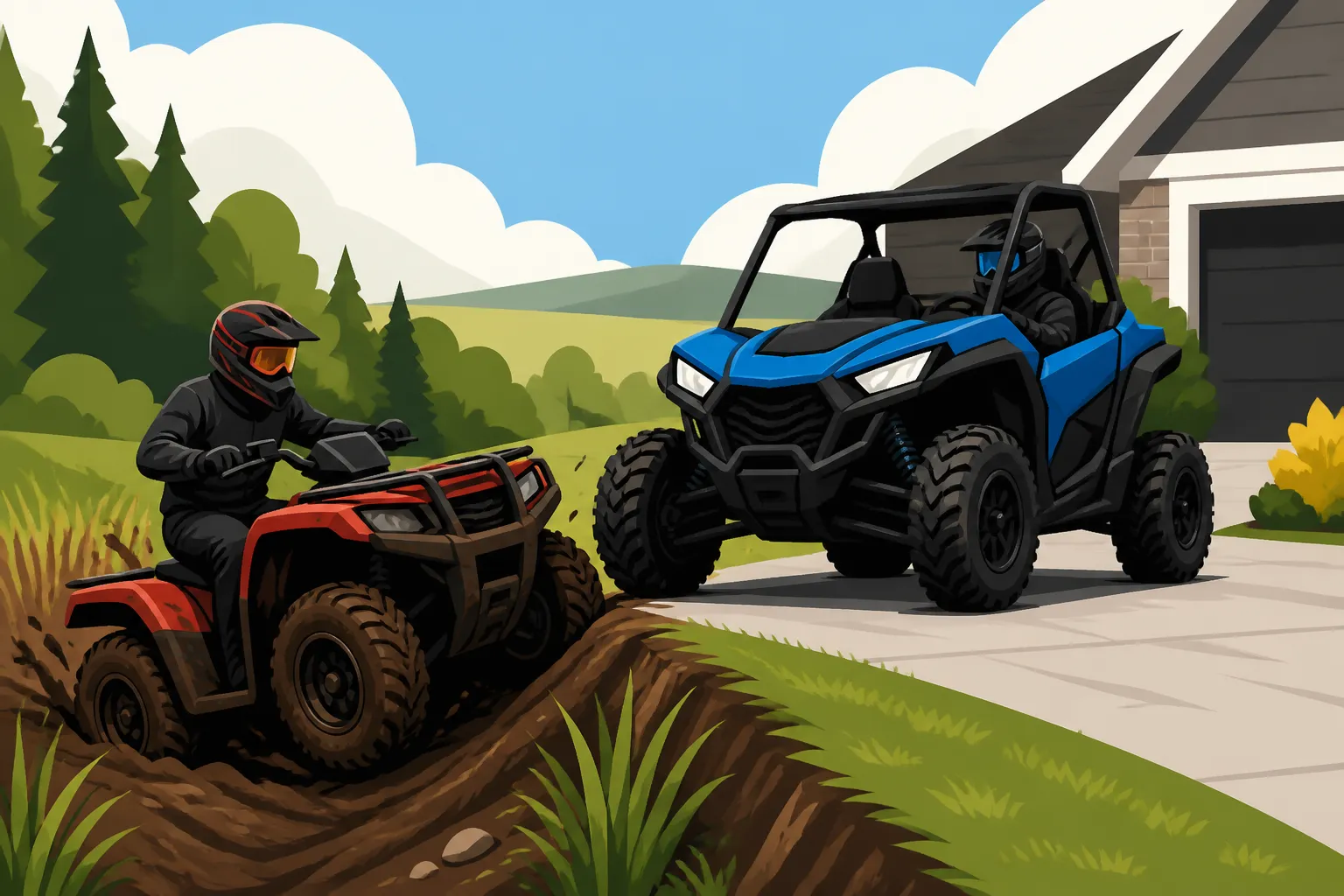
Now, here's where the specific "ditch meets driveway" confusion comes in. When you're riding in a roadside ditch and come to a driveway, whether it's for a home, a business, or an agricultural field, you are no longer just "riding in the ditch." You are, in essence, approaching a point where a private access intersects a public right-of-way. This moment triggers different expectations and rules than simply continuing down an unbroken ditch line. The general principle is that you must yield to any traffic entering or exiting that driveway, much like a vehicle would at an intersection. This often means slowing significantly, if not coming to a complete stop, and looking for other vehicles, pedestrians, or even farm equipment.
Think of a driveway as a mini-intersection where private access meets the public domain. While you have the right to operate your machine in the ditch, that right does not trump the safety of others or the right of property owners to access their land. You cannot simply blast across a driveway without regard. The homeowner or business owner expects to be able to use their driveway safely, and an ATV suddenly appearing can be an unexpected hazard. The law essentially asks you to treat these crossings with the same caution and respect you'd give to any other road user, emphasizing safety over continuous flow.
Navigating Driveway Crossings Safely and Legally
Approaching a driveway while riding in a Minnesota ditch requires more than just a quick glance. It demands a deliberate, cautious approach to ensure both your safety and compliance with the law. This isn't just about avoiding a ticket; it's about preventing collisions, showing respect for private property, and maintaining the positive image of the ATV/UTV riding community. Each driveway, whether it's a gravel path to a cabin or a paved entrance to a farm, presents its own unique set of challenges and demands your full attention.
Slowing Down and Yielding: Your Primary Responsibilities
Your absolute top priority when you see a driveway approaching is to slow down. I mean, really slow down. Don't just ease off the throttle; be prepared to come to a complete stop if necessary. This isn't just a suggestion; it's a legal expectation. You must be in a position to yield to any vehicle, person, or animal that might be using or about to use that driveway. This means scanning for approaching vehicles from the driveway, as well as looking for vehicles on the main road that might be turning into the driveway.
Think about it from the perspective of someone backing out of their garage, or someone driving a pickup truck into their yard. They're typically focused on the main road and may not expect an ATV or UTV to be traveling in the ditch at speed. By slowing down, you give yourself ample time to react to unexpected movements and make yourself more visible. This is where good visibility equipment, like a bright whip flag or reflective tape on your machine, can really pay off. Even if you don't see anyone, the act of slowing down is a demonstration of responsible riding and a crucial safety measure. Remember that the rules for [Crossing a Minnesota Road on an ATV] also apply in principle to these smaller, private crossings.
What to Do When the Ditch Ends at a Driveway
Sometimes, the ditch itself might seem to disappear or become impassable right where a driveway cuts through. This can be particularly confusing. In these situations, you generally have two main options:
-
Briefly use the shoulder or a small segment of the driveway: If the ditch is genuinely impassable at the crossing, and it's safe to do so, you may briefly and carefully use the very edge of the road shoulder or the paved/gravel surface of the driveway itself to cross the obstruction and re-enter the ditch on the other side. This should be done with extreme caution, checking for traffic in all directions, and using as little of the main road or driveway as possible. The key here is "briefly and carefully." This is not an invitation to ride on the driveway or road for any extended period. It's about navigating an immediate obstruction. This is often the case where the road culverts are completely covered, making the ditch impassable directly.
-
Turn back or find an alternate route: If crossing feels unsafe due to traffic, poor visibility, or if the ditch on the other side is clearly marked as closed or private, you must consider turning around or finding an entirely different route. You are never obligated to put yourself or others at risk to continue a ride. This applies especially in situations where [Minnesota Rules Where the Ditch Runs Out] entirely. It's important to remember that safety trumps convenience every single time. It's always better to turn around and find a legal, safer path than to risk a collision or a trespass citation.
For machines like Class 1 ATVs, which are generally more nimble, navigating these spots might be slightly easier, but the caution remains the same. [Minnesota Class 1 Machines on the Right of Way] have specific privileges, but these are always balanced with safety and respect for other users. High-quality mirrors, easily sourced from brands like SuperATV, can drastically improve your situational awareness, allowing you to quickly check for vehicles behind you or on the main road before you make any brief transition.
Equipment That Helps You See and Be Seen
In these tricky driveway scenarios, being visible and having the right equipment to spot potential hazards is paramount. It’s not just about obeying the law, it’s about making sure you get home safely at the end of the day.
Here's a quick rundown of what can make a real difference:
- Mirrors: Side mirrors are incredibly useful, especially on UTVs and larger ATVs, for checking behind you without having to twist your body. They help you anticipate traffic on the main road that might be turning into a driveway. Quality aftermarket mirrors, often available from reputable brands like SuperATV, can offer a wider field of view and be more robust than stock options, standing up to the bumps and vibrations of ditch riding.
- Whip Flags: A brightly colored whip flag mounted high on your machine significantly increases your visibility, especially over crops, brush, or small rises in the ditch line. This makes it easier for drivers on the main road or those pulling out of a driveway to spot you before you're directly in their path.
- Lights: Ensure your headlights and taillights are clean and functioning, even during daylight hours. Running your lights continuously can make your machine stand out more effectively against the background, particularly in overcast conditions or dusty ditches.
- Reflective Tape/Gear: Adding reflective tape to your machine or wearing reflective gear can drastically improve your visibility, especially during dawn, dusk, or in shaded ditch sections. Every little bit of added visibility can prevent a close call.
- Horn: A working horn is not just for startling wildlife; it's a critical safety tool for alerting distracted drivers or pedestrians to your presence, particularly if they are backing out of a driveway and haven't seen you.
Riding with proper [Eye Protection on a Minnesota Ditch Ride] is also key, as clear vision is critical for spotting potential hazards at driveways. Ultimately, good equipment complements careful riding; it doesn't replace it.
| Requirement/Action | Legal Necessity | Best Practice | Why It Matters |
|---|---|---|---|
| Speed | Must be reasonable and prudent; often 20 mph max in ditches | Slow to walking speed, or stop, at every driveway crossing | Reduces stopping distance; allows time to react to unexpected traffic. |
| Yielding | Must yield to all traffic entering/exiting driveways | Assume other traffic cannot see you; be prepared to stop and wait | Prevents collisions; shows respect for residents' access. |
| Visibility | Headlights/taillights generally required during operation | Use whip flags, reflective gear, and always run lights (even in daytime) | Significantly increases your chances of being seen by drivers. |
| Crossing Obstructions | Avoid riding on the paved road surface | Briefly and cautiously use shoulder/driveway if ditch is impassable | Minimizes road usage; maintains continuous ditch access where possible. |
| Awareness | Must be attentive to surroundings | Scan for vehicles, pedestrians, children, and pets; listen for sounds | Helps anticipate potential hazards before they become critical. |
| Signaling | Not specifically required for ditch turns | Use hand signals if turning onto a driveway (private land) or road section | Communicates your intentions to any nearby traffic. |
Common Misconceptions and Risky Behaviors at Driveways
Despite the relatively clear rules, riders still make mistakes when navigating driveways in Minnesota's ditches. These often stem from common misconceptions or a lapse in judgment that can lead to dangerous situations, potential fines, or even the closure of ditch access for everyone. It's vital for all of us to understand these pitfalls and adjust our riding habits accordingly, not just for our own safety but for the sustainability of our riding privileges.
The Temptation to Cut Across Private Property
One of the biggest no-nos, and a frequent temptation when a ditch gets tricky, is to cut across a corner of someone's lawn or field to bypass an awkward driveway crossing. You might think, "It's just a couple of feet," or "No one will see." This is absolutely, unequivocally, trespassing. Even if it's an un-mowed patch of grass, that land beyond the public right-of-way is private property. When a ditch appears impassable at a driveway, and the only easy way through seems to be veering off the public easement onto private land, you must resist that urge.
Trespassing not only carries legal penalties—which can range from fines to more serious charges depending on the property and incident—but it also severely erodes the goodwill between riders and landowners. Many public ditches run alongside private farms, homes, and businesses. When riders cut corners, leave ruts, or disturb private property, it creates animosity and leads landowners to put up "No Trespassing" signs or push for tighter restrictions on ditch riding. It's a lose-lose situation that jeopardizes access for all riders. Always remember to respect boundaries, and consult [Minnesota Trespass Rules Along Ditches] if you have any doubts about where public land ends and private property begins.
Assuming Right-of-Way at Unmarked Crossings
Another dangerous misconception is the idea that because you're in the ditch, you automatically have the right-of-way over vehicles entering or exiting a driveway. This simply isn't true. While ATV/UTV ditch riding is permitted in many areas, drivers of cars, trucks, and farm equipment using driveways are often focused on the main road and may not expect or see a recreational vehicle in the ditch. The law places the onus on the ATV/UTV operator to yield to traffic on the roadway and to traffic utilizing intersecting driveways.
Operating under the assumption that you have the right-of-way at these points is a recipe for disaster. It means you might not slow down sufficiently, you might not scan adequately for traffic, and you might put yourself in a position where a collision is unavoidable. This is particularly critical in rural areas where farm equipment might be slow-moving but massive, or where sightlines are obscured by trees, buildings, or crops. Always assume that the other party doesn't see you, and ride defensively. The best policy is to approach every driveway with the mindset that you will stop if necessary, giving way to anyone else. Your safety, and the safety of others, depends on this cautious approach.
Penalties for Ignoring Driveway Rules
The consequences of ignoring these rules can be quite severe, both legally and financially. Riding recklessly, failing to yield, or trespassing can lead to citations and significant fines. Conservation officers and local law enforcement are well aware of the rules governing ATV/UTV operation in ditches, and they actively enforce them. Getting caught violating these rules, especially near private property, can result in a hefty ticket. For specifics on fines, you might want to review [Minnesota Fines for Illegal Road Riding].
Beyond the immediate financial hit, there are other repercussions. Repeated violations by riders can lead to stricter local ordinances, reducing or eliminating ditch access in certain areas. This impacts the entire riding community, making it harder for everyone to enjoy the sport. Furthermore, if an accident occurs due to your failure to yield or riding unsafely at a driveway, you could face civil liability for damages or injuries, which can be far more costly than any fine. Staying informed through resources like [Minnesota Safety Training Requirements] and understanding the role of [Minnesota Conservation Officer Enforcement in Minnesota] are key to responsible riding and avoiding these penalties. It truly boils down to respect—respect for the law, respect for private property, and respect for the safety of everyone on or near the roads.
Disclaimer
This article is for general informational purposes only and does not constitute professional advice. Laws, prices and regulations vary by location and change over time. Consult a qualified professional for guidance on your specific situation.