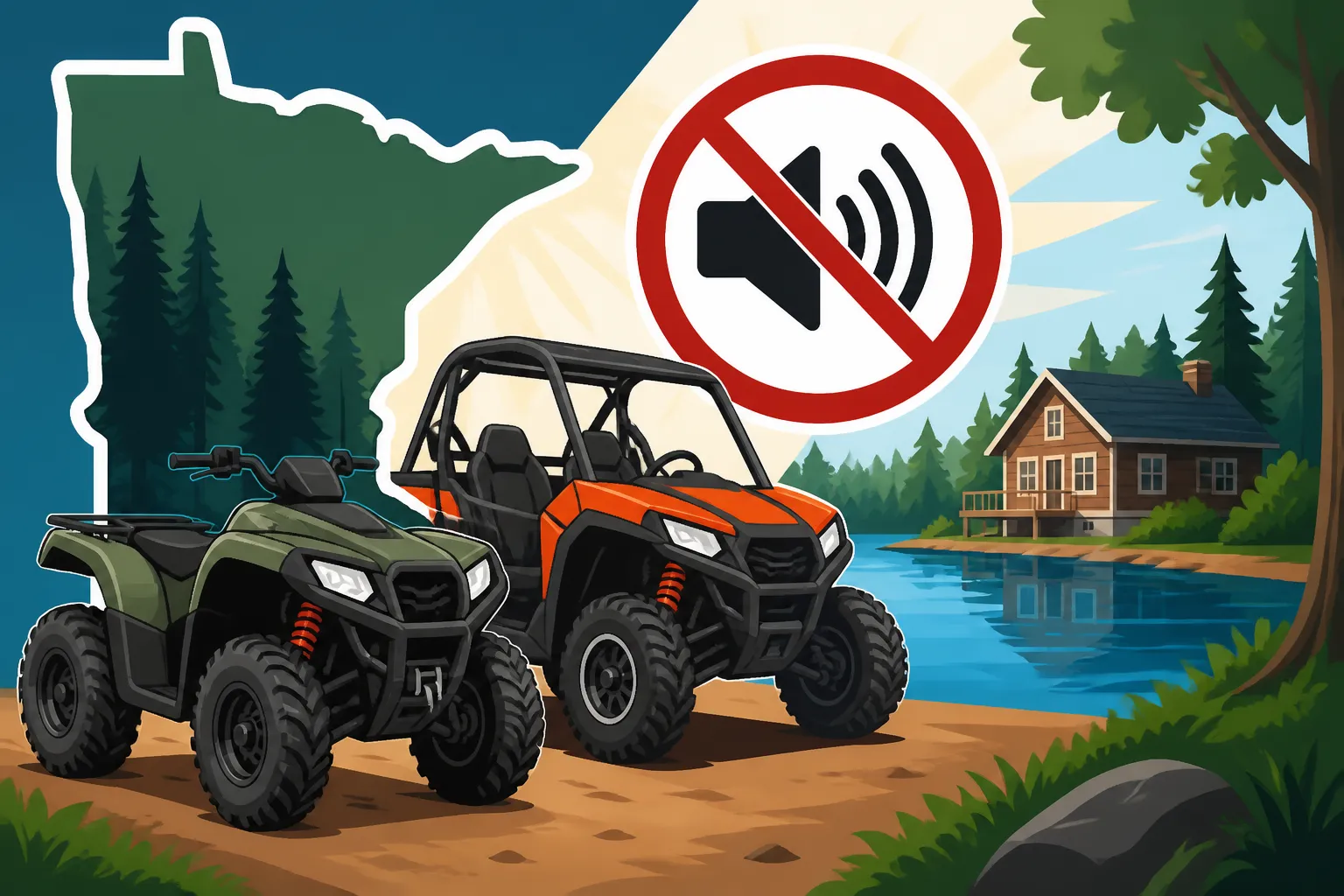
Minnesota Noise Rules Near Lake Homes
It’s a tale as old as time in Minnesota: the peaceful serenity of a cabin on a quiet lake, disturbed by the distant — or not so distant — roar of an ATV. For many, lake homes are a sanctuary, a place to escape the hustle and bustle, to listen to the loons call and the gentle lapping of waves. But for those of us who love the thrill of an off-road machine, that same quiet can feel a bit stifling, and sometimes, the sounds of our passion can grate on the nerves of our neighbors. This guide is all about navigating that delicate balance, helping you understand Minnesota’s rules, and offering practical advice to ensure your enjoyment of the trails doesn't come at the expense of someone else's peace, especially when those trails run near our cherished lake homes.
The Echoing Problem: Why ATV Noise Matters Near Minnesota Lake Homes
The sounds of summer in Minnesota are supposed to be gentle: the splash of a fish jumping, the rustle of leaves in the breeze, maybe the distant call of a heron. But often, these idyllic soundscapes are punctuated by the unmistakable whine or rumble of an ATV or UTV. This isn't just about personal preference; it’s about a clash of lifestyles and expectations that can lead to real tension and even stricter regulations if not addressed thoughtfully.
The Serenity of Lake Living Versus the Roar of the Trail
Imagine waking up at your family cabin on a crisp Minnesota morning, coffee in hand, ready to enjoy the quiet solitude. You settle onto the porch, anticipating the calm, when suddenly, a loud ATV whines past, echoing across the water. For many lake home residents, this isn't just an annoyance; it's a violation of the very reason they sought out lake living. They’ve invested in peace, and the sound of an engine, no matter how brief, can shatter that illusion.
On the flip side, we riders often don't mean to be disruptive. We're out there to enjoy our machines, explore the beautiful Minnesota landscape, and maybe catch up with friends. Sometimes we're on a designated trail, sometimes we're just heading down a gravel road to get to a fishing spot. The sound of our engine is part of the experience, a sign of adventure. The frustration comes when both sides feel their right to enjoy their space is being infringed upon, leading to misunderstandings and often, resentment.
Beyond Annoyance: Environmental and Community Impacts
The impact of excessive ATV noise stretches beyond just annoying a few cabin owners. Constant or sudden loud noises can genuinely disturb local wildlife. Birds might abandon nests, deer could be startled and displaced, and the natural rhythms of the ecosystem can be disrupted. Our beautiful Northwoods is home to incredible creatures, and their well-being is something we all cherish, riders included.
From a community perspective, noise is often the quickest path to complaints. A few persistent complaints can escalate, leading to increased law enforcement patrols, neighborhood watch groups focused on OHV activity, and ultimately, calls for tighter regulations. No one wants to see existing trails closed or new restrictions imposed, but consistent noise issues can make that a very real possibility. It's a collective responsibility, where the actions of a few loud riders can impact the access and enjoyment of the entire riding community.
Deciphering Minnesota's Official Stance on ATV Noise
Minnesota, like many states, has recognized the potential for conflict between motorized recreation and quiet enjoyment. While there might not be a specific "lake home noise rule" carved into stone, existing regulations around exhaust systems and general nuisance can definitely come into play when you’re riding near residential areas, especially those picturesque lake properties.
Where the Law Draws the Line: Decibel Limits and Enforcement
Minnesota's regulations for off-highway vehicles (OHVs), which include ATVs and UTVs, primarily focus on the exhaust system itself. The law generally requires all OHVs operating on public lands or public road rights-of-way to have a muffler in good working order that is effective in reducing noise and prevents excessive or unusual noise. Crucially, the law also requires an effective spark arrester. While there isn't a universally applied, real-time decibel limit that can be easily measured by every lake resident, law enforcement officers, particularly DNR Conservation Officers, have the authority to determine if a machine is creating "excessive or unusual noise" or if its muffler is not properly functioning.
This often means that machines with modified or removed mufflers, or those with clearly audible exhaust leaks, are prime candidates for a citation. It's about maintaining a reasonable sound level, which can feel subjective but is ultimately enforceable if your machine is clearly outside the norm. Understanding these requirements, as detailed in our guide on [Mufflers and Spark Arresters in Minnesota], is crucial for every rider.
Public Land, Private Land, and the Shifting Soundscape
The rules surrounding noise can vary depending on where you're riding. On designated public trails and public road rights-of-way (like ditches), you are absolutely subject to the state's OHV noise regulations. This means your machine needs to be equipped and operated in a manner that doesn't create excessive noise. If your chosen route for getting to the lake or a particular fishing spot involves a public ditch that passes directly in front of someone's cabin, their complaints are entirely valid and can lead to enforcement.
On your own private property, the state’s OHV laws regarding public land don’t directly apply. However, you are still subject to local noise ordinances that many counties or townships might have in place. These local ordinances often have "quiet hours" or general nuisance clauses that can be invoked if your ATV or UTV is consistently generating excessive noise, even on your own land, especially if it spills over onto a neighbor's property. The echoes carry particularly well over water, making it a unique challenge for lake properties. So, while you might feel like your own land is fair game, being a good neighbor means recognizing how far sound travels and adjusting your habits accordingly. This guide, [Minnesota Noise Rules Near Lake Homes], delves deeper into these specific considerations for residential areas.
The Usual Suspects: What Makes ATVs Loud Around Lake Properties
So, what exactly turns a normally acceptable hum into an irritating roar that sends lake residents scrambling for their phones? It’s rarely one single thing, but usually a combination of factors related to how the machine is set up, how well it's maintained, and how it’s being ridden. Understanding these common culprits is the first step toward becoming a more considerate and compliant rider.
The Lure of the Aftermarket: Performance Versus Peace
Let's be honest, there's a certain appeal to an aftermarket exhaust. Many riders upgrade their stock mufflers for a variety of reasons: to boost horsepower, reduce weight, or simply to give their machine a more aggressive, throaty sound. The stock exhaust on most ATVs and UTVs is designed by the manufacturer to meet specific noise and emissions regulations. Aftermarket systems, especially "performance" exhausts, often prioritize airflow and sound over quiet operation.
While some aftermarket manufacturers produce exhausts that are designed to be quieter or meet specific sound level requirements, many do not. The result can be a machine that sounds fantastic to the rider but is considerably louder than stock, easily exceeding what's considered acceptable in residential or environmentally sensitive areas like near lake homes. It's a classic trade-off: more aggressive sound and potential performance gains versus the peace of mind of your neighbors and compliance with local noise limits. When considering upgrades, it's worth checking if they could impact your ability to access [Aftermarket Exhaust and Club Trail Access] areas if they become too loud.
Maintenance Matters: Worn Parts and Unnecessary Racket
Sometimes, the noise isn't about an intentional modification at all. A well-maintained machine tends to be a quieter machine. Over time, components wear out, connections loosen, and things that were once snug and quiet start to rattle or leak. A cracked muffler, a rusted-through exhaust pipe, or loose baffling inside the muffler can turn a subdued purr into a metallic clang or a harsh, unfiltered roar.
Even seemingly minor issues, like a loose heat shield or a vibrating plastic fender, can contribute to the overall noise level, creating an unnecessary racket that travels easily across the water. Paying attention to regular maintenance, like checking exhaust connections and looking for visible damage, isn’t just about extending the life of your machine; it’s also a crucial step in being a good neighbor. For comprehensive maintenance insights, our guide on [Oil Change Intervals and Costs] can help ensure your machine runs smoothly and quietly.
Riding Habits: Throttle Happy and Unaware
Finally, and perhaps most importantly, how a machine is ridden significantly impacts its noise output. Even a perfectly stock, well-maintained ATV can be noisy if operated aggressively. Constant high-revving, rapid acceleration, or excessive throttle blipping generates far more sound than smooth, controlled operation. Think about it: that burst of power and sound might be exhilarating on an open trail, but when it's happening repeatedly near a lake home, it quickly becomes irritating.
Another common factor is simple unawareness. Many riders simply don't realize how far sound travels, especially over water, which acts like a giant sound amplifier. What sounds like a brief spurt of throttle to you might sound like a prolonged, invasive disturbance to someone across the lake. Repeated passes by a property, even at moderate speeds, can also amplify the problem. A single pass might be tolerated, but ten passes in an hour can push patience to its limits. This is where mindful riding, as explored in [Riding Slowly Past a Farmyard], becomes absolutely essential.
Turning Down the Volume: Practical Steps for Quieter Riding
Nobody wants to be that rider, the one whose machine causes eye-rolls and calls to the DNR. The good news is that there are many proactive steps you can take to significantly reduce your ATV’s noise output, ensuring you can still enjoy your ride while respecting the tranquility of Minnesota’s lake country. It’s all about making smart choices and adopting considerate habits.
Stock Up or Upgrade Smart: Choosing the Right Exhaust
The simplest way to ensure your machine is quiet is often to stick with the factory stock exhaust system. Manufacturers design these mufflers to meet all applicable noise regulations, and they typically do an excellent job of keeping sound levels manageable. If your stock muffler is damaged or rusted, replacing it with another OEM (Original Equipment Manufacturer) part is usually the best route for restoring quiet operation.
However, if you're looking for an aftermarket solution, perhaps for performance or just because you like the look, you need to choose wisely. Look for aftermarket exhausts that specifically state they are "low-noise," "quiet core," "trail-friendly," or designed to meet J287 ATV sound level standards. Some brands even offer "silencers" or "quiet tips" that can be added to existing aftermarket systems to reduce sound. Companies like SuperATV often provide a range of accessories, including exhaust components and mufflers, that can help tailor your machine's sound output to be more compliant without completely sacrificing performance. Always check reviews and product specifications carefully, and don't be afraid to ask dealers about the noise levels of their aftermarket offerings.
TLC for Your OHV: Regular Maintenance for Sound Control
A well-maintained machine is a quieter machine. Period. Make regular checks of your exhaust system a part of your pre-ride routine and annual maintenance schedule. Look for any visible cracks, holes, or loose connections in the muffler and exhaust pipes. Even a tiny crack can allow significant sound to escape.
Pay attention to exhaust gaskets and seals. These can wear out over time, leading to leaks that produce not just louder noise, but also an unpleasant "ticking" sound. Tighten any loose bolts or clamps on the exhaust system, as these can rattle or allow components to vibrate against each other. Don't forget about other potential noise sources, like loose skid plates, cargo racks, or worn suspension components that might clatter over bumps. A quick once-over can often identify and fix these minor issues before they become major disturbances.
Mind Your Manners: Riding with Respect and Awareness
Ultimately, the biggest factor in noise control is how you ride. Even with a quiet machine, aggressive riding can still be disruptive. When you're in areas where sound might be an issue – particularly near lake homes, campgrounds, or small towns – dial it back. Reduce your speed, avoid sudden acceleration, and keep your engine RPMs as low as possible. There’s no need to rev your engine or do wheelies when passing someone’s property.
Consider your route planning. If there’s an alternative path that avoids going directly past several lake homes, take it. If you must pass through a sensitive area, do so quickly and quietly. Be extra mindful during early mornings and late evenings, which are often "quiet hours" for residents. Understanding [Group Etiquette Through a Quiet Town] is invaluable here. If you're riding with a group, encourage everyone to adopt the same considerate habits. Remember, the goal is to enjoy your ride without infringing on the peace of others, a principle that also applies to activities like [Plowing a Minnesota Driveway With a Machine] for a neighbor.
The Unpleasant Reality: Penalties and Community Impact of Noise Violations
While no one wants to dwell on the negative, it's crucial to understand that excessive ATV noise isn't just a social faux pas; it can have genuine legal and community consequences. Ignoring the rules or your neighbors' concerns can lead to financial penalties, legal trouble, and a broader erosion of access for all riders.
Enforcement and Fines: When Quiet Hours Aren't Quiet
Minnesota's DNR Conservation Officers and local law enforcement are empowered to enforce the state's OHV regulations, including those pertaining to mufflers and excessive noise. If your machine is deemed to be in violation – whether due to a modified exhaust, a faulty muffler, or simply operating in an "excessive or unusual" manner – you could be issued a citation. These fines can vary depending on the specific violation and local ordinances, but they are never a pleasant surprise and can add up quickly if you're a repeat offender.
Beyond the initial fine, persistent complaints in an area can lead to increased patrols, more frequent enforcement checkpoints, and a general tightening of the leash on OHV activity. Imagine an officer stationed regularly near a problematic lake access point; that's the kind of attention no rider wants to attract. Learning about [Minnesota Fines for Illegal Road Riding] gives you a broader understanding of the legal repercussions that can arise from not following regulations, including noise.
The Ripple Effect: Damaged Reputation and Trail Closures
Perhaps even more impactful than individual fines is the damage excessive noise does to the reputation of the entire ATV riding community. Every time a rider acts irresponsibly or generates excessive noise near residential areas, it fuels anti-OHV sentiment. This negative perception can translate into very real consequences: local townships or counties might pass stricter noise ordinances, pressure could mount on the DNR to close trails, or existing access points could be restricted. We've seen it happen in other areas, and it's a constant threat when residents feel their quality of life is being compromised.
Organizations dedicated to promoting OHV recreation, and even businesses like SuperATV that supply parts and accessories, understand that responsible riding is key to maintaining trail access and a positive public image. They advocate for practices that help preserve the sport. When riders disregard noise rules, they inadvertently chip away at the very foundations that allow us to enjoy these incredible machines in Minnesota's beautiful outdoors. This underscores why proactive steps and mindful riding, supported by strong [Minnesota Conservation Officer Enforcement in Minnesota], are crucial for the long-term health of our sport.
Cultivating Harmony: Beyond Regulations, Building Relationships
Ultimately, navigating the waters of ATV noise near lake homes isn't just about adhering to the letter of the law; it's about being a good neighbor and a responsible member of the broader community. By focusing on communication, support for organized efforts, and proactive measures, we can ensure our passion for ATVs coexists peacefully with the tranquil aspirations of Minnesota’s lake residents.
Open Doors, Open Communication: Engaging with Your Neighbors
One of the most powerful tools we have is communication. Instead of waiting for a complaint to arrive, consider being proactive. If you own a lake home yourself and ride, or if you frequently ride near a specific cluster of cabins, take the initiative to talk to residents. Explain your passion for the sport, acknowledge their desire for peace, and see if there are compromises you can make. Perhaps you can agree on "quiet hours" when you won't ride, or commit to taking a specific, less intrusive route when passing their properties.
You might even find common ground. Maybe a neighbor needs help with a task that an ATV is perfect for, like hauling firewood or [Plowing a Minnesota Driveway With a Machine]. Building relationships fosters understanding and can turn potential conflicts into cooperative solutions. It's much harder for someone to complain about "those noisy ATVs" when they know you personally and appreciate your efforts to be considerate.
Supporting the Greater Good: Advocating for Responsible Recreation
Joining and supporting local ATV clubs is another excellent way to promote responsible riding and address concerns like noise proactively. These clubs often work directly with the Minnesota DNR, local governments, and landowners to maintain trails, educate riders, and advocate for continued access. They are on the front lines, and their efforts directly benefit all of us who enjoy the sport. When clubs organize events or trail maintenance, they often stress the importance of operating compliant, quieter machines, using quality parts that might be found through retailers like SuperATV, to minimize impact on surrounding communities.
By being an active, responsible rider and supporting organized efforts, you become part of the solution rather than part of the problem. This collective approach helps secure grant-in-aid funding for trails, as detailed in [Minnesota Grant-in-Aid Trail Funding], and ensures that the needs of all stakeholders, from riders to lake homeowners, are considered. Adhering to guidelines such as [Minnesota State Forest Rules Minnesota Riders Follow] is part of this collective responsibility, showing that the riding community is committed to stewardship and respect.
Here's a quick look at common noise reduction strategies and their general implications:
| Strategy | Description | Noise Reduction Level | Cost (Initial) | Maintenance Impact | Notes |
|---|---|---|---|---|---|
| Stock Exhaust System | Factory-installed muffler and pipe, designed for compliance. | High | Low (if OEM replacement) | Low | Best for noise compliance; may limit performance upgrades. |
| Quiet Core Insert | An insert for certain aftermarket mufflers to reduce sound. | Moderate to High | Low to Moderate | Low | Check compatibility with your specific aftermarket exhaust. |
| Sound-Dampening Material | Mats or coatings applied to body panels to absorb engine/chassis noise. | Low to Moderate | Moderate | Low to Moderate (installation) | More effective for UTV cabs than open ATVs. |
| Regular Maintenance | Fixing leaks, tightening connections, replacing worn parts. | Moderate | Low | Low (routine) | Prevents rattles and restores original sound levels. |
| Mindful Riding Habits | Lower RPMs, reduced speed, avoiding aggressive acceleration. | High | None | None | Most effective and free way to reduce perceived noise. |
| Performance Aftermarket Exhaust | Designed for power/sound, often louder than stock. | Low (increases noise) | Moderate to High | Low | Often the source of noise complaints; difficult to use in sensitive areas. |
Disclaimer
This article is for general informational purposes only and does not constitute professional advice. Laws, prices and regulations vary by location and change over time. Consult a qualified professional for guidance on your specific situation.