Using a Side-by-Side for Farm Work on a Road
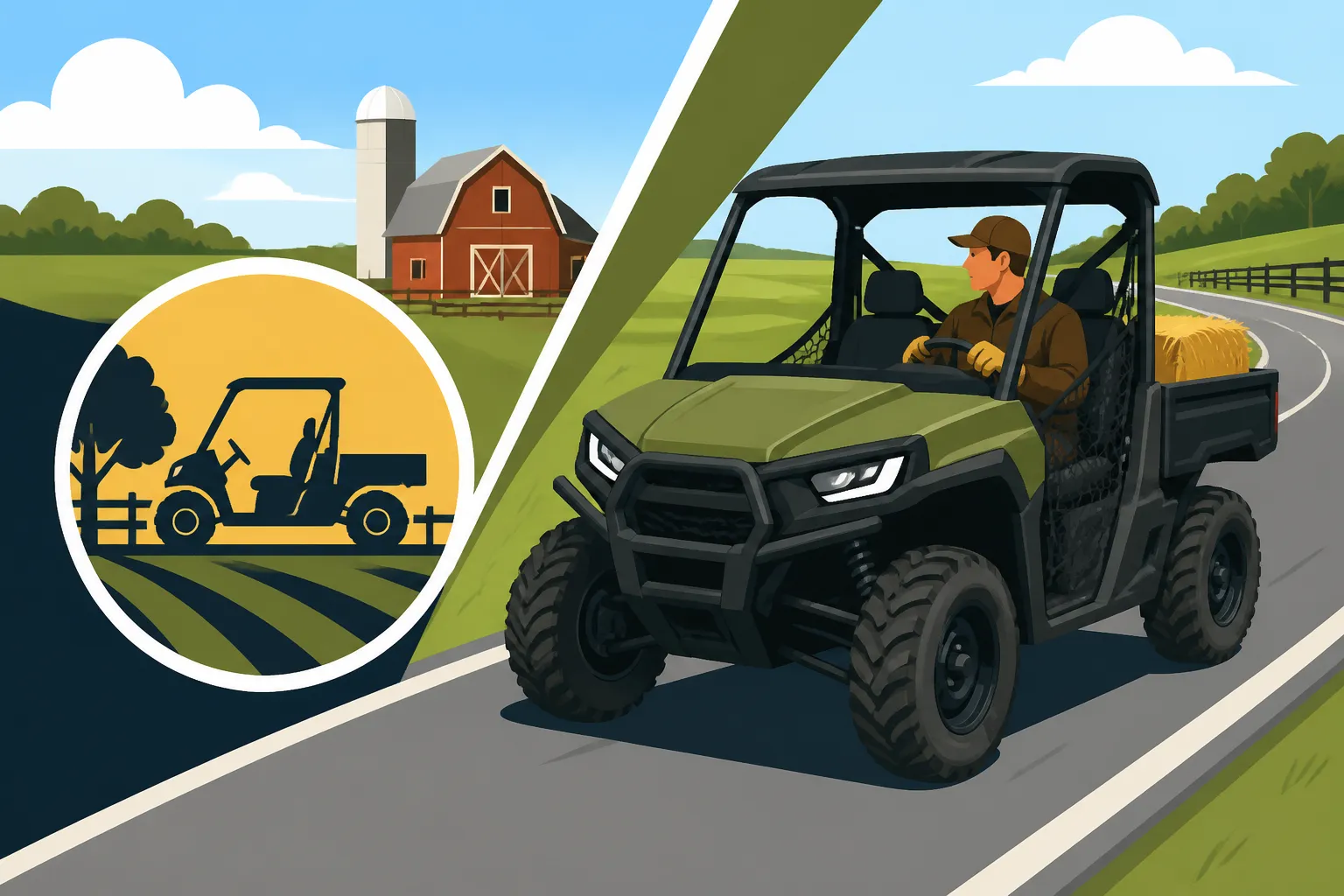
Anyone who runs a farm in Minnesota knows that efficiency is everything. When you're trying to move tools, feed, or even just yourself from one field to another, or from the barn to a distant outbuilding, firing up a big truck for a short hop can feel like a huge waste of time and fuel. It’s natural to look at your trusty side-by-side, which handles chores around the property with ease, and wonder if it can just get the job done on the road. This guide is here to untangle the specific rules and exceptions Minnesota has for using your UTV for agricultural purposes on public roadways.
Minnesota Agricultural Right-of-Way Exemptions for UTVs
When it comes to rolling your side-by-side onto a public road in Minnesota, most of the time you're thinking about trail access or riding to town, which comes with its own set of registration and equipment requirements. However, farmers operate under a different set of circumstances, and Minnesota law recognizes this practical necessity. There are specific exemptions carved out for machines being used for legitimate agricultural purposes. These aren't blanket "do whatever you want" rules, but rather common-sense allowances for the unique demands of farm life.
Understanding "Agricultural Purposes" on Minnesota Roads
So, what exactly counts as "agricultural purposes" when you're driving your side-by-side on a road? It's not just about having a farm and owning a UTV. The machine must be directly involved in the farming operation itself. Think about those crucial, often short, trips that connect different parts of your land or move essential items. This could include hauling supplies like fence posts or seed bags from one field to another across a township road, or taking tools to fix a broken piece of equipment down the road at a neighbor's field. It might also involve moving livestock or checking crops on parcels of land separated by public roads.
What it doesn't typically cover is simply driving your UTV into the nearest town for groceries, or taking it for a recreational spin on a county road, even if you happen to live on a farm. The intent of the trip must be clearly and primarily agricultural. If you're using your UTV to plow your own driveway, for example, that's often seen as a utility purpose that might fall under different rules, but transporting feed to animals on a separate pasture is usually a clear agricultural use. These distinctions can sometimes feel like splitting hairs, but they're important for staying on the right side of the law. You might find more detail in [Minnesota Rules for Farm and Utility Machines].
What Roads Are Included in the Exemptions?
Minnesota's agricultural exemptions for UTVs primarily apply to township roads and, in some cases, county roads. You'll typically find more leeway on lower-traffic, locally maintained roads that are common in rural farming communities. These are the arteries that often connect fields, barns, and residences within a farming operation. The idea is to allow farmers to move equipment and materials efficiently without having to trailer their UTV for every small crossing.
However, this flexibility rarely extends to state highways or interstate freeways. These are high-speed, high-volume roadways where UTVs, even for farm use, pose a significant safety risk. So, if your farming operation requires you to cross a state highway, you'll likely need to trailer your side-by-side or find an alternative route that sticks to county or township roads. Always check local ordinances, as some townships or counties might have specific rules or restrictions that go beyond the state guidelines. It's a good habit to check with your local sheriff's department or county engineer if you're unsure about a specific road. For general information on local roads, you could look up [Minnesota Rules on County Roads] or [Minnesota Rules on Township Roads].
Registration, Lighting, and Safety for Farm UTV Road Use
While agricultural exemptions give farmers a bit more flexibility, they don't mean you can just throw caution to the wind. There are still crucial requirements related to registration (or exemption from it), proper lighting, and general safety protocols that you absolutely must adhere to when operating your side-by-side on public roads for farm work. Ignoring these can not only put you and others at risk but also lead to fines and legal trouble.
Registration Requirements for Agricultural UTVs
This is where it can get a little tricky, but it's vital to understand. Generally, if your UTV is exclusively used for agricultural purposes and is only operated on public roads to move between parcels of land or conduct direct farm business, it might be exempt from the standard ATV/UTV registration that recreational riders need. This exemption is a huge relief for farmers, as it saves on fees and paperwork. However, "exclusively" is the key word here. If you're also using that same side-by-side for recreational trail riding, hunting, or going to the lake cabin on weekends, then you're likely going to need to register it as a regular off-highway vehicle.
If your machine is primarily for farm work, but you occasionally use it for other purposes, it's always safest to register it. It's better to be fully compliant than to face a hefty fine or have your vehicle impounded because a conservation officer determined your "farm use" was a bit too broad. The [Registering a Side-by-Side Used on a Farm] article might offer more specific guidance here. It's all about making sure you can prove the primary purpose of your machine.
Essential Lighting and Safety Gear
Even if your farm UTV is exempt from standard registration, it is never exempt from basic safety and lighting requirements when on a public road. Think visibility, especially during dawn, dusk, or adverse weather conditions. Your side-by-side must be equipped with:
- At least one headlight: Clearly visible from at least 500 feet. Many UTVs, like those from Polaris or Kawasaki, come standard with good headlights, but if yours is an older model or has seen some rough farm life, make sure they're in working order and bright enough. SuperATV, for instance, offers a range of aftermarket LED light bars and replacement headlights that can significantly boost your visibility and safety.
- At least one taillight: Clearly visible from at least 500 feet to the rear. This is crucial for preventing rear-end collisions, especially when moving slower than other traffic.
- Brake lights: Functional and visible, signaling when you're slowing down or stopping.
- Reflectors: On the sides and rear to make your machine more visible from different angles, even when the lights aren't directly shining on it.
- Slow-moving vehicle (SMV) emblem: If your side-by-side cannot maintain the posted speed limit (which is often the case on county or township roads), a red-orange reflective SMV triangle emblem is absolutely critical on the rear. This signals to approaching vehicles that you're moving slowly and they should exercise caution.
Beyond lighting, consider wearing a helmet, especially if you're operating on roads where you might encounter faster-moving traffic. While not always mandated for adults in a UTV, it’s a smart safety move. If you have any youth helping with farm chores, remember [Minnesota Helmet Rules for Riders Under 18]. Always ensure passengers (if your UTV is designed for them) are seated properly and using seatbelts if available.
| Feature / Requirement | Agricultural Road Use (Exempt) | General Public Road Use (Registered) |
|---|---|---|
| Primary Purpose | Strictly for farm operations (moving between fields, hauling supplies, etc.) | Recreation, transport to trails, general errands, etc. |
| DNR Registration | Often exempt if exclusively agricultural | Mandatory for public land/road use (triennial renewal) |
| Title | Required | Required |
| Driver's License | Varies by age/road type; generally recommended | Required for road sections |
| Headlights/Taillights | Mandatory | Mandatory |
| Brake Lights | Mandatory | Mandatory |
| SMV Emblem | Mandatory if traveling below speed limit | Recommended if traveling below speed limit |
| Helmets | Recommended; mandatory for minors | Mandatory for minors; recommended for adults |
| Roads Allowed | Primarily township/county roads | Designated ATV/UTV routes, county/township roads (with local approval) |
| Speed Limits | Must adhere to posted limits; drive safely for conditions | Must adhere to posted limits; drive safely for conditions |
Practical Considerations and Common Mistakes
Even with exemptions in place, using your side-by-side for farm work on Minnesota roads requires common sense, caution, and an understanding of the potential pitfalls. Farmers are busy, but cutting corners on safety or legalities can have serious consequences. Let's talk about how to keep things running smoothly and avoid common headaches.
Navigating Roadways Safely with a UTV
When you take your side-by-side onto a public road, even a quiet township road, you're sharing it with larger, faster vehicles. This means driving defensively and making yourself as visible as possible.
- Stay to the Right: Always keep as far to the right side of the road as is safely possible. This leaves room for other vehicles to pass you safely.
- Signal Your Intentions: If your UTV has turn signals, use them. If not, use clear hand signals to indicate turns or stops. Communication is key to preventing accidents.
- Watch for Traffic: Be extra vigilant at intersections, blind curves, and hill crests. Other drivers might not expect a slower-moving UTV, so scan constantly.
- Speed Management: While your side-by-side can go faster, remember you're operating a utility vehicle, not a race car. Maintain a safe speed that allows you to react to unexpected hazards, and always adhere to the posted speed limits. It's often safer to go slower, especially when hauling a load or crossing rough terrain.
- Avoid Peak Traffic Times: If possible, schedule your road travel during off-peak hours when there's less traffic. Early mornings or late evenings can sometimes be less congested, though you'll need robust [Lighting Rules for Minnesota Night Riding].
Remember, you're not just moving a machine; you're moving a piece of farm equipment. Treat it with the same respect and caution you would a tractor or combine on the road.
Avoiding Misinterpretations of "Agricultural Use"
One of the biggest traps farmers can fall into is blurring the lines between legitimate agricultural use and general utility or recreational use. A common scenario might be, "I'm just running into town for a quick part for the tractor, so it's farm work, right?" While that might sound like it should be covered, if that "part" is a mile into town and you're not moving between directly connected parcels of land, you could be stretching the definition too far.
Conservation officers and local law enforcement are trained to identify these distinctions. They understand the realities of farming, but they also have a job to do. If they stop you and determine your trip wasn't for a direct agricultural purpose, you could face penalties for improper registration, lack of proper licensing, or operating on an unauthorized roadway. It’s always best to err on the side of caution. If there's any doubt, consider trailering your UTV or using a different vehicle for that specific trip. The article [Minnesota Penalties for an Unregistered ATV in Minnesota] can shed light on the consequences.
Beyond Farm Work: When Standard Rules Apply
It's crucial to understand that agricultural exemptions for UTVs are very specific to the context of farming operations. The moment your side-by-side steps outside that defined role, it typically falls back under the standard Minnesota rules for Off-Highway Vehicles (OHVs). This means registration, proper licensing, and adherence to designated routes become paramount.
When Your UTV Needs Full Minnesota Registration
If your side-by-side is going to be used for anything beyond direct, exclusive agricultural purposes, you need to get it registered with the Minnesota DNR. This applies if you:
- Ride it recreationally: Taking it on designated ATV trails, public forest roads, or just for fun rides on your property that isn't connected to active farming.
- Commute for non-farm work: Using it to get to a job off the farm.
- Run personal errands: Driving it to the store, post office, or a friend's house.
- Go hunting or fishing: Even if your farm is huge, if you're using the UTV to access public lands for these activities, it requires registration.
- Cross public roads frequently for mixed-use: If you're constantly on and off the road for a variety of tasks, some farm, some not, it's safer to have it registered.
A registered UTV will receive a registration number and decals, which must be properly displayed on your machine. This registration is generally valid for three years. You can find more details on general registration in [Registering an ATV in Minnesota].
Driving on Designated ATV Routes and Roads Not Part of an Exemption
For those times when your side-by-side isn't strictly being used for farm work, Minnesota has a network of designated ATV routes and certain roads where OHVs are allowed. These routes are usually clearly marked and might include specific county or township roads where local ordinances permit UTV travel.
- Designated Trails: Minnesota has an extensive system of grant-in-aid trails and OHV areas where registered machines are welcome.
- Local Ordinances: Many smaller towns and counties have adopted ordinances that allow UTVs on certain municipal or county roads, often with specific speed limits and hours of operation. These are typically "trail towns" that welcome riders and provide access to services.
- Driver's License & Safety Training: When operating on these public roads, drivers must possess a valid driver's license. For youth riders, specific age and safety training requirements apply, often found in [Driver's License Requirements on Minnesota Roads] and [Minnesota ATV Safety Training Requirements].
Always check with local authorities or consult a current Minnesota DNR OHV map to understand which roads are open to general UTV use. Never assume that just because one township allows it, another one will. Staying informed and compliant ensures you can continue to enjoy the versatility of your side-by-side, whether for essential farm tasks or recreational adventures.
Disclaimer
This article is for general informational purposes only and does not constitute professional advice. Laws, prices and regulations vary by location and change over time. Consult a qualified professional for guidance on your specific situation.