Minnesota Agricultural Right-of-Way Exemptions
Navigating Minnesota’s roads with your ATV or UTV can feel like walking a tightrope, especially when you’re just trying to get farm work done. It’s easy to get confused about when and where you can legally operate your off-highway vehicle (OHV) on a public road or ditch. This guide is here to untangle the complexities of Minnesota's agricultural right-of-way exemptions, helping you understand the rules so you can confidently use your machine for the important tasks that keep our rural communities running.
Understanding the "Why" Behind Agricultural Exemptions
First off, let’s talk about why these exemptions exist. It’s not just some random loophole; it's a recognition of the essential role ATVs and UTVs play in modern farming and rural operations. For many farmers and landowners in Minnesota, these machines are more than just recreational toys; they’re indispensable tools for everything from checking fences to hauling feed or moving equipment short distances. Without these exemptions, basic tasks could become incredibly inefficient or even impossible, forcing farmers to use larger, less maneuverable, and often more fuel-intensive vehicles for quick trips across a field or down a township road.
The state understands that requiring full street-legal registration and equipment for a machine solely used for agricultural purposes on a limited basis doesn’t make sense. It’s about practicality and supporting the backbone of Minnesota’s agricultural economy. These rules aim to strike a balance: allowing necessary work to be done while still maintaining safety on public thoroughfares for all users. It's a pragmatic approach to a rural reality. You'll find similar considerations when looking into [Minnesota Rules for Farm and Utility Machines].
The Spirit of the Law: Balancing Utility and Safety
The spirit of these laws is to facilitate necessary farm work while ensuring that public safety isn't compromised. Picture a farmer needing to move a small trailer of hay bales from one pasture to another, just across a gravel township road. Having to load that hay onto a full-sized truck, drive a short distance, and then unload it again is a huge waste of time and effort. An ATV or UTV with a small trailer attached is often the most efficient and practical solution.
However, this utility can't come at the expense of safety for other drivers or the rider themselves. That’s why the exemptions come with specific conditions regarding speed, lighting, and general operating procedures. It’s not a free pass to drive your machine like a recreational vehicle on the road; it's a conditional allowance for specific work-related tasks. It's crucial for any farmer or landowner to understand that while they might be exempt from certain registration or titling requirements for their use case, they are never exempt from safe operating practices.
Addressing Rural Realities
In many parts of rural Minnesota, the only way to get from one part of a property to another, or to access a field, is by briefly traversing a public right-of-way, be it a ditch or sometimes the road surface itself. These exemptions acknowledge that farms aren't always neat, self-contained parcels; they often span roads, or require access points that necessitate crossing a public right-of-way. Imagine a situation where you need to [Hauling Feed by Machine on a Township Road]. It's not about joyriding; it's about doing your job.
The Minnesota Department of Natural Resources (DNR) and local law enforcement understand these realities. They know that a farmer plowing a driveway or checking livestock isn't the same as someone heading out for a weekend trail ride. These exemptions provide the legal framework for these necessary activities, recognizing the unique needs of the agricultural community. This pragmatic approach is a hallmark of how Minnesota manages its OHV laws, trying to adapt them to the diverse needs of its residents.
What Constitutes an "Agricultural" Use for Exemptions?
This is where the rubber meets the road, quite literally. Minnesota law is pretty specific about what kind of ATV or UTV use qualifies for an agricultural right-of-way exemption. Essentially, it boils down to using the machine for activities directly related to the production of crops, livestock, or other agricultural products, or for specific utility tasks on or adjacent to your property. It’s not just saying "I'm a farmer"; it's about the activity itself.
Think about the actual tasks you're doing. Are you checking on cattle in a pasture across the road? Are you [Plowing a Minnesota Driveway With a Machine]? Transporting tools or supplies between farm buildings? These are generally covered. The key is that the use must be "incident to the operation of a farm" or for "agricultural purposes" as defined by statute. This means a direct, functional connection to farming operations.
Defined Agricultural and Utility Purposes
The statute typically defines agricultural purposes quite broadly to include things like tilling, planting, cultivating, harvesting, and similar operations. For ATVs and UTVs, this extends to tasks like checking irrigation systems, moving hay bales with a small trailer, transporting fence repair materials, or even accessing remote parts of fields for pest control. If you're [Using a Side-by-Side for Farm Work on a Road], the exemption is designed for you.
Utility purposes often go hand-in-hand with agricultural use and might include tasks such as snow removal, property maintenance, or carrying tools for repair work on your land. The important thing is that these uses are tied to the functioning of the farm or rural property, not general transportation or recreation. For instance, hauling a sprayer to a field or even moving firewood for farm use could fall under this. However, using your UTV to go pick up groceries in town, even if you’re a farmer, would likely not qualify for the exemption.
Limitations: Where the Exemption Ends
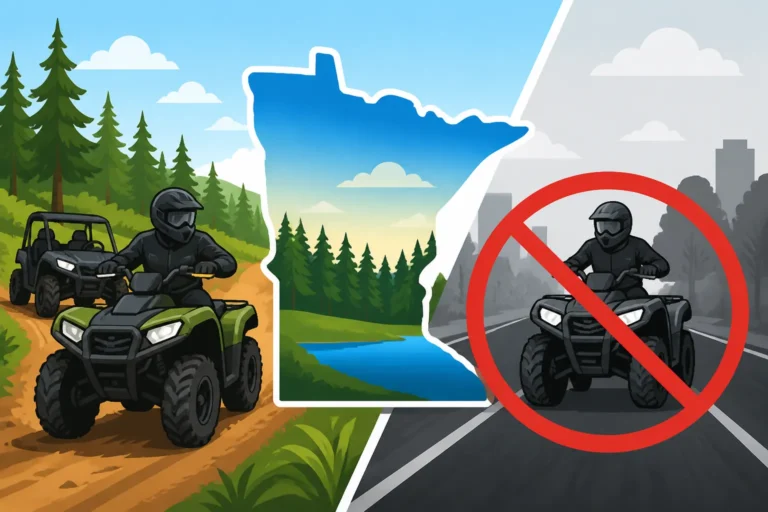
It's crucial to understand that these exemptions are not a blanket permission to drive your ATV or UTV on any public road at any time. There are strict limitations. Firstly, the exemption typically applies to unregistered ATVs and UTVs. If your machine is registered for public recreational use, then you'd generally follow the rules for registered machines, which can be found in resources like [Minnesota Rules on County Roads].
Secondly, the exemption often dictates where on the right-of-way you can operate. In many cases, it means sticking to the ditch or shoulder, and only using the road surface itself to cross or to avoid an obstruction that makes the ditch impassable. Riding directly down the middle of a county road for a mile, even for farm work, might push the boundaries of what's allowed. Speed limits are also a major factor; typically, these machines must be operated at minimal speeds, often under 30 mph, and always yield to other traffic. If you're using specialized attachments from brands like SuperATV for utility, ensure they don't impede visibility or create hazards.
The Role of Lighting and Safety Gear
Even with an agricultural exemption, safety is paramount. Minnesota law generally requires that if you’re operating any vehicle on a public right-of-way, even the ditch, during hours of darkness or when visibility is poor, you must have appropriate lighting. This typically means a headlight and a taillight. It's not just a suggestion; it's a legal requirement to ensure you're visible to other motorists.
While specific helmet laws might differ slightly for agricultural exemptions compared to recreational use, it's always smart to wear a helmet, especially for younger operators. Being visible, having working lights, and operating at a safe speed are non-negotiable aspects of using these exemptions responsibly. Think of it as a set of basic safety protocols that remain in effect regardless of your operational intent.
Navigating the Right-of-Way: Ditches, Shoulders, and Road Crossings
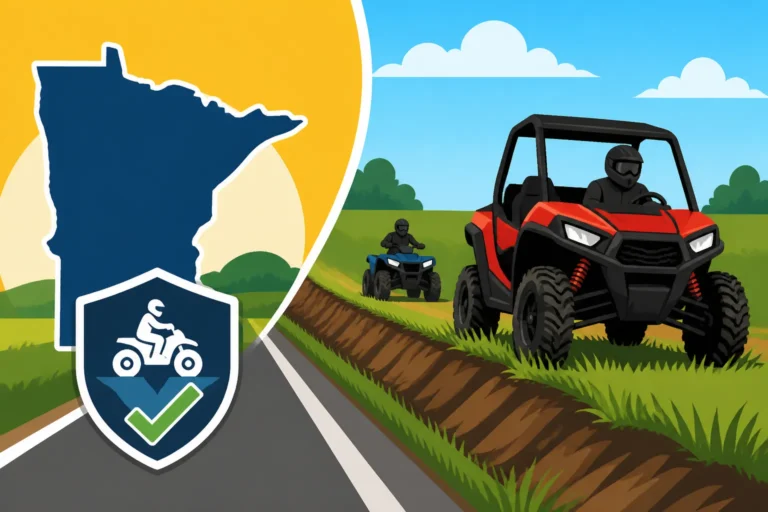
This is often the most confusing part for many rural landowners. When the law talks about agricultural exemptions on a right-of-way, it usually means the ditch or shoulder of the road, not the paved or gravel surface itself. Imagine the strip of land between the edge of the road and the fence line – that's generally your operational zone.
The rationale is that these areas are less likely to interfere with the flow of vehicular traffic on the main road surface. However, there are specific circumstances where you might need to briefly enter the road, such as when crossing to another field or when the ditch itself is impassable due to water, deep snow, or other obstructions. Understanding these nuances is key to avoiding an unexpected conversation with a conservation officer. You can learn more about general rules in [Riding the Ditch of a Minnesota Right of Way].
Understanding the Ditch and Shoulder Rules
When operating in the ditch or on the shoulder, you're expected to maintain a safe distance from the road surface and other traffic. This generally means staying as far to the right as practicable, giving way to pedestrians, and yielding to any vehicles exiting or entering the main roadway. The goal is to be predictable and avoid creating a hazard. If you have an especially wide machine, perhaps with aftermarket utility attachments from SuperATV, you'll need to be extra mindful of your width and clearance.
It's not about racing through the ditch; it's about methodical, slow movement for your specific task. Remember, while you might be exempt from certain registration requirements, you're still sharing a public space, and common sense safety rules always apply. This is particularly true if the ditch is narrow, has blind spots, or is near residential areas.
When Can You Be on the Paved Road Surface?
Minnesota statutes allow for very limited use of the main road surface itself under an agricultural exemption. The most common scenario is crossing the road to access property on the other side. When doing so, you must come to a complete stop, yield to all approaching traffic, and cross at a right angle to the road surface. This should be done quickly and directly, minimizing your time on the roadway.
Another allowable scenario is when the ditch or shoulder is impassable. This could be due to heavy snow, flooding, or severe erosion. In such cases, you might be permitted to briefly use the nearest safe portion of the road surface until you can re-enter the ditch or shoulder. However, this must be done with extreme caution, at the slowest possible speed, and always yielding to other vehicles. It is not an excuse for extended travel on the main road. The rules for crossing are clearly outlined in [Crossing a Minnesota Road on an ATV].
Yielding to Traffic and Avoiding Obstructions
A fundamental rule for any vehicle, including an ATV or UTV operating under an agricultural exemption, is to yield to all traffic on the main roadway. You are the secondary user of the right-of-way. This means if a car is approaching, you should be prepared to pull over or stop to allow it to pass safely.
Additionally, if you encounter an obstruction in the ditch – like a mailbox, culvert, or utility pole – you should navigate it cautiously. If you must momentarily enter the road surface, ensure it's safe to do so. After passing the obstruction, immediately return to the ditch or shoulder. It’s about minimal impact and maximal safety for everyone.
Proving Agricultural Use and Avoiding Penalties
Let's face it, nobody wants an unexpected stop from a conservation officer or sheriff's deputy. While the agricultural exemption is a real thing, you need to be able to demonstrate that your use falls within its parameters. It's not enough to simply be a farmer; you have to show that your machine is being used for legitimate agricultural purposes at that specific time.
Understanding what documentation or visual cues can help you prove your case can save you a lot of hassle. Prevention is always better than trying to explain yourself out of a ticket. This is where a little preparation goes a long way in ensuring your peace of mind while doing your farm work.
What an Officer Might Look For
When an officer pulls you over, they're typically assessing a few things:
- The nature of your activity: Are you actively engaged in a farm task? Are you hauling something, checking fences, or tending to livestock? Or are you simply riding with no apparent purpose?
- Your destination: Are you traveling between clearly defined farm properties or accessing a field? Or are you heading into town for unrelated purposes?
- The machine itself: Does it have features consistent with utility or farm work (e.g., a cargo bed, hitch, sprayer, SuperATV utility accessories)? Or does it look like a purely recreational sport machine?
- Your speed and manner of operation: Are you moving slowly and cautiously, or operating at higher speeds and less carefully?
- Location on the right-of-way: Are you in the ditch/shoulder, or have you been traveling excessively on the main road?
Having some tools or supplies clearly visible on your machine, especially if it’s a UTV with a bed, can often quickly convey your intent. Even a shovel, a bucket of feed, or fence posts can serve as visual evidence of your purpose.
Essential Documentation and Visual Cues
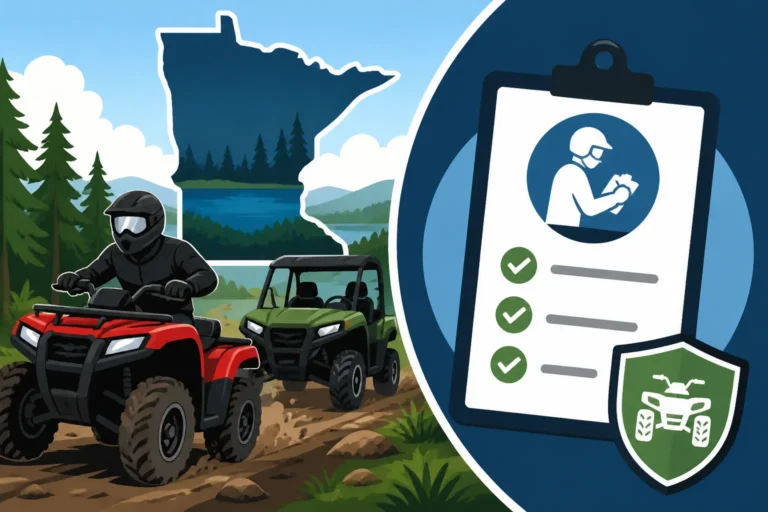
While there isn't usually a specific "agricultural exemption card," carrying documentation that links you to the land can be helpful. This might include:
- Proof of land ownership or lease agreement: Something that shows you own or operate agricultural land in the area.
- Farm registration or tax ID: If you have one, this solidifies your status as a farmer.
- Bill of Lading or work order: If you’re hauling something for a specific farm-related task.
However, often the most compelling evidence is visual. If you're hauling a small trailer of seed, carrying fence repair tools, or your UTV is equipped with a plow, these things clearly signal your intent. For example, if you're [Hauling Feed by Machine on a Township Road], having a visibly full feed bag in the bed is a strong indicator of agricultural use. Remember, officers are looking for consistency between your actions and the law's intent.
Avoiding Common Misinterpretations and Penalties
A common mistake is assuming that "farm use" means you can simply treat public roads like private property. The exemption is conditional, not absolute. Don't use it as an excuse for recreational riding on the right-of-way. Another pitfall is ignoring basic safety requirements like speed limits, yielding, or having proper lights after dark. These are often separate infractions that can still result in a citation, even if your agricultural use itself is legitimate. You can face [Fines for an Unregistered ATV in Minnesota] if you misuse the exemption.
The best way to avoid penalties is to:
- Know the law: Understand the specifics of Minnesota Statute regarding agricultural exemptions.
- Operate responsibly: Always yield to traffic, maintain low speeds, and use appropriate lighting.
- Be prepared to explain your purpose: Have a clear, concise explanation of what you're doing and why it falls under agricultural use.
- Ensure your machine is visibly equipped for farm tasks: Utility boxes, hitches, small trailers, or even basic tools can help convey intent.
Here’s a quick comparison of common scenarios:
| Scenario | Legitimate Agricultural Exemption? | Why / Why Not |
|---|---|---|
| Hauling feed across a county road | Yes | Direct farm operation, short distance. |
| Plowing a field approach on a township road | Yes | Direct farm maintenance, essential utility. |
| Checking fences along a ditch line | Yes | Direct farm management, operating in the appropriate right-of-way. |
| Riding to the local hardware store for personal items | No | Not a direct agricultural purpose, even if you are a farmer. |
| Taking the kids for a joyride in the ditch | No | Recreational, not related to farm operation. |
| Moving a broken sprayer to a repair shop in town | Unlikely | While farm-related, typically requires proper registration for road travel. |
| Crossing a state highway to another pasture | Yes (with caution) | Direct farm access, must follow strict crossing rules. |
Disclaimer
This article is for general informational purposes only and does not constitute professional advice. Laws, prices and regulations vary by location and change over time. Consult a qualified professional for guidance on your specific situation.