Mufflers and Spark Arresters in Minnesota
Navigating the world of ATV and UTV ownership in Minnesota can feel like a maze, especially when it comes to understanding all the specific rules and regulations for your machine. One area that often leaves riders scratching their heads, and sometimes facing an unexpected conversation with a conservation officer, involves mufflers and spark arresters. This guide is here to untangle the complexities, explain why these components are so crucial in our beautiful state, and help you ensure your machine is always compliant, keeping you on the right side of the law and respecting our shared natural spaces.
What Are Spark Arresters and Why Do They Matter in Minnesota?
Before we dive deep into the specific regulations, let's get a handle on what a spark arrester actually is and why it's not just a suggestion, but a vital component for any off-highway vehicle (OHV) operating in Minnesota. Many riders might hear the term and know it's "important," but truly understanding its function underscores its necessity, especially in a state with vast forests and sensitive ecological areas.
The Core Function and Fire Prevention
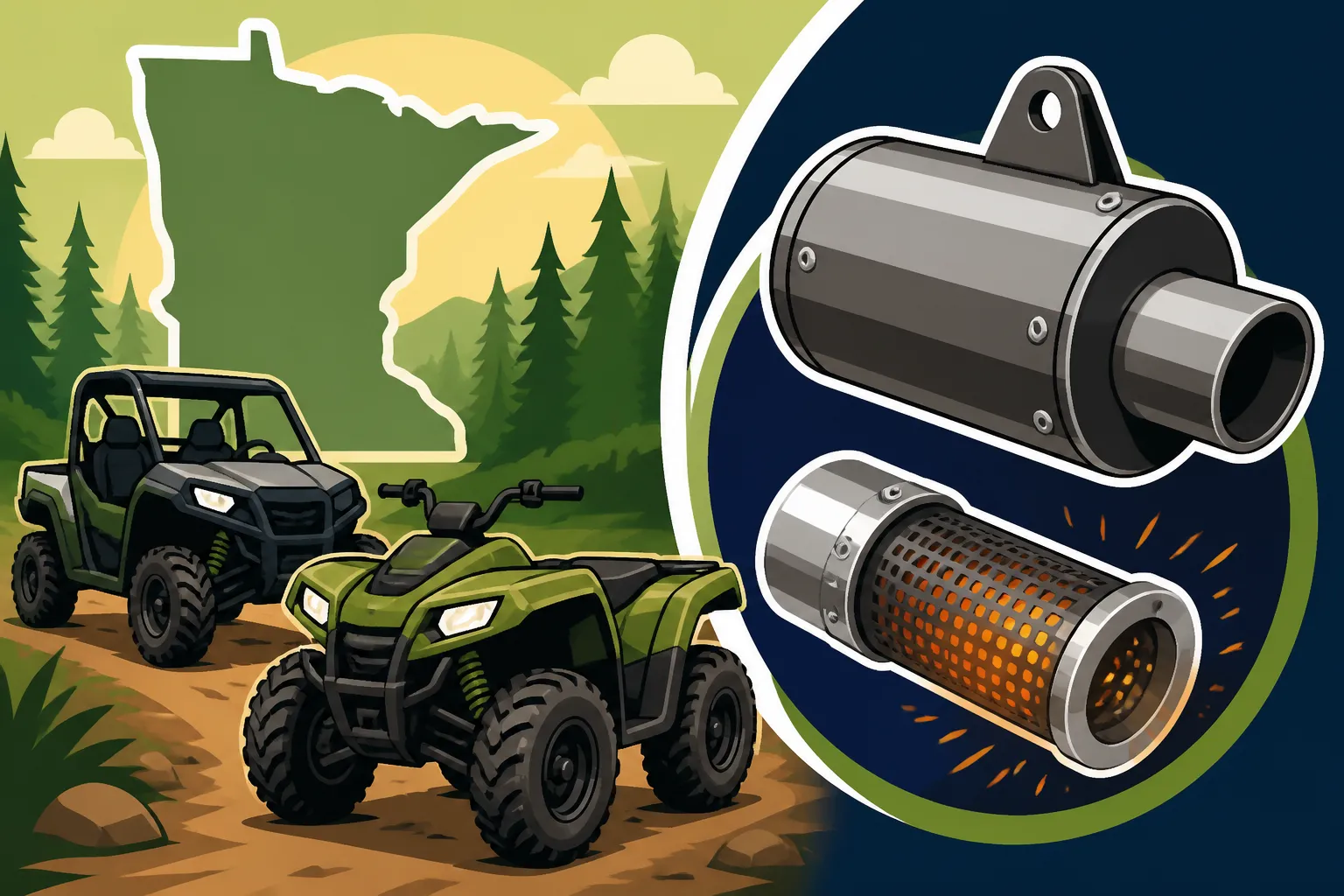
At its heart, a spark arrester is a safety device, plain and simple. Its primary job is to prevent hot, glowing carbon particles (sparks) that are expelled from your engine's exhaust system from escaping into the environment. When your ATV or UTV engine runs, it combusts fuel, and this process can create tiny fragments of carbon that glow red-hot. Without a spark arrester, these incandescent particles could easily fly out of your muffler and land on dry leaves, grass, brush, or even peat, igniting a potentially devastating wildfire.
Think about riding through the dry fall leaves in a state forest, or cutting across a field of tall, cured grass in late summer. The risk of even a tiny spark igniting a blaze is incredibly high. Minnesota has experienced its share of wildfires, and the damage can be catastrophic, not just to the environment but to homes and communities. This isn't just a theoretical danger; it's a very real and present threat that every responsible rider must take seriously. Your spark arrester is your first line of defense against being the unintentional cause of such a disaster.
How a Spark Arrester Works
Most spark arresters operate on a fairly straightforward principle, typically involving a screen or a series of baffles within the muffler. The exhaust gases, carrying those hot carbon particles, are forced through this fine mesh screen or a labyrinthine path. The screen acts as a filter, allowing gases to pass but trapping any particles larger than a specified size – usually 0.023 inches (0.584 mm). The trapped carbon particles then cool down and are either broken into smaller, cooler pieces or collect within the muffler until they are burned off or cleaned out.
There are various designs, but the most common type is a centrifugal or screen-type arrester. The key is that it must be designed to contain sparks without significantly impeding engine performance or increasing back pressure, which could lead to overheating. A properly functioning spark arrester is often U.S. Forest Service (USFS) approved, meaning it meets rigorous standards for effectiveness in preventing fires. You'll often see "USFS approved" stamped directly on the muffler or spark arrester itself, which is a good indicator of compliance.
Minnesota's Unique Landscape and Fire Risk
Minnesota's natural beauty, with its sprawling forests, peatlands, and grasslands, also presents significant fire risks, especially during dry seasons. Areas like the Nemadji State Forest or the vast stretches of the Paul Bunyan State Forest are particularly vulnerable. A single spark from an unequipped or poorly maintained OHV could rapidly escalate into a major conflagration, threatening not only the ecosystem but also recreational opportunities for everyone. The rules requiring spark arresters are not arbitrary; they are a direct response to the specific environmental conditions and the potential for widespread damage.
Consider a scenario where you're riding a trail that winds through pine forests near a lake. The needles on the ground are dry, and a slight breeze is picking up. If your spark arrester isn't working, even a quick burst of throttle could send a shower of embers into that tinder-dry fuel, and by the time you realize what's happening, it could be too late. The state's Department of Natural Resources (DNR) takes these regulations very seriously, and for good reason. It's about preserving the landscapes we love to ride in for future generations.
Minnesota's Legal Requirements for Mufflers on ATVs and UTVs
Beyond spark arresters, the overall muffler system on your ATV or UTV is subject to specific legal requirements in Minnesota. These regulations are designed to control both fire risk and noise pollution, ensuring that recreational riding remains sustainable and respectful of both the environment and other users, as well as nearby residents.
Decoding the DNR Regulations
Minnesota statutes, enforced by the DNR, are quite clear: all ATVs and UTVs operating on public lands or public waters must be equipped with an adequate muffler system in good working condition. This system must effectively prevent excessive or unusual noise and, critically, must be equipped with a U.S. Forest Service-approved spark arrester. The key here is "adequate" and "good working condition." This means not just having a muffler, but one that is intact, without holes or modifications that would make it louder or less effective.
This regulation applies whether you're cruising through the Iron Range OHV Area or exploring the trails in Nemadji State Forest. It's not enough to simply have a muffler; it needs to function as intended. A common mistake riders make is thinking an aftermarket exhaust system that looks cool automatically meets the requirements. While many reputable aftermarket brands like SuperATV offer exhaust systems, it's the rider's responsibility to verify that any replacement muffler or slip-on pipe is still equipped with a USFS-approved spark arrester and meets the state's noise requirements. You don't want to get pulled over and find out the hard way that your flashy new exhaust isn't legal.
Public vs. Private Land Differences
One important distinction to understand is where these regulations apply most strictly. The requirement for a USFS-approved spark arrester and a compliant muffler primarily pertains to machines operated on public land, public waters, or land open to public use. This includes state forests, grant-in-aid trails, and other publicly accessible riding areas. If you're riding exclusively on your own private property and your machine never touches public ground, the DNR's specific enforcement around USFS-approved spark arresters might not apply in the same way.
However, even on private land, common sense and local ordinances might still come into play, especially regarding noise. Your neighbors aren't going to care if your loud exhaust is "USFS approved" if it's rattling their windows every Saturday morning. Moreover, if your private land borders public land or is part of a larger, interconnected trail system, your machine's compliance could still be scrutinized if you inadvertently venture onto public access points. It's always best practice to maintain your machine to public land standards, regardless, because you never know when you might decide to trailer it to a [Minnesota Trails That Suit a 50-Inch Machine] and hit the public routes.
Factory-Equipped vs. Aftermarket Systems
When you purchase a new ATV or UTV from a dealership in Minnesota, it will almost certainly come equipped with a factory muffler and a USFS-approved spark arrester. These machines are designed to meet federal and state regulations right off the assembly line. The problems often arise when riders modify their exhaust systems. Aftermarket exhaust pipes and mufflers are popular for various reasons, including perceived performance gains, weight reduction, or simply a different exhaust note.
However, not all aftermarket systems are created equal when it comes to compliance. Some "race" exhausts, for example, are designed for closed-course competition and do not include spark arresters or meet public land noise limits. Installing such a system on your trail machine would immediately put you in violation of Minnesota law. Before you make any changes, always verify that the aftermarket product explicitly states it is USFS-approved and compliant with Minnesota's noise regulations. Retailers like SuperATV often provide clear descriptions of their products' compliance, but the onus is still on the buyer to choose wisely. This decision affects not only your legal standing but also the longevity of riding access for everyone.
Understanding Noise Limits and Their Impact on Minnesota Riding
Beyond the safety aspect of spark arresters, another critical component of muffler regulations in Minnesota centers around noise. Excessive noise from ATVs and UTVs is a significant concern for many communities, landowners, and other recreational users, and it directly impacts where and how we can all enjoy our machines.
Decibel Levels and What They Mean
While Minnesota's statutes might not always list a specific decibel (dB) limit right in the general OHV section, the spirit of the law, and specific local ordinances or trail rules, aim to keep noise levels reasonable. The general requirement is that a muffler must prevent "excessive or unusual noise." What constitutes "excessive" can sometimes be subjective, but it often correlates with a standard measurement taken at a certain distance from the exhaust. Many jurisdictions consider anything consistently over 96-99 dB at 20 inches from the exhaust outlet (with the machine at half throttle) to be problematic.
Riding a machine that's significantly louder than factory specifications can lead to uncomfortable experiences for others, whether they are hiking a nearby trail, fishing a quiet lake, or simply enjoying their property adjacent to a riding area. Imagine trying to enjoy a peaceful weekend at a cabin in the Northwoods, only to have a group of loud ATVs constantly rumbling by. This is the kind of scenario that fuels complaints and can lead to stricter regulations, or even outright closures, for OHV trails. Being mindful of noise is a form of respect for our shared environment and those who use it differently.
Specific Rules for Different Riding Areas
It's important to remember that while the DNR sets statewide standards, specific riding areas, parks, or even local townships might have their own, often stricter, noise ordinances. For instance, areas immediately adjacent to residential zones, like around lake homes or small communities that are also [Riding Into a Minnesota Trail Town], are particularly sensitive to noise. These areas might have tighter restrictions on operating hours or even lower decibel limits.
Some trail systems, especially those managed by local clubs or specific agencies, might also enforce stricter "quiet rules" as a condition of access. For instance, the [Aftermarket Exhaust and Club Trail Access] discussion highlights how clubs work to maintain good relationships with landowners and communities. Installing a loud aftermarket exhaust, even if it has a spark arrester, could potentially jeopardize your access to certain club-maintained trails if it exceeds their specific noise guidelines. Always check the rules for the specific trail or area you plan to ride. Information is usually available on the DNR website or through local trail clubs.
The Impact on Community Relations and Trail Access
The issue of noise goes beyond just avoiding a ticket; it's fundamental to the long-term viability of ATV and UTV riding in Minnesota. Persistent complaints about noise pollution can lead to negative public perception of OHV riders, which can in turn result in reduced trail access, stricter regulations, and even calls for outright bans in certain areas. When local communities feel their peace and quiet are being disturbed, they often lobby local and state officials for changes.
This is why responsible riding, including operating a machine with a compliant and quiet muffler, is so crucial. By being considerate of noise levels, riders help build a positive image for the OHV community, fostering better relationships with non-riders, landowners, and local governments. This cooperation is vital for maintaining and even expanding Minnesota's incredible trail network. Every time a rider acts responsibly, they contribute to the collective good of the sport. Conversely, every time a rider is excessively loud, they risk alienating the very people who have the power to influence future trail development and access.
Maintenance and Aftermarket Considerations for Spark Arresters and Mufflers
Keeping your muffler and spark arrester in top shape isn't just about avoiding a fine; it's about ensuring your machine runs safely and legally. Proper maintenance and smart choices when it comes to aftermarket parts are key to enjoying Minnesota's trails without worry.
Checking and Cleaning Your Spark Arrester
Regularly inspecting and cleaning your spark arrester is a simple, yet incredibly important, part of your ATV or UTV maintenance routine. Over time, carbon buildup can accumulate on the screen or within the baffles of the spark arrester, reducing its effectiveness and potentially restricting exhaust flow. A clogged spark arrester can lead to reduced engine performance, overheating, and a higher risk of fire if super-heated particles force their way through the blockage.
Most manufacturers recommend checking and cleaning the spark arrester every 20-50 hours of operation, or more frequently if you ride in dusty conditions or use certain types of fuel. The process usually involves removing a retaining bolt or screw to access the screen or core. Once removed, you can typically use a wire brush to scrub away carbon deposits. For more stubborn buildup, some riders use carburetor cleaner or a similar solvent, but always follow your manufacturer's recommendations. Make sure the screen is intact, with no holes or tears, before reinstalling it. A damaged screen is as good as no screen at all when it comes to fire prevention.
When to Replace or Upgrade Your Muffler
Even with diligent cleaning, mufflers and spark arresters don't last forever. Mufflers can suffer from internal corrosion, physical damage from impacts, or simply wear out over time, leading to leaks, increased noise, and reduced efficiency. If you notice your machine getting significantly louder, hear a rattling sound from the exhaust, or spot any cracks or holes, it's likely time for a replacement. Similarly, if your spark arrester screen becomes torn or extensively clogged beyond cleaning, it needs to be replaced.
Upgrading your muffler can be an option if you're looking for different performance characteristics or simply need a replacement. However, as discussed earlier, it's crucial to choose an aftermarket system that is both USFS-approved and compliant with Minnesota's noise regulations. Many manufacturers, including those whose products are available through retailers like SuperATV, offer direct-fit replacement mufflers that meet these standards. Investing in a quality, compliant system not only keeps you legal but also ensures your machine performs optimally and respects the environment. Don't cheap out on this critical component; the cost of a new muffler pales in comparison to the potential fines or, worse, the environmental damage of a wildfire.
Navigating Aftermarket Options
The market for ATV and UTV aftermarket parts is vast, offering everything from performance upgrades to cosmetic enhancements. Exhaust systems are a popular modification, with many riders seeking to change the sound or perceived power output of their machines. When considering aftermarket mufflers, here are a few things to keep in mind:
- Certification: Always look for explicit labeling that indicates USFS approval. This is often an "F" stamp or similar marking. If it doesn't have it, assume it's not compliant for public land use.
- Noise Compliance: Some aftermarket mufflers are designed to be louder, which might be appealing to some, but remember Minnesota's "excessive or unusual noise" clause. If the product description doesn't mention noise compliance for public trails, proceed with caution.
- Reputable Brands: Stick with well-known brands that have a reputation for quality and compliance. Companies like SuperATV, for example, often clearly state if their exhaust systems meet specific regulatory standards, giving you peace of mind. They understand that riders need both performance and legality.
- Installation: Ensure any aftermarket muffler is installed correctly. Improper installation can lead to leaks, rattles, and premature wear, compromising both noise suppression and spark arresting capabilities.
Taking the time to research and select the right aftermarket muffler is an investment in safe, legal, and enjoyable riding for years to come. It ensures you're ready for any [What a Minnesota Conservation Officer Asks For] if they pull you over on the trail.
Consequences of Non-Compliance and Enforcement in Minnesota
Ignoring Minnesota's regulations for mufflers and spark arresters is not a minor oversight; it carries real and significant consequences. The state's DNR, along with other law enforcement agencies, actively patrols public lands to ensure compliance, and they take these rules seriously for the safety of everyone and the protection of our natural resources.
Potential Fines and Penalties
Operating an ATV or UTV without a USFS-approved spark arrester or with an inadequate or excessively loud muffler can lead to substantial fines. These penalties can vary depending on the severity of the offense, whether it's a first offense, and if other violations (like operating unregistered or without proper safety gear) are also present. While specific fine amounts can change, you can expect a citation to cost you a significant chunk of change. These aren't just slaps on the wrist; they are designed to be deterrents.
Beyond the initial fine, there can be additional costs. You might be required to fix the issue and present proof of compliance, or even have your machine towed or impounded until it meets regulations. This can lead to towing fees, storage fees, and the cost of the repair itself, all adding up to a much larger expense than simply maintaining your machine properly in the first place. Nobody wants to be the rider whose weekend trip ends with a walk home and a hefty bill because of an avoidable muffler issue. You're better off learning about [Minnesota Penalties for a Missing Sticker] and how to avoid them across the board.
Conservation Officer Enforcement in Minnesota
Minnesota's Conservation Officers (COs), part of the DNR Enforcement Division, are highly visible and active on ATV and UTV trails throughout the state. Their primary role is to protect natural resources and ensure public safety, and enforcing OHV regulations is a core part of their duties. They are specifically trained to identify non-compliant machines, including those with missing or altered spark arresters and excessively loud exhaust systems.
During a routine stop, a CO may visually inspect your muffler for a USFS stamp, check for damage, and listen to your machine's exhaust note. They are equipped to identify modifications that violate noise regulations. If you're riding in a dry area during a high fire danger period, a CO will be even more vigilant about checking for functioning spark arresters. These officers aren't out to ruin your fun; they're ensuring everyone's safety and the preservation of our public lands. Cooperating with a CO and having your paperwork and machine in order makes the interaction smooth and quick.
Impact on Riding Privileges and Machine Seizure
In more severe or repeated instances of non-compliance, particularly if there's a perceived risk of fire or blatant disregard for regulations, a CO has the authority to issue more than just a ticket. They can order you off the trail, and in egregious cases, they might even seize your machine. While outright seizure is typically reserved for serious offenses, it's a possibility if a machine is deemed an immediate threat or if the owner is non-compliant after multiple warnings.
Furthermore, repeated violations could lead to a suspension of your riding privileges on public lands. This means you could be prohibited from operating any OHV on Minnesota's extensive trail network, even if your machine eventually becomes compliant. The goal of these penalties is not just to punish but to educate and compel responsible behavior. Ensuring your machine meets [Mufflers and Spark Arresters in Minnesota] guidelines is a small price to pay for uninterrupted access to the incredible riding opportunities our state offers.
Here's a quick reference for common muffler and spark arrester considerations:
| Component/Issue | Description | Minnesota Compliance Implication | Maintenance Tip |
|---|---|---|---|
| Spark Arrester | Device preventing hot carbon sparks from exiting exhaust. | Required on public lands/waters (USFS-approved). | Check/clean screen every 20-50 hours. Replace if torn. |
| Muffler | System that reduces engine noise and directs exhaust gases. | Must be "adequate" and prevent "excessive/unusual noise." | Inspect for holes, cracks, or loose components. Replace if damaged or too loud. |
| Aftermarket Exhaust | Non-factory exhaust systems. | Must still be USFS-approved (if spark arrester) and noise-compliant. | Verify compliance before purchase. Research reputable brands. |
| Excessive Noise | Machine sound levels beyond reasonable limits or specific dB regulations. | Violates general statutes; can lead to fines & trail closures. | Listen for changes in engine sound. Consider a dB meter test. |
| Carbon Buildup | Accumulation of soot in the spark arrester or muffler. | Reduces effectiveness of spark arrester and can affect performance. | Regular cleaning is crucial. |
| Physical Damage | Dents, cracks, or holes in the muffler or exhaust pipe. | Compromises noise reduction and spark arresting function. | Visually inspect after every ride, especially after impacts. |
Disclaimer
This article is for general informational purposes only and does not constitute professional advice. Laws, prices and regulations vary by location and change over time. Consult a qualified professional for guidance on your specific situation.