Crossing a Minnesota Highway Safely
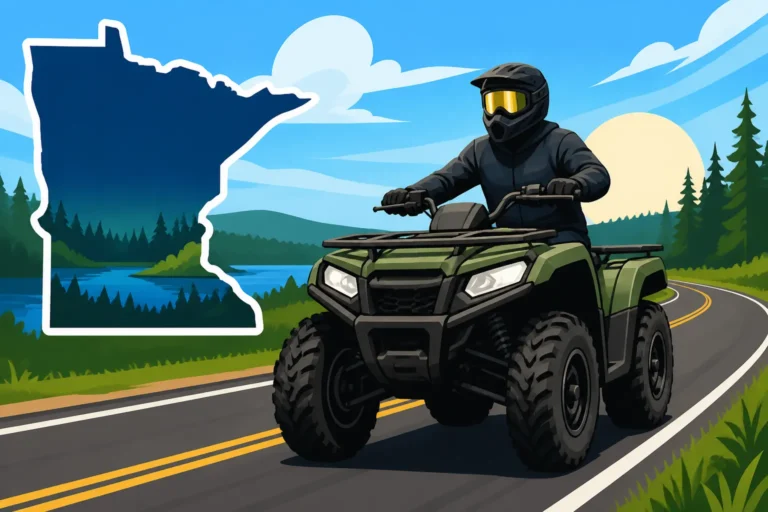
Alright, fellow Minnesota outdoor enthusiasts! We've all been there, haven't we? You're enjoying a fantastic day out on the ATV trails or exploring some back roads with your UTV, feeling that incredible freedom that only Minnesota's wild spaces can offer. Then, suddenly, you hit that unavoidable obstacle: a busy highway. That feeling of dread, or at least serious apprehension, is totally normal. Trying to figure out how to get from one side to the other, safely and legally, can feel like navigating a minefield. This guide is here to cut through the confusion and give you the real-world lowdown on how to cross a Minnesota highway with your ATV or UTV without risking fines or, worse, an accident.
Understanding Minnesota's Highway Crossing Rules for ATVs
Navigating the rules for riding off-highway vehicles (OHVs) in Minnesota can sometimes feel like you need a law degree. But when it comes to crossing highways, it's absolutely crucial to know your stuff. The state has specific regulations in place, not to annoy you, but to keep everyone—riders, drivers, and even pedestrians—as safe as possible. Ignoring these rules can lead to significant penalties, and frankly, puts you in harm's way. Let's break down the key distinctions and specific laws you need to understand.
The "Road Surface" Versus the "Right of Way"
This is perhaps the most critical distinction in Minnesota's OHV laws, and it's where a lot of riders get tripped up. When we talk about roads, we're not just talking about the paved or graveled part where cars drive. The "right of way" is generally much wider than the road surface itself. It often includes the shoulder, the ditch, and even some land beyond that, extending to the property line. For ATVs and UTVs in Minnesota, you're usually permitted to ride within the road right-of-way, particularly in the ditch or on the shoulder, but generally not on the "road surface" itself.
Think about it this way: the ditch is your friend. It's often where you're legally allowed to operate your machine to connect trails or access certain areas. However, the minute your tires touch the paved or graveled lane where cars are actively traveling, you're usually breaking the law unless there's a specific, posted ATV route. This distinction becomes incredibly important when you're looking at a highway crossing. You might be riding legally in the ditch leading up to the highway, but the rules change dramatically the moment you need to traverse the actual lanes of traffic. It's not just semantics; it's a legal and safety boundary. For a deeper dive into these nuances, you might find [Minnesota's Ditch Riding Rules] helpful.
Specific Laws Governing Highway Crossings
Minnesota law is quite clear that OHVs are generally prohibited from operating on the road surface of state and federal highways. However, there are specific exceptions for crossing. The law allows for an OHV to cross a trunk highway (like a US or state highway) when the crossing is made in the most direct manner possible, at approximately a 90-degree angle to the roadway. This isn't an invitation to ride down the highway, but rather to get from one side of the right-of-way to the other as quickly and safely as possible.
You must yield the right-of-way to all vehicular traffic on the highway. This means cars and trucks always have priority. You cannot impede their flow. Furthermore, you can only cross at an intersection or in a designated crossing area, never just anywhere you feel like it. Some cities and counties have specific local ordinances that might allow for limited road use or crossings on certain lower-traffic roads, but for major state or federal highways, these crossing rules are paramount. Always look for signage or specific trail information that might indicate a designated crossing point. It's easy to assume all rules are the same, but local differences can trip you up, so brushing up on [Minnesota Road Rules Riders Get Wrong] is always a good idea.
Penalties for Ignoring the Rules
Believe me, you don't want to learn about Minnesota's ATV laws the hard way – by getting a ticket. The penalties for operating an OHV illegally on a highway, or for making an unsafe crossing, can be pretty steep. You could face fines, and depending on the severity of the infraction, points on your driver's license, or even more serious consequences if an accident occurs. Conservation Officers and local law enforcement are well aware of the rules, and they are out there enforcing them. They know the common spots where riders try to "bend" the rules.
Beyond the legal penalties, the biggest risk is, of course, your safety and the safety of others. Highways are designed for high-speed traffic, and an ATV or UTV, even a powerful one, is no match for a car or semi-truck at highway speeds. An illegal or unsafe crossing is incredibly dangerous. It's just not worth the risk to save a few minutes or avoid trailering a short distance. Understanding these rules isn't just about avoiding a fine; it's about making sure you get home safely at the end of the day. For more on this, check out [Minnesota Fines for Illegal Road Riding].
Preparing for a Safe Highway Crossing
Even with Minnesota's specific laws, successfully and safely crossing a highway comes down to preparation. It's not something you should just "wing it" when you get there. A little foresight and attention to detail can make all the difference, transforming a potentially hazardous situation into a routine part of your ride. From scoping out the area to ensuring your machine is ready and your mind is focused, there are several steps you should take before your tires even approach the asphalt.
Assessing the Intersection and Traffic Flow
Before you even think about putting a wheel onto the highway, you need to conduct a thorough reconnaissance of the crossing point. This isn't just a quick glance; it's a careful assessment. Is it a blind corner? Are there hills that obscure oncoming traffic? How many lanes are there? Is there a median? Look at the speed limit on the highway – a 55 mph zone is vastly different from a 70 mph zone when you're trying to gauge closing speeds.
Pay close attention to the rhythm of traffic. Are there long gaps between vehicles, or is it a continuous flow? Are there stoplights that can create predictable lulls in traffic? You need to identify the safest, most opportune window to cross. Sometimes, if the traffic is relentless, the safest option might be to simply turn around and find an alternative route, even if it means a longer journey. Never rush or feel pressured to cross if the conditions aren't absolutely ideal.
Machine Readiness: Lights, Brakes, and Visibility
Your ATV or UTV needs to be in tip-top shape for any road-adjacent activity, especially highway crossings. First and foremost, check your brakes. Are they responsive and strong? You need to be able to stop quickly and decisively if an unexpected situation arises. Next, ensure all your lights are functional: headlights, taillights, and any turn signals if your machine is equipped. Even during the day, having your lights on can dramatically increase your visibility to oncoming traffic.
It's also a good idea to ensure your machine is clean enough that mud isn't obscuring your lights or reflectors. For older machines, sometimes adding aftermarket lights can provide an extra layer of visibility. Think about anything that can make you more noticeable to drivers who might not be expecting an OHV. A well-maintained machine isn't just about performance on the trail; it's a crucial component of safety when interacting with road traffic. Companies like SuperATV offer a range of robust lighting solutions that can make your machine much more visible, day or night.
Rider Preparedness: Gear and Mindset
Beyond your machine, you need to be ready. This starts with proper gear. A DOT-approved helmet is non-negotiable, even if the law only strictly requires it for certain ages in Minnesota. It protects your head in the unthinkable event of a collision. Beyond that, wear bright, high-visibility clothing. Fluorescent greens, oranges, and yellows stand out much better than camouflage or dark colors, especially against varied backgrounds. Consider a reflective vest, particularly if you're riding near dawn, dusk, or in less-than-ideal weather.
Your mindset is equally important. Crossing a highway requires absolute focus and decision-making. Put away your phone, stop chatting with your riding buddies, and dedicate 100% of your attention to the task at hand. Be patient. If there's any doubt about whether you have enough time or space to cross, wait. It's better to wait an extra minute or five than to try to squeeze through a questionable gap. A calm, focused rider is a safe rider. Understanding [Minnesota Helmet Rules for Riders Under 18] is vital, but honestly, everyone should wear one for their own protection.
The Act of Crossing: Step-by-Step Safety
Once you've done all your prep work, it's time for the actual crossing. This isn't a complex maneuver, but it needs to be executed precisely and with unwavering commitment. Thinking of it as a series of deliberate steps can help you stay focused and ensure you're making the safest possible decision at every turn. Remember, your goal is to be across the highway and safely back into the right-of-way as quickly as possible.
Approaching the Highway: Stop, Look, Listen
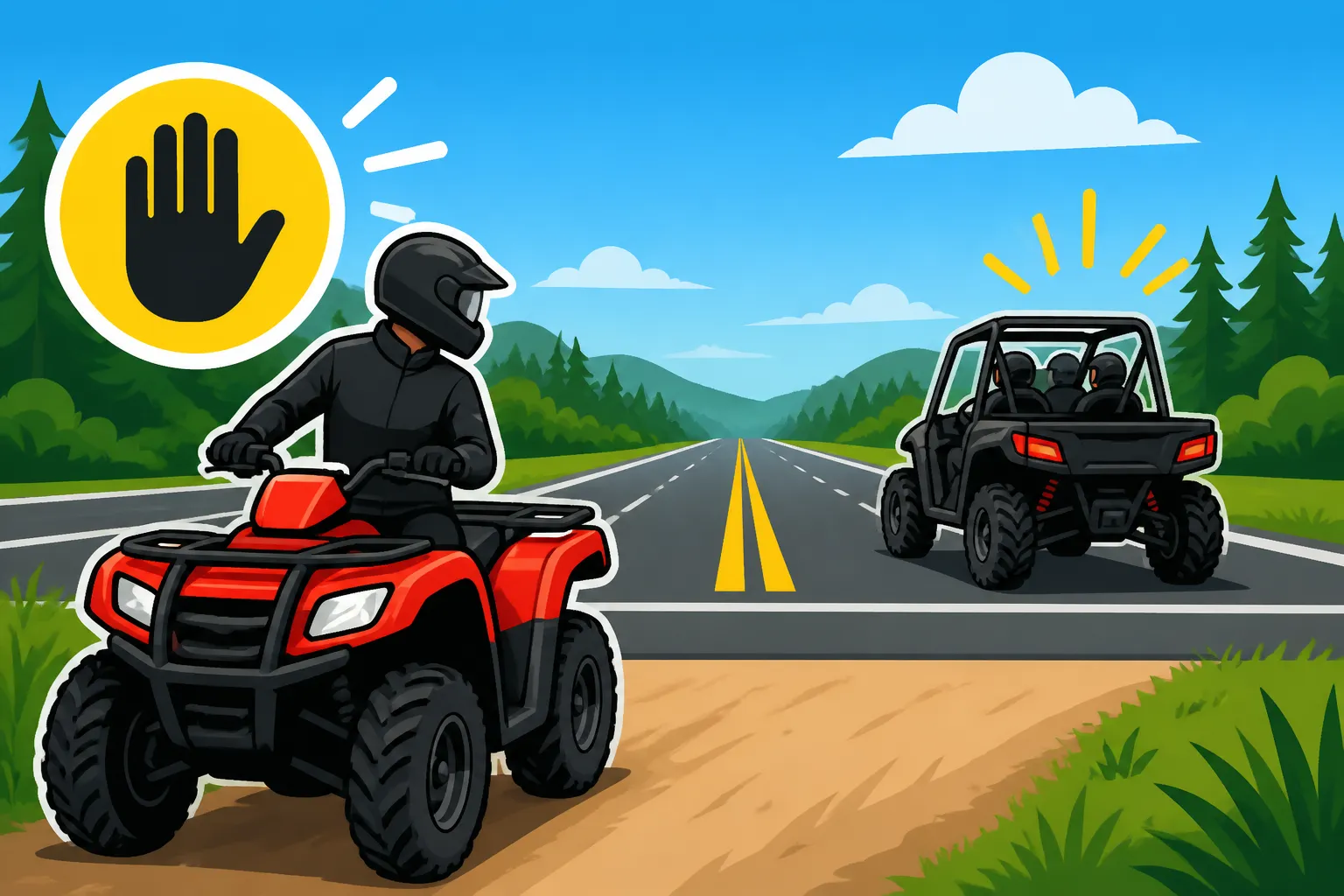
As you approach the edge of the highway right-of-way, slow your machine to a crawl, and then come to a complete stop. Do not just roll up to the edge. Stop a safe distance back from the active traffic lanes, but close enough that you have a clear, unobstructed view in both directions. Now, it's time for the classic "Stop, Look, Listen" mantra.
Look: Turn your head and actively scan for oncoming traffic. Look left, then right, then left again. Check your mirrors if you have them, but rely primarily on a direct visual check. Be aware of both immediate traffic and vehicles further down the road that are approaching quickly.
Listen: While modern machines can be a bit noisy, try to listen for the sound of approaching vehicles, especially those that might be obscured by hills, curves, or other obstacles. The roar of an engine or the hum of tires can give you a crucial early warning.
Wait: If there's any question about whether you have a clear path, wait. Patience is your best friend here. Don't be pressured by others, or by your own desire to keep moving.
Executing the Crossing Quickly and Decisively
Once you've identified a clear and sufficient gap in traffic, it's time to go. Engage your machine and accelerate smoothly and decisively across the highway. Your crossing should be as direct as possible, at approximately a 90-degree angle to the roadway. This minimizes the time you are exposed to traffic and makes your path predictable to any drivers who might suddenly appear.
Do not weave, stop in the middle of the road, or change your mind once you've started. Commit to the crossing. Maintain your speed until you are completely off the road surface and safely back into the ditch or shoulder on the other side. This is not the time for leisurely sightseeing; it's about efficient, focused movement. If you find yourself in a situation where you've started and suddenly see an approaching vehicle, your best bet is to continue across if you have the clear space to do so safely, rather than trying to stop or reverse. Always have a clear exit strategy on the other side.
Group Riding Considerations
When you're riding with a group, highway crossings require even more coordination. The safest approach is for each machine to cross individually, one at a time, just as you would if you were riding alone. Do not attempt to cross in a single, strung-out line, or worse, side-by-side. The lead rider should cross first, verify the other side is clear and safe, and then signal for the next rider to go.
Communication is key here. Hand signals or helmet-to-helmet communicators can be invaluable. Ensure everyone in the group understands the plan before you even approach the highway. Sometimes, the gaps in traffic might only be large enough for one or two machines at a time, requiring the group to split up temporarily. Re-group safely on the other side, well off the highway, before continuing your journey. Patience, again, is paramount when riding with a group. Sometimes, waiting for a stoplight cycle or a significant break in traffic for everyone to cross is the only truly safe option.
What to Avoid: Common Mistakes and Dangerous Practices
Even with the best intentions, it's easy to fall into bad habits or make critical errors when interacting with highways on your ATV or UTV. These aren't just minor infractions; they can quickly escalate into extremely dangerous situations. Knowing what not to do is just as important as knowing what to do, especially when dealing with the high-speed environment of Minnesota's highways.
Riding On the Highway Surface
This is arguably the biggest and most dangerous mistake riders make. Under almost all circumstances, you are not allowed to ride your ATV or UTV on the paved or graveled surface of a Minnesota state or federal highway. The brief act of crossing is the only exception, and even then, it must be direct and at a 90-degree angle. Lingering, riding down the shoulder, or attempting to use the highway surface as a connector between ditches is illegal and incredibly risky.
Automobiles travel at high speeds, and an ATV, even a side-by-side, is relatively slow and small in comparison. Drivers often don't anticipate an OHV on the road surface, leading to a much higher risk of collision. This rule is in place for a reason: your safety. Stick to the ditch, shoulder, or designated trail routes. If you need to cover a significant distance along a highway, the only truly safe and legal option is to load your machine onto a trailer and transport it. [Minnesota's Ditch Riding Rules] reiterates this point constantly.
Misjudging Traffic Speed and Distance
Another common and perilous error is miscalculating how quickly oncoming traffic is approaching or how much distance you truly need to cross safely. What looks like a distant car can close the gap shockingly fast, especially on open stretches of highway where vehicles might be traveling above the posted speed limit. Always give yourself a much larger buffer than you think you need. If you have to ask yourself "Can I make it?", the answer is almost always "No, don't go."
It's also easy to get tunnel vision, focusing only on the immediate traffic. Remember to scan both directions multiple times and look further down the road for vehicles that are not yet close but will be soon. Assume drivers aren't paying attention. While you should ride defensively, you also need to be aware that some drivers are distracted, looking at their phones, or simply not expecting an OHV. Don't rely on them to see you and slow down; rely on your own judgment to cross when the way is absolutely clear.
Ignoring Signals and Signs
Minnesota has a system of road signage and, in some cases, traffic signals at intersections. These are there to regulate traffic flow and improve safety for all users. Ignoring a stop sign, a yield sign, or a red light at an intersection while attempting to cross a highway is not only illegal but extremely dangerous. You are expected to obey all traffic control devices just as a car would, even if you are an OHV.
Furthermore, there might be specific signs related to OHV use, such as "ATV Crossing" or "No ATV Crossing" signs. Always be on the lookout for these. They provide critical information about legal crossing points and restrictions. Ignoring these signs can lead to fines and, more importantly, put you in an unexpected or prohibited area where drivers will be even less likely to anticipate your presence. Always pay attention to what the road and trail signs are telling you. Knowing the rules for Crossing a Minnesota Highway Safely often involves understanding these visual cues.
Essential Gear and Machine Modifications for Visibility
When you're operating an ATV or UTV near or crossing a highway, being seen is paramount. These machines are often smaller and less conspicuous than typical road vehicles, and many drivers aren't accustomed to seeing them in areas adjacent to high-speed traffic. Making yourself and your machine as visible as possible isn't just a good idea; it's a critical safety strategy that can significantly reduce your risk of an incident.
Lighting Up Your Machine
Modern ATVs and UTVs come with some standard lighting, but for situations involving highways, "standard" might not be enough. Consider upgrading your headlights and taillights to brighter LED versions. LEDs consume less power and typically put out a much more intense beam, making you more noticeable both during the day and after dark. Additionally, adding auxiliary lights can be a game-changer. LED light bars or cube lights, especially amber or white ones mounted strategically, can enhance your machine's profile.
Don't forget the rear of your machine! Many riders focus only on forward visibility, but when you're stopped and waiting to cross, or just exiting a crossing, vehicles approaching from behind need to see you. Brighter LED taillights, additional brake lights, or even a rear-facing amber strobe light (where legal and appropriate) can significantly improve your visibility. SuperATV, for example, offers a wide array of aftermarket lighting kits specifically designed for ATVs and UTVs, ranging from powerful LED headlights to accent lights and whips, all engineered to boost your machine's presence.
High-Visibility Apparel
This is one of the easiest and most effective ways to make yourself more visible, and yet it's often overlooked. Forget the camouflage for a moment when you're near a highway. Instead, embrace bright, fluorescent colors like neon green, safety orange, or bright yellow. These colors stand out dramatically against most natural backgrounds and are easily caught by the human eye, even in peripheral vision. Many riding jackets, vests, and even helmets are now available in these high-visibility options.
For an extra layer of protection, consider a reflective vest or reflective tape on your helmet and gear. Reflective materials don't produce light but bounce back light from other sources (like car headlights), making you incredibly visible in low-light conditions. Even during the day, the reflective strips can catch the sun and provide an extra glint that draws attention. Remember, you want to make it impossible for a driver to say, "I didn't see them."
Reflectors and Flags
Beyond active lighting, passive visibility aids like reflectors and whip flags are simple yet effective tools. Ensure your machine's factory reflectors are clean and intact. You might even consider adding additional reflective tape to strategic points on your machine, like the fenders, rear bumper, or even the wheels. This is especially useful for older machines that might not have as many integrated reflective surfaces.
Whip flags, while often associated with dune riding, can also be beneficial in areas where you might interact with road traffic. A bright, colorful flag mounted on a tall pole makes your machine's presence known from a greater distance, especially if your actual machine is obscured by terrain or other vehicles. While not legally required for highway crossings, these small additions can contribute significantly to your overall visibility profile. Remember, a bigger visual footprint means a safer ride. This is part of [Eye Protection on a Minnesota Ditch Ride] and other safety advice, focusing on being seen.
Connecting Your Ride: Alternatives to Highway Crossings
While knowing how to safely cross a highway is crucial, sometimes the best crossing is no crossing at all. Minnesota's vast network of trails and roads sometimes offers alternatives that can entirely bypass the need to contend with high-speed highway traffic. Exploring these options can not only enhance your safety but also provide a more enjoyable and less stressful riding experience. It's all about planning your route effectively and leveraging the resources available.
Utilizing Trail Underpasses and Overpasses
As Minnesota continues to develop and improve its extensive trail system, more and more infrastructure is being built to separate OHV traffic from vehicular traffic. This often includes dedicated underpasses (tunnels) or overpasses (bridges) that allow ATVs and UTVs to safely cross under or over major highways without ever coming into direct contact with cars. These are the gold standard for crossings, offering maximum safety and peace of mind.
Before heading out on a ride, check your trail maps (digital or paper) for your planned route. Many modern trail maps clearly indicate where these dedicated crossings are located. Using these facilities, even if it means a slight detour, is almost always the smarter and safer choice compared to a direct surface crossing. They eliminate the guesswork, the stress of timing traffic, and the inherent risks of mixing with high-speed vehicles. [Minnesota Trails That Link Two Towns] might often feature such infrastructure.
Exploring Designated ATV Routes
In some areas, especially around smaller towns or where significant trail networks exist, local authorities (county or city) may have designated specific roads or routes as legal for ATV/UTV use. These aren't trunk highways, but rather county roads, township roads, or even specific city streets that have been explicitly marked for OHV traffic. Utilizing these designated routes can often help you bypass a major highway crossing or at least reduce the number of high-risk road interactions.
These routes are typically well-marked with specific signage, indicating where OHVs are permitted. Always look for these signs and adhere to any posted speed limits or other restrictions. While these aren't high-speed highways, they still involve sharing the road with other vehicles, so all the rules of defensive driving and visibility still apply. Leveraging these routes allows you to legally and safely connect different sections of trails or access local amenities without having to trailer your machine. Many [Minnesota Cities That Allow ATVs on Streets] will have such routes.
Trailering to the Next Section
Sometimes, despite all the planning and looking for alternatives, a direct highway crossing might simply be too risky or entirely prohibited. In these situations, the safest and most responsible option is to trailer your machine to the next accessible section of trail. This means loading your ATV or UTV onto a trailer, driving your truck or SUV with the trailer along the highway, and then unloading your machine once you're safely past the hazardous area.
While it might seem like a hassle, especially if you only need to cover a short distance, think of it as a small investment in your safety and the longevity of your machine. It completely removes the risk of a highway collision and ensures you're always operating within the bounds of the law. Keeping your machine secure on the trailer with proper tie-downs is also important – remember to consult [Tying a Machine Down for the Interstate]. Investing in a good trailer and learning how to safely load and secure your ATV or UTV is a key part of responsible OHV ownership in Minnesota, especially if you plan on exploring diverse riding areas.
Disclaimer
This article is for general informational purposes only and does not constitute professional advice. Laws, prices and regulations vary by location and change over time. Consult a qualified professional for guidance on your specific situation.