Ticks and Bug Season on the Trail
A ride through Minnesota’s woods can leave you with more than mud on your boots: ticks may be tucked into clothing, mosquitoes can make a trail stop miserable, and black flies can swarm around exposed skin. This guide explains when bugs are most bothersome, how to protect yourself and your group, and what to do after a ride.
When ticks and biting insects are active in Minnesota
Tick season follows the woods and weather
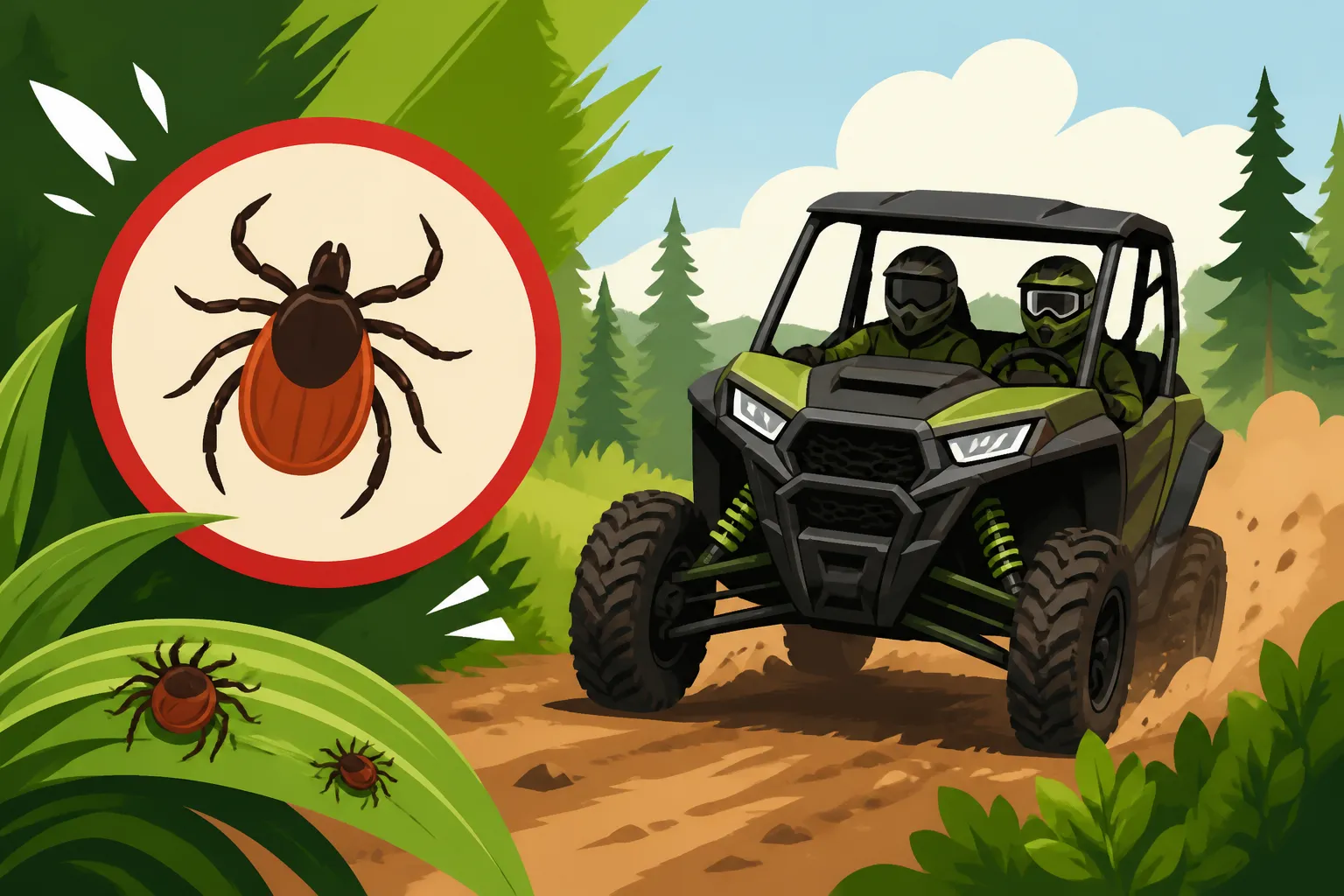
Ticks can be a concern during much of Minnesota’s riding season, especially in wooded areas, brush, tall grass, and leaf litter. Blacklegged ticks, often called deer ticks, may carry illnesses such as Lyme disease. American dog ticks are also common in the state. Your risk depends on the habitat, conditions, and time spent outdoors—not simply the number of miles you ride.
Ticks do not usually drop from trees onto riders. They wait on vegetation and attach when a person or animal brushes past. That makes trail edges, overgrown staging areas, and places where riders step off the trail useful spots to be especially careful. A quick break beside a leafy track can mean more exposure than the ride itself.
Spring and early summer are common times for tick encounters, but do not assume the risk disappears once summer is underway. Weather and local conditions affect activity, and ticks may be encountered during warmer periods outside the season people typically associate with them. Check yourself and your riding companions after every outing, even if the trail looked dry and open.
Mosquitoes and black flies have their own peak periods
Mosquitoes are often most noticeable in damp, sheltered places and around standing water, particularly during warm evenings. A buggy stop at a trail junction or lakeside pull-off can quickly turn uncomfortable. Black flies can be a nuisance in parts of northern Minnesota, especially around moving water and wooded areas during their active season. Their timing varies with weather and location, so two rides in the same region may feel very different.
The practical difference is that ticks are a concern even when you do not notice a bite, while mosquitoes and black flies are hard to miss once they start swarming. Plan for both. Wear clothing that helps limit exposed skin, bring a repellent you can apply as directed, and avoid lingering in a buggy area if the group is getting bitten.
Trail conditions and route choice can influence how much time you spend in bug-heavy spots. Before heading north, review [Planning a Minnesota Riding Trip] and check the route and access details for places such as [Nemadji State Forest and Its 200 Miles]. If you are using a mapping app such as onX Offroad to plan a route, use it to identify trailheads, nearby roads, and potential places to take a break—not as a substitute for posted signs or current land-management guidance.
| Pest | Where riders may encounter it | A practical response |
|---|---|---|
| Ticks | Brush, tall grass, leaf litter, and wooded trail edges | Use repellent as directed, cover exposed skin, and do a full tick check after the ride |
| Mosquitoes | Damp or sheltered areas, especially near standing water | Apply an appropriate repellent and keep breaks brief if insects are swarming |
| Black flies | Wooded areas and places near moving water | Cover skin, use repellent as directed, and move away from the swarm when possible |
How to protect yourself before and during a ride
Choose clothing that makes ticks easier to spot
Long sleeves and long pants can reduce exposed skin. Light-colored clothing can make ticks easier to see before they reach skin, though it does not prevent them from attaching. Tuck pants into socks or boots when practical, and consider clothing designed for outdoor use if you ride frequently in tick habitat.
A full riding kit does not need to feel like a sauna. Choose breathable layers and adjust them as the day warms up. If you are riding in a side-by-side, keep a light layer handy for stops rather than relying on the vehicle to shield you from insects when you step out. Gloves and boots help cover skin, but they do not replace checks around cuffs, waistbands, and other places ticks can hide.
For repellents, follow the product label carefully. Some products are intended for skin, while others are designed for clothing or gear. Do not apply a clothing treatment directly to skin, and take extra care when applying any product around children. If you are unsure which product is appropriate for someone in your group, read its directions and ask a health professional or pharmacist.
Make trail stops part of your bug plan
A short stop can become a long one when someone needs to adjust gear, find a snack, or check a map. Pick a more open stopping place when available, rather than sitting in tall grass or leaning against brush. Keep jackets and bags off the ground, and check clothing before getting back on the machine.
If you use onX Offroad to review a route, mark likely breaks near accessible trailheads or open areas when planning. The app can help you think through where a group might pause, particularly on a remote ride, but cell reception and map details can vary. Download or prepare the information you need before you leave service, and carry a backup navigation option. For more on preparing for limited reception, see [Cell Dead Zones in Northern Minnesota] and [What to Carry on a Remote Northwoods Ride].
Insect protection is one part of a broader ride plan. Carry basic first aid supplies, enough water, and clothing for changing weather. A group that has planned its stops and knows where it is going is less likely to wander into brush while trying to sort out directions. Review [First Aid Far From the Trailhead] before a remote outing, and check [Checking Minnesota Trail Status Before You Drive] so you are not forced to reroute unexpectedly.
Protect children and pets without relying on memory
Kids may not notice a tick crawling on a sleeve, and they may be eager to climb off the machine and explore. Build a simple routine: check exposed clothing at stops, remind children to stay on the trail, and do a careful check after the ride. Pay attention to the scalp and hairline, behind the ears, under arms, around the waist, and behind knees. Ticks can be small, so a quick glance is not always enough.
Pets can also pick up ticks and bring them near the people in the group. Ask a veterinarian about suitable prevention for your animal, and check its coat after outdoor activity. Do not assume a product made for one species is safe for another; use only products intended for that animal and follow the directions.
For family outings, consider choosing a route that keeps the day manageable and allows for regular checks without rushing. [Family-Friendly Minnesota ATV Trails] can help with choosing a more suitable outing, while [Riding Minnesota's North Shore] offers a reminder that landscape, trail setting, and nearby water can all shape what you encounter.
What to do after a Minnesota trail ride
Check clothing, gear, and skin before settling in
Before getting into a vehicle or relaxing at camp, look over clothing and gear. Check socks, cuffs, waistbands, hats, backpacks, and the places where clothing has folded or gathered. Ticks can travel on fabric and equipment, so inspect the items that have been on the ground or in brush as well as your skin.
Once home or back at your lodging, change clothes and do a careful body check. A mirror or a trusted companion can help with areas that are hard to see. Showering soon after being outdoors can make it easier to notice ticks and wash away unattached ones, but it does not replace a thorough check. Pay particular attention to places where clothing was tight or where skin is warm and covered.
Handle riding clothes according to their care labels. If you use a dryer, follow garment instructions and established public-health guidance for treating outdoor clothing; do not assume that a quick tumble is appropriate for every fabric. Keep potentially exposed gear separate from clean clothing until it has been checked.
Remove an attached tick promptly and carefully
If you find an attached tick, use fine-tipped tweezers if available. Grasp it as close to the skin as possible and pull upward with steady, even pressure. Avoid squeezing the body, twisting sharply, or using folk remedies such as heat, petroleum jelly, or nail polish. Those methods can delay removal or irritate the skin.
After removal, clean the bite area and your hands. If you cannot remove the mouthparts easily, avoid digging aggressively into the skin; clean the area and seek medical advice if needed. Note when and where you may have been exposed, and keep an eye on the bite site and your health in the following days and weeks.
A rash, fever, headache, muscle aches, or other concerning symptoms after a possible tick bite are reasons to contact a healthcare professional. Tell them about the outdoor exposure and when it happened. Symptoms and their timing can vary, so do not wait for a particular rash pattern before seeking advice if you feel unwell.
Make the post-ride check routine automatic
It is easier to keep up with tick checks when they happen at the same time every ride. For example, make one check when loading the machines, another when changing out of riding gear, and a final check before bed. A routine is especially useful after a long day, when everyone is tired and eager to get back to the cabin.
If your group uses onX Offroad for route planning, you can also make the post-ride check part of the same trip routine: confirm everyone is accounted for, review the route completed, then check clothing and skin before heading inside. The app can help organize the route side of the day, while a deliberate physical check addresses the part a map cannot.
Planning around bugs without giving up the ride
Adjust timing and breaks to local conditions
Bug activity can change with weather, shade, moisture, and time of day. If insects are thick at a particular stop, move to a more open area or keep the break short. When possible, plan longer breaks at developed trailheads or other suitable open locations rather than beside dense vegetation.
Do not treat a route description or a previous visit as a guarantee. A trail that felt comfortable last month may be buggy after a wet stretch, while breezier or sunnier conditions may make a stop more pleasant. Check local conditions before leaving and be ready to adjust the day. For a state forest ride, follow signs and stay on authorized routes; [Trail Signs and Markers in a State Forest] can help explain why those markers matter.
Mapping tools can help you prepare, but do not depend on a phone alone in areas with weak reception. onX Offroad may be useful for reviewing a route and saving information ahead of time, while a paper map and a clear group plan provide backup. Keep the app’s route information secondary to posted closures and instructions from the land manager.
Keep the goal realistic for your group
If someone in the group is sensitive to bites, traveling with young children, or simply uncomfortable around insects, build in flexibility. Choose a ride with convenient places to stop, carry extra clothing, and agree ahead of time that the group can turn around or shorten the route. Nobody has to prove anything by staying in a miserable swarm.
A little preparation usually pays off: protective clothing, an appropriate repellent, a planned route, and a thorough check afterward. Those steps will not eliminate every bite or tick encounter, but they can make a Minnesota trail day feel far more manageable—and help you spend less time worrying about bugs once you are back home.
Disclaimer
This article is for general informational purposes only and does not constitute professional advice. Laws, prices and regulations vary by location and change over time. Consult a qualified professional for guidance on your specific situation.