Busy Minnesota Trails on a Holiday Weekend
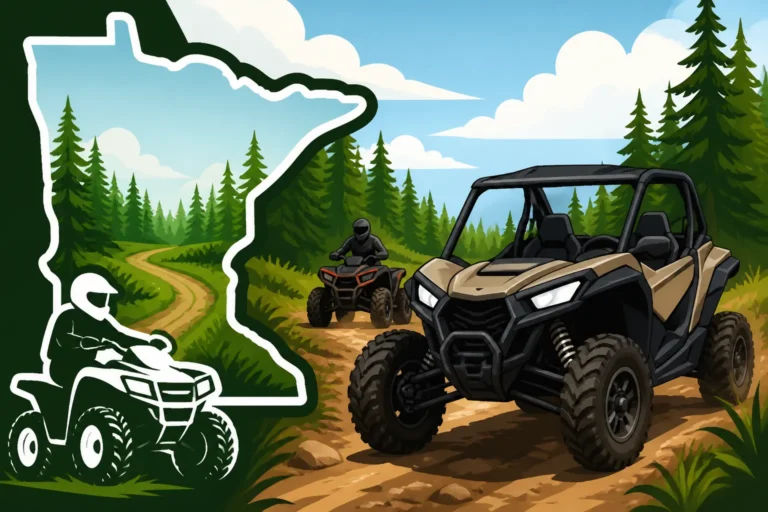
A holiday weekend can turn a Minnesota trailhead into a slow-moving line of trucks, trailers, and riders trying to choose a route at the same time. The busiest sections may feel very different from a quiet weekday ride, but a little planning can prevent parking stress, rushed decisions, and avoidable trail conflicts. This guide covers how to choose a riding area, prepare for crowds, and keep your group moving safely.
Why Minnesota ATV trails feel busier on holiday weekends
Holiday weekends bring more riders to popular trail systems, especially when the weather is pleasant and families have a few days away from work. That does not mean every trail is crowded all day. Traffic can vary by trailhead, time, weather, and local events, so plan for bottlenecks without assuming the entire route will be packed.
Expect crowds at access points first
The busiest moments often happen before a ride really gets underway. Riders arrive around similar times, unload machines, check maps, adjust helmets, and wait for friends. A trailhead with limited parking can fill quickly, and a vehicle with a long trailer may need more space to maneuver than it does on an ordinary day.
The entrance to a popular route can also become a meeting point for groups. Riders may stop to sort out directions or wait for someone who is still unloading. If you arrive to find the staging area cramped, resist the urge to squeeze into a questionable spot or block the way for another trailer. Look for a permitted overflow area, if one is available, or choose another legal access point.
Areas such as the Iron Range OHV Area near Gilbert, Nemadji State Forest, Spider Lake in the Foot Hills State Forest, and trail corridors around the Soo Line and Paul Bunyan State Forest can attract riders looking for a full day outdoors. Their layouts and access points differ, so do not assume that parking, services, or trail conditions will be the same from one area to another. Review Minnesota Trailhead Parking and Staging before you leave, and check local trail information for the specific place you intend to ride.
Crowding changes during the day
Even a busy trail system can have quieter stretches. Traffic often builds around popular entry points, intersections, scenic stops, and connections to towns or services. Riders may also leave at different times, so the first hour after arriving can feel more congested than the middle of the day—or the reverse, depending on the area and the conditions.
That changing pattern is one reason to avoid making a tight schedule. If your group expects to ride a long loop, stop for lunch, and get back to the trailer by a fixed time, a slow section or a navigation pause can make the plan stressful. Allow room for breaks, regrouping, and a slower pace where visibility is limited.
A holiday weekend is also a poor time to assume that a familiar trail will be easy to navigate from memory. Junctions can be busy, and following another group without checking where it is headed can put you on the wrong route. Use a map or navigation tool, and confirm that the route is open and appropriate for your machine. onX Offroad can help riders view mapped routes and keep track of their position, but it should be one part of your navigation plan rather than a substitute for paying attention to signs and conditions.
How to choose a trail and plan a realistic route
The best holiday-weekend route is not necessarily the longest or most famous one. It is the route that matches your group’s experience, machine capability, available time, and willingness to handle busier access points. Picking a manageable plan before you arrive makes it easier to adjust without a parking-lot debate.
Match the trail to your group
Think about the least experienced rider in your group, not just the person who knows the area best. A newer rider may need more time at intersections or on uneven ground. A family with children may want a shorter outing with a clear turnaround point rather than a route that depends on everyone keeping pace for several hours.
Trail difficulty and machine fit matter, too. A route suitable for a narrow machine may not work for a wider side-by-side, and surface conditions can affect how difficult a section feels. Read Minnesota Trail Difficulty Ratings and compare the information with the capabilities and width of your machine. If you are bringing children, Riding Minnesota Trails With Kids can help you think through pacing, breaks, and age-appropriate preparation.
Be honest about what your group enjoys. Some riders are happy with a slow, scenic loop and frequent stops; others want to cover more ground. When those preferences do not match, agree on a route that gives the group a comfortable shared plan. Splitting up may sound convenient, but it creates extra coordination and can leave someone navigating alone in an area with limited cell service.
Make a route plan with a backup
Before leaving home, identify your intended starting point, a shorter alternative, and a reasonable time to turn back. Share the plan with everyone in the group, including the person who is riding sweep. If the main access point is full, your backup should be a verified, legal alternative—not a roadside pull-off that happens to look convenient.
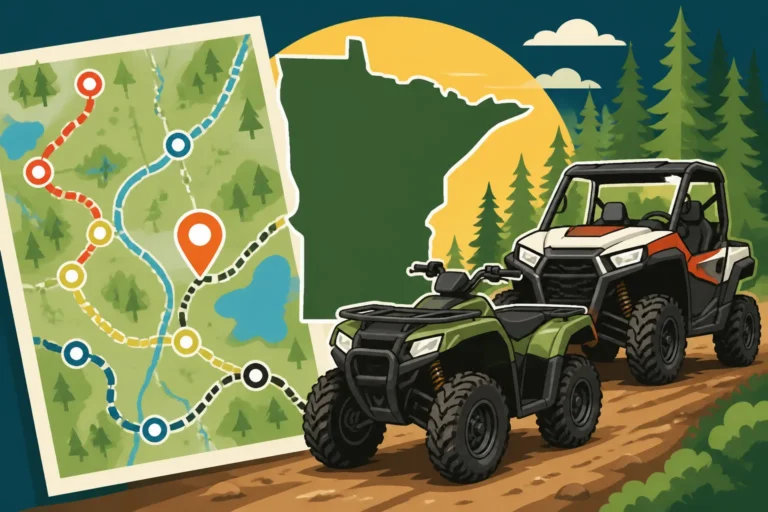
Check the route in advance using reliable trail information and a map. onX Offroad may be useful for reviewing mapped routes, saving information for navigation, and checking where you are when trails branch. Still, downloaded maps and screens do not replace posted signs, local closures, or sound judgment. A map can help you understand the layout; it cannot tell you that a muddy section has become difficult or that a route is temporarily closed.
For a broader planning routine, see Finding a Minnesota DNR Trail Map and Checking Minnesota Trail Status Before You Drive. Confirm that the information applies to your chosen riding area and access point. Trail status can change, and a route shown on a map should not be treated as permission to ride wherever it appears. If an official closure or posted restriction conflicts with your intended route, follow the restriction and use your backup plan.
| Planning choice | What to check | Why it helps on a holiday weekend |
|---|---|---|
| Trail system | Route access, machine fit, and area rules | Prevents arriving with a plan that does not suit your group |
| Starting point | Parking capacity and legal staging options | Reduces the chance of getting stuck searching for a place to unload |
| Route length | Estimated riding time, stops, and turnaround point | Leaves room for slow sections and regrouping |
| Navigation | Map access, saved route details, and offline options | Helps at confusing intersections or when service is limited |
| Backup plan | Another verified access point or shorter route | Gives the group a calm alternative if the first choice is busy |
| Fuel and supplies | Range, fuel availability, water, and basic repair items | Avoids depending on an unconfirmed stop or service |
Getting through crowded trail sections safely
Busy trails call for patience, clear communication, and predictable riding. A line of machines may move more slowly than expected, especially near a junction or a narrow section. The safest response is usually to give the group ahead space and wait for a clear, legal opportunity to continue—not to rush past because your schedule is slipping.
Ride predictably and leave room
Keep a safe following distance. Dust, uneven ground, and sudden stops can make it harder to react when riding close behind another machine. On a narrow trail, stay in single file when needed and give oncoming riders room to pass where the trail allows. Avoid stopping in a blind spot or at the top of a rise, where another rider may not see you in time.
At intersections, slow down enough to read signs and confirm your route. Do not assume the group ahead is turning where you need to go. If you need to regroup, move out of the main line of travel when it is safe and permitted to do so. A trail intersection can be a confusing place to stop when several groups are arriving from different directions.
Communication is especially important when a group includes riders with different experience levels. Agree on simple signals and a regrouping routine before starting. For example, decide that the lead rider waits at major junctions and that the sweep rider confirms everyone has made the turn. Avoid letting a fast rider disappear ahead while a newer rider feels pressured to keep up.
Plan for delays, fuel, and limited service
A crowded trail day can take longer than expected even when nothing goes wrong. A slow-moving group, a break, a navigation check, or a minor machine issue can shift your schedule. Pack enough water and basic supplies for a longer outing than the one you hope to take. Carry the tools and recovery equipment that make sense for your machine and planned route, and know how to use them before you need them.
Fuel planning deserves special attention. Do not assume that a station will be open, close to your route, or able to serve your machine. Identify a realistic fueling option before you head out, and keep enough fuel in reserve to handle a route change. Fuel Planning for a Minnesota Trail Day offers a useful way to think through range and stops.
Cell service can be inconsistent in parts of northern Minnesota and wooded riding areas. Tell someone who is not riding with you where you expect to go and when you plan to return. Save key route information before entering areas where service may be limited, and consider carrying a paper map as a backup. For more on planning around coverage gaps, see Cell Service in the Minnesota Northwoods. onX Offroad can support route awareness when you have prepared the map information in advance, but do not count on a live connection being available throughout the ride.
A practical holiday-weekend checklist
A short checklist can catch the small problems that turn into frustrating delays once the trailer is unloaded. Run through it the day before, then do a quick second check before leaving the staging area.
Before you leave home
- Confirm that your chosen trail and access point are open and appropriate for your machine.
- Pick a primary route, a shorter option, and a backup starting point.
- Check that the trailer, tie-downs, ramps, and tow vehicle are ready.
- Bring required riding gear, water, snacks, and basic tools.
- Check fuel range and identify possible stops without assuming services are available.
- Share the route and expected return time with someone outside your riding group.
- Save useful map information and carry a backup navigation option.
If you are deciding between a popular weekend outing and a quieter trip, compare your schedule with the likely pressure on access points and services. A weekday can be a calmer option for some riders; Weekday Riding on Minnesota Trails explores that alternative. If the holiday weekend is the only time everyone can go, plan around the crowd rather than letting it dictate your decisions.
At the trailhead and on the ride
- Park and unload only where permitted, and keep access routes clear.
- Review the route with the whole group before setting off.
- Assign a lead rider and sweep rider, especially in a large group.
- Follow posted signs and closures, even if your map suggests another route.
- Leave space between machines and slow down near junctions and blind areas.
- Stop to regroup only where you can do so safely without blocking other riders.
- Turn back or shorten the ride if the group is tired, delayed, or uncomfortable.
Local clubs help maintain many Minnesota riding opportunities, and their knowledge can be useful when you are trying to understand an area’s trail network or community guidance. Minnesota ATV Clubs and the Trails They Keep explains the role clubs play. For conditions and access questions, use information relevant to the specific system you plan to ride rather than relying on a general assumption about the region.
A successful holiday ride does not depend on avoiding every other rider. It depends on arriving with a flexible plan, choosing a route your group can handle, and giving yourself enough time to respond to the day as it unfolds. If parking is full, a trail is closed, or the group needs a shorter loop, treating that change as part of the plan can make the outing far less stressful.
Disclaimer
This article is for general informational purposes only and does not constitute professional advice. Laws, prices and regulations vary by location and change over time. Consult a qualified professional for guidance on your specific situation.