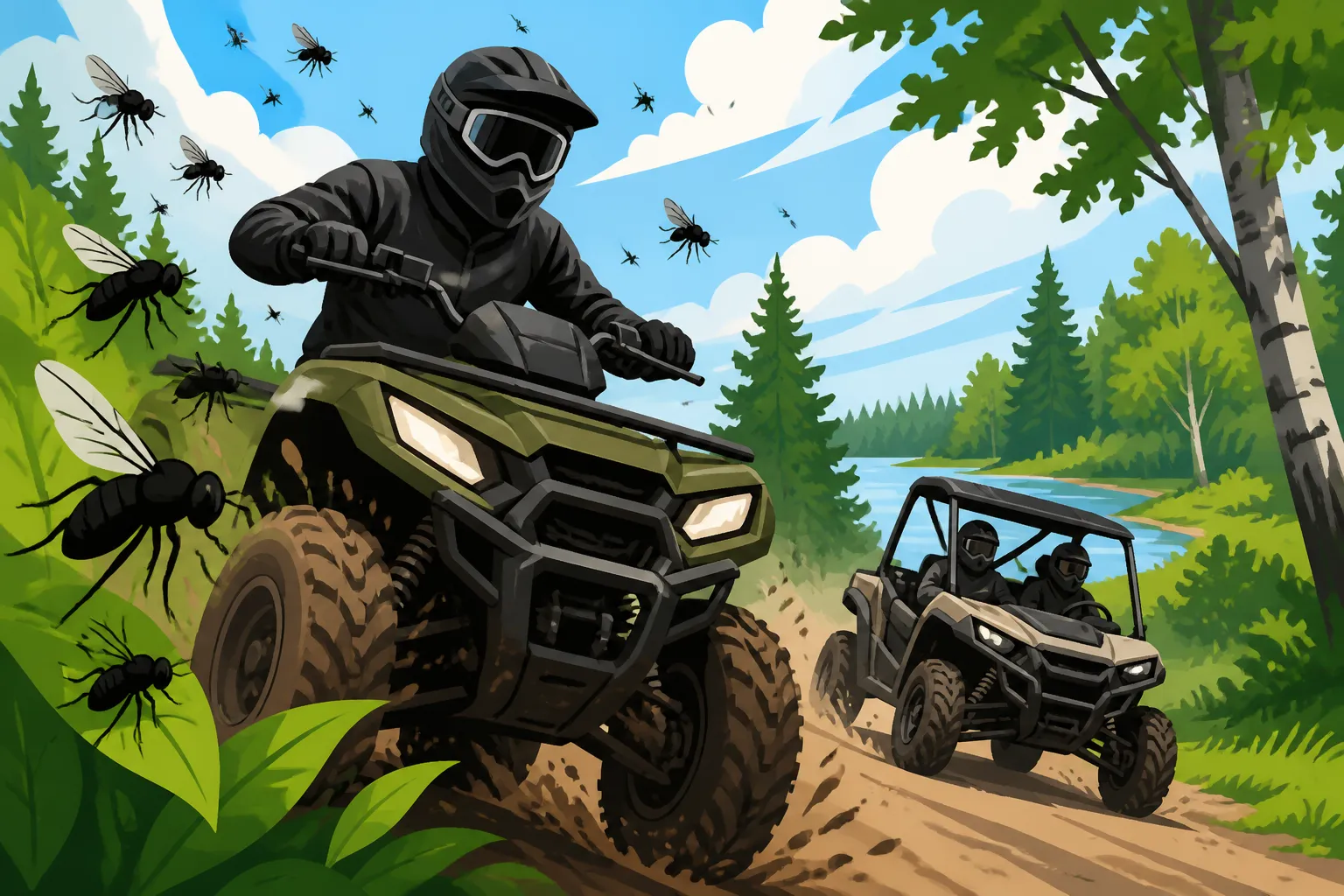
Black Flies on a June Ride
A June ATV ride in Minnesota can turn miserable when black flies find the gaps around your helmet, collar, and gloves. These tiny biters are especially frustrating when you stop to check a map or help someone on the trail. This guide explains how to dress, choose repellents, plan breaks, and respond to bites without letting bugs call off the whole ride.
Why Black Flies Can Make a June Ride So Difficult
When black flies are most bothersome
Black flies are a familiar nuisance during Minnesota’s warmer months, and June rides can overlap with active black fly season. Their numbers and intensity vary with local weather, water, and habitat, so one trail day may be relatively calm while another feels relentless. Damp, wooded areas and places near moving water can be especially uncomfortable, but conditions can change over a short distance.
The problem is not just the bite itself. Black flies can swarm around your face and ears, sneak beneath clothing, and keep biting while you are trying to focus on steering. They are small enough to slip through loose openings, so a standard outfit that works for a cool morning may not provide enough protection once the bugs are out.
A warm, overcast, still day can feel particularly aggravating because you may be reluctant to add another layer, yet exposed skin gives flies easy access. If the weather turns breezy, riding may feel more comfortable, but don’t count on wind to protect you at every stop. Before planning around expected conditions, check local trail information and prepare for the possibility that insects will be worse than you anticipated. [Ticks and Bug Season on the Trail] offers a broader look at seasonal pests riders may encounter.
Why stops often feel worse than the ride
Moving through a trail can make bugs seem less noticeable. The moment you pull over to take a break, examine a route, adjust gear, or sort out a minor machine issue, they may gather around your face and hands. That’s often when riders discover that their gloves have a gap at the wrist or their shirt collar doesn’t close securely.
Stopping also gives you time to notice bites. Black fly bites can involve a small cut in the skin and may leave itching, redness, or swelling. People react differently: one rider may barely notice a bite, while another develops an itchy, raised spot that lasts longer. Scratching can further irritate the area, especially if your hands are dusty or dirty from riding.
Build bug protection into your planned stops rather than waiting until everyone is swatting. Choose a spot where you can keep your helmet on while you get organized, and have water, maps, snacks, and basic supplies within easy reach. A few minutes of preparation at the trailhead can reduce the number of times you need to rummage through a pack with bare hands later.
What to Wear and Carry for Black Fly Protection
Cover skin without overheating
Long sleeves, long pants, and gloves reduce the amount of exposed skin black flies can reach. Lightweight, breathable fabric can be more comfortable than a heavy layer, particularly when temperatures rise. Aim for clothing that covers your wrists and ankles without bunching or interfering with your ability to move, shift position, or operate the machine.
Pay attention to openings. Tuck a shirt into pants, fasten cuffs, and choose gloves that overlap the sleeves. If your shirt collar sits open, a neck gaiter or similar lightweight covering may help shield the area. Keep the fit comfortable rather than tight enough to restrict movement or breathing, and make sure any added layer works with your protective riding gear.
A head net can help during stationary breaks in severe insect conditions, but it needs to work safely with your helmet and eye protection. Don’t wear anything that obscures your vision, blocks your hearing, interferes with a secure helmet fit, or can snag on equipment. Try unfamiliar gear before the ride, not for the first time beside a busy trail.
Choose repellents carefully
Repellent can help on exposed skin, but read and follow the product label. Products with ingredients such as DEET or picaridin are commonly used to discourage biting insects; apply them as directed and avoid eyes, mouth, cuts, and irritated skin. If you’re applying repellent to a child, follow the label’s age guidance and supervise the application.
Some products are designed for clothing rather than skin. Permethrin-treated clothing can be one option, but permethrin products meant for clothing should not be applied to skin. Follow the label directions for treatment and drying, and keep treated items away from people and pets until they are ready to use as directed. Don’t assume that more product means better protection.
Repellent can also affect riding equipment or finishes. Avoid spraying near a helmet, visor, goggles, plastics, or painted machine parts unless the product directions say it is suitable for that use. A practical approach is to apply skin repellent before putting on your helmet and gloves, then wash your hands before handling food. Carry a small, securely closed container so you can reapply according to the label without coating the inside of your gear.
| Riding problem | Useful preparation | What to watch for |
|---|---|---|
| Flies reach your wrists | Gloves that overlap long sleeves | Loose cuffs or gaps when you reach forward |
| Bites around your neck | A comfortable neck covering | Any fabric that restricts movement or catches on gear |
| Bugs gather during breaks | Keep repellent and supplies accessible | Applying repellent near eyes, food, or equipment |
| A rider is sensitive to bites | Bring personal medication and a basic first-aid kit | Allergic symptoms that need prompt medical attention |
| Conditions are worse than expected | Have a plan to shorten or change the ride | Continuing when the group is distracted or uncomfortable |
For a fuller packing checklist, [What to Carry on a Remote Northwoods Ride] can help you think beyond insect protection, particularly if your route takes you far from a trailhead. A compact first-aid kit, drinking water, and a way to contact help can matter just as much as having another layer of clothing.
How to Plan a More Comfortable Minnesota Trail Day
Check conditions and choose a flexible route
Look at the trail and weather information before loading up, especially after a wet spring or a change in conditions. Mud, standing water, or a slow-moving day can mean more time stopped and more time exposed to insects. [Minnesota Trail Conditions After a Wet Spring] explains why conditions can vary, while [Checking Minnesota Trail Status Before You Drive] is a useful reminder to verify access before making the trip.
Consider planning a route with reasonable options for turning back or taking a shorter loop. If the black flies are intense, a long route with few convenient places to pause may feel much harder than expected. A shorter ride can still be a good day out, especially when the group includes children, newer riders, or anyone who is already uncomfortable.
A mapping tool can help you understand the route and keep track of where you are, but don’t rely on a phone alone in remote country. Some riders use onX Offroad to review routes and trail access before leaving. Download or save the information you need when you have a connection, carry a backup map when appropriate, and tell someone where you plan to ride. Cell coverage can be limited in parts of northern Minnesota, so plan for that possibility rather than assuming you can look everything up on the trail. [Cell Service in the Minnesota Northwoods] covers that concern in more detail.
Time breaks and group stops thoughtfully
Before starting, agree on how the group will handle stops. A quick drink break may be more comfortable if everyone has water and snacks ready instead of taking off helmets and unpacking bags. For a longer stop, choose a place where riders can stand safely away from traffic, other machines, and trail hazards while still keeping an eye on the group.
Try not to let insect discomfort turn a small navigation question into a long, unplanned roadside meeting. Review the route before the ride, appoint a lead and sweep rider if the group is large, and decide how to regroup if someone falls behind. If you use onX Offroad or another mapping app, make sure riders understand the route rather than relying on a single person’s phone.
Be willing to change plans. If someone is swatting constantly, struggling to focus, or becoming increasingly irritated, shorten the loop or head back. That is not a failed ride; it is a sensible call when the conditions are making safe riding harder. For seasonal timing context, [Best Month to Ride Minnesota Trails] can help with broader trip planning, but local conditions still matter more than a fixed calendar expectation.
Bites, Itching, and When to Stop Riding
Care for ordinary bites
After a bite, move to a safe place before taking off gloves or handling skin. Wash the area with soap and water when available, then use a cool compress to ease itching and swelling. Try not to scratch, even when the itch is distracting; broken skin can become more irritated and may be harder to keep clean during a trail day.
If you regularly use an over-the-counter treatment for itchy bites, follow its label and make sure it is appropriate for you. Don’t apply products to broken skin unless their directions allow it. Riders with a history of strong reactions may want to bring the treatment or medication they normally use and discuss recurring concerns with a healthcare professional before a remote trip.
Watch how the bite changes. Mild itching and local redness can be uncomfortable without necessarily meaning something serious is happening. But swelling that spreads significantly, worsening pain, warmth, drainage, or signs of infection deserve medical advice. If you have a known allergy, follow your clinician’s instructions and carry any prescribed emergency medication as directed.
Know when symptoms require urgent help
A severe allergic reaction can involve trouble breathing, swelling of the face or throat, faintness, or widespread hives. Treat those symptoms as an emergency. Stop the ride, get help, and use prescribed emergency medication according to the instructions you have been given. Don’t leave a rider alone while the group searches for assistance.
It is also worth distinguishing a typical bite reaction from signs that someone is becoming overheated, dehydrated, or exhausted. On a warm ride, discomfort can build while a person focuses on the bugs. Confusion, unusual weakness, dizziness, or inability to continue safely are reasons to stop in a safe place and assess the situation rather than pushing on.
If you are riding somewhere remote, know what your group will do if someone needs help. Bring first-aid supplies suited to your needs, share the route plan with someone at home, and identify a practical way to reach assistance. [First Aid Far From the Trailhead] can help you plan for injuries and illness beyond simple bites. When conditions, visibility, or a rider’s health make the trail unsafe, turning around is the right decision.
Disclaimer
This article is for general informational purposes only and does not constitute professional advice. Laws, prices and regulations vary by location and change over time. Consult a qualified professional for guidance on your specific situation.