Supervising a Youth Rider in the Ditch
A youth riding an ATV in a Minnesota road ditch needs more than a capable machine and an interested adult. Age eligibility, safety certification, supervision, equipment, and whether that stretch of right-of-way is open to riding all matter. Here’s how to plan a supervised ride, what the adult should do, and where to check the rules before setting out.
Start with age, machine, and route eligibility
A roadside ditch is part of a public road right-of-way. That means a youth riding there is subject to public-use rules, not just the rules that apply on private land. A parent’s permission or presence does not make an otherwise ineligible rider eligible, and an open-looking ditch is not automatically an authorized route.
For riders aged 12 to 15, Minnesota’s requirements include safety certification and adult accompaniment for riding in public areas such as a road right-of-way. The details can depend on the rider’s age and the machine’s class. Younger children may not be eligible to operate on a public right-of-way, so don’t assume that a child who can ride on family land can also ride a ditch. Check the current age and machine rules before planning the trip; Minnesota Road Rules for Riders Aged 12 to 15 covers the age-specific points.
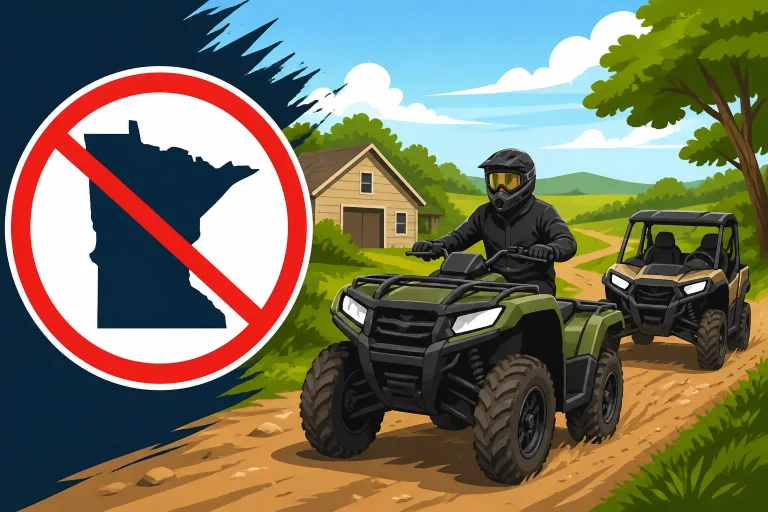
For an eligible youth, the accompanying adult should be an adult allowed under the applicable rule, such as a parent or guardian where that is required. Plan for the adult to ride a separate machine rather than carry the youth as a passenger on a single-rider ATV. A second machine lets the adult supervise while keeping the youth in control of their own vehicle. Never add a passenger to a machine that is not designed and equipped to carry one.
Use this as a planning summary, not as a substitute for checking the current Minnesota DNR rules and local route restrictions:
| Before riding | What to confirm |
|---|---|
| Rider’s age | The youth is old enough to operate that machine in a public road right-of-way |
| Safety training | The rider has any required Minnesota ATV safety certification |
| Adult supervision | The required adult accompanies the youth and can supervise throughout the ride |
| Machine | The ATV’s class and size are suitable and legal for the rider |
| Route | The local road authority allows ditch riding on that stretch |
| Equipment | Required protective gear is available and properly fitted |
| Conditions | The ditch is visible, passable, and safe for the rider’s ability |
Safety certification is not a replacement for supervision, and supervision is not a replacement for certification. If the youth has not completed the required training, postpone the public-right-of-way ride rather than treating a short trip as an exception. See Minnesota ATV Safety Training Requirements for the certification basics.
Route eligibility deserves its own check. A ditch may be beside a county road, state highway, or local street, and rules can differ by road and location. Restrictions may be posted, and a city or road authority may limit or prohibit riding. Do not treat every right-of-way as a continuous trail. What Minnesota Requires Before You Ride the Ditch explains the checks to make before choosing a route, while Can You Ride the Road Surface in Minnesota? covers the important distinction between riding a ditch and riding on the roadway itself.
What effective supervision looks like
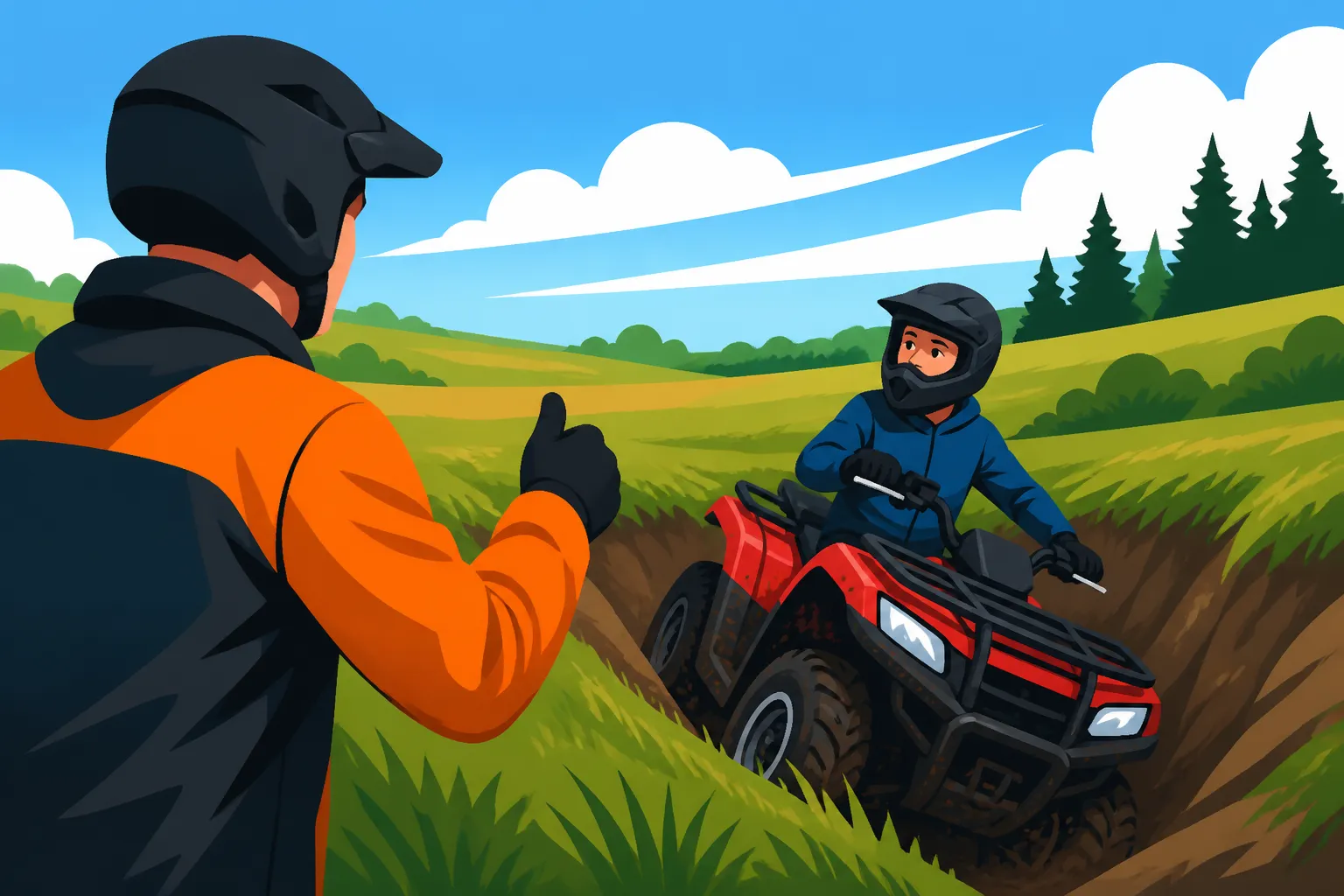
Accompanying a youth means staying engaged, not simply starting the ride in the same place. The adult should be able to see the youth, communicate, and respond quickly if the rider stops, becomes uncertain, or encounters a hazard. Keep the group close enough that supervision remains practical, but leave enough space to avoid dust, sudden stops, and collisions.
Before the ride, agree on simple instructions: where to stop, how to signal a problem, what to do if the group gets separated, and when the adult may decide to turn back. A youth should know that stopping is the right response when they cannot see the route, are unsure what to do, or feel uncomfortable. Establish a conservative pace based on the rider’s skill, not on how fast the adult’s machine can travel.
During the ride, the adult should:
- Lead at a pace the youth can manage without rushing.
- Choose a position that keeps the youth in view and allows for a safe response.
- Stop before confusing intersections, road crossings, blind spots, and difficult sections.
- Watch for fatigue, distraction, frustration, or a loss of control.
- Avoid pressuring the youth to keep up or continue through a section they find difficult.
- Be prepared to end the ride if weather, traffic, visibility, or trail conditions change.
A novice may need frequent stops and a short route. That is not a problem to solve by increasing the pace. It is a reason to choose an easier route or call it a day. The adult should also avoid riding so close that the youth cannot steer freely or so far ahead that the adult cannot intervene.
Supervision includes setting an example. Use a helmet and appropriate protective gear yourself, ride predictably, and stop where it is safe to do so. An adult who takes shortcuts around signs or crosses a road without checking teaches the wrong lesson, even if the youth is being watched closely.
Use a route the youth can handle
A ditch ride can involve uneven ground, steep banks, standing water, tall vegetation, driveways, culverts, and limited sightlines. A route that is easy for an experienced adult may be difficult for a smaller rider or a youth with little practice. Check the route on foot or from a safe stopping place when necessary; don’t assume that conditions remain the same from one section to the next.
If the ditch narrows, disappears, becomes obstructed, or leads to a section where riding is restricted, stop and reassess. Do not put a youth in the position of having to improvise a route onto a road surface or across private land. For guidance on avoiding unauthorized land, see Minnesota Trespass Rules Along Ditches. For how to ride on the proper side of a ditch, see Which Side of the Ditch Minnesota Riders Use.
Prepare the youth and machine before leaving
A brief practice session in a safe, permitted area can reveal problems before they become roadside emergencies. The youth should be able to start, stop, steer, and control the ATV at a manageable speed. They should also understand how the brakes work, how to shut the machine off, and what to do if it stalls. If they cannot do those things consistently, a ditch ride is not the right next step.
Choose a machine that fits the rider and the rules. A youth who struggles to reach the controls, move the machine, or stop confidently may be on an ATV that is too large or powerful for their current ability. Check the owner’s manual for the machine’s intended use and passenger capacity. Do not assume a youth can safely operate a larger machine just because an adult can manage it.
Before setting out, inspect basic items that can affect control and visibility:
- Tires and brakes
- Throttle operation and engine shutoff
- Lights and reflectors where required
- Steering and controls
- Fuel level and any visible leaks
- The helmet’s fit and condition
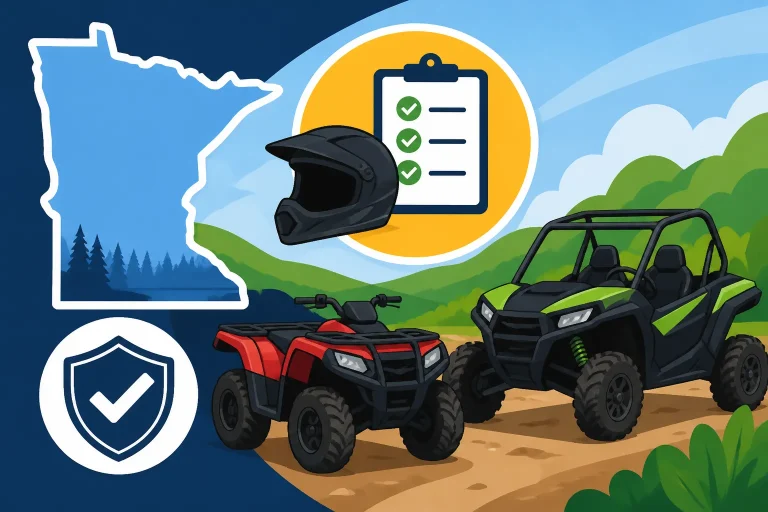
Wear a properly fitted, DOT-compliant helmet. Minnesota has helmet requirements for minors riding in public areas; check Minnesota Helmet Requirements Under 18 for the relevant details. Eye protection, gloves, sturdy footwear, long sleeves, and long pants are sensible protection for a ditch ride, where dust, branches, and debris can be hard to avoid. If buying gear online, including through Amazon, verify the helmet’s certification and fit rather than relying on a listing title or appearance.
Dress for the actual conditions. Loose clothing can catch on controls or vegetation, while dark clothing can make a rider harder to see. In changing weather, bring a layer the youth can put on during a stop. Make sure the rider can operate all controls while wearing gloves and protective equipment.
Set clear ride limits
Before departure, agree on limits that are easy to remember. For example: stay behind the lead adult, stop when signaled, do not pass, and do not leave the right-of-way. Explain that the group will stop before crossing a road and that the youth must wait for the adult’s instruction. A youth should never be asked to make a last-second decision about traffic or an unfamiliar intersection.
Keep the first ride short enough that the youth can finish without becoming tired. Fatigue can affect attention and control, particularly when the ride includes bumps, dust, or repeated stops. Carry water and a basic way to contact help, but do not rely on a phone as a substitute for choosing a route with a safe exit plan.
Handle road crossings and unexpected situations calmly
A ditch ride may require crossing a road or dealing with a driveway, culvert, blocked section, or approaching vehicle. These are points where the adult should take the lead by stopping early and making sure the youth understands what comes next. Never assume that a vehicle driver has seen the ATV or will yield.
At a crossing, stop in a place that does not put the group in the traffic lane. Check in both directions and follow the rules for that road and location. Cross only when it is lawful and clear to do so. The adult should not leave the youth behind or expect them to follow without a clear signal. Crossing a Minnesota Road on an ATV offers more detail on crossing safely.
If the youth stalls, loses confidence, or becomes separated, stop the rest of the group in a safe location. Do not have the youth walk or ride blindly along the road edge to catch up. Re-establish contact, assess the situation, and choose the safest way to continue or return. If the machine has a mechanical problem, move out of traffic exposure if that can be done safely, then arrange help rather than attempting a risky roadside repair.
The adult should be willing to cancel or turn around when conditions change. Heavy traffic, poor visibility, deep water, mud, damage to the route, or an unexpectedly difficult section can make a planned ride unsuitable. A youth’s discomfort is enough reason to stop. Finishing the route is never more important than keeping the rider safe and within the rules.
A practical pre-ride sequence
Use this short process each time, even if the youth has ridden the route before:
- Confirm eligibility. Check the youth’s age, machine class, and any required safety certification against current Minnesota DNR information.
- Check the route. Confirm that ditch riding is allowed on the specific road and identify crossings, restricted sections, and safe places to stop.
- Inspect the machines. Check controls, tires, brakes, fuel, and required equipment on both the youth’s ATV and the adult’s machine.
- Fit the gear. Make sure the helmet fits securely and that the youth can operate the controls while wearing protective clothing.
- Agree on signals and limits. Review the pace, following distance, stop signal, crossing procedure, and plan if the group becomes separated.
- Start conservatively. Choose a short, familiar route and stop early to check how the youth is managing.
- Reassess as you go. Turn back if the rider is tired, conditions worsen, or the route becomes more challenging than expected.
A supervised ride works best when the adult treats the youth as a developing rider, not as a passenger who happens to be operating a machine. Keep the route legal, the pace manageable, and the communication clear. When age eligibility, certification, or a local road restriction is uncertain, verify it before the ride rather than trying to resolve it in the ditch.
Disclaimer
This article is for general informational purposes only and does not constitute professional advice. Laws, prices and regulations vary by location and change over time. Consult a qualified professional for guidance on your specific situation.