Resort Machines and the Trail Pass
A resort may hand you the keys to an ATV or UTV, but that does not automatically settle whether it can use Minnesota trails. The answer depends on the machine’s registration, the trail you plan to ride and whether a required pass is already in place. Here’s how to check before leaving the resort, whether you’re renting a machine or bringing your own.
Start with the machine and the trail
“Resort machine” is not a special registration category. A machine might belong to the resort, be rented through a separate operator, or belong to a guest who keeps it at the property. Those arrangements can affect who handles the paperwork, but the resort setting alone does not make a machine exempt from trail requirements.
Start by separating two questions:
- Is the machine properly registered or otherwise allowed to operate where you plan to ride?
- Does it need a Minnesota ATV trail pass for that route?
Registration and a trail pass are different things. Registration concerns the machine’s legal status. A trail pass is a separate requirement that may apply when an ATV uses certain Minnesota trails, depending on its registration and the applicable rules. A machine can have registration papers and still need a pass.
The route matters, too. A resort’s private trails, a public state forest route and a grant-in-aid trail are not interchangeable. A resort may have permission to operate on private land, but that does not automatically carry over to a public trail nearby. Check the requirements for the exact trail network you intend to use. Which Minnesota Trails Require a Pass explains why the route is part of the answer.
The word “ATV” can also cover machines with different classifications and registration arrangements. If the rental is a side-by-side or another utility-style machine, confirm its class and how it is registered rather than assuming rules for one type apply to every unit. For an overview, see Minnesota ATV Classes and What They Mean.
| Situation | What to check before riding | Common mistake |
|---|---|---|
| Resort-owned rental | Registration, machine classification, trail eligibility and whether a required pass is current | Assuming the resort has handled every requirement |
| Guest’s own Minnesota-registered machine | Registration status and whether the planned route has any additional requirements | Treating registration and a pass as the same thing |
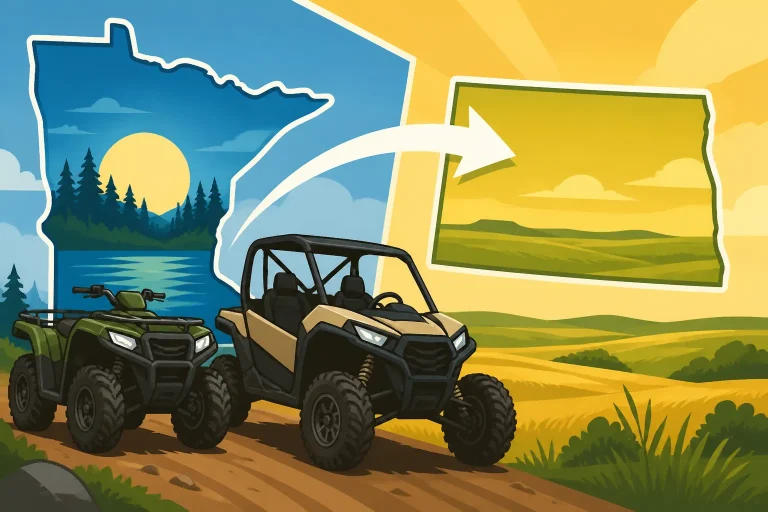
| Guest’s out-of-state machine | Whether Minnesota requires a nonresident pass for the machine and route | Assuming the home-state registration replaces Minnesota requirements |
| Resort property only | Whether the ride stays on private land and what the owner allows | Assuming permission for resort land includes nearby public trails |
| Mixed private and public route | Requirements for each section, including connecting trails | Checking only the first part of the route |
If you are unsure what kind of registration a machine carries, ask the resort to show or explain it. Minnesota DNR ATV Registration Explained covers the basic registration distinction. For a machine registered outside Minnesota, Minnesota’s Non-Resident ATV Trail Pass is a useful next check.
Renting a machine from a resort
Before you ride a rental, ask the resort directly whether the machine is equipped and authorized for the specific trails in your plan. A broad assurance that “it’s ready to ride” may not tell you whether the machine can use a particular public trail or whether a trail pass is required.
Ask clear, practical questions:
- What is the machine’s registration status and class?
- Is a Minnesota trail pass required for the route, and if so, is the required pass already provided?
- Does the pass, if needed, belong to this machine and remain valid for the planned ride?
- Are there trails the rental is not allowed to use?
- Is the route entirely on resort or other private land, or does it connect to public trails?
- What documents or proof should you have with you while riding?
A pass or registration arrangement should be tied to the actual machine and applicable rules, not just to the person who booked the rental or the resort that owns it. Don’t assume that a pass for one vehicle covers another vehicle in the fleet. If the resort says the rental is covered, ask how that is shown and whether the coverage applies to the route you plan to ride.
The machine’s sticker or decal may help confirm that a requirement has been addressed, but don’t rely on a visible sticker alone if you don’t know what it represents. Ask the staff to confirm that the machine is properly registered and that any needed pass is current. Keep any rental paperwork and instructions with you, and follow the resort’s guidance about carrying proof. [Minnesota Pass Rules for a Rented Machine] focuses on this rental-specific question.
Responsibility can be divided in practice: the resort may supply and maintain the machine, while the rider is expected to follow trail rules and stay on permitted routes. Read the rental agreement, but don’t treat it as a substitute for confirming that the machine is allowed on the trail. If the staff cannot confirm the machine’s status, pause before riding onto a public trail and contact the relevant trail manager or Minnesota Department of Natural Resources for guidance.
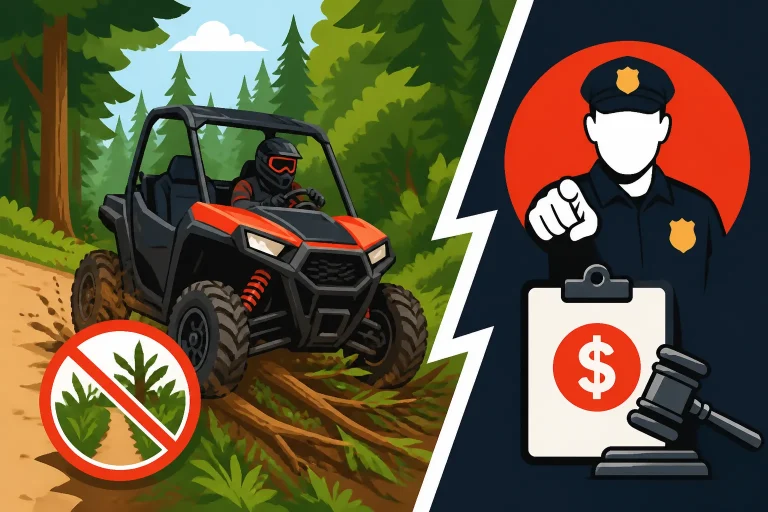
Also distinguish a trail pass from permission to ride. A pass does not grant access to private property, authorize riding on a closed trail or override restrictions on machine size or type. A resort route map may show suggested connections, but conditions and closures can change. Check current trail status before setting out, especially when your ride leaves resort property.
Bringing your own machine to a resort
If you arrive with your own ATV or UTV, the resort’s location does not change the machine’s registration or trail-pass requirements. Work out the rules based on the machine’s registration and the trails you plan to use.
For a Minnesota-registered machine, verify that the registration is current and that the machine is eligible for the intended route. Do not assume every Minnesota registration type has the same use rights. Machines Registered in Minnesota and the Pass can help clarify how registration relates to trail-pass requirements.
For an out-of-state machine, don’t assume your home registration automatically satisfies Minnesota’s trail-pass rules. Confirm whether the machine needs a Minnesota nonresident pass for the route. The answer may also depend on whether the ride stays on private property or includes public trails. Minnesota’s rules are not necessarily the same as those in your home state, and another state’s sticker or permit does not by itself settle Minnesota requirements. See Reciprocity Minnesota Does Not Offer for the broader issue of cross-state recognition.
A practical pre-ride check looks like this:
- Identify the machine’s state of registration, registration category and vehicle class.
- Decide whether the route stays on private land or uses public trails.
- Check whether each public trail segment has a pass requirement, machine restriction or current closure.
- Confirm whether the machine needs a Minnesota trail pass and whether it already has the required pass.
- Carry the relevant registration and rental or ownership information, and follow posted instructions for displaying any decal.
If you are borrowing a friend’s machine rather than bringing one you own, the same principle applies: check the machine’s status, not just the rider’s. A friend’s assurance that they ride it regularly may not tell you whether its paperwork covers your planned route. Trail Passes for a Borrowed Machine addresses that situation.
A weekend promotion or special event should not be treated as a general exemption. Even when a temporary registration program applies, it may not remove separate trail-pass obligations or other restrictions. Check the conditions rather than assuming a waiver covers every requirement. Minnesota No Registration Weekend and the Pass explains the distinction.
Before you leave the resort
Most confusion can be avoided by getting specific answers before the machine is unloaded or driven onto a public trail. Ask which machine you are taking, what public routes it may use, and who can confirm its registration and pass status. If you are bringing your own machine, have that information ready before you arrive.
Keep the questions focused. “Is it legal?” can produce a vague answer because legality depends on the trail and the machine. “Is this machine eligible for this named trail, and does it have the required Minnesota pass?” is more useful. If the planned route crosses several trail systems, check each one rather than relying on one general answer.
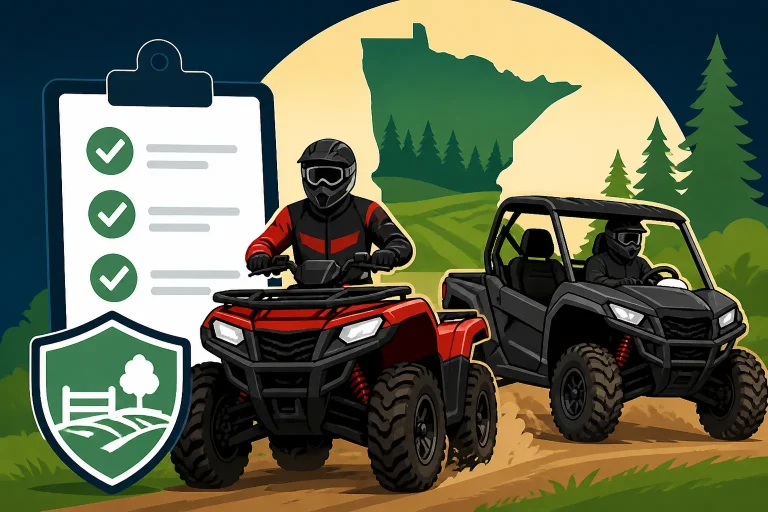
Use this quick checklist:
- Confirm the route. Mark where private resort land ends and public trail use begins.
- Confirm the machine. Know its registration state, category and class.
- Confirm the pass. Ask whether one is required and whether the specific machine has a current pass.
- Confirm access. Check closures, width limits and other trail restrictions.
- Keep proof accessible. Follow current instructions about displaying a decal and carrying paperwork.
- Ask again if the plan changes. A machine permitted on one route may not be permitted on another.
If the resort cannot answer, avoid guessing. Check the official Minnesota DNR information for the trail and machine type, or contact the relevant trail manager. This is especially important for an out-of-state machine, a side-by-side, or a route that moves between private property and public trails.
The main takeaway is straightforward: resort ownership does not, by itself, create an exemption from Minnesota trail-pass rules. Confirm the machine’s status and the route before riding. A few minutes spent asking specific questions can prevent a frustrating interruption once you’re on the trail.
Disclaimer
This article is for general informational purposes only and does not constitute professional advice. Laws, prices and regulations vary by location and change over time. Consult a qualified professional for guidance on your specific situation.