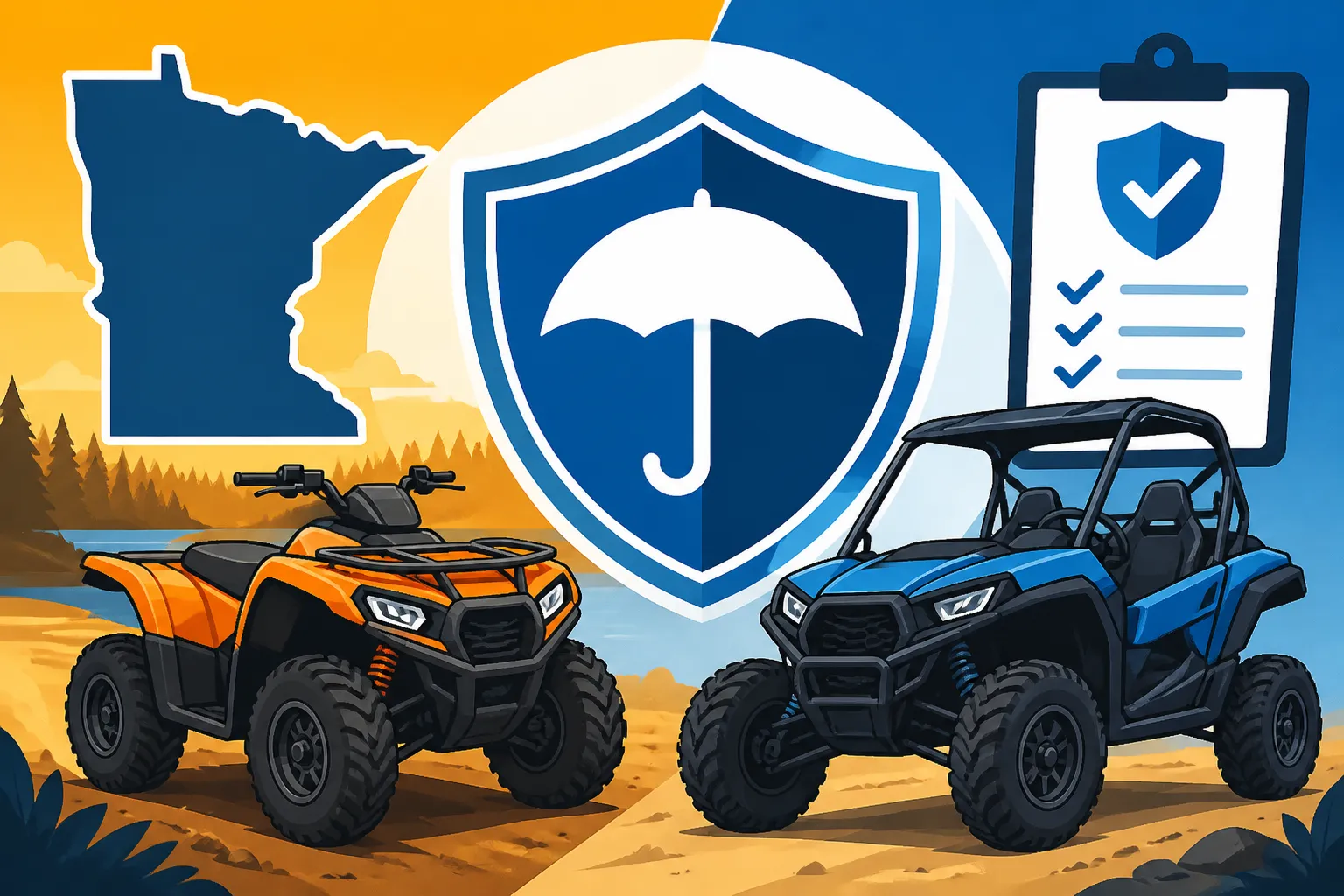
Does Auto Insurance Cover a Minnesota ATV?
It’s a common scenario, and one that trips up a lot of folks who are new to the world of ATVs and UTVs here in Minnesota: you’ve got your car, you’ve got your truck, and both are insured. So, when you bring home that shiny new quad or side-by-side, it's natural to think your existing auto insurance policy might just stretch to cover it. Unfortunately, more often than not, that’s just not how it works, and finding out the hard way after an accident is a terrible experience. This guide will walk you through why your auto policy likely doesn't cover your Minnesota ATV and what you actually need to protect your investment and yourself.
The Core Misconception: Why Auto Insurance Falls Short
Let's be real, it makes sense why people assume their auto insurance will cover their ATV. After all, it's a vehicle, right? You drive it, it has an engine, wheels, sometimes even headlights. But the insurance world often sees things very differently, and this distinction can leave Minnesota riders in a pretty vulnerable spot if they're not careful. The main issue comes down to how insurance companies classify different types of "vehicles" and the unique risks associated with each.
Understanding the "Vehicle" Definition in Policies
When you look at your standard auto insurance policy, you'll find that it's designed specifically for vehicles intended for road use, like your car, truck, or SUV. These policies are crafted around the risks associated with paved roads, traffic laws, and the specific types of accidents that typically occur in that environment. An All-Terrain Vehicle (ATV) or Utility Terrain Vehicle (UTV) operates in a completely different realm – off-road, on trails, through mud, over uneven terrain, and sometimes in situations that are far more unpredictable than your daily commute.
Insurance companies have very precise definitions for what constitutes a "covered vehicle" under an auto policy, and off-highway vehicles (OHVs) like ATVs and UTVs are almost universally excluded. They are simply considered a different class of risk. If you were to have an accident with your ATV, even if it was just crossing a gravel township road near your cabin, your auto insurance provider would likely deny the claim, stating that the machine wasn't covered under the terms of your policy. This isn't them being difficult; it's simply adhering to the specific language written into the contract you agreed to. It's a frustrating realization for many, especially when they've been paying premiums for years, only to find a gaping hole in their coverage for another expensive piece of equipment they own.
The Limited Scope of Homeowner's Coverage
Another common misconception is that if your auto policy doesn't cover your ATV, then surely your homeowner's insurance will, right? Especially since it's stored on your property, perhaps in your garage or shed. While homeowner's policies do offer some protection for personal property, and definitely provide liability coverage for incidents that occur on your property, their scope for motorized vehicles, especially off-highway ones, is extremely limited.
Typically, your homeowner's policy might offer very basic physical damage coverage for your ATV if it's stolen from your garage or damaged by fire while on your property. However, this coverage is usually subject to a high deductible and might only cover a fraction of the machine's value. More importantly, where homeowner's insurance almost universally falls short is in providing liability coverage once that ATV leaves your property, or even if an incident occurs on your property involving its operation. For example, if your nephew is riding your ATV on your land and accidentally hits a tree, causing injury to himself, your homeowner's liability might kick in. But if he then rides it across the street onto a neighbor's property or even just into a ditch on public land and an accident happens, your homeowner's policy would very likely not cover the resulting damages or injuries to others. This means you're personally on the hook for medical bills, property repairs, and legal fees. For more specific details, you might want to look into [Does a Homeowners Policy Cover a Quad?] as it explores this often-misunderstood area in depth. The bottom line is, relying on homeowner's insurance for anything beyond very specific, limited scenarios is a risky gamble that most Minnesota riders simply can't afford to take.
What a Dedicated ATV Insurance Policy Covers in Minnesota
Given the limitations of auto and homeowner's insurance, it becomes clear that a dedicated ATV insurance policy is not just a good idea, but often a necessity for Minnesota riders. These policies are specifically designed to address the unique risks associated with off-road machines, providing comprehensive protection that standard policies simply can't match. They understand the terrain, the speeds, and the potential for incidents that come with enjoying our beautiful Minnesota trails and landscapes.
Key Components of ATV-Specific Coverage
A proper ATV insurance policy for Minnesota riders will typically include several core components, much like auto insurance, but tailored for the off-highway environment. Understanding these is crucial for ensuring you have adequate protection.
- Liability Coverage: This is arguably the most critical component. It protects you financially if you cause an accident that results in injury to another person or damage to their property. For instance, if you're riding a trail in Nemadji State Forest and accidentally swerve, hitting another rider, or if you lose control and damage a fence while crossing a road right-of-way, your liability coverage would help pay for their medical expenses or property repairs. In Minnesota, while there isn't always an explicit law demanding insurance for all ATV use, liability coverage is often a practical requirement, especially when you consider [Minnesota Liability Coverage for Riders] for public land or road crossings. Many public trails or areas, though not always explicitly stating "insurance required," implicitly rely on riders being financially responsible, and a conservation officer might ask for proof of this. [Proving Insurance to a Minnesota Officer] can be vital in these situations.
- Collision Coverage: This part of your policy covers damage to your ATV or UTV resulting from a collision with another object or vehicle, regardless of who was at fault. If you misjudge a turn on a challenging trail at the Iron Range OHV Area and hit a rock, or if you collide with another machine, collision coverage would help pay for the repairs to your quad.
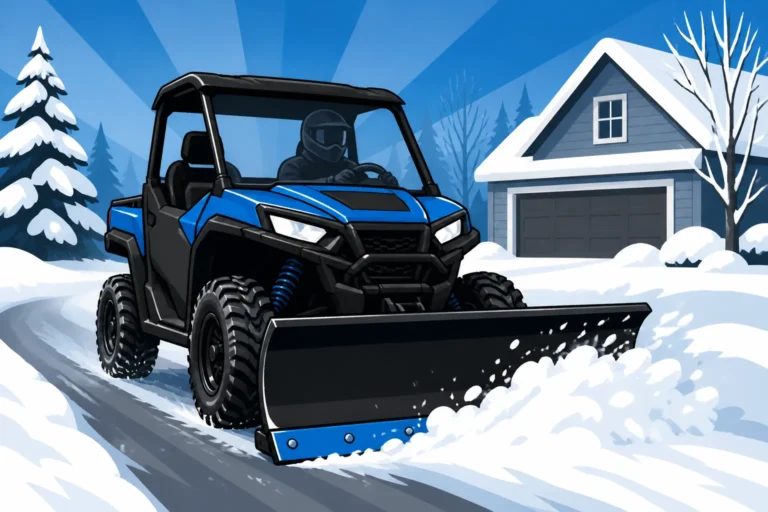
- Comprehensive Coverage: This protects your ATV from non-collision-related damage or loss. Think about situations like theft from your hunting shack near Park Rapids, fire damage, vandalism, or even damage from natural disasters like a falling tree limb during a storm. If your carefully chosen [Machines Minnesota Owners Pick for Plowing] is stolen from your driveway, comprehensive coverage would be a lifesaver.
- Uninsured/Underinsured Motorist Coverage: Just like with cars, this coverage protects you if you're involved in an accident with another off-road rider who either doesn't have insurance or whose insurance isn't enough to cover your damages and injuries. It's a sad reality that not everyone is as responsible as they should be, and this coverage acts as a safeguard.
Optional Coverages Tailored for Minnesota Riders
Beyond the core components, many ATV insurance providers offer specialized options that are particularly useful for Minnesota riders, given our unique climate and popular uses for these machines.
- Accessory Coverage: Many of us love to deck out our ATVs with aftermarket parts. Whether it’s a powerful SuperATV winch for recovery, a snowplow for those long Minnesota winters, upgraded lighting for night rides, or a cab enclosure for your UTV, these add-ons can significantly increase your machine's value. Standard policies might not cover these extras, or only up to a very low limit. Accessory coverage ensures that your investment in these upgrades is protected. For instance, if you've added a premium plow system, you'll want to review [Winch and Plow Pricing for Minnesota Owners] to understand the value of these additions and ensure they are adequately insured.
- Roadside Assistance: Imagine breaking down deep in the Paul Bunyan State Forest. Having roadside assistance can mean the difference between a long hike back to the truck and a relatively quick tow to a service center.
- Agreed Value/Stated Amount: For those with highly customized or vintage machines, standard policies might only pay out "actual cash value" (depreciated value) in the event of a total loss. An agreed value policy allows you and the insurer to agree on the machine's value upfront, ensuring you get that amount if it's totaled.
- Rental Reimbursement: If your ATV is being repaired due to a covered loss, this option helps cover the cost of renting a replacement machine, which can be useful if your livelihood depends on your UTV, or if you simply can't miss that annual fall color ride.
Understanding these options helps you customize a policy that truly fits your machine and your riding lifestyle. The overall [Minnesota ATV Insurance Cost] will vary based on these choices, but the peace of mind is often well worth the investment.
When Minnesota Law Requires ATV Insurance (and When It Doesn't)
Navigating the legal requirements for ATV insurance in Minnesota can feel a bit like wading through marshland—it’s not always clear where solid ground is. Unlike cars, where insurance is almost universally mandatory for road use, ATVs have a slightly more nuanced set of rules. However, don't let the lack of an explicit, overarching statewide mandate lull you into a false sense of security. There are crucial situations where insurance is absolutely necessary, both legally and practically, to protect yourself.
Public Lands, Trails, and Road Crossings
This is where the rubber meets the trail, literally. While Minnesota doesn't have a broad mandate stating "all ATVs must be insured at all times," the reality is that if you plan to operate your machine on any public land, designated ATV trails, or when crossing roads, you absolutely need liability insurance. This isn't just a suggestion; it's a critical financial safeguard and often an implicit expectation.
Consider this: Minnesota law requires you to be financially responsible for any damage or injury you cause while operating an ATV. If you're out exploring the extensive network of trails in Nemadji State Forest, for example, and you have an accident involving another rider or public property, you are on the hook for the damages. Without liability insurance, you could face immense financial strain, including medical bills, property repairs, and legal defense costs. While a conservation officer might not pull you over solely to check for an insurance card like they would a car, if an incident occurs, the question of financial responsibility will immediately come up. Having proper [Minnesota Liability Insurance for Riders] ensures you can meet these obligations without risking your personal assets. Remember, ignorance of the rules won't protect you from the consequences.
Furthermore, when you need to cross a county or state road to access another section of trail, or perhaps ride the ditch of a public right-of-way in an approved area, you are essentially engaging with public infrastructure. In these moments, your ATV is operating in a context similar to a road vehicle, and the risks of interaction with cars or pedestrians escalate. This is precisely why liability insurance becomes paramount. If you're involved in an accident while legally crossing a road, your dedicated ATV policy will provide the necessary coverage, unlike your auto policy which would likely deny the claim. It’s better to have that paperwork ready, because [Proving Insurance to a Minnesota Officer] after an incident is a lot easier than explaining why you don’t have it.
Private Property and Loaned Machines
What if you only ever ride on your own sprawling property up north, or perhaps exclusively on a friend's expansive farm? In these specific scenarios, Minnesota law typically doesn't mandate you carry ATV insurance. Since you're not on public land or interacting with public roadways, the state's direct oversight on insurance requirements for such activities is minimal.
However, "not legally mandated" does not equate to "not needed." This is where realism and good sense must prevail. If you have an accident on your own land and suffer serious injury, without collision or comprehensive coverage, you're looking at potentially footing the entire bill for repairs to your machine and your own medical expenses, which could be astronomical.
The situation becomes even more complex when you loan your ATV to a friend or family member, or if you borrow someone else's. Even on private land, if the person operating your machine causes an accident, you, as the owner, could still be held liable. This is a huge risk to take on. Similarly, if you're riding a friend's quad and an accident occurs, it's vital to understand whose insurance (if any) would cover the incident. This is precisely why understanding questions like [Is a Borrowed Machine Covered?] is so important. A dedicated ATV policy typically extends coverage to authorized operators of your machine, offering protection in these common, yet often overlooked, scenarios. While the law might not force your hand on private property, practical wisdom strongly suggests comprehensive insurance is the smartest choice.
Steps to Get the Right ATV Insurance in Minnesota
Okay, so we've established that dedicated ATV insurance is absolutely essential for Minnesota riders. But how do you go about getting the right policy? It's not just about getting any policy; it's about getting one that truly fits your specific machine, riding habits, and budget. Taking a thoughtful approach now can save you a world of headaches and financial strain down the road.
Assessing Your Needs
Before you even start calling insurance agents or browsing websites, take a moment to honestly assess your unique situation. This will help you tailor your coverage and avoid paying for things you don't need, or worse, overlooking critical protections.
- Machine Type and Value: Is it a new, high-performance sport quad like a Polaris Scrambler, or a workhorse UTV like a Honda Pioneer 1000? Is it one of the [Youth Machine Sizes and Prices for Minnesota Families]? The value of your machine will significantly influence the cost of collision and comprehensive coverage. If you've invested heavily in modifications, like a SuperATV lift kit or a full cab enclosure, make sure you know their value so they can be adequately added to your accessory coverage. Also, consider the age of your machine. An older quad might not warrant full collision coverage if its market value is low, but liability is still crucial.
- Riding Habits: Where do you typically ride? Are you primarily on Minnesota's extensive Grant-in-Aid trail system, occasionally crossing roads? Do you use your machine heavily for farm work or plowing snow in the winter? [Machines Minnesota Owners Pick for Plowing] might require additional coverage for specific attachments. Are you one of the many who use your ATV for [Buying a Machine for Minnesota Ice Fishing], meaning it's often on frozen lakes? Each scenario carries different risks and coverage needs. Frequent trail riders need robust liability and collision, while those who only use their UTV for agricultural purposes might have different priorities.
- Public vs. Private Use: If your machine rarely leaves your own land, your primary concern might be liability for guests and physical damage to your machine. If you're regularly on public trails, forest roads, or crossing county roads, then strong liability and potentially higher limits are non-negotiable.
- Budget Considerations: We all have budgets, and insurance is another line item. While it's tempting to opt for the cheapest policy, remember that skimping on coverage can lead to massive out-of-pocket expenses if an accident occurs. Think about the maximum deductible you can comfortably afford. A higher deductible will lower your premium, but you'll pay more upfront if you file a claim. Understand that [Minnesota UTV Insurance Cost Per Year] can fluctuate greatly depending on these choices. It’s a balance between cost and comprehensive protection.
Shopping for the Best Policy
Once you have a clear picture of your needs, it's time to start comparing options. This isn't a "one-and-done" purchase; shopping around can save you a good chunk of change while ensuring you get the right coverage.
- Get Multiple Quotes: Don't just go with the first quote you receive. Contact several insurance providers that specialize in ATV and OHV insurance. Many major insurers offer these policies, but there are also specialty providers. Each company has different underwriting guidelines, discounts, and policy features.
- Compare Deductibles and Limits: Carefully review the deductibles (the amount you pay before insurance kicks in) and the coverage limits for each component (e.g., $25,000/$50,000 for bodily injury liability, $10,000 for property damage). Make sure the limits are sufficient for your risk tolerance and the value of your assets. What might be an acceptable deductible on a basic liability policy for a small quad might be entirely different for comprehensive coverage on a brand new, high-end side-by-side.
- Ask About Discounts: Many insurers offer discounts that can lower your premium. These might include multi-policy discounts (even if your auto policy doesn't cover your ATV, bundling can sometimes reduce the cost of both), safety course discounts (completing an ATV safety course in Minnesota often qualifies), anti-theft device discounts, or even discounts for being a member of an ATV club. Inquiring about [What Raises an ATV Insurance Premium] can also highlight factors that might lead to higher costs, helping you make informed decisions.
- Read the Fine Print: Before signing anything, read the policy document carefully. Pay close attention to exclusions and limitations. For example, some policies might have restrictions on racing or certain types of commercial use. Ensure that the policy covers where and how you plan to use your ATV in Minnesota. If you've added a number of SuperATV accessories, confirm they are specifically included and valued correctly.
By following these steps, you’ll be much better equipped to secure a comprehensive ATV insurance policy that protects you, your passengers, your machine, and your financial future as you enjoy the trails and backcountry of Minnesota.
| Feature | Standard Auto Insurance | Homeowner's Insurance | Dedicated ATV Insurance |
|---|---|---|---|
| Liability Coverage | No (Excludes ATVs) | Very Limited (On-property, often excludes vehicle operation off-property) | Yes (Comprehensive for on/off-road use, road crossings) |
| Collision Coverage | No (Excludes ATVs) | No | Yes (Covers damage to your ATV in an accident) |
| Comprehensive Coverage | No (Excludes ATVs) | Limited (Theft/fire on-property only, often high deductible, low limits) | Yes (Theft, fire, vandalism, natural disaster, etc.) |
| Medical Payments | No (Excludes ATVs) | No | Yes (Covers medical expenses for you/passengers) |
| Uninsured/Underinsured Motorist | No (Excludes ATVs) | No | Yes (Protects you if another rider has no/insufficient insurance) |
| Accessory Coverage | No | No | Yes (Optional, covers aftermarket parts like winches, plows) |
| Roadside Assistance | No | No | Yes (Optional, for breakdowns on trails) |
| Covers Off-Road Use | No | No | Yes (Designed specifically for off-road environments) |
| Covers Road Crossings | No | No | Yes (Important for legal access across roads in Minnesota) |
Disclaimer
This article is for general informational purposes only and does not constitute professional advice. Laws, prices and regulations vary by location and change over time. Consult a qualified professional for guidance on your specific situation.