Blaze Orange on a Deer Season Ride
Planning an ATV or UTV ride during deer season raises a practical question: do you have to wear blaze orange if you are not hunting? Minnesota draws a distinction between hunters and general OHV riders. Knowing where the legal requirement applies—and why visibility still matters—helps you prepare for a safer ride without mistaking a recommendation for a rule.
Who must wear blaze orange or pink
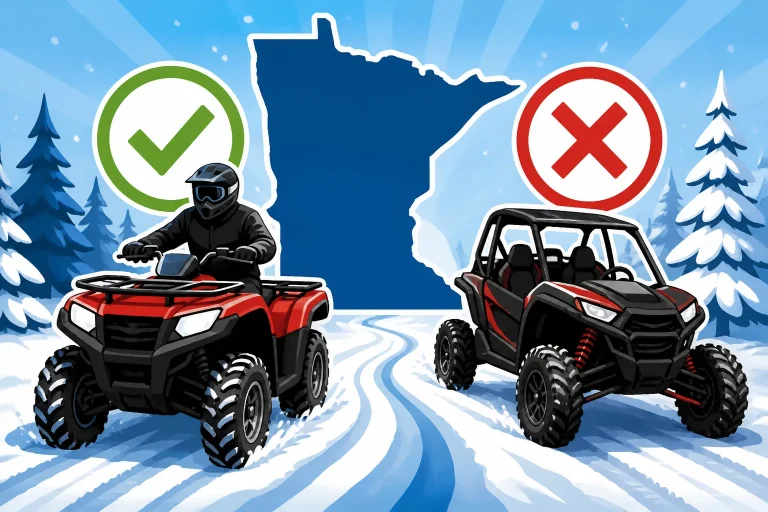
Minnesota’s requirement is tied to hunting and trapping, not simply to riding an ATV or UTV during deer season. According to the Minnesota Department of Natural Resources, anyone hunting or trapping during open firearms or muzzleloader deer seasons must wear blaze orange or pink. That includes licensed deer hunters who use an OHV.
The distinction matters if you are riding with a hunting party or using a machine as part of a hunt. If you are hunting or trapping during one of those seasons, plan to wear the required color even while operating the machine. The fact that you are on an ATV or UTV does not remove the requirement.
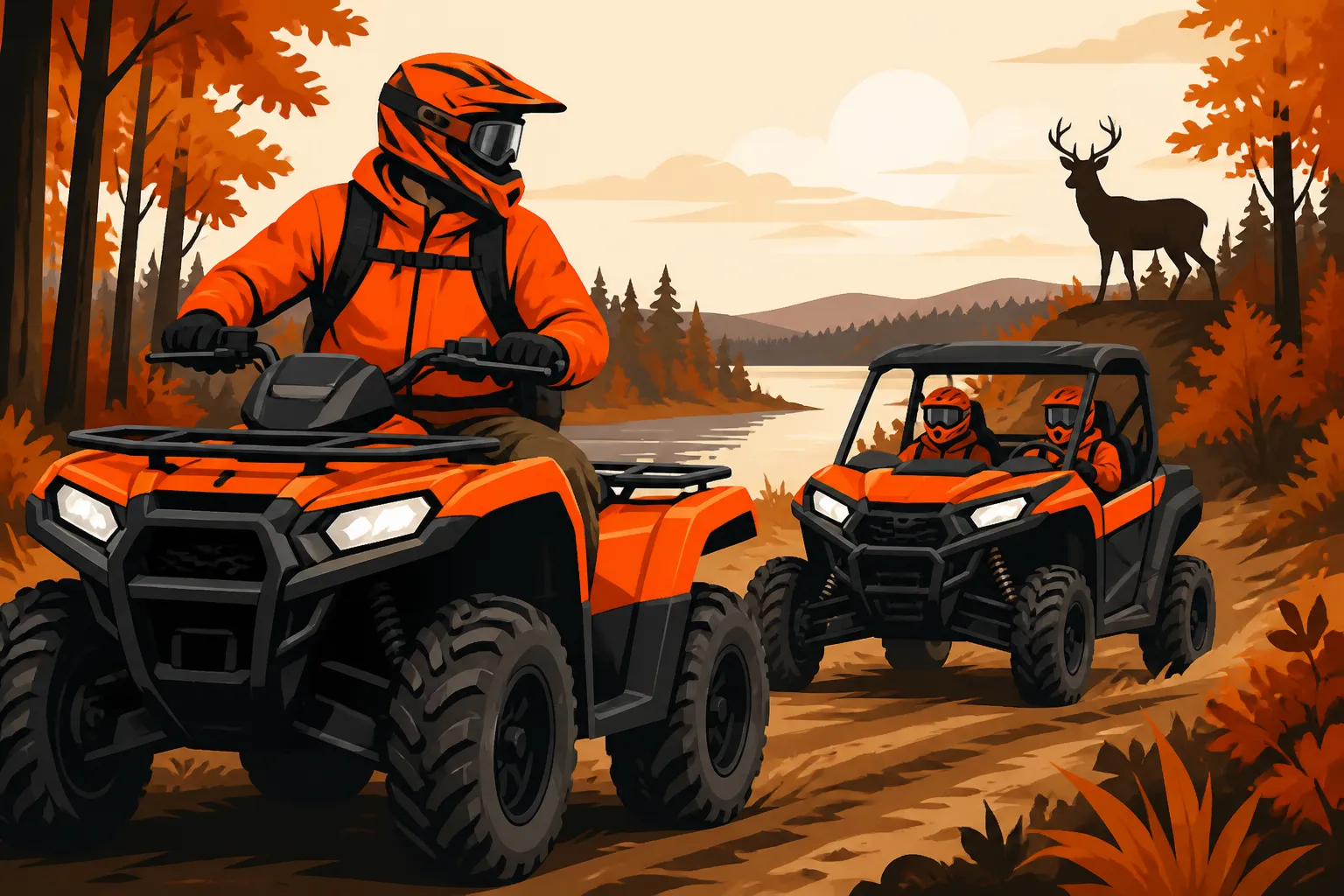
By contrast, the Minnesota DNR says general OHV riders who are not hunting or trapping are not explicitly bound by hunter-orange laws. The department strongly recommends that these riders wear blaze orange or pink for safety during deer seasons. In other words, the recommendation applies broadly to riders, while the legal requirement applies to people hunting or trapping during the specified seasons.
| Your activity during an open firearms or muzzleloader deer season | Blaze orange or pink |
|---|---|
| Hunting or trapping | Required, according to the Minnesota DNR |
| Licensed deer hunting while using an OHV | Required, according to the Minnesota DNR |
| Recreational OHV riding without hunting or trapping | Not explicitly required by hunter-orange laws, but strongly recommended by the Minnesota DNR |
If your ride combines recreation and hunting, do not rely on the label you give the trip. Consider what you will actually be doing. A licensed deer hunter riding to or between hunting locations is still covered by the requirement, according to the Minnesota DNR. For additional hunting-related context, see Minnesota Rules During Firearm Deer Season and Minnesota ATV Rules During Deer Season.
This distinction also helps when you ride with friends. A group may include hunters and recreational riders on the same route, but each person’s legal obligation can differ based on whether they are hunting or trapping. Wearing visible orange or pink throughout the group is a straightforward way to avoid confusion and make riders easier to spot.
Why recreational riders should still choose visible colors
Not being legally required to wear hunter orange does not mean it is a poor choice. During deer seasons, hunters may be in woods, fields, and other areas near riding routes. A rider in a bright color is easier for others to notice than one wearing dark or earth-toned gear, particularly when brush, trees, dust, or changing light reduce visibility.
Visibility is a practical concern even on a familiar trail. Riders may meet other machines, approach a trail crossing, or pass near a hunter moving on foot. A bright outer layer can make your body easier to distinguish from the surrounding landscape. It may also help your group keep track of one another when the trail bends or vegetation blocks a clear view.
Choose clothing that remains visible while you are actually riding. A vest or jacket that is hidden under a dark coat, covered by a pack, or folded beneath a seat will not help much. If you wear a helmet, gloves, or other gear over your outer layer, check that the bright color is still easy to see from multiple directions.
You can look for high-visibility clothing through outdoor retailers or marketplaces such as Amazon, but focus on whether the item suits your ride rather than on the storefront. Check its color, fit, coverage, and compatibility with the layers you already wear. Visibility is the goal; a product listing by itself does not establish that a garment meets any hunting rule.
Blaze orange and pink are options named by the Minnesota DNR for hunters and trappers subject to the requirement. General riders may also choose either color as a safety measure. If you are hunting or trapping, make sure your clothing meets the applicable requirement; if you are riding recreationally, treat bright clothing as a sensible precaution rather than a legal mandate.
A visible color cannot make a risky ride safe on its own. Keep a controlled pace, stay on routes where OHV use is allowed, and take care when approaching intersections or areas where other trail users may be present. It is also worth checking for seasonal restrictions before you leave, especially if your planned route includes public land or a road right-of-way.
Check your route and riding permissions too
Blaze orange addresses visibility; it does not authorize a route or replace registration and trail-pass requirements. Before a deer-season ride, check that your machine and the places you plan to ride meet Minnesota’s OHV rules.
The Minnesota Department of Natural Resources says off-highway vehicles used in Minnesota must be registered with the DNR or the operator must possess a trail pass when operating on state and grant-in-aid trails. A separate rule applies to nonresidents: according to the Minnesota DNR, nonresidents operating an ATV, OHM, or ORV on state or grant-in-aid trails need a nonresident trail pass. The department also says a trail pass is not needed when the machine being ridden is registered in Minnesota.
A pass does not make every path available for OHV use. Check that the route itself is open to your type of machine and that you have permission to ride wherever required. Minnesota’s state forests are classified for OHV use, and the Minnesota DNR says a closed forest does not permit OHVs, while a limited forest allows them on roads and trails posted open. In a managed forest, the department says OHVs may use roads and trails that are not posted closed.
For route-specific planning, Minnesota Rules During Firearm Deer Season can help with the seasonal context, while Where to Ride an ATV in Minnesota and Minnesota State Forest Riding can help you think through ride locations. Check current maps and closures before setting out rather than assuming a route is open because it was usable on a previous trip.
Roadside riding needs particular care. Minnesota law generally restricts operating an ATV along or on the roadway, shoulder, or inside bank or slope of the public right-of-way of a trunk, county state-aid, or county highway unless an exception applies, according to the Office of the Revisor of Statutes. The same office says an ATV must stop completely before crossing a road shoulder or main-traveled way, and a crossing must be made at approximately a right angle to the road. These rules are separate from clothing recommendations, but they matter when a ride connects trails by road crossings or right-of-way sections.
If your route includes ditches, check the seasonal rules as well. The Minnesota DNR says ditch riding is prohibited south of the agricultural line from April 1 through August 1. For details on that issue, see Minnesota Ditch Riding Rules. Do not assume that a ditch is a legal detour around a closed trail or a route you cannot otherwise use.
A few practical checks before leaving can prevent avoidable problems:
- Confirm whether you are riding as a hunter or trapper, or only for recreation.
- If you are hunting or trapping during an open firearms or muzzleloader deer season, wear blaze orange or pink.
- If you are riding recreationally, consider wearing visible orange or pink as the Minnesota DNR recommends.
- Check the current trail map and closure information for your route.
- Confirm that your registration or trail-pass situation is correct for the machine and trail.
- Review road-crossing and right-of-way rules if your route uses them.
For nonresident riders, Minnesota’s Non-Resident ATV Trail Pass explains the pass issue in more detail, and Carrying a Minnesota Trail Pass on the Machine can help clarify what to have available during a ride. The Minnesota DNR says ATV and OHM trail passes do not need to be displayed on the machine but must be available if an officer requests them. A legal route, proper paperwork, and visible clothing address different risks, so check each one separately.
A simple deer-season riding routine
You do not need a complicated checklist to make a deer-season ride more deliberate. Start by deciding whether anyone in your group will be hunting or trapping. If so, the Minnesota DNR’s orange-or-pink requirement applies to those people during open firearms or muzzleloader deer seasons, including licensed deer hunters using an OHV. If nobody is hunting or trapping, the legal requirement described by the DNR does not explicitly cover general riders, but its safety recommendation still makes bright clothing a sensible choice.
Then match clothing to the conditions. Wear the visible layer on the outside, where it is not obscured by a dark jacket or pack. If you stop for a break or take off a layer, check that you remain easy for other people to see. For a group, agree on a visible color before leaving so a rider is less likely to disappear visually against the woods or a field edge.
Next, verify the route and paperwork. Confirm that the machine can legally use the planned trail, and that the registration or trail pass requirement is met. Check for closures and do not assume that a route is open just because it appears on an older map. If your ride connects trails through road rights-of-way, review the relevant crossing rules and use only places where riding is allowed.
Finally, keep the legal distinction clear. A recreational rider can choose not to wear orange without violating the hunter-orange rule described by the Minnesota DNR, but that does not make dark clothing a wise choice in a busy hunting season. A hunter or trapper should treat the required color as part of their hunting gear and wear it while riding as well as while traveling on foot.
The practical takeaway is straightforward: if you are hunting or trapping during an open firearms or muzzleloader deer season, wear blaze orange or pink. If you are riding only for recreation, the Minnesota DNR strongly recommends those colors for safety even though general OHV riders are not explicitly covered by hunter-orange laws. Pair visible clothing with a legal route and the right registration or pass, and you will be better prepared to share the season safely.
Disclaimer
This article is for general informational purposes only and does not constitute professional advice. Laws, prices and regulations vary by location and change over time. Consult a qualified professional for guidance on your specific situation.