Hauling Feed by Machine on a Township Road
It's a familiar scene across Minnesota's rural landscapes: you've got livestock to feed, chores that stretch for acres, and a township road that stands between your barn and that extra load of hay or grain. The idea of hopping on your trusty ATV or UTV to quickly ferry supplies feels like the most natural, efficient solution, but many folks worry about whether it's truly allowed. This guide will walk you through the nuances of using your off-highway vehicle (OHV) on Minnesota's township roads specifically for agricultural purposes, helping you understand the rules, equip your machine safely, and avoid unexpected headaches.
Understanding Minnesota's Rules for Farm and Utility Machines
Minnesota's regulations around ATVs and UTVs on public roads can feel like a tangled mess of "ifs," "ands," and "buts," especially when it comes to agricultural use. The good news is that the state does acknowledge the practical needs of farmers and landowners. You're not just taking your recreational machine out for a joyride; you're performing essential work, and the law often makes allowances for that.
Defining "Farm Use" and Exemptions
The key to understanding whether you can haul feed on a township road often hinges on the definition of "farm use." Generally, if your ATV or UTV is being used for agricultural purposes—meaning direct involvement in the production of crops, livestock, or other farm products—it may fall under specific exemptions. This isn't about using your side-by-side to drive to the local diner, but rather about moving feed, tools, or even fence posts from one part of your property to another, especially if your land is bisected by a public road. These exemptions exist because the legislature understands that a farmer's "work vehicle" sometimes needs to cross or briefly use public ways to complete tasks vital to their livelihood. [Minnesota Agricultural Right-of-Way Exemptions] provides a good overview of these allowances.
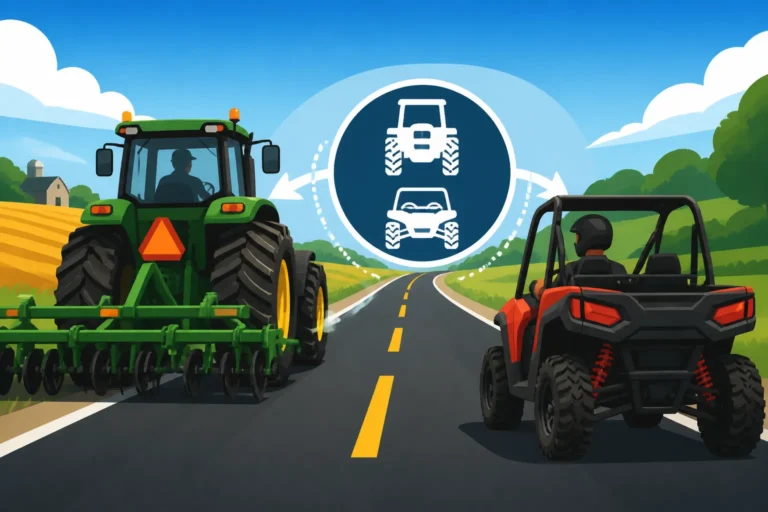
However, these aren't blanket permissions. While you might be exempt from registration if the machine is solely used for agricultural purposes on private land, once you touch a public roadway, even for a short distance, other rules can kick in. The crucial distinction is often whether you're crossing a road or traveling along it. Crossing is usually more permissible and less regulated than riding down the ditch or on the road surface for a sustained period. When carrying feed, you're likely traveling, which brings more scrutiny.
Registration and Trail Pass Considerations for Farm Use
Even with farm use in mind, the question of registration always comes up. If your machine is used exclusively for agricultural work on your own property and never touches a public road (not even crossing), then you might not need to register it. But as soon as you venture onto a township road to haul feed from a remote field back to the barn, or even just drive to a neighbor's property for shared equipment, you're entering a gray area. Most often, if you plan to operate on any public land, including township road rights-of-way, your machine will need to be properly registered with the Minnesota DNR.
This means getting your registration stickers and ensuring they are displayed correctly. Think of it this way: if a conservation officer or sheriff's deputy sees you, they need to quickly identify your machine as legally operated. While specific "farm plates" or special agricultural registrations for ATVs/UTVs are not typically a thing in Minnesota, your standard off-highway vehicle registration serves the purpose. Furthermore, a trail pass is generally not required for operation within a road right-of-way, as passes are intended for designated trails. If your machine is already registered for general public use, you're usually covered for the basic "legal to be on public land" aspect of using a road right-of-way. It’s always best to be registered than to risk a fine.
Navigating Township Roads with Your Machine
Once you've clarified the legal aspects, the practical reality of operating an OHV with a load of feed on a township road comes into play. These roads, while often less traveled than county or state highways, still present unique challenges and demand a high degree of caution.
Safety First: Visibility and Speed
When hauling feed, your machine's dynamics change significantly. The added weight, especially if it's not evenly distributed, can affect steering, braking, and stability. This is particularly true if you're pulling a small trailer. Visibility becomes paramount. Township roads can have blind curves, dusty sections, and farm implements that move slower than typical traffic. You might be focused on keeping your load secure, but you also need to be acutely aware of your surroundings. Consider using a whip flag, especially if your machine is shorter than other vehicles, or adding extra reflective tape to your trailer, particularly for dusk or dawn trips. [Reflective Tape for a Dusk Ditch Ride] can offer some good ideas.
Speed is another critical factor. While your ATV or UTV might be capable of higher speeds, especially on a smooth gravel road, hauling a heavy load of feed demands a slower, more deliberate pace. This isn't just about control; it's about minimizing dust for oncoming traffic, reducing wear and tear on your machine, and ensuring your load doesn't shift or spill. Drivers of passenger vehicles might not expect an OHV, especially one laden with hay or grain, to be on the road, so giving them ample time to react to your presence is crucial. Maintaining a steady, predictable speed also makes you easier for others to anticipate.
Where to Ride: Ditch, Shoulder, or Road Surface?
This is where many riders get into trouble, as Minnesota has very specific rules about where OHVs can and cannot operate on public road rights-of-way. For township roads, the general rule is that you must stay on the extreme right of the improved roadbed. This typically means the ditch or the shoulder, not the paved or graded surface itself, unless certain exceptions apply or specific local ordinances permit it. [Which Side of the Ditch Minnesota Riders Use] explains this in detail.
Township roads are often gravel, making the distinction between "roadbed" and "shoulder/ditch" a bit blurry in practice, but the intent of the law is clear: keep off the main travel lane where cars and trucks primarily operate. However, if the ditch is impassable due to water, snow, or obstructions, you might temporarily use the shoulder or, in some cases, the extreme right of the road surface to pass the hazard. This is a temporary measure, not a permanent right-of-way. Always be prepared to yield to other vehicles and move back to the ditch or shoulder as soon as safely possible. Remember, the road surface [The Road Surface Minnesota Keeps Closed] is generally off-limits for ATVs and UTVs.
Equipping Your Machine for Hauling Feed Safely
Hauling feed isn't just about having an ATV or UTV; it's about having the right setup for the job. You wouldn't try to haul a ton of corn in a car, and similarly, your OHV needs to be appropriately equipped to handle the weight and bulk of agricultural supplies.
Trailers, Racks, and Weight Distribution
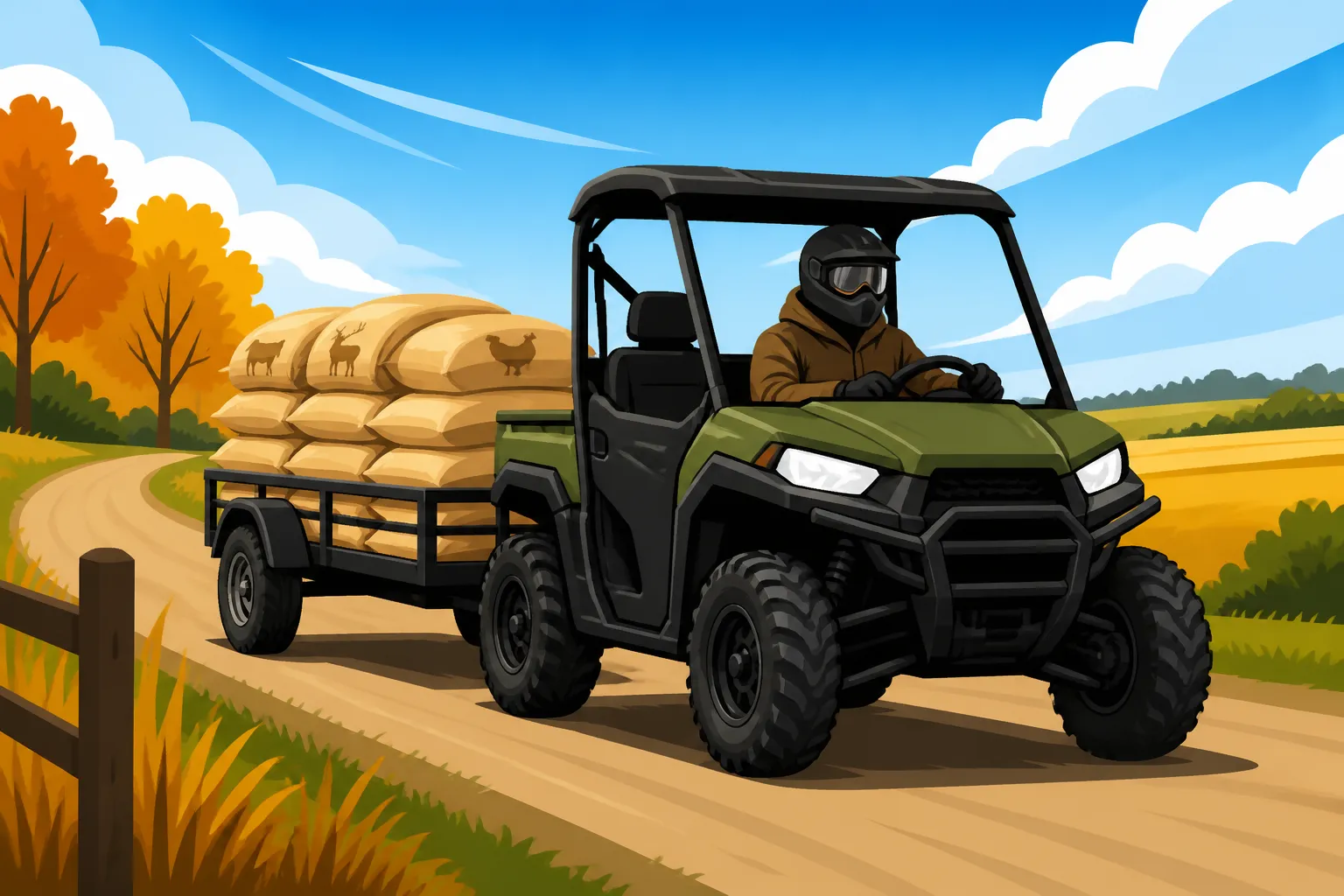
For anything beyond a small bag of feed, a trailer is usually your best bet. Many utility-focused UTVs, like a Polaris Ranger or a Kawasaki Mule, come with robust dump beds that are perfect for smaller loads of grain or silage. But for larger quantities, or bulky items like hay bales, a utility trailer is essential. When choosing a trailer, consider its weight capacity and ensure it matches or exceeds the weight of the feed you plan to haul. Also, check that your machine has an adequate hitch rating. Aftermarket hitches are available, and brands like SuperATV offer heavy-duty options that can increase your machine's towing capabilities, though you should never exceed the manufacturer's recommended towing capacity.
Proper weight distribution is absolutely critical, whether you're using a bed or a trailer. If you're loading hay bales onto a rear rack, make sure the weight is centered and secured. An unbalanced load can make your machine unstable, especially on uneven gravel roads or when going around curves. With a trailer, ensure a proper tongue weight – too little, and the trailer can sway; too much, and it puts excessive stress on your machine's suspension and hitch. Always secure your load with straps or netting to prevent spills, which could not only create a hazard for other drivers but also lead to fines for littering.
Tires, Suspension, and Braking Upgrades
The stock tires on many recreational ATVs are designed for trail riding, not heavy hauling on gravel roads. If you're regularly hauling significant loads, consider upgrading to more robust, multi-ply tires that can handle the extra weight without puncturing or flexing excessively. Tires with a more aggressive tread can also help with traction, especially if your route involves muddy sections. Similarly, a heavy load will put a strain on your machine's suspension. If your UTV sags noticeably with a full load, you might want to look into aftermarket heavy-duty springs or even an air-assist suspension system. Brands like SuperATV offer suspension components designed to handle rough terrain and increased loads, which could be beneficial for farm use.
Perhaps most importantly, don't overlook your braking system. Hauling feed means a lot more inertia to stop. Your brakes will work harder, and stopping distances will increase. If your trailer has its own braking system, ensure it's properly connected and functioning. For machines without trailer brakes, practice stopping with a loaded trailer in a safe area to get a feel for the increased stopping distance. Regular inspection of brake pads and fluid becomes even more crucial when you're using your machine for heavy work.
Here's a quick look at essential equipment considerations:
| Equipment Type | Purpose | Key Considerations |
|---|---|---|
| Trailer | Hauling large/bulky feed, minimizing machine strain | Weight capacity, hitch rating, tongue weight, securing straps, trailer brakes |
| Rear/Front Racks | Smaller, manageable loads | Weight limit, even distribution, secure attachment |
| Heavy-Duty Tires | Better load support, puncture resistance | Ply rating, tread pattern suitable for gravel/mud, proper inflation |
| Suspension Upgrades | Prevents sagging, improves stability with load | Heavier springs, shock upgrades, air-assist systems |
| Lights/Reflectors | Enhanced visibility, especially at dawn/dusk | Headlights, taillights, turn signals (if equipped), reflective tape on machine/trailer |
| Whip Flag | Increases visibility for other drivers | Height, bright color, placement |
| Fenders/Mud Flaps | Reduces thrown debris on self and others | Essential for gravel roads, keeping feed clean |
Avoiding Common Pitfalls and Legal Troubles
Operating an OHV for agricultural purposes on a public road in Minnesota might seem straightforward, but it's rife with potential legal and practical traps if you're not careful. Understanding these can save you a lot of grief.
Local Ordinances and Enforcement
While state law provides the overarching framework, local control is a significant factor in Minnesota. Township boards, county commissioners, and even city councils have the authority to enact their own ordinances regarding OHV use on roads within their jurisdiction. What's perfectly fine on one township road might be strictly prohibited on another, even just a mile down the road. This is why it's incredibly important to check with your local township office or county sheriff's department. [Minnesota Rules on County Roads] and [Minnesota Rules on Township Roads] touch upon how these local variations can impact your riding.
A township might have a specific ordinance that prohibits any ATV/UTV use on certain roads, or it might restrict it to specific times of day or for specific purposes. Getting caught unaware can lead to tickets and fines. Remember, just because your neighbor does it, doesn't mean it's legal or that enforcement won't happen. A quick phone call or visit to the local administrative office can clear up any confusion and ensure you're operating within all applicable rules. Conservation officers and local law enforcement are well-versed in these rules and won't hesitate to issue a citation if you're in violation.
Liability and Insurance Concerns
Even if you're following all the rules, accidents can happen. When you're operating an OHV on a public road, even for farm use, your liability increases significantly. If you're involved in a collision with another vehicle, or if your unsecured load causes damage or injury, you could be held financially responsible. This is where insurance becomes non-negotiable. While a basic homeowners policy might offer some limited coverage for an ATV/UTV used on your own property, it's highly unlikely to extend to incidents on public roads.
You absolutely need a dedicated ATV/UTV insurance policy that includes liability coverage. This will protect you from the financial fallout of property damage or bodily injury claims. It's an investment, but it's far cheaper than facing a lawsuit without coverage. When talking to your insurance agent, be very clear that you intend to use the machine for agricultural purposes, including occasional use on public roads. This ensures they can provide you with the appropriate coverage. [Minnesota Liability Coverage for Riders] is an important read on this topic. Should an accident occur, knowing how to handle [Minnesota ATV Crash Reporting] is also vital.
General Road Etiquette and Courtesies
Beyond the legalities, there's the unspoken code of road etiquette. Even if you're legally allowed to be on a township road, common courtesy goes a long way. This includes pulling over safely to allow faster traffic to pass, signaling your turns (if your machine is equipped), and being mindful of the dust you might kick up. Riding slowly past homes and livestock can prevent complaints and maintain good relationships with your neighbors. When you encounter equestrians, pedestrians, or cyclists, slow down to a crawl and give them a wide berth. Many people appreciate a friendly wave from a farmer, and respectful behavior can help ensure that these valuable agricultural exemptions remain in place.
Ultimately, using your ATV or UTV to haul feed on a Minnesota township road can be a perfectly legitimate and efficient part of your farm operations. By understanding the specific exemptions for farm use, ensuring your machine is properly registered, equipping it safely, and exercising caution and courtesy, you can get your chores done without running afoul of the law or creating hazards for others. Always prioritize safety and stay informed about both state regulations and local ordinances, and your machine will serve you well.
Disclaimer
This article is for general informational purposes only and does not constitute professional advice. Laws, prices and regulations vary by location and change over time. Consult a qualified professional for guidance on your specific situation.