Single File in a Narrow Ditch
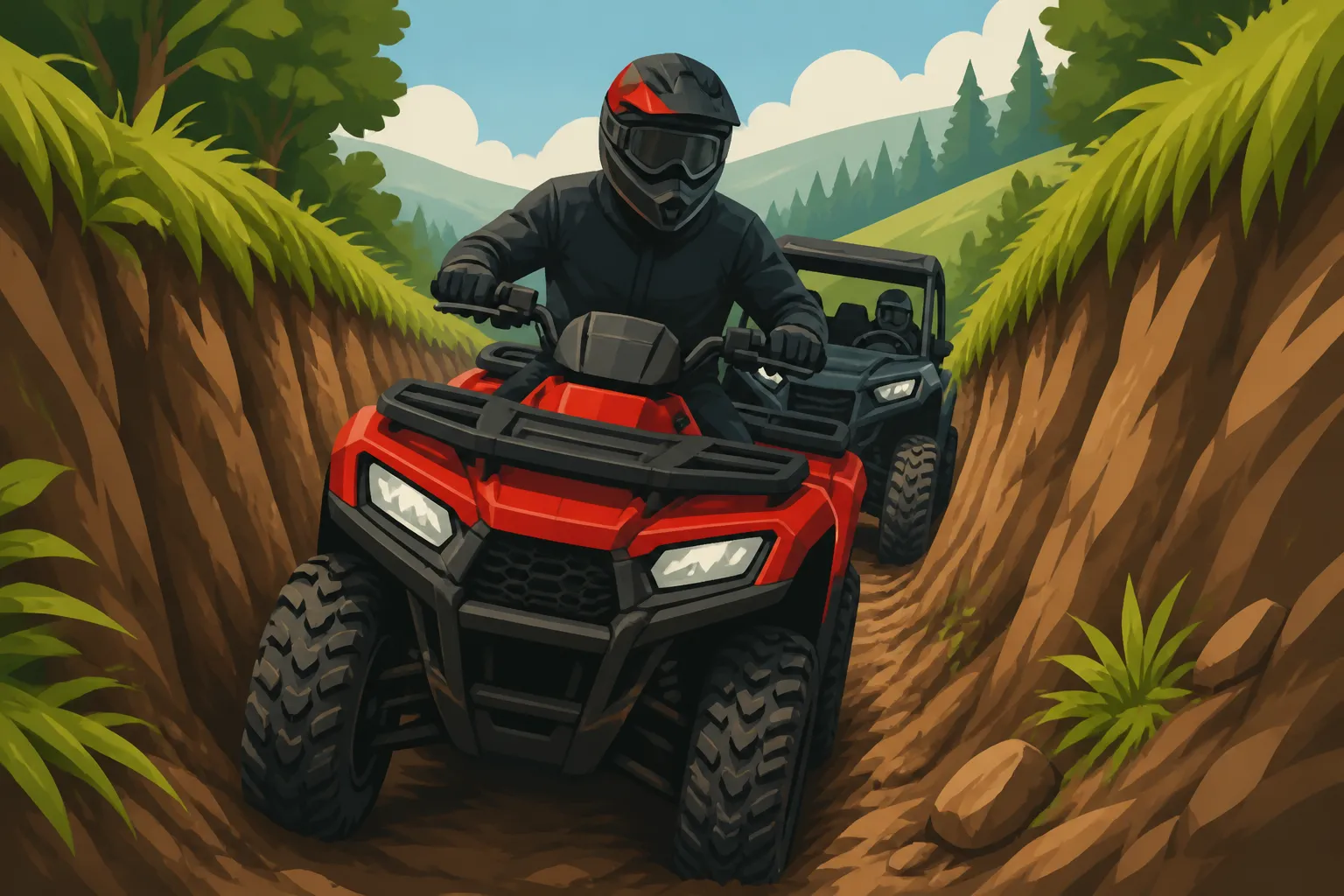
There’s nothing quite like hitting the ditches in Minnesota on your ATV or UTV, especially when you’re out with a group. But let’s be honest, those ditches aren't always wide open stretches of prairie. Many times, you’re squeezed into a narrow strip of land, and that’s when the conversation inevitably turns to riding "single file." It's not just about good manners or keeping the dust down; in Minnesota, riding single file in a narrow ditch is often a legal requirement and always a matter of safety. This guide will help you understand the why and how of navigating those tight spots with your riding buddies.
Why "Single File" Isn't Just Good Etiquette in Minnesota Ditches
It's easy to think of ditch riding as a free-for-all, but Minnesota's rules of the road (or, more accurately, the right-of-way) apply even to our beloved ATVs and UTVs. When the terrain gets snug, these regulations become paramount, transforming a suggestion into a strict necessity. Ignoring them can lead to serious consequences, not just legally, but for the safety of everyone in your group and any other ditch users you might encounter.
The Legal Obligation to Stay on the Right Side of the Ditch
One of the foundational rules for operating an ATV or UTV in Minnesota's road right-of-way, which includes those ditches you love to ride, is that you must always operate as close as possible to the right-hand side. This isn't a suggestion; it's a legal mandate designed to prevent head-on collisions and maintain order. Think of it like driving a car on a two-lane highway – you stay on your side. In a ditch, especially a narrow one, this rule inherently forces you into a single-file formation if you're riding with others. You simply don't have the lateral space to ride side-by-side safely, or legally, without encroaching on what would be "oncoming traffic" space.
Imagine you're cresting a slight rise or rounding a blind curve in a particularly narrow ditch, happily riding two abreast because the last section was wide. Suddenly, another ATV or UTV appears heading directly toward you. In a narrow space, there’s no room for error, no shoulder to pull onto, and no time to react. That's a recipe for a head-on collision. By adhering to the "right-hand side" rule and riding single file, you're creating a predictable flow of traffic, even in seemingly unstructured environments like a ditch. This is why understanding [Which Side of the Ditch Minnesota Riders Use] is so critical; it’s not just for cars, but for us riders too.
Navigating Obstacles and Variable Ditch Conditions
Minnesota's ditches are anything but uniform. One moment you might be cruising across a wide, grassy expanse, and the next you're squeezed between a fence and a thorny patch of wild rose bushes, dodging a hidden culvert or a rock that rolled down from the field. These aren't manicured trails; they're dynamic environments. Trying to maintain a side-by-side formation through these constantly changing conditions is incredibly risky. It increases the chance of a rider hitting an unseen obstacle, veering off course, or having their machine get caught in something that could cause a rollover.
When you ride single file, each rider can focus on their immediate path, picking the best line through the terrain without worrying about colliding with the rider next to them. This allows for quicker reactions to sudden dips, muddy patches, or unexpected debris. For instance, if the lead rider spots a deep rut filled with water and has to swerve, the following riders, spaced appropriately, have time to see their maneuver and adjust their own path accordingly. If you were riding abreast, that same maneuver could easily send one of you into the path of the other, or worse, off into a dangerous bank. The varying width of the ditch, from expansive to just barely machine-width, constantly demands an adaptive riding style that single-file best supports.
Practical Strategies for Riding Single File in a Group
Riding single file, especially in a group, requires discipline and coordination. It’s not just about lining up; it's about smart riding that keeps everyone safe and ensures the enjoyment of the entire outing. You want to make sure everyone understands the game plan before you even hit those narrow sections.
Maintaining Safe Spacing and Visibility
One of the biggest challenges when riding single file is maintaining an adequate and safe distance between machines. Too close, and you're eating dust, reducing reaction time, and increasing the risk of a pile-up if the lead rider stops suddenly. Too far apart, and you risk losing sight of your group, especially on twisty routes or dusty days. A good rule of thumb is to allow at least one machine length for every 10 mph you're traveling, and then add a little extra for dusty or uneven conditions. This isn't a hard and fast rule, but a starting point.
Imagine a dry summer day when the dust plumes behind each machine are significant. If you’re too close to the rider in front, you’ll be blinded, unable to see upcoming hazards or their signals. Riding single file with proper spacing dramatically improves visibility for everyone in the group. It also allows for better air quality, making the ride more enjoyable. When starting out, especially on a narrow stretch, consider a staggered start if you’re pulling off a wider area, then transition into a single file with ample space. It keeps everyone in sight and allows for smooth progression without constant stops and starts. This kind of disciplined riding is often part of [Minnesota ATV Safety Training Requirement] discussions, emphasizing the importance of predictable behavior in a group.
Communication and Hand Signals
In the roaring wind and engine noise of an ATV or UTV ride, shouting to your buddies is usually futile. This is where hand signals become your best friend, especially when riding single file and you can only see the rider directly in front or behind you. Before you head out, have a quick huddle and review common signals. A raised left hand for "stopping," an arm pointed left or right for "turn," or a pointed finger to indicate an obstacle on that side of the trail. These simple gestures can prevent accidents and keep the group moving efficiently.
For example, if the lead rider spots a large pothole on the left side of the ditch, they can simply point to it with their left hand, alerting everyone behind them to shift right. If the group spreads out, or if you're navigating particularly tricky terrain, investing in helmet communicators or two-way radios can be a game-changer. Brands like SuperATV offer robust communication systems that integrate directly into helmets, allowing for clear, hands-free conversation between riders. This kind of technology can transform a stressful, silent ride into a coordinated, communicative adventure. Even so, basic hand signals remain a vital backup. Remember, a quick tap on the helmet means "slow down," and a thumbs-up means "all clear."
| Signal | Action | Description |
|---|---|---|
| Stop | Left arm raised, fist clenched | Indicates the group is stopping or needs to stop immediately. |
| Slow Down | Left arm extended down, palm facing back, waving | Signals a need to reduce speed due to hazards, terrain, or group conditions. |
| Turn Left | Left arm extended straight out, palm open | Indicates a left turn or obstacle to the left. |
| Turn Right | Left arm bent at elbow, hand up, palm forward | Signals a right turn or obstacle to the right (some riders also use right arm for this). |
| Hazard Ahead | Arm pointed with finger, waving in a circle | Points to a specific hazard (rock, hole, branch) or general caution area. |
| Fuel Low | Point to fuel tank | Alerts the group leader that you might need to find a gas stop soon. |
| All Clear | Thumbs up | Used by the sweep rider to confirm everyone is accounted for and past a difficult section or intersection. |
| Mechanical | Hand on top of helmet | Signals a mechanical issue with your machine; you'll need to pull over safely. |
Leading and Sweeping: Designated Roles
In any group ride, designating a lead rider and a sweep rider is always a good idea, but it becomes absolutely essential when you're tackling narrow, single-file ditches. The lead rider is the trailblazer. They set the pace, navigate the route, and are the first to identify potential hazards like deep ruts, hidden rocks, or low-hanging branches. This person should be experienced, confident in their machine, and familiar with the general area or at least adept at reading a map or GPS like onX Offroad. Their decisions directly impact the safety and enjoyment of everyone behind them.
The sweep rider, on the other hand, is the guardian of the group's rear. This individual ensures no one gets lost, helps with any mechanical issues that arise, and communicates with the lead rider about the group's status. They are often the last to pass through a tricky section, making sure all machines are accounted for and that everyone has successfully navigated the obstacle. They can also signal to the lead rider if the pace is too fast for the slowest member, allowing for adjustments. Having these designated roles provides structure and accountability, making the single-file procession much smoother and safer, especially when you're deep in the wilderness where [Cell Service in the Minnesota Northwoods] might be nonexistent.
When the Ditch Narrows: Specific Challenges and Solutions
Even with good intentions and a well-coordinated group, narrow ditches present unique challenges that can test a rider's patience and skill. These aren't just minor inconveniences; they demand a higher level of awareness and often a change in riding strategy.
Dealing with Limited Clearance and Overgrowth
Picture this: you've been riding a beautiful, wide-open ditch for miles, and suddenly, the landscape closes in. The ditch bank becomes steeper, the fence line moves closer, and worst of all, thick brush and tree branches start encroaching on your path. Limited clearance and overgrowth are common frustrations in Minnesota's ditches. In these situations, riding single file isn't just a choice; it's the only physically possible way to proceed. You might find yourself having to slow to a crawl, weaving to avoid branches, or even stopping to clear a path.
This is where protective gear truly shines. Beyond helmets and eye protection, which are always mandatory for riders under 18 and highly recommended for everyone, long sleeves, durable pants, and gloves become invaluable for protecting against scrapes and scratches from branches. Some riders even install brush guards on their machines, like those offered by SuperATV, to protect their headlights and plastics from snags. If the overgrowth is severe, it might even be worth considering a different route if possible, or taking a moment to trim back some branches with a hand saw you carry specifically for trail clearing. Remember to respect private property and only clear what's absolutely necessary on public rights-of-way.
Sharing the Right-of-Way with Other Users (Bicycles, Pedestrians, Farm Equipment)
It’s easy to forget that ditches aren't exclusively for motorized recreation. In many parts of Minnesota, especially on township roads or near agricultural areas, you might encounter other users sharing that precious sliver of right-of-way. This could be a local farmer moving equipment, a family out for a walk, or even cyclists enjoying the quiet country lanes. When you're in a narrow, single-file section, the ability to maneuver around these other users is severely limited.
The key here is courtesy, caution, and yielding. As an ATV or UTV operator, you generally have a responsibility to yield to non-motorized traffic. As soon as you spot another user, reduce your speed significantly – often to idle – and be prepared to stop. If possible, move your machine even further to the right to create as much space as you can. A friendly wave goes a long way. Trying to power through or squeeze past can not only be dangerous but can also give all ATV riders a bad reputation. Encountering a slow-moving combine on a narrow township road ditch demands patience and respect, and often means pulling over entirely until it passes. You'll want to be familiar with [Minnesota Rules on County Roads] to ensure you're always operating safely and legally in shared spaces.
The Impatience Trap: Avoiding Risky Overtakes
We've all been there: you're behind a slower rider, perhaps a newer member of the group or someone being extra cautious, and the trail ahead looks clear for a moment. The urge to zip past, to regain your preferred pace, can be incredibly strong. But in a narrow, single-file ditch, attempting to overtake is almost always a terrible idea and can lead to dangerous situations. There might not be enough room, the ditch might suddenly narrow further, or the rider you're trying to pass might unexpectedly swerve.
The risks include forcing the overtaken rider into the ditch bank, colliding with them, or even losing control yourself and ending up in a fence or a culvert. Patience is paramount. If you're consistently finding yourself behind a much slower rider, communicate with the lead and sweep riders at your next stop. Perhaps the group can adjust its pace, or the slower rider can be moved closer to the front if they're comfortable. Never, ever attempt to overtake in a blind spot, on a curve, or where there isn't ample, clear, visible space. Remember, everyone wants to have a fun and safe ride, and a few moments of frustration are far better than a potential accident and the resulting [Minnesota ATV Crash Reporting] that would follow.
Disclaimer
This article is for general informational purposes only and does not constitute professional advice. Laws, prices and regulations vary by location and change over time. Consult a qualified professional for guidance on your specific situation.