Riding Over a Minnesota Bridge
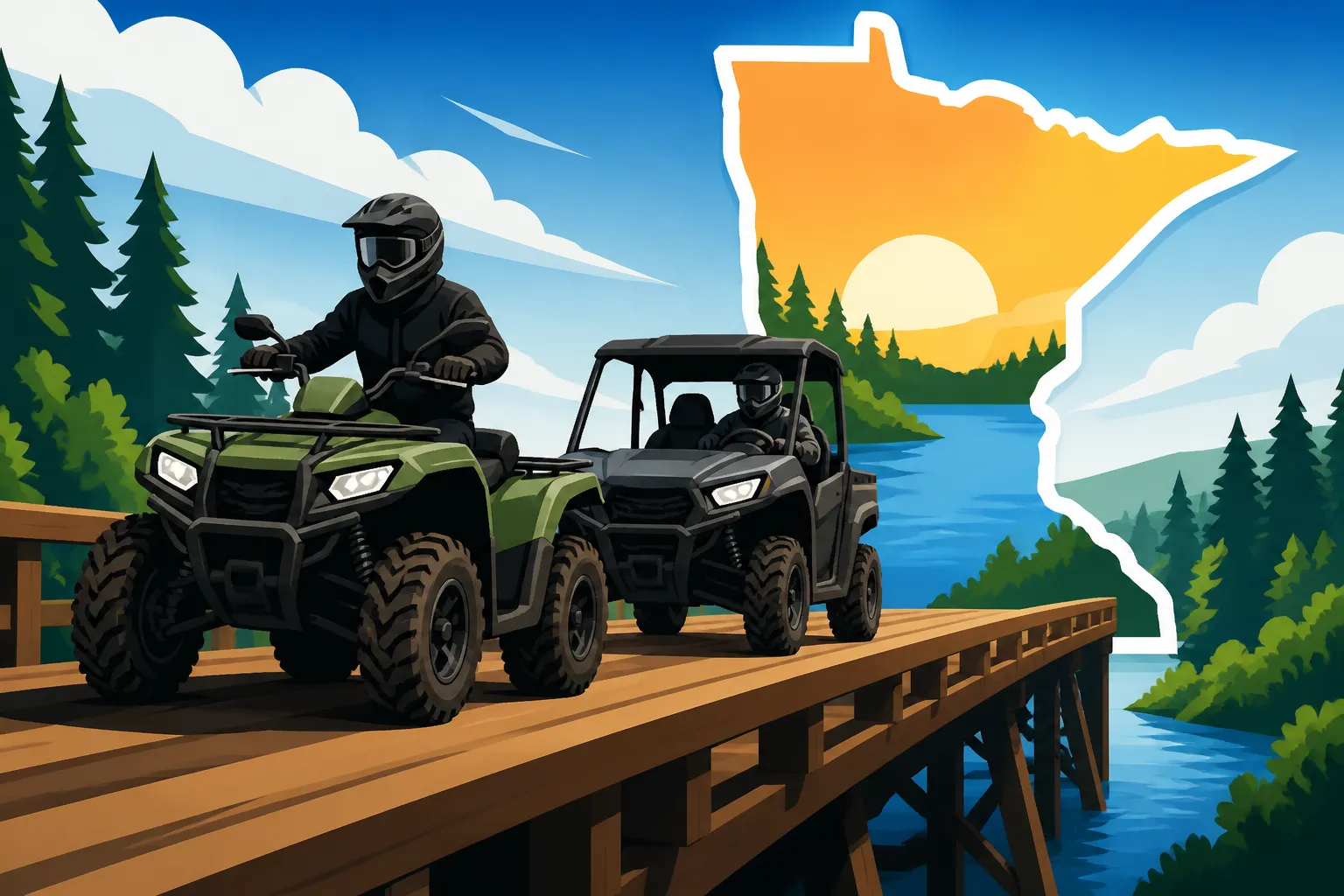
It's a beautiful day out on the trails, the wind in your face, the roar of your engine a steady companion as you explore Minnesota's incredible backcountry. But then you come to it: a bridge. Suddenly, that feeling of freedom might be replaced with a knot of uncertainty. Can you ride your ATV or UTV across it? Do the ditch riding rules still apply? This is a common point of confusion for so many riders, and frankly, the rules aren't always crystal clear when you're out there. This guide will cut through the ambiguity, helping you understand Minnesota's specific regulations for navigating bridges safely and legally, ensuring your adventures stay on track and out of trouble.
The Core Rule: Why Bridges Present a Different Challenge
When you're out enjoying Minnesota's extensive ATV and UTV trail system, or even just exploring the ditches and shoulders alongside many rural roads, it can feel like you have the run of the place. Your machine is built for varied terrain, right? But then you encounter a bridge, and suddenly, the rules shift dramatically. It’s not just another section of trail or ditch; a bridge is a distinct legal and safety entity that demands a different approach. Understanding why this distinction exists is key to safely and legally continuing your journey.
Understanding the Road Surface Versus Right-of-Way Distinction
Minnesota's regulations for ATV and UTV use often hinge on a crucial distinction: the "road right of way" versus the "traveled portion of the roadway." Your ditch riding privileges, which are so vital to connecting trails and accessing certain areas, almost exclusively apply to the road right of way – that’s the ditch, shoulder, or unpaved area beside the main road. The intent here is to allow riders to utilize these areas separate from high-speed vehicular traffic. However, a bridge, in nearly all circumstances, is considered an integral part of the traveled portion of the roadway. Think of it this way: when you're driving your car, the bridge is part of the road you’re on, not a separate shoulder. This means that the general permission to ride in the ditch usually stops abruptly at the bridge abutment. It’s a legislative choice designed to keep off-highway vehicles, which are slower and less visible than cars, out of direct conflict with faster-moving traffic in confined spaces. Many riders assume that if they can ride the ditch right up to a bridge, they can just cruise across it. That assumption, unfortunately, can lead to serious legal and safety issues. You’re essentially entering a different operational zone, and without explicit designation, it's typically off-limits for continuous riding.
The Safety Imperative: Risks on Bridge Structures
Beyond the legal definitions, there are very real and critical safety reasons why bridges are treated differently. Bridges are often narrower than the surrounding road, offering little to no shoulder. They can also have concrete barriers or railings that leave no room for error or evasive maneuvers. Unlike a wide-open ditch, a bridge funnels all traffic into a constricted space, increasing the likelihood of high-speed collisions. Imagine your ATV, perhaps topping out at 40 mph, suddenly sharing a narrow lane with a semi-truck going 65 mph. The speed differential alone is terrifying. Furthermore, many bridges have limited sightlines, especially older ones with humped designs or those on winding roads. You might not see oncoming traffic, and they certainly might not see you until it's too late. Traction can also be an issue; bridge surfaces, often made of concrete or steel grating, can react differently with ATV tires, especially in wet or icy conditions. Your machine, whether it's a nimble sport quad or a heavy-duty side-by-side that you’ve outfitted with robust components from a company like SuperATV, is built for challenging off-road conditions, not necessarily for navigating high-speed bridge traffic. The potential for catastrophic accidents on bridges is simply too high for unrestricted ATV/UTV access.
Navigating Minnesota Bridges Legally: Your Options and Responsibilities
So, if simply riding over a bridge is generally a no-go, what are your options when you encounter one on your journey? Minnesota law does provide specific pathways for ATV and UTV operators to cross bridges, but these are exceptions to the rule and come with strict requirements. It’s crucial to understand these distinctions to ensure you’re not only compliant with the law but also prioritizing your safety and the safety of others on the road.
Designated Crossings and Officially Marked Routes
The most straightforward and safest way to cross a bridge is when it’s part of a officially designated ATV route or a specifically marked crossing. These are the "green light" zones for riders. When a local municipality, county, or the DNR has determined that a bridge can be safely integrated into the ATV trail system, they will typically post clear signage. You'll see official brown or green signs indicating "ATV Route" or "ATV Crossing" approaching the bridge. These designations usually mean that the authorities have assessed the bridge for safety, potentially added signage for motorists, and formally established an ordinance or rule permitting ATV use on that specific segment. For instance, if you're riding a state-designated trail system, and it leads you directly to a bridge that’s part of that continuous trail, it's generally safe to assume it's a legal crossing. Always look for these explicit markers. Without them, even if a trail seems to continue on the other side, don't assume you can just power across. Many [Minnesota Cities That Allow ATVs on Streets] have also designated specific routes that might include bridge crossings within city limits, but again, these are always clearly signed. If you're planning a trip, check local ordinances and official trail maps carefully.
The "Hazard Exception" for Culverts and Bridges
This is where things can get a little tricky, and it's often misunderstood by riders. Minnesota law does include a "hazard exception" that allows an off-highway vehicle to operate on the traveled portion of a public road for the purpose of crossing a bridge or culvert when the ditch or shoulder is impassable. However, this is not permission to ride over the entire length of the bridge. Instead, it’s specifically for a momentary, direct crossing of the road surface to re-enter the ditch or shoulder on the other side. Imagine the ditch abruptly ends at a large culvert or a bridge abutment, and there's no way to continue in the ditch. The law allows you to stop, yield to all traffic, enter the traveled portion of the road, proceed directly across the roadway to the point where the ditch or shoulder becomes passable again, and then immediately re-enter it. This is a very brief, purposeful maneuver, not a leisurely ride across the structure. You must proceed with extreme caution, yielding to all vehicular traffic, and doing so only if it's safe. It's akin to how you might make a designated [Crossing a Minnesota Road on an ATV] at an intersection, but specifically for an obstruction in the right of way. Remember, the intent is to allow you to pass the obstruction, not to use the bridge as a trail segment. This rule also applies if you're just trying to get around a [Passing a Culvert on a Minnesota Ditch Ride].
Consequences of Illegal Bridge Crossings
Ignoring the rules for bridge crossings can lead to a host of problems, none of them pleasant. First and foremost, you're looking at significant fines. Operating an unregistered or illegally ridden ATV/UTV on a public road, especially on the main traveled portion of a bridge, can result in citations that quickly add up. These [Minnesota Fines for Illegal Road Riding] can be substantial and definitely put a damper on your riding day (or season). Beyond the financial hit, you could face more serious charges, such as reckless endangerment or even a DWI if alcohol is involved. Law enforcement, including local police, county sheriffs, and DNR conservation officers, are well aware of common problem spots, and bridges are often high on their patrol list, particularly on busy weekends. The greater concern, however, is the risk of an accident. A collision between an ATV/UTV and a car on a bridge can be catastrophic, leading to severe injuries or fatalities. Even a minor fender bender can result in costly property damage and complex legal battles, far outweighing any perceived convenience of illegally riding over a bridge. It’s simply not worth the risk.
Strategic Riding: Planning and Practices for Bridge Encounters
Knowing the rules is one thing, but applying them effectively when you’re out on the trails is another. Strategic planning and adopting best practices for bridge encounters are essential for a safe and enjoyable riding experience in Minnesota. A little foresight can prevent a lot of headaches, keep you legal, and ensure you make it home after a great day of riding.
Pre-Ride Planning: Mapping Out Your Crossings
Before you even load up your machine, one of the most effective strategies for dealing with bridges is thorough pre-ride planning. Don't just head out hoping for the best. Grab those official DNR maps, or use reliable trail apps (many offer detailed mapping features that show ATV-legal routes and crossing points). Look specifically for sections where trails or ditch routes might intersect with roads and bridges. These maps will typically indicate designated crossings or show where a trail route explicitly uses a bridge. For areas where you suspect a bridge might be an issue, have an alternative route in mind. Sometimes, a short detour on a side road (if legal for ATVs) or even a complete reroute might be necessary to avoid an illegal or dangerous bridge crossing. Consulting a [Reading a Minnesota OHV Trail Map] is not just about finding the best vistas; it's about navigating the legalities of the landscape. Don't hesitate to reach out to local ATV clubs or online rider forums. Many experienced riders are happy to share their knowledge about specific routes and how to handle tricky bridge sections. They can often provide invaluable, real-world advice that complements the official maps.
Best Practices for Safe and Legal Maneuvers
When you encounter a bridge, whether it’s a designated crossing or an impassable ditch requiring the hazard exception, specific practices will boost your safety. If it’s a designated crossing, slow down significantly as you approach. Be extra vigilant for vehicular traffic, using your mirrors and looking both ways multiple times. If your machine has turn signals, use them to indicate your intention to cross. Proceed directly and purposefully across the bridge, maintaining your lane and re-entering the trail or ditch as soon as safely possible. If you’re executing the hazard exception crossing, the emphasis is even greater on caution. Come to a complete stop before entering the traveled portion of the road. Scan for traffic in all directions, waiting for a substantial gap in vehicles. Cross the road surface as close to a 90-degree angle as possible, making your intentions clear and minimizing your time in the roadway. Re-enter the ditch immediately once the obstruction is passed and the ditch is safe to use again. For group rides, approach crossings single file, and have the lead rider signal when it’s safe for others to follow, ensuring no one is caught on the bridge. Visibility is paramount; wearing bright colors and ensuring your headlights and taillights are functioning (and maybe investing in some [Reflectors for a Dusk Ditch Ride]) can make a huge difference, especially if the light is fading. Also, make sure your machine is in good working order. A reliable machine, perhaps one maintained with quality parts like those from SuperATV, will respond predictably when you need it most.
When in Doubt: Prioritizing Safety Over Speed
There will inevitably be times when you encounter a bridge, and you’re simply not sure if it’s legal to cross, or if the hazard exception applies in a way that feels safe. In these moments, the golden rule of off-roading (and life in general) applies: when in doubt, turn around. No trail adventure is worth risking your life, the lives of others, or facing hefty fines and legal trouble. If a bridge doesn’t have clear signage for ATV use, and you can’t confidently and safely execute a hazard crossing, the best course of action is to backtrack and find an alternative route. This might mean adding extra miles to your trip, but it ensures your safety and keeps your ride legal. Minnesota's vast network of trails and roads means there's almost always another way to get where you're going. Sometimes, the most adventurous choice is knowing when to pivot and take the long way around. A little humility and a lot of common sense go a long way in ensuring your day of riding is memorable for the right reasons.
Specific Bridge Scenarios: What to Expect
The type of bridge you encounter in Minnesota can also influence the rules and your options. Understanding the nuances between bridges on different types of roads or those that are part of dedicated trail systems can help you navigate more confidently and legally. Not all bridges are created equal when it comes to ATV access.
Road Bridges: County, Township, and State Concerns
Most bridges you encounter while ditch riding will be over rivers, creeks, or ravines on public roads. The rules for these bridges largely depend on who maintains the road.
- State Highways (Trunk Highways): Bridges on state highways are almost universally off-limits for ATVs and UTVs to ride across, unless it's part of an exceedingly rare, explicitly designated crossing that would be heavily signed. These are high-speed routes, and the Minnesota Department of Transportation (MnDOT) is highly restrictive about anything interfering with traffic flow. [Minnesota Rules on State Highways] are very clear about keeping ATVs off the traveled portion.
- County Roads: [Minnesota Rules on County Roads] offer a bit more flexibility, as county boards have the authority to designate certain roads, and thus bridges, as ATV routes. However, this designation must be formalized through a county ordinance and will always be clearly marked. Without signage, assume it's still off-limits for riding over the bridge. The hazard exception for crossing the road at the bridge to re-enter the ditch might apply here, but again, extreme caution is needed.
- Township Roads: These are typically the most rural and lowest-speed roads. Township boards also have the authority to designate roads and bridges for ATV use. Because traffic is generally lighter, you might find more designated ATV routes that incorporate bridge crossings on township roads. Nevertheless, the same rule applies: if it’s not explicitly signed as an ATV route or crossing, you cannot simply ride across the main surface of the bridge. The hazard exception is still your only recourse for navigating an impassable ditch.
Rail-Trail and Multi-Use Trail Bridges
This category offers a much different and usually more permissive scenario for ATV and UTV riders. Minnesota has an impressive network of rail-trails – former railroad beds converted into recreational trails. Many of these trails incorporate the original railroad bridges, which are often robust structures built to handle heavy trains. If a rail-trail or a similar multi-use trail (like parts of the [Soo Line North Trail Across Minnesota] or other [Minnesota Trails That Link Two Towns]) is officially open to ATVs and UTVs, then by extension, the bridges that are an integral part of that trail are also open. These bridges are typically maintained as part of the trail system, and you'll often see trail markers or signage indicating the continuous nature of the route across them. These are distinct from road bridges because they are not part of the vehicular traffic system. When riding these bridges, remember you are often sharing them with other users – hikers, cyclists, horseback riders, or snowmobilers in winter. Always practice trail etiquette, slow down, and be courteous to everyone else enjoying the path.
Here's a quick reference table to help clarify common bridge scenarios:
| Bridge Type / Scenario | General Rule for ATVs/UTVs | Legal Crossing Method (if any) | Key Consideration |
|---|---|---|---|
| State Highway Bridge | Generally prohibited for riding across. | Only if explicitly designated and heavily signed. | High-speed traffic, extreme danger. Assume no access. |
| County Road Bridge | Generally prohibited for riding across. | 1. If designated by county ordinance and signed. 2. Hazard exception (direct crossing of road surface). |
Check local ordinances/maps. Caution for hazard crossing. |
| Township Road Bridge | Generally prohibited for riding across. | 1. If designated by township ordinance and signed. 2. Hazard exception (direct crossing of road surface). |
Often lower traffic, but still requires official designation. |
| Rail-Trail / Multi-Use Trail Bridge | Generally permitted if the trail itself is open to ATVs/UTVs. | Ride as part of the continuous trail. | Share with other users, follow trail etiquette. |
| Private Road/Farm Bridge | Permitted only with specific owner permission. | With explicit owner permission. | Always get permission in writing. |
Disclaimer
This article is for general informational purposes only and does not constitute professional advice. Laws, prices and regulations vary by location and change over time. Consult a qualified professional for guidance on your specific situation.