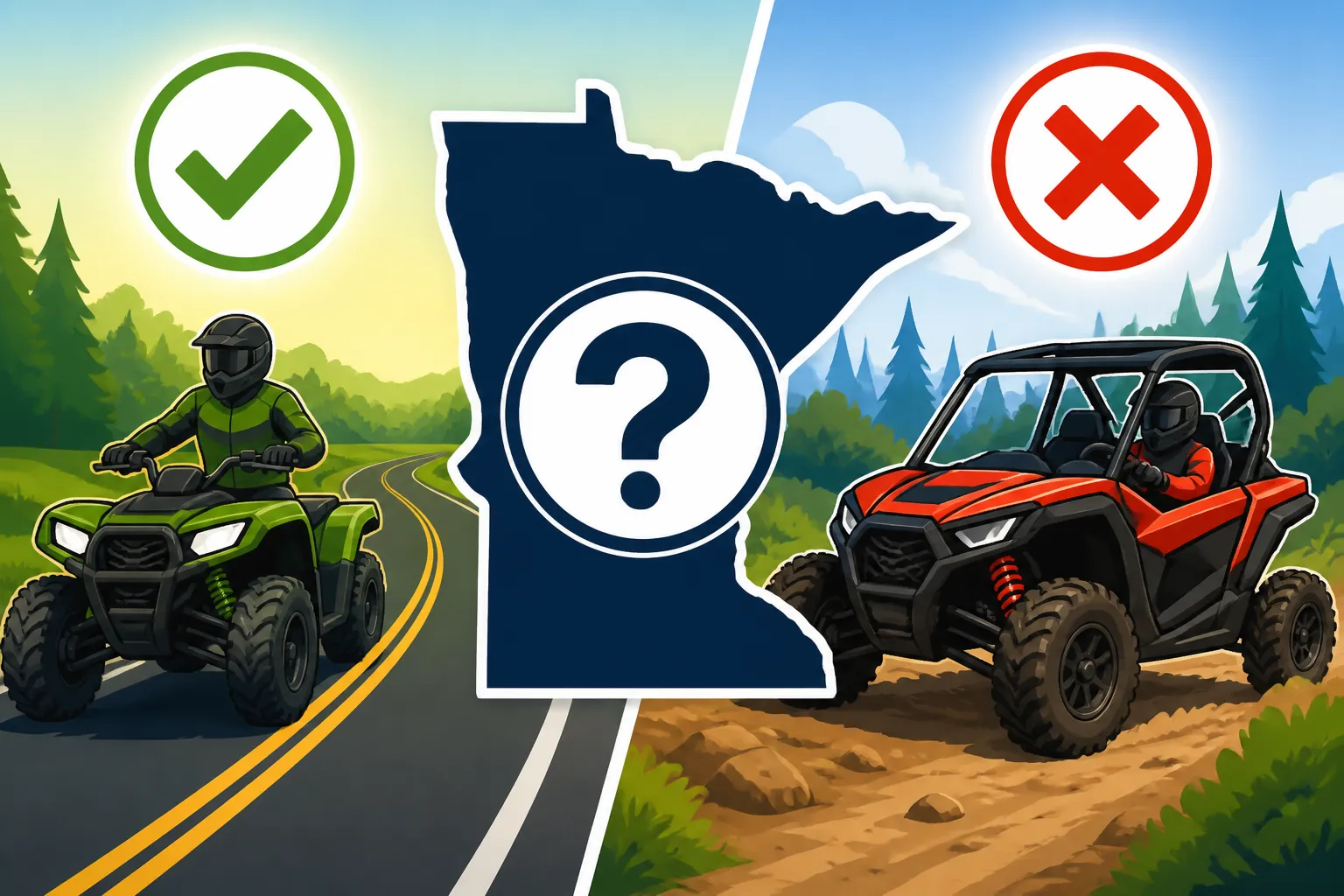
Can You Ride the Road Surface in Minnesota?
It's a common question, and honestly, a source of frustration for many Minnesota ATV and UTV riders: can you just hop on the pavement and cruise down the road like a car? We've all been there, looking at that clear stretch of blacktop or gravel road, wishing we could just take the direct route. But in Minnesota, the answer isn't as simple as a yes or no, and often, it leans heavily towards "no" when it comes to riding on the actual road surface. This guide is here to untangle Minnesota's rules, clarify what's allowed, and explain why those restrictions are in place.
The General Rule: Why Road Surfaces Are Off-Limits (Mostly)
Let's get right to it: for the vast majority of scenarios, riding your ATV or UTV directly on the paved or graveled road surface in Minnesota is not allowed. It's a hard pill to swallow sometimes, especially when you're just trying to get from one section of a trail to another, or even just to a gas station. But there are very specific, safety-driven reasons behind these regulations that make a lot of sense when you think about them from a broader perspective.
Safety Concerns and Traffic Flow
The primary reason Minnesota law keeps ATVs and UTVs off the main road surface is safety. These machines are engineered for off-road conditions, not for sharing lanes with cars, trucks, and semi-trailers traveling at highway speeds. Think about it: a typical passenger car weighs thousands of pounds and can stop much more quickly on asphalt than an ATV or UTV, which often has a higher center of gravity, knobby tires, and a braking system designed for dirt and mud.
The speed differential is a huge factor. While some UTVs can reach impressive speeds, the legal limits for ATVs and UTVs, even where they are allowed, are generally much lower than posted road speeds. This creates a dangerous situation where faster-moving traffic can come upon an off-highway vehicle unexpectedly, leading to quick braking, swerving, and a higher risk of collision. Visibility is another problem. ATVs and UTVs are smaller than cars, and on certain road configurations, they can be harder for motorists to see, especially at dusk or dawn, or around curves. These aren't just theoretical concerns; they are real-world risks that Minnesota's lawmakers have tried to mitigate to protect everyone on the road.
The Legislative Intent Behind the Restrictions
The laws governing off-highway vehicles in Minnesota are designed with a clear distinction between vehicles intended for road use and those built for off-road recreation. Cars, trucks, and motorcycles undergo rigorous testing and meet specific federal and state standards for "street legality," including things like advanced lighting, signaling, braking, and emissions systems. While modern UTVs, especially, have come a long way in terms of features, they are still fundamentally different from a street-legal vehicle.
Minnesota's regulations, often enforced by the Department of Natural Resources (DNR) and local law enforcement, aim to keep these different vehicle types in their appropriate environments. The legislative intent is to preserve the safety and smooth flow of traditional road traffic while still providing ample opportunities for off-road enthusiasts to enjoy their machines on designated trails, private land, and in the road ditch right-of-way where permitted. This framework also helps to reduce wear and tear on public roads from vehicles not designed for that purpose, as well as minimizing noise and other impacts on residential areas that are not accustomed to ATV traffic.
Exceptions Where You Might Briefly Touch the Pavement
Okay, so we've established that generally, no, you can't just cruise down the main road. But like most rules, there are specific, limited exceptions in Minnesota. These aren't blanket permissions to ride the road, but rather very narrow circumstances where your ATV or UTV might briefly make contact with the paved or graveled surface.
Crossing a Road or Highway
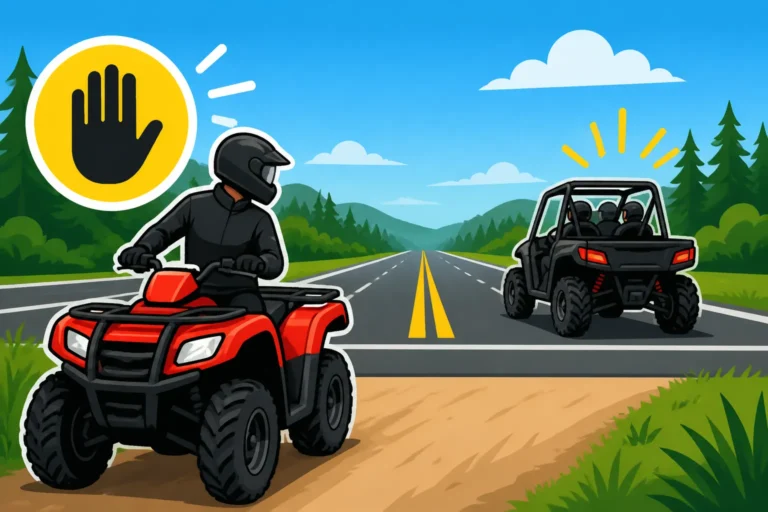
This is perhaps the most common and widely understood exception. You absolutely are permitted to cross a public road or highway on your ATV or UTV in Minnesota. However, this isn't a free-for-all; there are rules you must follow to do so safely and legally. The core principle is that you must cross at the safest point, as close to perpendicular to the roadway as possible. You must yield to all oncoming traffic and ensure the crossing can be completed safely. This means stopping, looking both ways multiple times, and waiting for a clear break in traffic.
It's crucial to understand that "crossing" means just that: moving from one side of the road to the other. It does not mean riding down the middle of the road for any distance, even a short one. This is a quick maneuver to bridge a gap between two legal riding areas, such as when a trail continues on the other side of a county road. Familiarize yourself with these guidelines before you even think about putting a tire on the pavement. You can learn more about the specifics of these maneuvers by reading [Crossing a Minnesota Road on an ATV] and [Crossing a Minnesota State Highway Safely].
Designated Road Routes in Trail Towns and Local Ordinances
Here's where things get a little more nuanced and location-specific. While state law generally restricts ATVs from road surfaces, Minnesota grants local units of government – like cities and townships – the authority to establish their own ordinances regarding ATV and UTV use on certain public roads under their jurisdiction. This is why you might hear about "trail towns" where ATVs are allowed on specific city streets. A great example of this is a community like Appleton, Minnesota, which has embraced ATV tourism and created designated routes to allow riders to access amenities like gas, food, and lodging.
However, this is not universal. Just because one town allows it doesn't mean the next town over does. It is absolutely vital that you do your homework before riding on any municipal road surface. Look for posted signs, check the city's website, or even call the local police department or city clerk if you're unsure. Ignoring local ordinances can quickly lead to a ticket, and more importantly, can create a dangerous situation for yourself and others. These routes are usually clearly marked and are designed to facilitate access, not to open up all roads to ATV traffic. You can find more details on these specific areas in posts like [Appleton and Other ATV-Friendly Minnesota Cities] and [Riding Into a Minnesota Trail Town].
Hazard Exceptions and Emergency Situations
Minnesota law also provides very limited exceptions for situations where continuing in a legally designated area, such as a road ditch, becomes temporarily impossible due to an obstruction or hazard. For instance, if the ditch is completely flooded, blocked by a fallen tree, or if you encounter a bridge or culvert where the ditch disappears, you might be allowed to briefly move onto the shoulder or a small section of the road surface to bypass the hazard.
Again, the emphasis here is on "briefly" and "hazard." This is not a loophole to use the road whenever the ditch gets a little bumpy or muddy. It's strictly for unavoidable obstructions. Once the hazard is passed and it's safe to return to the legal riding area, you must do so immediately. The intent is to prevent riders from being stuck in an unsafe situation, not to grant general access to the pavement. Understanding these nuances is important, and you might find more helpful context in [Hazard Exceptions for Bridges and Culverts] and [Riding Over a Minnesota Bridge].
Understanding the Ditch Riding Distinction
Many riders, especially those new to Minnesota's rules, often confuse "ditch riding" with "road riding." It's an easy mistake to make, but understanding the difference is absolutely critical, as one is generally legal (with rules) and the other is generally not.
Ditch Riding Versus Road Surface Riding
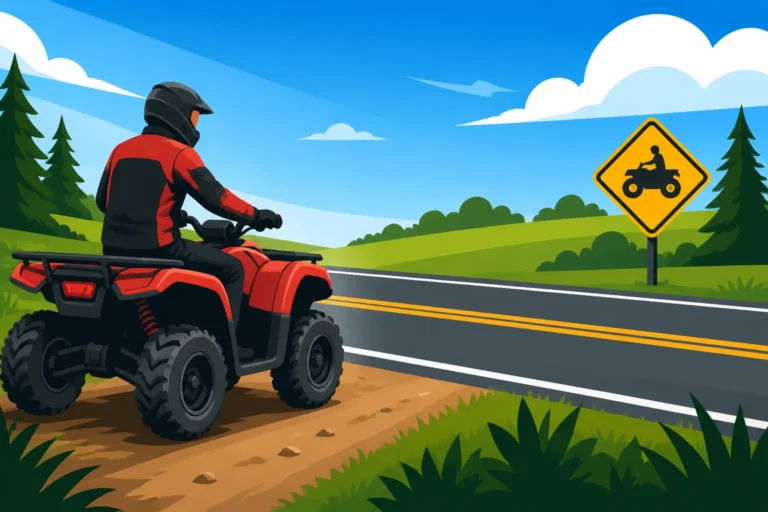
In Minnesota, the "road ditch" or "road right-of-way" is often the designated legal area for ATV and UTV travel along roadsides. This means the area from the edge of the road surface out to the fence line or the edge of the maintained roadside. It's typically unpaved, often grassy, sometimes muddy, and generally considered an extension of the off-road environment your machine is designed for. The key here is that you are not on the traveled portion of the road itself. You are separated from the main flow of traffic, which significantly reduces the safety concerns associated with riding on the road surface.
This distinction is central to Minnesota's ATV laws. It allows riders to connect trails, access private property, or simply traverse areas where no dedicated trail exists, all while maintaining a separation from high-speed vehicular traffic. Many county roads and township roads permit ditch riding, but it's important to remember that these privileges come with responsibilities and specific regulations. It's a compromise that attempts to balance rider access with public safety. For a deeper dive, check out [Minnesota's Ditch Riding Rules] and [Riding the Ditch of a Minnesota Right of Way].
Specific Requirements for Ditch Riding
Just because ditch riding is often allowed doesn't mean it's a free-for-all. Minnesota has a comprehensive set of rules that apply to ditch riding, and ignoring them can lead to tickets and fines. These rules typically cover:
- Speed Limits: There are often specific, lower speed limits for machines operating in the ditch, even if the adjacent road has a higher posted limit. These are usually much slower than road speeds, reinforcing the safety aspect.
- Side of the Road: In most cases, you must ride on the far right side of the ditch, traveling in the same direction as adjacent traffic. This maintains predictability and reduces head-on collision risks with other ditch riders.
- Lighting: If you're riding after dark, your ATV or UTV must have appropriate headlights and taillights, just as if you were on a trail.
- Registration and Decals: Your machine must be properly registered with the Minnesota DNR, and the registration decal displayed correctly.
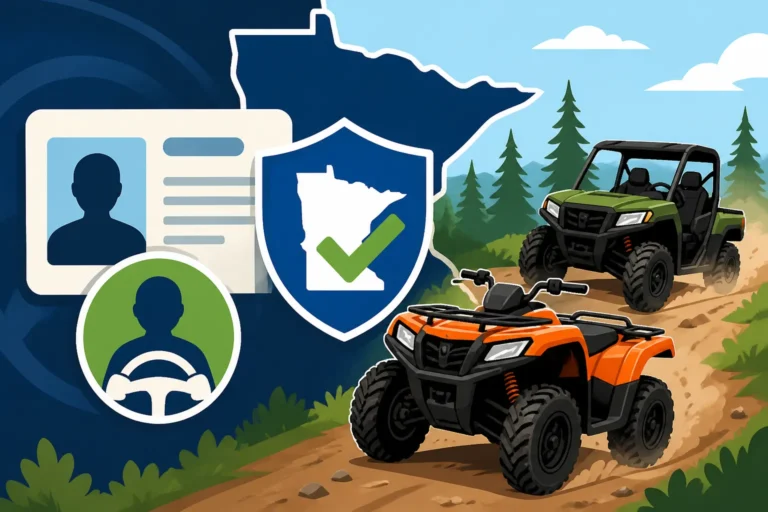
- Safety Training: If you were born after a certain date (currently July 1, 1987), you are required to have an ATV safety certificate to operate on public lands, which includes road ditches.
- Age Restrictions: There are age and supervision requirements for younger riders.
- Private Property: Always be mindful of private property lines. The road right-of-way extends only so far, and trespassing into someone's yard or field is illegal.
Before you head out, make sure you understand [What Minnesota Requires Before You Ride the Ditch] and clarify [Do You Need a License to Ride a Minnesota Ditch?]. It’s about being a responsible rider and respecting both the law and other users of the land.
When the Ditch Itself Becomes Impassable or Ends
Even experienced riders encounter situations where the ditch simply isn't a viable option. Maybe the ditch becomes too steep, turns into a marsh, or is completely overgrown and impassable. Perhaps it narrows significantly at a driveway or disappears entirely at a bridge or culvert. These moments are where judgment calls come into play, but it's crucial to remember the general rule: the road surface is usually still off-limits for general travel.
In these scenarios, you typically have limited options. If it's a very brief obstruction like a culvert, you might be allowed the temporary, hazard-exception use of the road shoulder or surface as described earlier. However, if the ditch becomes impassable for a significant distance, or if it simply ends without a continuation point, your only legal recourse might be to turn around, find an alternate route, or trailer your machine. You cannot simply decide the ditch is too difficult and move onto the main road for an extended period. Understanding [Where the Ditch Meets a Driveway] or [Where the Ditch Runs Out] can help you anticipate these situations and plan your route accordingly, minimizing surprises.
The Penalties for Illegal Road Surface Riding
Riding your ATV or UTV on a Minnesota road surface where it's not explicitly allowed isn't just a minor infraction; it carries real consequences that can hit your wallet, your insurance, and even your ability to ride in the future. Nobody wants to deal with a run-in with a conservation officer or sheriff's deputy, especially when it could have been easily avoided.
Fines and Legal Consequences
If you're caught riding your ATV or UTV on a road surface outside of the narrow legal exceptions, you can expect to receive a citation. The specific fines can vary depending on the jurisdiction and the exact nature of the violation, but they are generally not cheap. These aren't like parking tickets; they can be substantial and, combined with court fees, can quickly add up to hundreds of dollars.
Beyond financial penalties, there could be other legal ramifications. Repeated offenses might lead to impoundment of your machine, or even a temporary or permanent loss of your riding privileges on public lands. Remember, conservation officers and local law enforcement are out there specifically to enforce these regulations, not just on trails, but also along roadsides. They are very familiar with the nuances of what is and isn't allowed, and "I didn't know" is rarely an acceptable excuse in the eyes of the law. Make sure you understand [Minnesota Fines for Illegal Road Riding] so you're not caught off guard.
Insurance and Liability Risks
This is perhaps the most serious and often overlooked consequence of riding illegally on road surfaces. Your ATV or UTV insurance policy is typically written with the expectation that you will operate your machine legally and within the bounds of state and local regulations. If you're involved in an accident while riding on a road surface where it's prohibited, your insurance company could potentially deny coverage.
Imagine this scenario: you're illegally riding your UTV down a county road, and a car, legally operating, fails to see you and an accident occurs. If your insurance company determines you were operating outside the terms of your policy by being on the road illegally, you could be held personally liable for damages to the other vehicle, medical expenses for injured parties (including yourself and any passengers), and potentially even wrongful death claims. This could lead to devastating financial consequences, easily reaching tens or even hundreds of thousands of dollars, or more. While a strong, durable machine is important, with good parts from a company like SuperATV, no aftermarket part can protect you from the financial fallout of illegal operation.
Always ensure you have adequate [Minnesota Liability Coverage for Riders] and that you are operating within the legal framework to keep that coverage valid. It's not just about avoiding a ticket; it's about protecting yourself and your family from potentially life-altering financial ruin.
Minnesota Road Surface ATV/UTV Rules at a Glance
| Aspect | Road Surface Riding (Generally) | Ditch Riding (Often Permitted) | Crossing a Road (Permitted) |
|---|---|---|---|
| Legality | Generally illegal, except in specific "trail towns" or for unavoidable hazards. | Generally legal on most county/township roads, with rules. | Legal when necessary to continue travel between legal areas. |
| Separation from Traffic | On the same surface as vehicles, high risk. | Separated from main traffic flow, lower risk. | Brief exposure, but must yield to all traffic. |
| Permissible Distance | Very limited (e.g., specific town routes, brief hazard bypass). | Can be for extended distances. | Only long enough to get from one side to the other. |
| Speed | Must adhere to road speed limits if allowed, but generally restricted. | Lower, specific speed limits often apply. | Must be done safely, yield to all traffic. |
| Local Ordinances | Requires specific local permission (e.g., "trail towns"). | Often allowed by state law, but local rules may apply. | State law dictates crossing procedures. |
| Key Requirement | Check local signage/ordinances before riding. | Stay on the far right, obey speed limits, have proper lighting. | Perpendicular, yield to traffic, safest point. |
| Consequences of Violation | Significant fines, potential liability, impoundment, loss of privileges. | Fines if rules (speed, side, lighting) are ignored. | Fines if done unsafely or without yielding. |
Conclusion
So, to answer the burning question: can you ride the road surface in Minnesota? The overarching answer is generally no, not in the same way you'd drive a car. Minnesota's laws are designed to keep ATVs and UTVs in their intended environments—off-road trails, private property, and the designated road ditch right-of-way. While there are very specific and limited exceptions for crossing roads, briefly bypassing unavoidable hazards, or utilizing specially designated routes in ATV-friendly towns, these are exceptions, not the rule.
It's tempting to want to take the shortest route, but the risks associated with illegally operating your machine on a public road surface in Minnesota far outweigh any convenience. The potential for serious accidents, hefty fines, and crippling liability costs are simply not worth it. Always prioritize safety, know the local rules, and stick to the areas where your ATV or UTV is legally permitted. Happy (and legal!) riding!
Disclaimer
This article is for general informational purposes only and does not constitute professional advice. Laws, prices and regulations vary by location and change over time. Consult a qualified professional for guidance on your specific situation.