Minnesota Muffler and Noise Limits
One of the quickest ways to ruffle feathers in Minnesota's beautiful outdoors, especially when you're just trying to enjoy a ride, is excessive noise from your ATV or UTV. Many riders, myself included, have found themselves scratching their heads, wondering what the actual rules are, or worse, facing a stern chat with a conservation officer because their machine was just a little too loud for someone's liking. This guide is here to cut through the confusion and help you understand Minnesota's muffler and noise limits so you can ride with peace of mind – and a quieter machine.
The Core of Minnesota's ATV/UTV Noise Regulations: What's the Law?
Let's face it, nobody wants to be that rider, the one whose machine echoes for miles, disturbing wildlife or waking up a sleeping cabin country. Minnesota law, specifically the Department of Natural Resources (DNR) rules, aims to strike a balance between allowing enthusiasts to enjoy their machines and protecting the peace and quiet of our natural spaces and residential areas. It's not just about a numerical limit; it's about the type of equipment you're running and how it affects those around you.
The dB Standard: What's the Number, and How Is It Measured?
Minnesota law, like many states, specifies a decibel (dB) limit for off-highway vehicles (OHVs). For ATVs and UTVs, the standard is generally 96 decibels when measured at an "SAE J1287" test site. Now, I know what you're thinking – "What in the world is an SAE J1287 test site?" This isn't something most of us have in our backyard. It's a specific, controlled testing procedure designed by the Society of Automotive Engineers, used by manufacturers to certify that new machines meet noise standards. For the average rider, this number is less about how you can measure it precisely and more about understanding that the law has a clear threshold.
The important takeaway here is that new machines sold in Minnesota are designed to meet this 96 dB limit right off the factory floor. The issues usually arise when riders make modifications or neglect maintenance. An enforcement officer isn't likely to pull out a dB meter on the trail and conduct a full SAE J1287 test. Instead, they'll often rely on their ears, training, and experience. If your machine sounds significantly louder than a stock machine, it's a good bet you might be pushing or exceeding that limit. It’s all about reasonable expectation – if your quad sounds like a jet taking off, you’re probably in violation, regardless of a precise decibel reading.
Mufflers, Spark Arresters, and Aftermarket Exhausts: Staying Legal
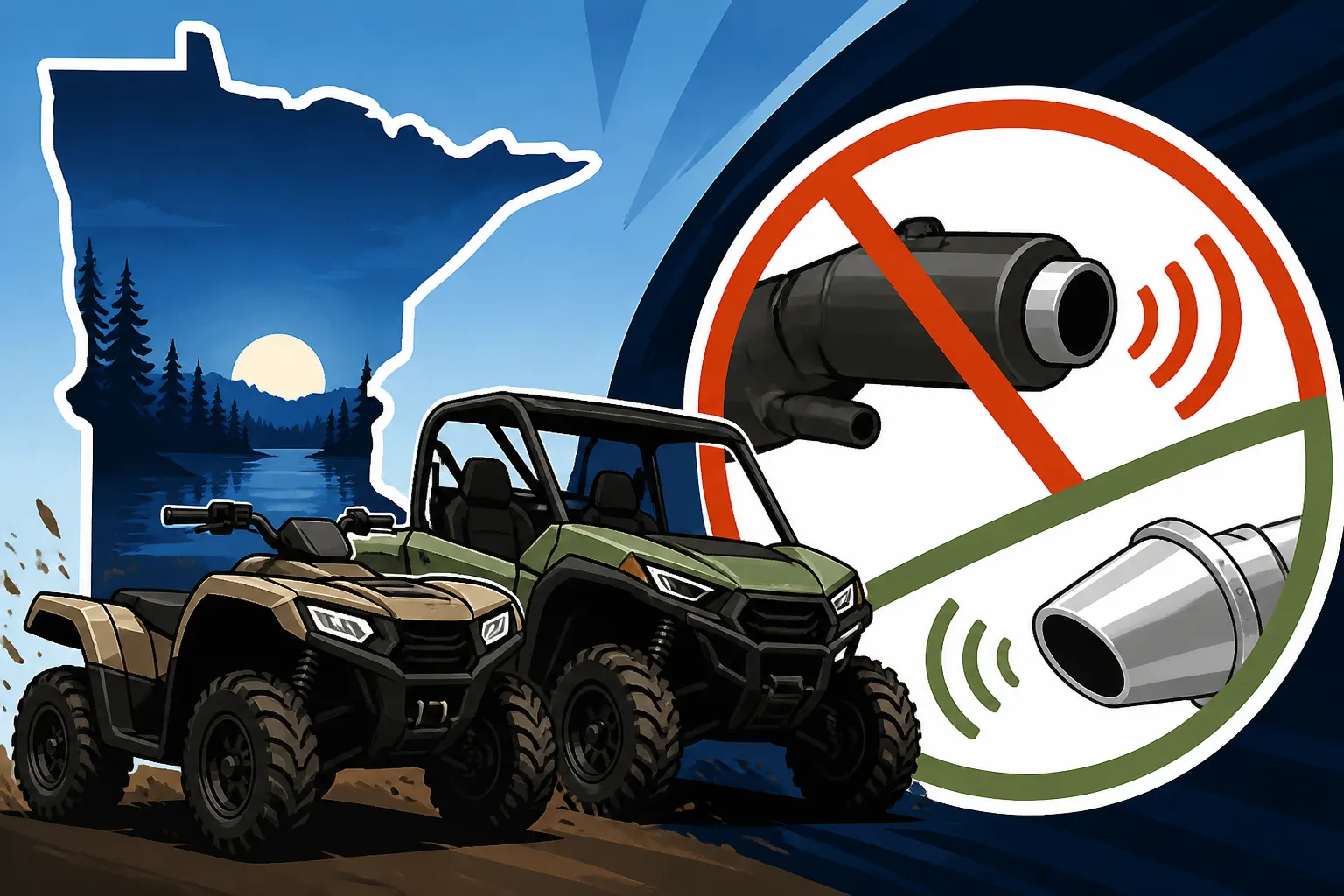
Beyond the decibel level, Minnesota law is quite explicit about the equipment on your machine. Every ATV or UTV operated in Minnesota on public lands, frozen waters, or road rights-of-way must be equipped with a muffler in good working condition. This muffler needs to effectively prevent excessive or unusual noise. Crucially, the law also requires an approved spark arrester. A spark arrester is a device that traps or destroys hot carbon particles emitted from the exhaust, preventing them from igniting dry vegetation and causing wildfires. This is particularly important in Minnesota's forests and grasslands, which can become extremely dry.
This is where many riders run into trouble: aftermarket exhausts. While some aftermarket systems are designed to enhance performance and remain compliant with noise regulations, many are designed with performance and sound volume as primary goals, often ignoring legal limits. If you're considering an aftermarket exhaust system, like those offered by SuperATV, it is absolutely critical to verify that it meets Minnesota's noise and spark arrester requirements. Just because it bolts on doesn't mean it's legal for public land use. Always look for documentation or labeling that confirms compliance. Removing baffles, drilling holes in your muffler, or running straight pipes are surefire ways to fall afoul of the law and earn yourself a ticket. You can find more specific details by looking up [Mufflers and Spark Arresters in Minnesota].
Why Minnesota Cares About Noise: The Impact on Communities and Trails
It's easy to think of noise regulations as just another hoop to jump through, but there's a real reason behind them. Minnesota is a state that deeply values its natural beauty and the tranquility it offers, especially for residents living near trails or lakes. The way we ride and the noise our machines make directly impact public perception and, in turn, future trail access. Ignoring noise limits isn't just a minor infraction; it can have significant, long-lasting consequences for the entire riding community.
Noise Complaints From Lake Neighbors and Residential Areas
Picture this: it's a beautiful summer afternoon, and a family is enjoying a quiet day at their cabin on a serene Minnesota lake. Suddenly, a group of ATVs roars by on a nearby trail or ditch, their engines screaming. What might be exhilarating to the riders can be a jarring, unwelcome disturbance to those seeking peace and quiet. These are the kinds of scenarios that lead to noise complaints, which then escalate to local authorities and the DNR. And trust me, these complaints are taken seriously.
Many rural residents choose to live in these areas precisely for the quiet. When that peace is repeatedly disrupted by excessive ATV/UTV noise, it builds resentment. This resentment often translates into pressure on local and state governments to restrict or even close trails. I've seen it happen. Communities that were once welcoming to riders can quickly become hostile if noise becomes a consistent issue. Responsible riders understand that sharing the outdoors means being considerate of others, and that includes keeping the decibels down. Understanding [Minnesota Noise Rules Near Lake Homes] is key to being a good neighbor.
The Role of Noise in Trail Access and Public Perception
Beyond individual complaints, the collective impact of noisy machines can shape the broader future of ATV and UTV riding in Minnesota. When the general public perceives ATVs as loud, disruptive, and destructive, it becomes incredibly difficult to advocate for new trails or even maintain existing ones. Legislators and land managers often respond to public sentiment. If the sentiment is negative, due to noise, dust, or other issues, expansions become impossible, and closures become more likely.
Consider the effort and dedication that goes into maintaining Minnesota's extensive Grant-in-Aid trail system, often by volunteer clubs. These clubs work tirelessly to secure access, build and maintain trails, and foster positive relationships with landowners and local communities. A few excessively noisy riders can undermine years of this goodwill in a single afternoon. If a club has spent countless hours negotiating with a private landowner for an easement, only to have riders on loud machines alienate them, that access can be revoked. This is why discussions around [Aftermarket Exhaust and Club Trail Access] are so vital – it's about preserving the entire riding ecosystem, not just your personal preference for sound.
| Noise Impact Category | Description | Rider Responsibility | Potential Consequences for Community |
|---|---|---|---|
| Direct Disturbance | Loud machines interrupt quiet enjoyment of nature/homes. | Ensure muffler and spark arrester are compliant and well-maintained. | Increased complaints, negative public image. |
| Environmental | Excessive noise can stress wildlife and impact natural habitats. | Ride responsibly, maintain machines, adhere to designated trails. | Restrictions on riding areas, ecological damage. |
| Community Relations | Repeated noise creates tension with residents and landowners. | Be considerate of others, especially near homes and populated areas. | Loss of trail access, opposition to new trails, legal action. |
| Regulatory Risk | Widespread complaints lead to calls for stricter laws/enforcement. | Stay informed on laws, advocate for responsible riding. | Harsher penalties, increased patrols, blanket bans. |
| Trail Sustainability | Negative perception undermines support for trail funding & maintenance. | Support clubs, report irresponsible riding, set a good example. | Decreased trail funding, deteriorating trail conditions, closures. |
Practical Steps for Minnesota Riders: Keeping Your Machine Quiet
So, what can you do, as a responsible Minnesota rider, to ensure your ATV or UTV meets noise limits and doesn't upset the apple cart? It's not rocket science, but it does require a bit of attention and, sometimes, an investment. The goal isn't just to avoid a ticket, but to be a good steward of our trails and a respectful neighbor in our outdoor communities.
Checking Your Current Setup and Making Adjustments
First things first: know your machine. If you bought it new, it almost certainly came from the factory compliant. But things wear out, and sometimes previous owners make modifications. Start by giving your exhaust system a thorough visual inspection. Look for any cracks, holes, or loose connections in your muffler or exhaust pipe. Even a small leak can significantly increase noise. A good sign of a leak is black soot around a joint. If you're missing a spark arrester, or it's clogged, that needs to be addressed immediately. Many spark arresters can be cleaned, but if it's damaged, replacement is necessary.
If you've purchased a used machine, especially from a private seller, you need to be extra vigilant. It's common for previous owners to remove or modify exhaust components for more sound or perceived performance. If your used quad sounds considerably louder than similar models you hear on the trail, it's a red flag. You might need to source a stock muffler or a compliant aftermarket option. Sometimes, adding an exhaust tip silencer or a "quiet core" insert to an existing aftermarket muffler can bring the sound down to acceptable levels without having to replace the entire system. Just be sure any modification still incorporates an effective spark arrester.
Aftermarket Solutions and Upgrades for Noise Reduction
For riders who've inherited a loud machine or simply want to ensure their current setup is as quiet as possible while maintaining performance, there are options. Many aftermarket companies, including those like SuperATV, offer various solutions that aim to balance performance with sound reduction. This can range from full exhaust systems designed to meet legal limits to specific inserts or tips for existing mufflers. When researching these, always prioritize products specifically labeled as "SAE J1287 compliant" or "USFS approved" (for spark arresters).
Another often overlooked area is tires. Aggressive tire treads, especially on hard-packed surfaces or pavement (which you might encounter on limited road sections or in trail towns), can generate a surprising amount of road noise. While not strictly exhaust noise, it contributes to the overall sound signature of your machine. Choosing a less aggressive tread if your primary riding isn't extreme mudding, or simply being mindful of your speed on hard surfaces, can help reduce your overall noise footprint. Keeping up with regular maintenance, ensuring your engine is running efficiently, and tightening loose components can also contribute to a quieter ride.
What Happens If You're Caught: Penalties and Enforcement
Nobody wants to deal with a ticket, especially when you're out enjoying your favorite pastime. But knowing the potential consequences of operating an illegally loud machine is an important part of responsible riding. Minnesota's conservation officers are out there to protect our natural resources and ensure everyone can enjoy the outdoors safely and respectfully. This includes enforcing noise regulations.
Conservation Officer Enforcement in Minnesota and Citations
The primary enforcement agency for ATV and UTV regulations in Minnesota is the DNR, with its dedicated team of conservation officers. These officers are highly trained and experienced in identifying machines that don't meet legal requirements, including those that are excessively loud or lack proper spark arresters. They conduct patrols on trails, frozen lakes, and ditch riding areas, and they respond to complaints from the public. If an officer determines your machine is in violation of the noise or muffler laws, you will likely receive a citation.
The penalties for operating an illegal exhaust or an excessively loud machine vary, but they typically involve a fine. These fines can add up quickly, especially if you're cited multiple times or if other infractions are discovered during the stop. Beyond the immediate financial hit, a citation can be a significant hassle, potentially requiring a court appearance or simply taking time out of your day to deal with the paperwork. It's far better to invest in a compliant muffler now than to pay a fine later. You can learn more about general enforcement in [Conservation Officer Enforcement in Minnesota].
Losing Trail Privileges and Community Trust
Beyond the immediate legal and financial repercussions, operating a loud machine can have broader, less tangible but equally significant negative impacts. Repeated violations or widespread disregard for noise limits can lead to a loss of trail privileges. This could mean specific trails being closed to OHVs, or even stricter regulations being imposed statewide. When the riding community consistently fails to self-regulate, external regulations inevitably become more severe.
Furthermore, you risk losing the trust and goodwill of the communities and landowners who provide access to our cherished trails. If local residents consistently complain about noise, they'll pressure their elected officials to limit or revoke trail access. This isn't just about your individual right to ride; it's about the collective future of ATV and UTV recreation in Minnesota. Being a responsible rider means more than just staying on the trail; it means respecting the environment, the wildlife, and most importantly, the people who share and live in these beautiful outdoor spaces. Your actions, or inactions, regarding your machine's noise level contribute to the overall reputation of all Minnesota ATV and UTV riders.
Disclaimer
This article is for general informational purposes only and does not constitute professional advice. Laws, prices and regulations vary by location and change over time. Consult a qualified professional for guidance on your specific situation.