Driver’s License Requirements on Minnesota Roads
Riding an ATV or UTV in Minnesota can feel like navigating a maze of rules, especially when it comes to getting those wheels on or near a public road. Many folks assume that because these machines are "off-road vehicles," the typical driver's license requirements for cars and trucks just don't apply. But that assumption can quickly land you in hot water with law enforcement, causing frustration and unexpected fines. This guide will meticulously break down the driver's license requirements for operating ATVs and UTVs on Minnesota's roads and their rights-of-way, helping you understand precisely what's expected of you and your fellow riders.
The Basics of Operating an ATV or UTV on Minnesota Roads
It's a common sight across Minnesota: an ATV rumbling down a ditch line or a UTV making a quick dash across a paved county road to get to the next section of trail. For many, these scenes blur the lines between off-road adventure and on-road legality. Understanding the foundational principles of why driver's licenses even enter the conversation for these machines is crucial to staying on the right side of the law.
Why Driver's Licenses Are Even a Question for Off-Highway Vehicles
For most of us, an ATV or UTV screams "dirt, mud, and trails!" The very design—knobby tires, high ground clearance, lack of traditional road safety features like sealed cabins or crumple zones—suggests an environment far removed from asphalt and traffic. This perception naturally leads to the assumption that operating one doesn't require the same credentials as driving your family car. After all, if you're not on the actual paved road, why would you need a driver's license? This line of thinking is where many Minnesota riders get tripped up. The reality is that once your machine even touches a public road, a public road right-of-way, or a public ditch, you're entering a realm where state motor vehicle laws, including those concerning operator licensing, begin to apply.
Minnesota's regulations acknowledge the dual nature of these machines—their primary purpose is off-road, but there are specific, legal avenues for them to interact with public roadways. This interaction, however, doesn't exempt the operator from the responsibilities that come with navigating public spaces. Think of it this way: while you might not be expected to have a boat license to drive a jet ski in your private pond, the moment you take it out onto a public lake, different rules, including operator permits, kick in. The same principle applies here; the location of operation is key to determining the licensing requirements.
General Rules for All Operators on Road Rights-of-Way
When we talk about "roads" in Minnesota's ATV/UTV rules, we're often talking about the right-of-way, which includes the shoulder, the ditch, and the embankment, not just the paved surface. This is a critical distinction because while riding directly on the paved portion of most public roads is prohibited (with specific exceptions for crossing or designated routes), traveling within the ditch or shoulder is often permissible under certain conditions. However, "permissible" does not always mean "unregulated." The general rule of thumb in Minnesota, for nearly any motorized vehicle operating on a public right-of-way, is that the operator must be appropriately licensed.
This means that whether you're heading down the ditch to a friend's cabin, crossing a highway to reach a trail connector, or even briefly riding a township road where it's specifically allowed, you're expected to have the necessary credentials. This isn't just about knowing how to drive the machine; it's about demonstrating a basic understanding of traffic laws, signals, and safe operating practices that a driver's license signifies. These rules apply universally, regardless of the machine's class or the operator's experience, unless a very specific exemption is outlined in state statute, which typically focuses on youth riders or agricultural use.
Specific Driver's License Requirements for Adult Riders (18+)
For the vast majority of adult ATV and UTV enthusiasts in Minnesota, understanding driver's license requirements boils down to a straightforward principle. However, even with this simplicity, there are nuances and common situations that warrant a closer look to ensure compliance.
What Constitutes a Valid Driver's License in Minnesota
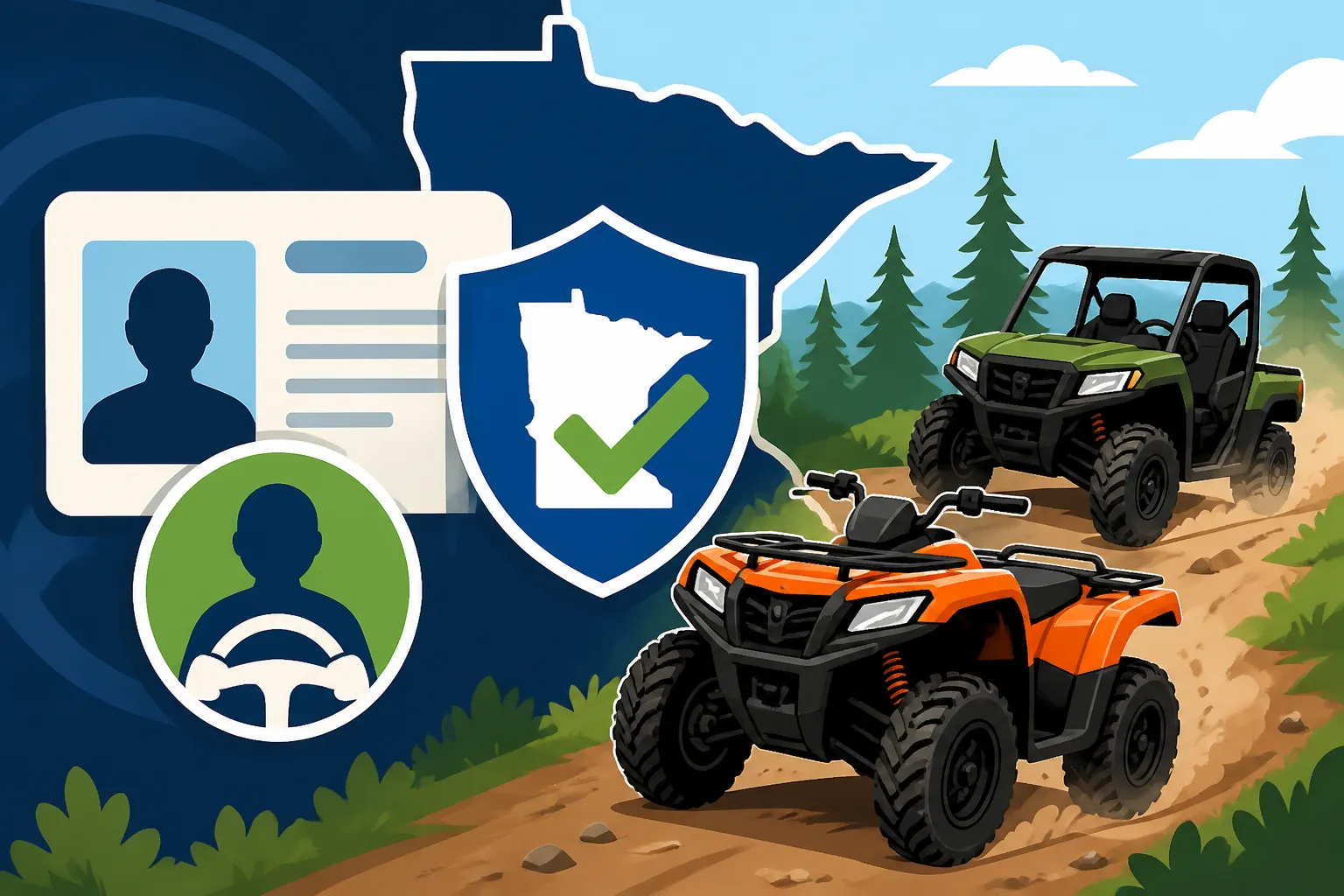
When an adult (someone 18 years of age or older) intends to operate an ATV or UTV on any public road right-of-way in Minnesota—be it the ditch, shoulder, or for a legal road crossing or designated route—they must possess a valid driver's license. The good news is that for most recreational riders, this simply means a standard Minnesota Class D driver's license. This is the same license you carry for driving your car or light truck. You don't need a special endorsement for ATVs or UTVs, nor do you typically need a commercial driver's license (CDL) unless you're engaged in very specific, large-scale commercial operations that are rare for recreational OHVs.
What doesn't count as a valid driver's license? A simple ATV safety certificate, while mandatory for many youth riders and highly recommended for adults, is not a substitute for a driver's license when operating on a public road right-of-way. Similarly, a permit for a different type of vehicle, or an expired driver's license, won't cut it. Your license must be current, valid, and un-suspended. If you've recently moved to Minnesota, you'll want to ensure you've updated your out-of-state license to a Minnesota one within the required timeframe to maintain validity while on public thoroughfares. You should always carry your physical license with you when riding.
Operating a Registered Machine on the Right-of-Way
Let's put this into a common scenario: you're an adult rider, and you've just finished a fantastic day on the [Nemadji State Forest Trail Network]. You need to ride your side-by-side a short distance down a township road's ditch to get back to your cabin, which is perfectly legal in that specific area. Or maybe you're out ice fishing on a frozen lake and need to traverse a small section of ditch to access the lake entry point. In all these instances, if you are 18 or older, you absolutely must have your valid Class D driver's license in your possession. Your machine must also be properly registered with the Minnesota DNR and display its current registration stickers, as detailed in [Where a Minnesota ATV Registration Sticker Goes] and [Minnesota DNR ATV Registration Explained].
The rationale here is safety and accountability. Even though you're in the ditch, you're still in close proximity to moving traffic. You might encounter pedestrians, cyclists, or other vehicles. The state expects that anyone operating a motor vehicle in such a public space has demonstrated the basic competency and legal standing that a driver's license represents. This includes knowing and obeying traffic signs, yielding to right-of-way, and understanding speed limits, even if you're not on the paved surface itself. Failing to have your license, or operating with an invalid one, can result in significant penalties, including fines and potential machine impoundment. It's a simple, yet often overlooked, requirement that can save you a lot of hassle.
Driver's License Requirements for Minor Operators (Under 18)
Riding an ATV or UTV is often a family affair in Minnesota, with many young people eager to join in the adventure. However, the rules surrounding driver's licenses and age for minors operating these machines on public road rights-of-way are significantly more complex than for adults. There are specific age groups with distinct requirements that every parent and young rider needs to understand to avoid legal trouble.
The 12- to 15-Year-Old Age Group and Road Riding
For young riders aged 12 to 15, the path to legal operation on Minnesota's public road rights-of-way is quite strict. First and foremost, any rider in this age group must have a valid ATV safety training certificate. This isn't just a suggestion; it's a legal requirement for them to operate an ATV or UTV anywhere other than private property owned by a parent or guardian. This certificate, which can be obtained through an approved online course and often includes a hands-on component, signifies that the rider has learned the basic safety principles and rules of operation. You can find more details on this by checking out [Minnesota ATV Safety Training Requirement].
However, even with a safety certificate, 12- to 15-year-olds generally cannot operate an ATV or UTV independently on public road rights-of-way. The law typically requires them to be accompanied by a parent, legal guardian, or an adult at least 18 years of age who has been authorized by the parent or guardian. This accompanying adult must also be operating an ATV or UTV and must be within visual and audible contact of the minor. This "accompanied riding" rule is designed to provide direct supervision and guidance for younger, less experienced operators. While this age group does not need a traditional driver's license for a car, their ATV safety certificate acts as their primary credential for public land use, with the critical caveat of adult supervision on public rights-of-way. The complexities of this rule are often discussed when talking about [Minnesota Road Rules for Riders Aged 12 to 15].
16- and 17-Year-Old Riders on Minnesota Roads
The rules shift again once a young person turns 16. At this age, many teenagers are in the process of obtaining their provisional driver's license for cars. When a 16- or 17-year-old rider possesses a valid Minnesota driver's license (which could be a provisional license), the requirements for operating an ATV or UTV on public road rights-of-way become more akin to those for adults. They still must have their ATV safety training certificate, as this requirement generally applies to all riders born after a certain date (often July 1, 1987) when riding on public lands.
The key difference for this age group, once they have a driver's license, is the reduced need for direct adult accompaniment on public road rights-of-way. With a valid driver's license and an ATV safety certificate, a 16- or 17-year-old can often operate an ATV or UTV on designated road shoulders, ditches, or legal road crossings independently, similar to an adult. However, it's crucial for both the rider and their parents to be fully aware of any local ordinances or specific road classifications that might impose additional restrictions, such as those sometimes found in cities that allow limited ATV access on their streets. Understanding the intricacies of [Driver's License Rules for Minnesota Road Riding] for this age group is vital, as it allows for greater independence but also greater responsibility.
Exemptions and Special Considerations
While the general rule in Minnesota leans heavily towards requiring a driver's license or specific certifications for operating ATVs and UTVs on public road rights-of-way, there are a few nuanced exemptions and special scenarios worth exploring. These exceptions are often tied to the machine's primary use or the brevity of its interaction with a public road.
Farm and Utility Machine Exemptions
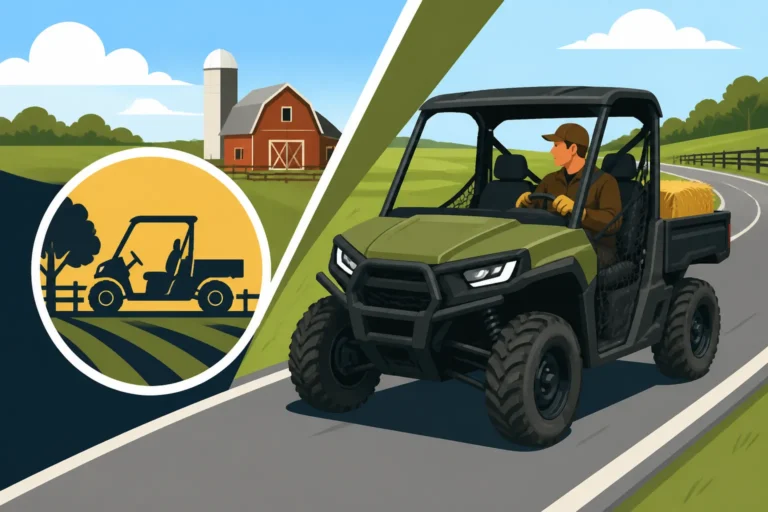
One of the most frequently discussed exemptions pertains to ATVs and UTVs used primarily for agricultural purposes or certain utility work. Minnesota law provides some leeway for farmers or utility workers operating these machines on or immediately adjacent to public roads for bona fide work-related tasks. For instance, a farmer might use a UTV to quickly check fences or move tools between fields that are separated by a township road. In such cases, if the machine is used strictly for agricultural purposes and is not operated for recreational riding, the driver's license requirement may be waived under specific conditions, often requiring the machine to be equipped with certain safety features like slow-moving vehicle signs.
It's absolutely critical to understand that these exemptions are narrowly defined. They are not a blanket pass for recreational riding. If you're using your UTV to haul firewood from your back forty to your house, and your property abuts a township road, you might fall under this exemption for the short distance on the ditch. However, if you then decide to take that same UTV for a joyride down the road into town, the exemption vanishes, and you would need a valid driver's license. The intent of use is paramount here. Equip your utility machine with durable accessories from a brand like SuperATV, such as heavy-duty cargo racks or even plows for winter, but remember that the purpose of your travel dictates whether you need a license for the public right-of-way. Always double-check [Minnesota Rules for Farm and Utility Machines] to ensure you're in compliance.
Crossing Roads vs. Riding the Right-of-Way
There's a significant distinction in Minnesota law between briefly crossing a public road and riding along its right-of-way (like the ditch or shoulder). While riding along a ditch often requires a driver's license for adult operators, a quick, direct crossing of a paved road to get from one section of trail or private property to another can sometimes have slightly different stipulations, especially for youth riders. For adults, a valid driver's license is almost always required for any interaction with a public road, including crossings.
For younger riders, particularly those in the 12-15 age bracket with an ATV safety certificate and accompanied by an adult, crossing a road might be permitted even if extended ditch riding wouldn't be without a license. The key here is the "direct crossing" aspect: it must be at a 90-degree angle, yielding to all traffic, and executed as quickly and safely as possible. It's not an excuse to travel down the road to find a better crossing point. This is where understanding [Crossing a Minnesota Road on an ATV] becomes vital. Even in these crossing scenarios, the emphasis is always on safety, visibility, and minimizing interaction with road traffic. The rules for crossing are typically less about continuous travel and more about safely connecting two points.
Common Misconceptions and Consequences
Despite clear regulations, many ATV and UTV riders in Minnesota still operate under outdated beliefs or misunderstandings regarding driver's license requirements. These misconceptions can lead to uncomfortable encounters with law enforcement and costly penalties. It's crucial to dispel these myths and understand the tangible consequences of non-compliance.
The Myth of "No License Needed for the Ditch"
This is perhaps one of the most persistent myths in the Minnesota ATV and UTV community: the idea that because you're "just in the ditch," you don't need a driver's license. This belief stems from the fact that ditches are not the primary paved surface of the road, leading many to incorrectly assume they fall outside the purview of standard motor vehicle laws. However, as previously discussed, a public ditch is almost universally considered part of the public road right-of-way in Minnesota. This means that, for most recreational purposes, operating a motorized vehicle within it—including an ATV or UTV—still triggers the need for a valid operator's license.
Conservation Officers (COs) and local law enforcement are well-versed in these regulations and frequently patrol areas where ditch riding is common, especially near popular trailheads, lake access points, and rural communities. They understand that while ditch riding can be a legitimate means of access or travel, it still requires adherence to state law, including proper registration and licensing. Explaining that you thought the ditch was "different" will not typically excuse you from a citation. It's simply a matter of public safety and ensuring that anyone operating a machine in an area adjacent to active traffic has demonstrated basic driving competency. So, whether you're using robust SuperATV accessories to get through challenging terrain or just cruising a gravel road, if you're in the ditch, assume the license rules apply. You can learn more about what an officer might ask for by reading [What a Minnesota Conservation Officer Asks For].
Penalties for Operating Without a Valid License
The consequences for operating an ATV or UTV on a public road right-of-way in Minnesota without a valid driver's license can range from inconvenient to severe. At a minimum, you're likely looking at a citation and a fine. These fines can add up quickly, especially if combined with other violations like improper registration or lack of safety equipment. Depending on the severity of the offense, your machine could even be impounded, leaving you stranded and incurring additional towing and storage fees. This is just one of many [Minnesota Fines for Illegal Road Riding] you could face.
Beyond immediate financial penalties, there can be longer-term repercussions. Operating without a valid license, or with a suspended/revoked license, can sometimes lead to points being assessed against your standard driver's license record, which could affect your insurance rates or even lead to further suspension of your driving privileges. For minors, repeat offenses could impact future ability to obtain a driver's license. The state takes these regulations seriously because they are fundamental to maintaining safety on and around public roads. It's always best to be prepared and carry your valid driver's license, along with your ATV registration, to ensure a smooth and legal ride.
Navigating Minnesota's roads and their associated rights-of-way on an ATV or UTV requires careful attention to the rules, particularly when it comes to operator licensing. The expectation is clear: if you're on public land or a public right-of-way, you need to be legally qualified to operate your machine.
Here's a quick reference table summarizing the general driver's license requirements for various age groups and situations:
| Age Group | Valid Driver's License Required? | ATV Safety Certificate Required? (Public Land) | Accompaniment Needed? (Public Road Right-of-Way) | Common Scenarios |
|---|---|---|---|---|
| Under 12 | No | Yes (if eligible by age/size) | Yes (by adult 18+) | Limited to private land, very strict rules for public access/roads. Often restricted by machine size. |
| 12-15 Years Old | No (for car license) | Yes | Yes (by parent/guardian or authorized 18+) | Ditch riding, road crossings (with adult supervision). [Minnesota Road Rules for a 15-Year-Old] outlines more. |
| 16-17 Years Old | Yes (provisional or Class D) | Yes | No (if licensed & certified) | Ditch riding, road crossings, designated routes. Similar to adults but still under age 18 specific laws. |
| 18 Years & Older | Yes (Class D) | No (recommended, but not mandatory) | No | All legal public road right-of-way operation. |
| Farm/Utility Use | No (conditional) | No | No | Limited to agricultural/utility work on or near property. |
Remember, these are general guidelines, and local ordinances or specific road conditions (like those found on [Minnesota Rules on County Roads]) can add further layers of complexity. Always verify the rules for your specific area and riding plans. Being informed and compliant means you can enjoy Minnesota's incredible ATV and UTV opportunities without the headache of legal issues.
Disclaimer
This article is for general informational purposes only and does not constitute professional advice. Laws, prices and regulations vary by location and change over time. Consult a qualified professional for guidance on your specific situation.