When a Club Trail Switches to Snowmobiles
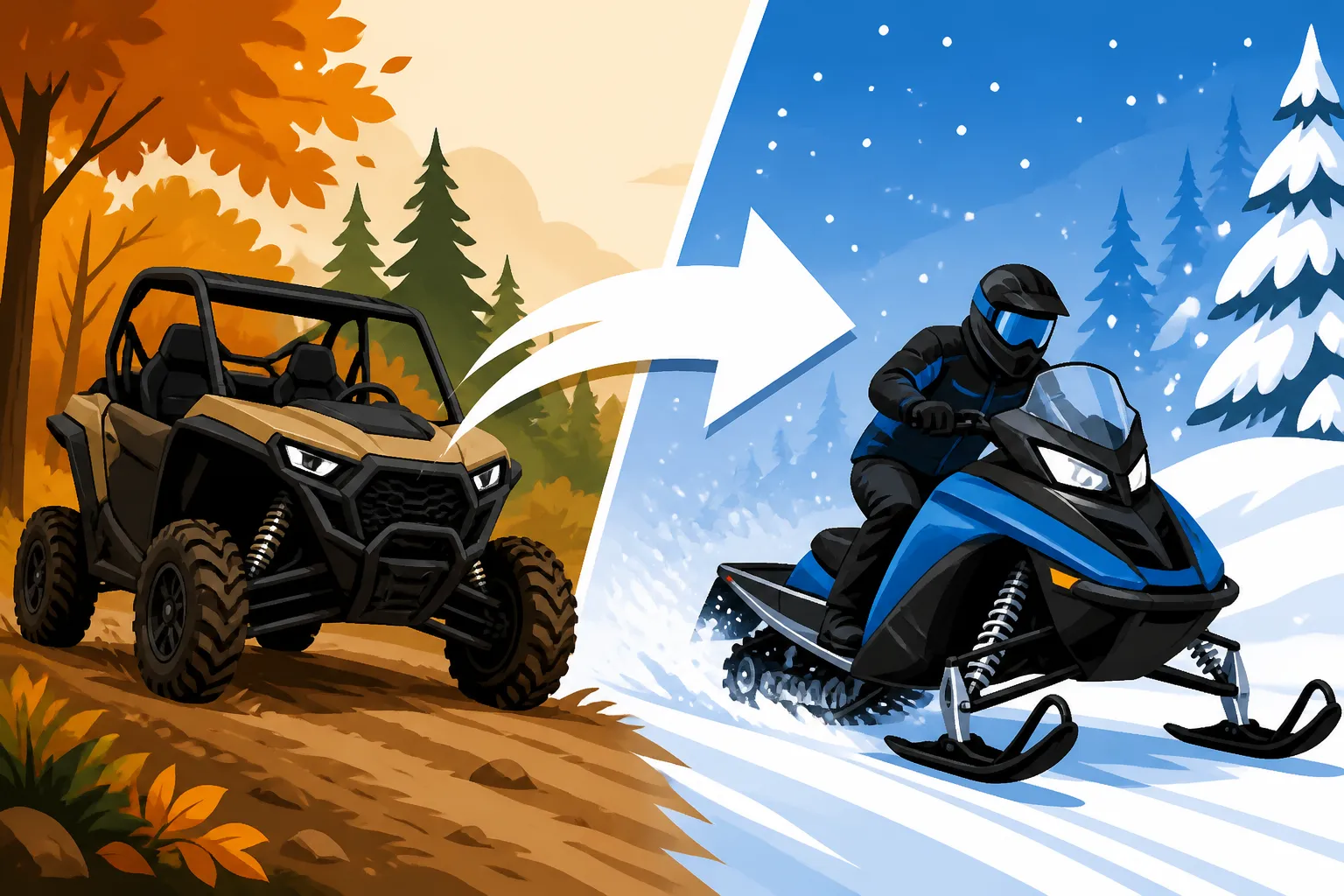
A Minnesota trail you rode on an ATV last fall may be groomed for snowmobiles this winter. The change can affect who may use the route, what permits apply, and whether your machine is allowed at all. Here’s how to check a trail’s winter status, avoid relying on an old ATV pass, and make a safer plan before unloading.
What it means when a club trail switches to snowmobiles
A club-maintained trail can serve different users in different seasons. When snow arrives, a local club may groom a route for snowmobile traffic, or the land manager may close it to wheeled vehicles to protect the trail surface. In some places, routes connect or overlap; that does not mean every vehicle is allowed to use every section year-round.
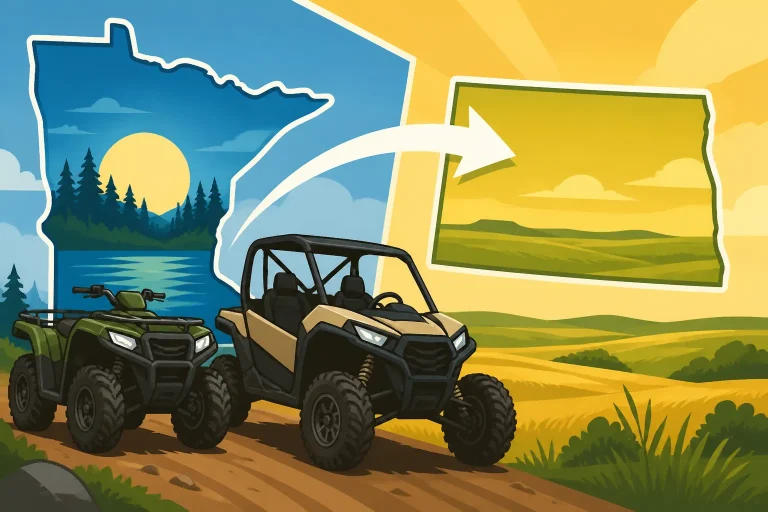
The key point is that an ATV route’s past access does not automatically carry over to winter. A trail that was open to ATVs can be closed to them when snowmobile grooming begins, even if the route follows the same corridor. Snowmobile tracks, groomed surfaces, and winter signs are not an invitation for an ATV or UTV to ride there.
This is partly about trail condition. Wheeled machines can rut a soft or groomed surface, damage drainage, or create hazards for snowmobiles approaching at speed. It is also about permission: a club’s work maintaining a route does not, by itself, authorize every type of vehicle to use it. The landowner or managing agency sets access rules, and those rules can change by season or segment.
A route name is not enough
Trail maps may show a named route without making clear that its permitted use changes over the year. A map you saved in summer could be out of date for winter, and a trailhead sign may give more specific directions than a broad regional map.
Check the status of the particular segment you want to ride, not just the general trail network. Look for seasonal closure notices, signs at access points, and updates from the relevant land manager or trail organization. For state forest routes, review State Forest Rules Minnesota Riders Follow as well as the route’s current status. If a segment is marked for snowmobile use or closed to wheeled vehicles, treat that as controlling even if an older ATV map shows a connection.
When a trail is described as shared, confirm what “shared” means for the dates you plan to ride. It might mean use by different vehicle types in different seasons, not simultaneous access. It might also refer to one part of a route while adjoining segments have different rules.
The trail pass is not permission to ride any winter route
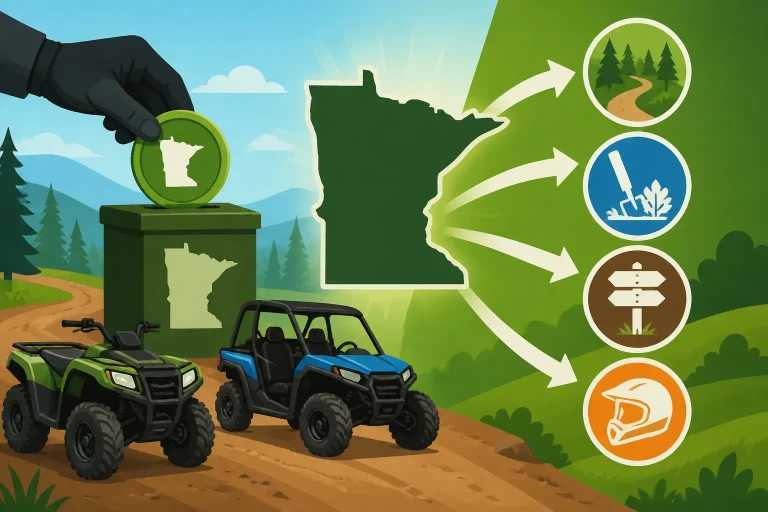
An ATV registration or trail pass does not give you a general right to ride on snowmobile trails. A pass is only one part of the rules that may apply. The vehicle must be permitted on that trail, the trail must be open to that vehicle at that time, and the rider must meet any applicable registration, permit, and safety requirements.
That distinction matters for both Minnesota residents and visitors. A valid ATV pass does not override a winter closure, and a pass for one vehicle type should not be assumed to cover another. Review Which Minnesota Trails Require a Pass and Minnesota’s Non-Resident ATV Trail Pass for the ATV pass rules that apply to the routes you intend to ride. For visitors, Minnesota Rules for Visiting Riders can help clarify what to check before traveling.
Check the route, vehicle rules, and permits before you go
Before a winter ride, verify three things separately: whether the route is open, whether your machine is allowed there, and what current registration or permit requirements apply. Treat these as separate checks. Passing one does not answer the others.
| Check | What to confirm | Why it matters |
|---|---|---|
| Route status | Whether the specific segment is open, closed, or reserved for seasonal use | Conditions and permitted uses can change by season |
| Vehicle access | Whether ATVs or UTVs are allowed on that segment at that time | A trail’s summer access does not establish winter access |
| Registration and pass | Which requirements apply to your machine and the route | An ATV registration or pass is not blanket permission |
| Signs and closures | Whether trailhead or route signs restrict wheeled vehicles | On-site notices may address conditions not shown on an older map |
| Connections | Whether every section of your planned route has the same rules | One open section does not make the entire loop legal |
A practical pre-ride process
- Identify the exact trail segments. Note the trail name, access point, and any connector roads or trail sections. A plan that includes several links may cross areas managed by different authorities.
- Check current trail information. Use the managing agency’s or local trail organization’s current notices rather than relying only on a map saved from an earlier season. The article Where Minnesota Closure Notices Are Posted can help you identify the kinds of updates to look for.
- Confirm which vehicle types are allowed. Look for explicit ATV or UTV access for the season and segment. If the information only says “snowmobile trail,” do not assume that your wheeled machine is included.
- Read signs at the trailhead and along the route. A closure or restriction may apply to just one portion of a larger system. If signs conflict with an old map, do not proceed on the basis of the map.
- Check registration and permit requirements for your machine. Make sure the required documents are current and apply to the vehicle you are bringing. See Minnesota ATV Rules for Visiting Riders if you are coming from out of state.
- Have a legal alternate plan. If the intended route is closed to ATVs, choose a different route that is clearly open to your vehicle instead of trying to find a way around a closure.
Do not infer permission from a groomed trail, a packed surface, tire tracks, or the absence of a gate. Those details do not confirm that ATVs are allowed. If the available information is unclear, contact the relevant land manager or trail organization before riding. A short confirmation can prevent a long tow back to the trailer or a citation.
Out-of-state riders should check both access and reciprocity
Visitors sometimes assume that a home-state registration or trail sticker will be accepted on every Minnesota route. Reciprocity questions are separate from winter trail access: even when a machine meets applicable registration or pass requirements, it still cannot use a trail closed to that vehicle.
Start with the Minnesota requirements for the machine and route, then confirm whether your home-state documents meet them. Do not assume that a snowmobile permit, ATV trail pass, or registration for one vehicle type substitutes for another. For broader visitor requirements, consult Minnesota Rules for Visiting Riders. If a route has switched to snowmobile use, an ATV pass from Minnesota or another state does not change that restriction.
How to handle a seasonal change without risking a bad ride
A trail switch can affect more than your choice of route. It can change where you can park, whether a connector remains usable, and how you should plan for snow and limited daylight. A little preparation helps avoid both rule problems and trail damage.
Do not ride around a closure
If a gate, sign, or closure blocks a route, do not bypass it by cutting through trees, across private land, or along the edge of a groomed trail. That can damage vegetation and drainage, create a new unauthorized route, or put you on land where you do not have permission to ride. A closure may protect a vulnerable surface, accommodate grooming, or reflect a change in access permission.
If the route is only partly closed, turn around at the closure rather than assuming the restriction ends where it is less visible. Do not use a snowmobile track as an alternate ATV route. If you need help interpreting a sign, stop and ask the land manager or trail organization rather than testing the boundary with your machine.
For other seasonal restrictions, including how trail conditions affect spring riding, see When Minnesota Trails Open Each Spring. Trail status is not only about whether snow is present. A route can be closed during thaw or after damage even when it looks passable.
Plan parking and staging around winter use
A trailhead that served ATV riders during warmer months may be busier or managed differently once snowmobile season starts. Avoid blocking groomer access, snowmobile trailers, gates, or emergency routes. Confirm that the parking area is open and suitable for your trailer before making a long drive.
If your plan depends on connecting a public road or another trail, verify those sections too. A legal route to the trailhead does not make the trail itself open, and a trail’s access rules do not necessarily authorize riding on nearby roads. For staging tips, Minnesota Trailhead Parking and Staging can help you think through trailer access and space.
Winter conditions can also make it harder to recognize route edges, signs, and hazards. Keep to routes clearly open to your machine, reduce speed where visibility is limited, and do not follow tracks into an area you have not verified. If conditions make signs or trail boundaries difficult to see, choose a different ride.
Keep documents and status information accessible
Carry the documents and permit information that apply to your machine, and keep a way to check current trail notices if you lose cell service or need to change plans. Save relevant maps or contact details before leaving home. A paper map can be a useful backup, but it does not replace current closure information.
It also helps to keep a simple note of the route segments you verified and the source of that information. If a plan includes several connecting trails, list them separately instead of treating the entire loop as one route. That makes it easier to spot a section with different seasonal access.
If you arrive and find the trail is closed to ATVs, do not rely on the fact that other machines have gone through. Other riders’ choices do not establish permission. Turn around and use a route that is clearly open, or save the ride for another season.
Disclaimer
This article is for general informational purposes only and does not constitute professional advice. Laws, prices and regulations vary by location and change over time. Consult a qualified professional for guidance on your specific situation.