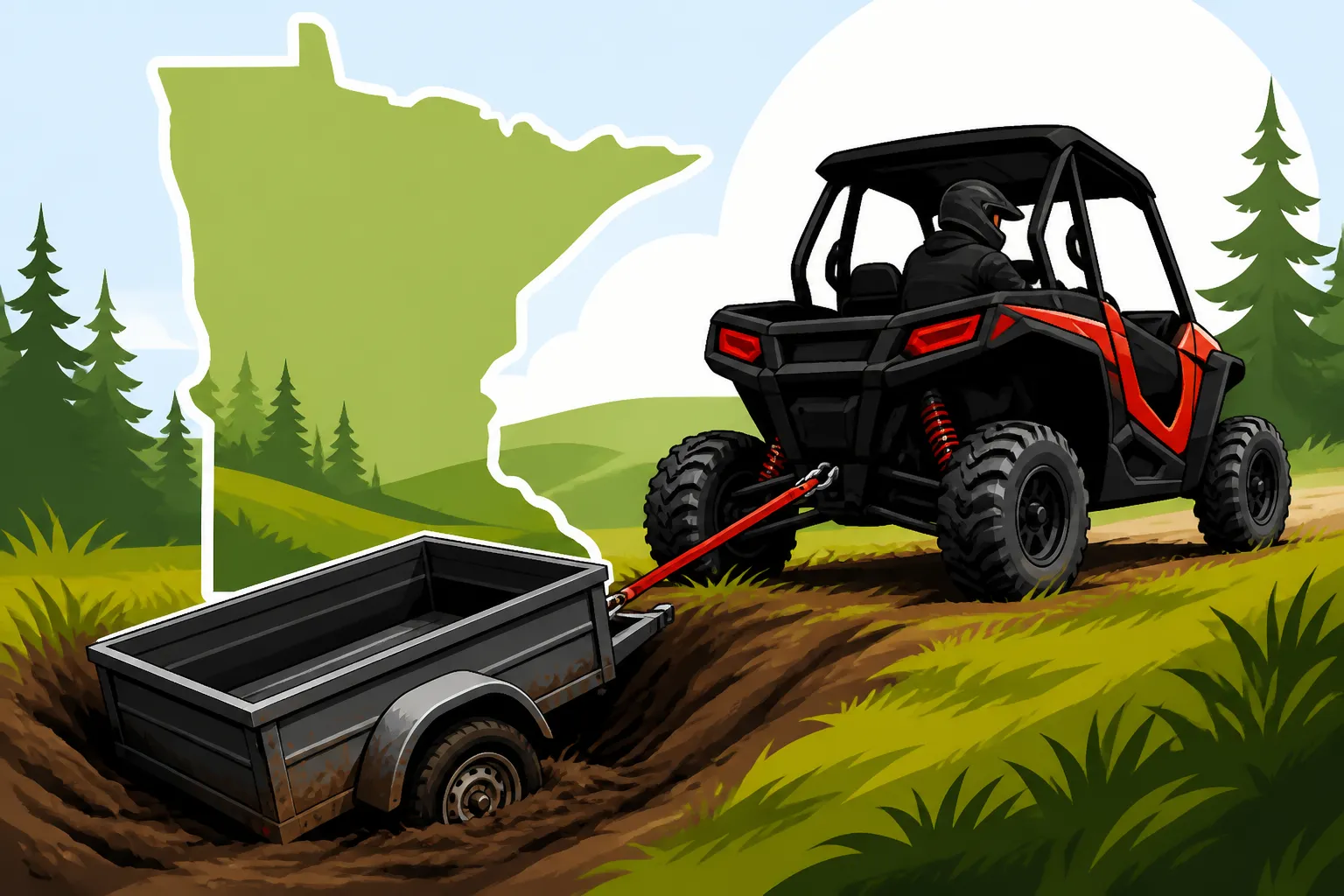
Towing a Small Trailer in the Ditch
So, you've got a quad or side-by-side, and maybe a small trailer you use for hauling firewood, hunting gear, or fishing supplies. The big question in Minnesota is often, "Can I actually tow this thing in the ditch?" It's a common scenario, and frankly, the rules can feel a bit murky when you're trying to figure out what's allowed and what's not. This guide will clarify Minnesota's regulations around towing small trailers with your ATV or UTV in the ditch, ensuring you stay legal, safe, and avoid any unwanted run-ins with conservation officers.
Understanding Minnesota's Ditch Riding Rules
Before we even hook up a trailer, it's absolutely crucial to have a firm grasp of Minnesota's general rules for riding ATVs and UTVs in road ditches. Many riders mistakenly believe that any ditch is fair game, but that's simply not the case. The state has specific guidelines designed to ensure safety for both riders and other motorists, as well as to protect property. These rules form the foundation for any activity you undertake with your machine in the ditch, including towing.
When you're out there on the ditch line, you're not entirely on private property, nor are you fully on a designated trail. It's a unique legal space. Generally, in Minnesota, you can ride your ATV or UTV in the ditch of public roads, but there are significant caveats. You usually must ride on the right-hand side of the roadway, in the same direction as vehicular traffic, and typically within the right-of-way. Speed limits for ditch riding are usually lower than for the adjacent road, and you're always expected to exercise extreme caution, especially when approaching intersections, driveways, or other potential hazards. Ignoring these basic rules is a quick way to find yourself facing a citation for [Fines for Riding Minnesota Unregistered] or other offenses.
The "Road Right-of-Way" Defined
One of the biggest areas of confusion for riders is understanding exactly what constitutes the "road right-of-way" and, more specifically, where the "ditch" actually is. The road right-of-way isn't just the paved or gravel surface you drive on; it typically extends quite a distance beyond that, often encompassing the shoulders, ditches, and even some of the adjacent land. For ATV and UTV use, the focus is usually on the unpaved portion alongside the road.
However, just because it's within the right-of-way doesn't mean you can tear through someone's lawn. The ditch is generally considered the sloped area designed for drainage, running parallel to the road. You must stay off the maintained road surface itself, as [The Road Surface Minnesota Keeps Closed] to ATVs. This distinction is vital, especially when you're maneuvering a machine with an attached trailer, as straying onto the road surface or private property can lead to serious legal issues or even accidents. Always be mindful of fences, property markers, and signs indicating private land.
General ATV/UTV Requirements for Ditch Riding
Beyond knowing where you can ride, you also need to ensure your machine and yourself meet the basic requirements. First and foremost, your ATV or UTV must be properly registered with the Minnesota DNR. This isn't just a suggestion; it's the law for any machine operating on public lands or public road rights-of-way. For most riders, this means a three-year registration that ensures your machine is recognized by the state and contributes to the funding of our incredible trail system. Without it, you're not only risking fines but also potentially complicating things like insurance claims if an incident occurs.
Safety training is another critical component, especially for younger riders. If you or any operator was born after a certain date (July 1, 1987, to be precise), you're required to have an ATV safety certificate to operate on public lands or rights-of-way. This training covers essential safety practices, environmental considerations, and, of course, the rules and regulations. Even if you're not legally required to take the course, it's a fantastic idea for any rider, offering valuable knowledge that can prevent accidents and ensure everyone has a more enjoyable experience. Always be prepared to show [What a Minnesota Conservation Officer Asks For] if you are stopped.
What Kind of Trailer Are We Talking About?
When you mention "towing a small trailer," that can mean a lot of different things to different people. For the purpose of ditch riding with an ATV or UTV in Minnesota, it's important to clarify what types of trailers are typically used and what factors might limit their suitability for this kind of terrain. We're generally not talking about enclosed cargo trailers designed for highway speeds, but rather smaller, open utility trailers, log haulers, or specialized ice fishing houses designed for off-road use.
These are often single-axle trailers, perhaps 4 to 6 feet long, sometimes even smaller, and built to be relatively lightweight. Their primary purpose is often to transport gear for hunting, fishing, yard work, or small-scale agricultural tasks. The key here is that they are small and lightweight enough to be safely managed by your ATV or UTV in less-than-ideal terrain, like a ditch, without compromising the stability or control of your primary machine. Anything too large or heavy immediately raises red flags for safety and legality.
Weight and Size Limitations
Minnesota statutes don't typically have explicit, separate weight and size limitations carved out specifically for "ATV/UTV towing a small trailer in the ditch." Instead, you'll need to consider a combination of factors, including your machine's manufacturer towing capacity, general road rules for trailers, and common sense. Exceeding your ATV's or UTV's rated towing capacity is not only dangerous but can void warranties and lead to serious mechanical failures.
Always check your owner's manual for the maximum towing capacity of your specific machine. This figure includes the weight of the trailer itself plus its cargo. For instance, many ATVs might be rated to tow around 500 to 1,200 pounds, while larger UTVs could handle well over 2,000 pounds. When you're in the ditch, navigating uneven terrain, soft ground, or steep culverts, you should actually consider an even lower practical towing limit. The rough nature of the ditch places far more strain on your hitch, frame, and suspension than smooth, paved surfaces. Overloading a trailer, especially in this environment, is a recipe for disaster.
Trailer Registration and Lighting
This is where many people get tripped up. Does a small trailer towed behind an ATV in the ditch need to be registered? In Minnesota, utility trailers generally require registration if they are used on public roads, even if it's just the shoulder or ditch. The size and weight thresholds for registration can vary, but most small utility trailers capable of carrying a meaningful load will likely need to be registered and display a license plate. It's a common oversight, but one that can lead to fines.
Beyond registration, lighting and reflective markings are non-negotiable, especially if there's any chance you'll be operating near dusk, dawn, or in low visibility conditions. Even if you only plan to ride during daylight, things happen – a quick trip can turn into a long one, or weather can change. Your trailer needs functioning taillights, brake lights, and turn signals that are properly connected to your ATV or UTV's electrical system. If your trailer is wide enough to obscure your machine's lights, it must have its own. Reflective tape on the sides and rear of the trailer is also a smart, low-cost safety measure. For those who frequently haul heavy loads or operate after dark, investing in high-quality trailer lighting is a must, and brands like SuperATV often have durable, weather-resistant options suitable for off-road conditions.
Specific Rules for Towing a Trailer in the Ditch
While the general rules for ditch riding apply, towing a trailer introduces an additional layer of complexity. The state's primary concern is safety, and a trailer, even a small one, changes the dynamics of your machine significantly. It affects braking, turning radius, acceleration, and overall stability. Therefore, understanding how these specific rules intertwine with your towing activities is paramount. There isn't a single statute that explicitly states "you can tow a trailer in the ditch," but rather the activity falls under the umbrella of general ATV/UTV operation and trailer laws.
The key is often found in the language surrounding "safe operation" and ensuring your machine and attachments do not pose an undue hazard to others or yourself. This means if your trailer is too wide for the ditch, obstructing visibility, or simply too unstable for the terrain, you could be cited for unsafe operation. It's less about the act of towing itself, and more about how you're doing it.
Legal Interpretation and DNR Guidance
The Minnesota DNR, which enforces many of the ATV/UTV laws, generally expects that any equipment being operated in the road right-of-way, including towed implements, adheres to basic safety and traffic laws. While direct guidance on which specific types of trailers are allowed in a ditch is sparse, the overriding principle is common sense and safety. If your trailer is road-legal (registered, lit, etc.) and you are operating your ATV/UTV within the ditch riding regulations (speed, direction, location), then the act of towing is generally permissible, provided it can be done safely.
However, this isn't a blank check. Conservation officers have discretion. If your setup looks unstable, is causing damage to the ditch, or appears to be a danger to others, you can and likely will be stopped. Think about common sense: can you see around your trailer? Is it swaying uncontrollably? Are your lights working? Is the trailer securely attached? These are the questions an officer will be asking. Always err on the side of caution. If in doubt, avoid towing in the ditch, or find an alternative route, perhaps on a designated trail if applicable.
Essential Safety Gear for Trailers
Regardless of the legal nuances, certain safety gear for your trailer is absolutely non-negotiable for ditch riding.
- Proper Hitch and Ball: Ensure your hitch ball matches the trailer coupler size perfectly. An ill-fitting connection is a major hazard. The hitch itself should be robust and securely bolted to your ATV or UTV's frame, not just to a flimsy bumper. Aftermarket hitches from reputable companies are often a wise upgrade for serious towing.
- Safety Chains: This is paramount. Every trailer should have two safety chains that cross under the trailer tongue and attach independently to your tow vehicle. These chains are your last line of defense if the coupler fails, preventing the trailer from detaching entirely. They should be strong enough to hold the trailer's full loaded weight.
- Lights and Reflectors: As mentioned earlier, proper lighting is crucial. Make sure your taillights, brake lights, and turn signals are working. If your trailer is too small for wired lights, at the very least, attach reflective tape and reflectors, especially on the rear and sides, to enhance visibility.
- Tires: Check the air pressure in your trailer tires. Underinflated tires can cause sway and increase rolling resistance, making towing more difficult and less safe. Overinflated tires can lead to a harsh ride and potential blowouts on rough terrain.
- Brakes: For heavier trailers, independent trailer brakes are a huge safety advantage, though not always legally required for smaller ATV/UTV trailers. They help prevent the trailer from pushing your ATV/UTV, especially on descents or during sudden stops. If your trailer has them, ensure they are in good working order.
Here’s a quick checklist for your trailer setup:
| Feature | Check Before You Roll |
|---|---|
| Hitch & Ball | Correct size, securely attached, no excessive play |
| Safety Chains | Crossed, securely attached, proper length, no damage |
| Wiring & Lights | All lights working (tail, brake, turn), secure wiring |
| Reflectors | Clean, visible on rear and sides |
| Tires | Proper inflation, good tread, no visible damage |
| Wheel Bearings | No excessive play, properly greased |
| Load Securement | Cargo tied down, balanced, not overhanging |
| Breakaway Cable | If equipped, properly attached and functioning |
Safety Considerations and Best Practices
Towing a trailer in a road ditch is inherently more challenging than riding an unencumbered ATV or UTV on a groomed trail. The uneven surfaces, potential for hidden obstacles, and proximity to road traffic demand a heightened level of awareness and caution. It's not just about legal compliance; it's about making sure everyone gets home safe.
Always remember that adding a trailer significantly alters your machine's handling. Braking distances will increase, your turning radius will widen, and your overall stability will be reduced, especially on side slopes or rough terrain. What might be an easy maneuver without a trailer could become a precarious situation with one attached. This means slowing down, being more deliberate with your movements, and always anticipating potential hazards well in advance. Consider adding [Whip Flags for a Ditch Ride] to increase visibility, especially when your trailer might obscure your machine from view.
Load Management and Stability
One of the most critical aspects of safe towing is how you load your trailer. Improper load distribution can lead to dangerous sway, loss of control, and even trailer detachment. A general rule of thumb is to place about 10-15% of the total loaded weight on the trailer tongue (the part resting on your hitch ball). Too much tongue weight can overload your ATV's rear suspension, affecting steering and traction, while too little can cause the trailer to sway violently, especially at speed or over bumps.
Distribute the heaviest items low and over the trailer's axle. Secure everything with straps, ropes, or nets to prevent shifting during transit. Even a slight shift in cargo can throw off your balance and lead to an accident. Imagine hitting a deep pothole in the ditch, and your carefully stacked firewood suddenly shifts to one side – that could easily pull your machine sideways. When navigating varying terrains, from gravel to soft earth, ensuring your cargo is stable is not just a recommendation, it's a necessity. Companies like SuperATV offer cargo nets and tie-downs designed for rugged off-road use, which can be a worthy investment for securing your precious cargo.
Navigating Ditches with a Trailer
Navigating the unique challenges of a Minnesota ditch with a trailer requires patience and skill. The terrain can change quickly, from smooth gravel to muddy ruts, steep culverts, and overgrown brush.
- Speed is Your Enemy: Slow down, significantly. This is not the place for speed runs. A slower speed gives you more time to react to unexpected obstacles or changes in terrain, and it reduces the severity of any sway or loss of control if things go awry.
- Wide Turns: Remember that your turning radius is extended. Plan your turns wide, especially around corners, driveways, or when crossing roads. Pay close attention to your trailer's path to avoid clipping obstacles or running off the designated ditch area. [Crossing a County Road on a Minnesota ATV] becomes a much more involved process with a trailer in tow.
- Culverts and Driveways: These are often trouble spots. Many ditches have drainage culverts that create dips and rises, or steep approaches for driveways. Approach them slowly and at a slight angle to prevent the trailer from bottoming out or becoming high-centered. The jolt from hitting a culvert too fast can also damage your trailer, your machine, or even throw your cargo.
- Visibility: Always be aware of your surroundings. Your trailer might obscure your rear view, so use your mirrors often and be extra cautious when backing up or maneuvering in tight spaces.
- Soft Ground and Slopes: If the ditch is soft or muddy, a loaded trailer can quickly get you stuck. Avoid steep side slopes, as the added weight of the trailer can easily destabilize your machine and cause it to roll over. Choose the most level and firm path possible.
- Road Crossings: When you need to [Crossing a Minnesota Highway Safely] or any other road, the trailer adds another layer of complexity. Ensure you have ample time and visibility, and remember your increased braking distance. Don't be shy about waiting for a clear opening.
- Fatigue: Towing, especially on rough terrain, is more physically and mentally demanding. Take breaks, stay hydrated, and recognize when you're getting tired. Operator fatigue can severely impair judgment and reaction time, turning a routine trip into a dangerous situation.
By understanding the rules, preparing your equipment properly, and practicing diligent safe driving habits, you can confidently and legally tow a small trailer in the Minnesota ditches for all your outdoor adventures.
Disclaimer
This article is for general informational purposes only and does not constitute professional advice. Laws, prices and regulations vary by location and change over time. Consult a qualified professional for guidance on your specific situation.