Taking an ATV Citation to Court
A Minnesota ATV citation can mean more than paying a fine: the response may affect your driving or riding record, and missing a deadline can make things harder. The right next step depends on what the ticket alleges and whether it requires a court appearance. Here’s how to read the citation, prepare a response, and decide whether to contest it.
Start by understanding the citation
Read the whole citation before deciding what to do. It should identify the alleged violation, the issuing officer, the location, and how to respond. It may list a court date, a response deadline, or instructions for paying or requesting a hearing. Follow the instructions on your citation; don’t assume every ATV ticket is handled the same way.
The allegation might involve riding without a required trail pass, operating an unregistered machine, riding where motorized access is prohibited, or breaking a road-riding rule. The legal and practical consequences depend on the specific charge and the facts. For context, see Fighting an ATV Ticket in Minnesota and Minnesota ATV Ticket Amounts.
| What the citation says | What to do next |
|---|---|
| A court appearance is required | Attend on the date and at the location shown, or contact the court promptly about the procedure for requesting a change |
| You may pay or contest the citation | Check the deadline and the consequences of paying before choosing |
| The allegation or court information is unclear | Contact the court listed on the citation for procedural information; ask a lawyer about legal advice |
| The citation involves an injury, property damage, or a more serious allegation | Consider getting legal advice promptly and preserve relevant records |
| You think the citation has an error | Keep a copy and gather facts that clarify the alleged violation; don’t assume an error automatically dismisses the case |
Check the response deadline and court details
Make a note of every date on the citation and any court notice. The deadline to respond may come before a hearing date, and missing a required appearance or response can create additional problems. If the citation lists a court, use the court’s official contact information to confirm where and how to respond. The officer who issued the ticket is not the right contact for questions about filing or scheduling.
If you need more time or cannot attend, contact the court as soon as possible and follow its instructions. Do not treat a phone call or voicemail as a granted extension. Ask how to confirm that a request has been received and whether you must still appear while the request is pending.
If you pay the amount shown, check what that payment means for the particular citation. Paying may resolve the matter without a hearing, but it can also have consequences beyond the immediate cost. Don’t assume that payment is simply an administrative fee or that it has no effect on the case. The citation and court can clarify the process; a lawyer can advise you about the legal consequences.
Identify the issue, not just the amount
The fine alone does not explain whether contesting the ticket is worthwhile. Read the description and any statute or rule reference printed on the citation. Then compare that allegation with what happened. For example, a dispute about where you were riding is different from a dispute about whether a machine or rider had a required pass.
Permit and access issues can be especially fact-specific. A machine may have a valid registration but still need a separate trail pass for a particular trail, or a rider may misunderstand whether an exemption applies. The relevant details can include where the machine was, who was operating it, what type of land or trail it was on, and what documents or permits were valid at the time. Related information is available in Minnesota’s Non-Resident ATV Trail Pass, Which Minnesota Trails Require a Pass, and Minnesota ATV Rules for First-Time Visitors.
Decide whether to contest the ticket
You do not have to agree with a citation simply because an officer issued it. But contesting it takes preparation, and a disagreement with the officer is not by itself evidence that the allegation is wrong. Start by identifying the precise fact or rule you dispute. If you cannot explain what is inaccurate or incomplete, consider speaking with a lawyer before choosing how to respond.
A useful first question is: what would the court need to understand to evaluate the allegation? Your answer might concern the location, the machine, the rider, a permit, a sign, or the timing of an event. Write down the facts while they are still clear, including details that do not support your position. A balanced record is more useful than a statement that leaves out inconvenient information.
Evidence that may help
Keep evidence that relates directly to the alleged violation. Depending on the circumstances, that could include:
- The citation and any court notice, photographed or copied for your records.
- Registration, pass, permit, or training documents that were valid on the date in question.
- Receipts or confirmation records that help establish when a pass or registration was obtained.
- Photos or videos of the location, signs, trail entrance, or machine, if they accurately show relevant conditions.
- A map or other reliable record that helps identify where you were.
- Names and contact information for witnesses who saw the relevant events.
- Messages, trip notes, or other records made close to the time of the incident.
Keep original files when possible. For digital photos or videos, retain the original rather than relying only on edited versions or screenshots. Record when and where the images were made, and avoid altering them in a way that could make their reliability harder to assess.
Do not create a record after the fact that could be mistaken for a contemporaneous document, and do not ask a witness to change or embellish what they saw. If a witness has information, write down their contact details and let them describe events in their own words. A witness who did not see the relevant part of the incident may not help establish what happened.
A permit or receipt can be useful, but it may not answer every question. For example, proof that you bought a pass does not necessarily establish that the pass applied to that machine or covered the location involved. Check the relevant conditions and keep the full record, not just a cropped image of a confirmation screen.
Consider the strengths and risks
Think through what supports your position and what the other side may point to. Was the trail clearly marked? Could the officer see the registration or pass? Were you at the location described on the ticket? Do your records show the relevant date and machine? If you are uncertain about an exemption, do not rely on a general impression that “private land” or “farm use” automatically settles the issue. The details and rules matter.
A citation may also involve more than one allegation. Resolve each one separately in your notes. If the ticket includes a registration issue and a location issue, evidence about registration may not resolve the location allegation. Understanding Minnesota Public Use Versus Private Use Registration or Minnesota Permit Rules on Grant-in-Aid Trails may help identify the question, but use the current official rules for your situation.
If the potential consequences are significant, the facts are disputed, or you are unsure what a plea or payment would mean, consider consulting a Minnesota attorney. A lawyer can assess the specific citation and explain options. Court staff can generally explain filing and scheduling procedures, but they are not a substitute for legal advice.
What to expect when you go to court
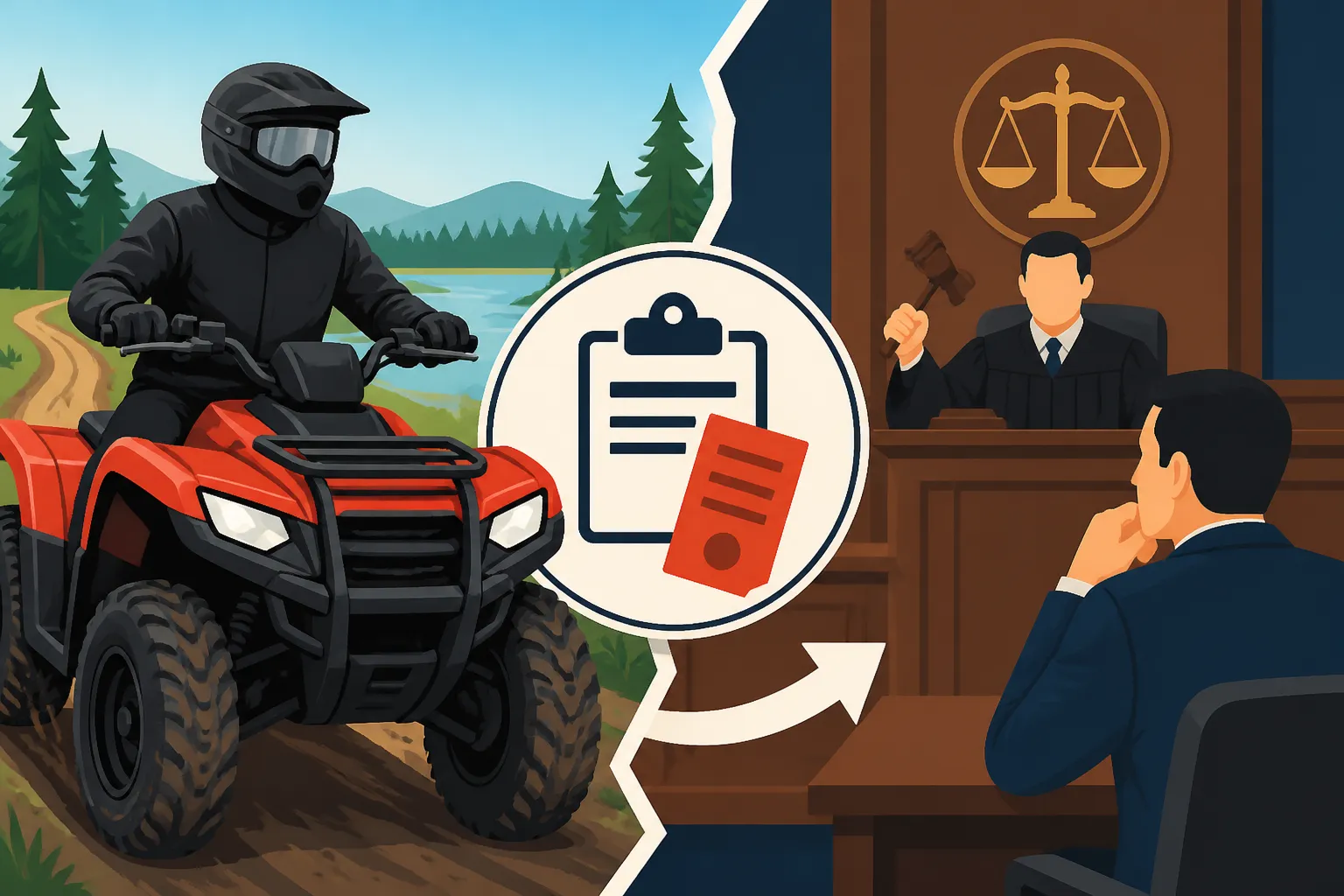
The citation or court notice should tell you where to appear and what the court expects. Procedures can differ depending on the allegation and how the case is classified. Read the instructions carefully rather than assuming every case has the same sequence or that a hearing will take place immediately.
Arrive with enough time to find the correct courtroom or check-in location. Bring the citation, court notices, and organized copies of relevant documents. Keep your notes concise: the alleged violation, the facts you dispute, the evidence that supports your account, and any questions you need answered. If you have a lawyer, follow their instructions about what to bring and how to communicate with the court.
Be respectful and answer questions truthfully. Do not interrupt the judge, prosecutor, officer, or other participants. If you do not understand a question or procedure, ask for clarification rather than guessing. Avoid making a broad statement such as “I didn’t know the rule” if your actual position is that a specific fact is mistaken. Lack of knowledge may not resolve whether a violation occurred.
A hearing may involve an opportunity to explain your position, review evidence, or respond to the allegation. The process and available outcomes depend on the case. Do not assume that the officer must appear in every matter, that a citation will be dismissed if the officer is absent, or that a particular outcome is guaranteed. If the case is continued or the court gives you a new deadline, write it down and confirm the next required step before leaving.
If you are offered a resolution, make sure you understand what it requires. Ask what the agreement means for the charge and whether you must complete any additional steps. If you are unsure, ask for time to consider it or seek legal advice where the court’s procedures allow. Do not agree simply because you feel rushed.
Keep the issue focused
Your best presentation is usually clear and specific. Explain what happened in sequence, identify the detail you dispute, and point to the evidence that supports your account. Avoid adding unrelated complaints about the officer, trail system, or general ATV rules unless they directly relate to the allegation.
For example, if the dispute is whether a pass applied to the machine, focus on the pass record, machine identification, dates, and the relevant rule. If the dispute concerns riding in a restricted area, focus on the location, signs, route, and what you observed. If the ticket concerns road riding, review the specific restriction and the place where the ride occurred; Minnesota Road Rules Riders Get Wrong and Riding an ATV on the Road in Minnesota explain common issues, but the court will consider the facts and applicable rule in your case.
Keep copies of anything you submit. If you send documents through a court-approved method, keep proof of submission and follow any instructions about serving or sharing copies. Never assume that giving paperwork to one person automatically files it with the court.
After the hearing or decision
Before leaving, make sure you understand the result and any next steps. Write down the outcome, any payment or other requirement, and the deadline for completing it. If the court gives you written instructions, keep them with the citation. If you do not understand an order, ask the court how to get clarification.
If the matter is not resolved that day, note the next hearing date and whether you need to provide evidence or take another action before then. Confirm how the court expects you to receive future notices, and update your contact information through the proper process if it changes. A missed letter can still lead to a missed deadline.
If you believe the result is wrong, do not assume you can simply reopen the case by contacting the issuing officer. Ask the court about the formal procedure and deadlines that apply, and get legal advice promptly if you are considering an appeal or other post-decision step. Those procedures can be time-sensitive.
Also keep the citation and outcome documents with your ATV records. They may be useful if questions arise later about a registration, pass, or related enforcement matter. For related information on enforcement and riding requirements, see Minnesota Conservation Officer Enforcement in Minnesota and Enforcement and Checkpoints in Minnesota.
The practical rule is straightforward: respond by the deadline, understand what the citation actually alleges, and make decisions based on the evidence and consequences—not on assumptions about what a ticket means. If the case is serious or the procedure is unclear, get qualified legal guidance rather than relying on general information.
Disclaimer
This article is for general informational purposes only and does not constitute professional advice. Laws, prices and regulations vary by location and change over time. Consult a qualified professional for guidance on your specific situation.