Do Iowa Riders Need a Minnesota Pass?
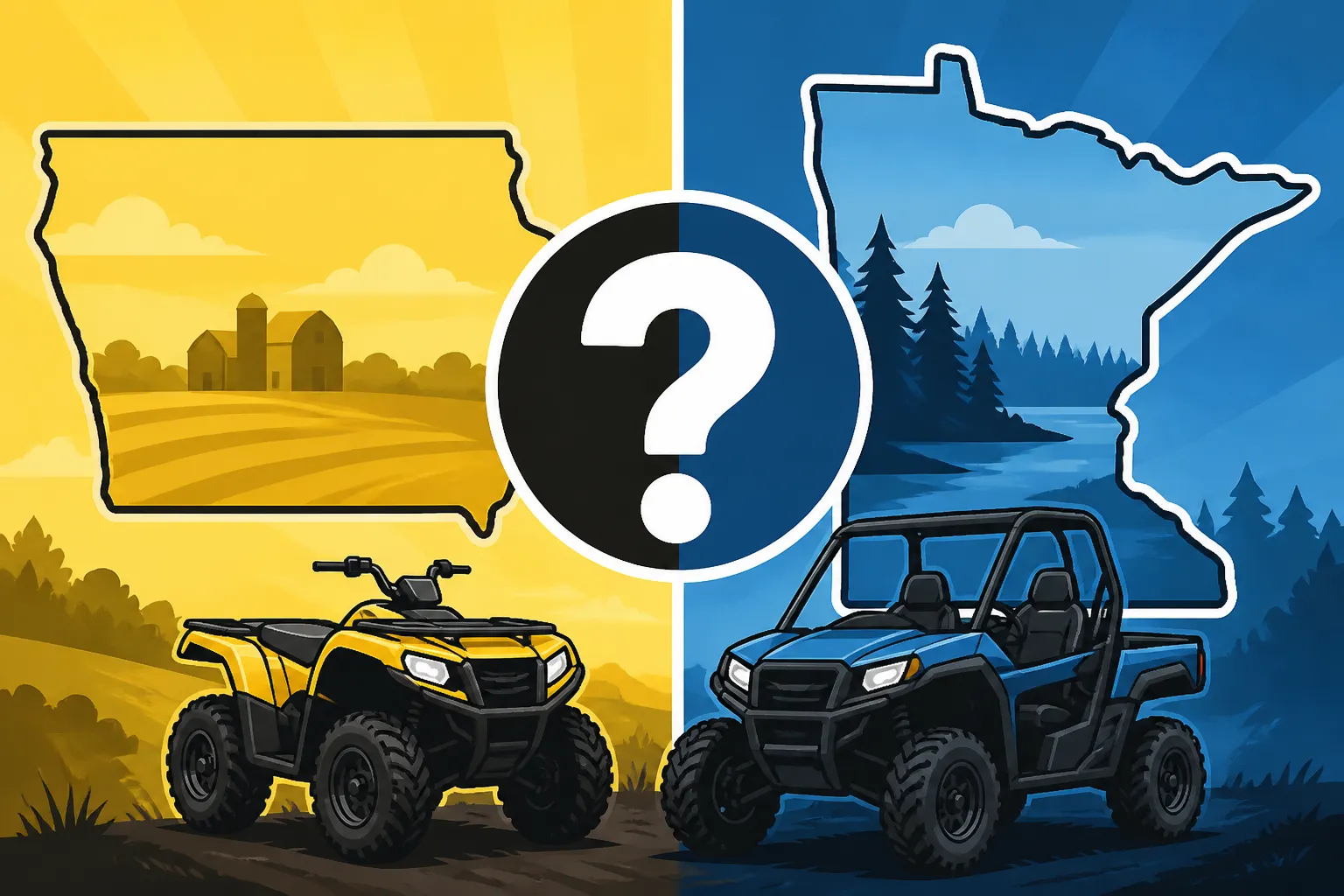
Iowa registration can make your machine legal to bring across the border, but it does not automatically cover every Minnesota trail requirement. If you plan to ride a designated Minnesota ATV trail, you will generally need a Minnesota nonresident trail pass for an ATV that is not registered in Minnesota. Here’s how to check what applies before you unload.
When Iowa Riders Need a Minnesota Trail Pass
In general, an ATV registered in Iowa needs a Minnesota nonresident ATV trail pass when it is operated on Minnesota state or grant-in-aid ATV trails. The requirement is tied to the machine and where it is ridden, not simply to the rider’s home address. An Iowa registration is not a substitute for the Minnesota pass.
That does not mean a pass is required for every place an ATV might be used. Rules depend on the specific land, trail, route and machine. A private property ride, a local route and a designated public ATV trail can have different requirements. Check the rules for the exact riding area rather than assuming that one pass covers all riding in Minnesota.
| Situation | What an Iowa rider should check |
|---|---|
| Riding a Minnesota state or grant-in-aid ATV trail | Whether the Iowa-registered ATV needs a Minnesota nonresident trail pass |
| Riding private property | The landowner’s permission and any applicable local rules |
| Using a road or right-of-way | Whether that specific route allows ATV use and what additional rules apply |
| Riding a trail that crosses private land | The trail’s designation and access rules; private ownership does not necessarily mean unrestricted access |
| Bringing a side-by-side or utility machine | How Minnesota classifies the machine and whether the trail allows its size or type |
Minnesota’s nonresident pass is a separate trail-use requirement. For more detail about the pass itself, see Minnesota’s Non-Resident ATV Trail Pass. To understand where it applies, use Which Minnesota Trails Require a Pass as a starting point, then confirm the current rules for the route you intend to ride.
Registration and trail access are separate questions
Treat these as two separate checks:
- Is the machine properly registered for use in Minnesota? Iowa registration may be relevant, but it does not mean the machine can be used on every Minnesota route.
- Does the riding area require a Minnesota trail pass? An Iowa-registered ATV generally needs the nonresident pass for designated state and grant-in-aid ATV trails.
- Is that machine allowed on the route? Trail restrictions can depend on vehicle type, width and local conditions.
- Does the rider meet Minnesota requirements? Age, safety training and other rules may apply regardless of where the rider lives.
A pass is not a replacement for registration, and registration is not a replacement for a pass. Neither one grants permission to ride private land or overrides a trail closure.
What Iowa Registration Does and Does Not Cover
An Iowa registration can help establish that the machine is registered in its home state, but it should not be treated as blanket permission to ride in Minnesota. Minnesota’s trail-pass requirement is a separate condition for certain trails. This is the key point for visitors who have already paid registration costs at home: those costs do not automatically satisfy Minnesota’s nonresident trail-pass rule.
The word “ATV” can also be used differently in everyday conversation than in vehicle rules. A four-wheeler, side-by-side or utility machine may be treated according to its features and Minnesota’s definitions, not just the name on an Iowa document or the label used by a seller. Before planning a trip with a larger machine, confirm that the intended trail permits its class and dimensions. See Minnesota ATV Classes and What They Mean for background on how Minnesota separates machine types.
Trail access is another independent issue. A trail may be closed, restricted to a particular vehicle class, or unavailable to motorized use even if the machine is registered and the rider has a pass. County, city, forest and land-manager rules can also affect connections between trail sections. Do not assume that a route shown on a map permits riding along every nearby road or through every connecting area.
For a broader pre-trip checklist, What Minnesota Riders Need Before They Ride covers requirements that can matter beyond the pass. Visitors should also check the current trail status before leaving Iowa. Seasonal closures, maintenance and local restrictions can affect a route, and a valid pass does not make a closed trail legal to ride.
A pass does not create road access
A trail pass should not be confused with permission to operate an ATV on a public road. Road use has its own rules, and permission can vary by road and local jurisdiction. A trail connection may approach or cross a road without allowing a rider to continue along the road surface. Review Minnesota’s Ditch Riding Rules if your route involves roadside ditches, and check the specific crossing or local route rules before riding.
This distinction matters when planning a trip from a trailhead, campground or town. A map may show nearby roads, but the map alone does not establish that an ATV can legally use them. Follow posted signs, trail markers and current local guidance.
How to Get the Pass and Prepare Your Machine
Once you confirm that your planned trail requires a Minnesota nonresident pass, use an authorized purchase route and follow the current instructions for the pass. The purchase process, display instructions and available options can change, so check the Minnesota DNR’s current information rather than relying on an old receipt, forum post or another rider’s recollection.
You can review Buying a Trail Pass Through Minnesota eLicense for the online process, or check Minnesota License Agents That Sell Passes if you prefer to ask about purchasing through an agent. Confirm that the pass is for the right type of machine and that you understand how it must be carried or displayed. Keep any confirmation or proof of purchase available as directed.
Before the trip, use this checklist:
- Verify the machine’s registration. Bring the current Iowa registration documents and make sure the identifying details match the machine.
- Confirm the Minnesota pass requirement. Check the exact trail or riding area, not just the county or town.
- Check machine eligibility. Confirm that the trail allows your ATV or side-by-side’s class and dimensions.
- Review current access information. Look for closures, restrictions and route changes before towing to the trailhead.
- Check rider requirements. Minnesota rules may apply to visitors as well as residents. Review age and safety-training requirements for each operator.
- Prepare proof and identification. Keep registration and pass information accessible, following the current instructions for what must be carried or displayed.
- Plan legal connections. Make sure the route between the trailer, trailhead, fuel stop and lodging does not depend on an unauthorized road or private access.
If you plan to trailer your machine from Iowa, remember that the trail pass is for trail use; it does not address trailer requirements. Review Trailering a Quad Across the Border for the separate transport questions to consider.
Common Mistakes Iowa Visitors Can Avoid
The most common mistake is assuming that a home-state registration provides reciprocity for trail access. It may be part of the machine’s registration compliance, but it does not erase Minnesota’s separate nonresident pass requirement on designated trails. Minnesota’s rules should be checked independently; Reciprocity Minnesota Does Not Offer explains why an out-of-state credential should not be assumed to replace a Minnesota requirement.
Another mistake is buying a pass but failing to confirm that the trail is suitable for the machine. A pass does not guarantee that every trail allows every ATV or side-by-side. Check vehicle restrictions, route designation and local notices, particularly if your machine is wider or heavier than a typical ATV.
Some riders also confuse a trail pass with a general riding permit. The pass applies only to the use covered by the relevant rules. It does not provide landowner permission, legalize riding on a closed trail, authorize road travel, or replace any required registration or safety qualification. Keep each requirement separate when planning.
Finally, avoid relying on outdated dates or fee information. Pass terms, purchase instructions and trail conditions can change. Confirm current details with the Minnesota DNR or the manager responsible for the trail before traveling. If you are unsure whether a specific route requires a pass, ask about that route and machine directly rather than making a general assumption based on its location.
For most Iowa visitors, the practical answer is straightforward: if the ATV is registered in Iowa and you intend to ride a Minnesota state or grant-in-aid ATV trail, plan to obtain the Minnesota nonresident trail pass unless current official guidance confirms an applicable exception. Then check registration, machine eligibility, rider requirements and trail status separately. That small amount of planning can prevent a pass issue from disrupting the ride.
Disclaimer
This article is for general informational purposes only and does not constitute professional advice. Laws, prices and regulations vary by location and change over time. Consult a qualified professional for guidance on your specific situation.