Registering a Machine Two People Own
Buying an ATV or UTV with a partner, a friend, or a family member can be a fantastic way to share the thrill of Minnesota's incredible trails and scenery. But if you’ve ever tried to register a vehicle with multiple owners, you know it can feel like navigating a winding trail without a map. This guide is here to untangle the complexities of registering an off-highway vehicle (OHV) in Minnesota when two people legally share ownership, helping you ensure your machine is properly documented and ready for adventure.
Why Co-Ownership Can Get Tricky and Why It's Worth Doing Right
Shared ownership of an ATV or UTV brings a lot of benefits – splitting costs, sharing the fun, and always having a riding buddy. However, it also means shared responsibility, and without clear documentation, disagreements can turn what should be a joy into a real headache. It’s not just about who gets to ride on Saturday; it’s about legal clarity and protecting everyone involved.
The Importance of Clear Ownership Documentation
Think about it: when you register an OHV in Minnesota, you're creating a public record of who legally owns that machine. If only one name is on the registration, but two people contributed to the purchase and use, that can lead to major issues down the road. What if one owner decides they want to sell the machine without consulting the other? Or, in a more serious scenario, what if there's a serious accident, and questions of liability arise? Without both names on the official documents, one owner might find themselves without legal standing.
Clear documentation protects everyone's investment and their rights. It establishes a verifiable chain of ownership that the state recognizes. Whether it's for insurance claims, resale, or even just proving who is responsible for trail fees, the registration is your bedrock. Skipping this step or doing it incorrectly can lead to frustrating delays, legal battles, and potential financial loss, overshadowing all the fun you planned to have on the trails.
How Minnesota Views Multiple Owners
Minnesota's Department of Natural Resources (DNR) and its network of Deputy Registrars are set up to handle registrations for machines with multiple owners, but they need all the correct information upfront. Essentially, the state wants to know exactly who is responsible for the machine and who has legal claim to it. When multiple names are listed, it signifies that those individuals collectively hold the rights and responsibilities associated with the OHV.
The key often lies in how the names are listed on the initial bill of sale and subsequently on the registration application. Phrases like "John Doe AND Jane Smith" indicate joint ownership where both parties must generally agree on actions related to the machine. If it's "John Doe OR Jane Smith," it might imply that either party can act independently, though this is less common for initial purchases and can have different legal implications. For the purpose of registration, the state wants clear, unambiguous identification of all owners to ensure proper notification for renewals and other official communications.
Essential Paperwork for Joint Registration
Getting the paperwork right from the start is paramount when registering an ATV or UTV with two owners. This isn't just bureaucratic red tape; it's the foundation of your legal ownership and ability to enjoy your machine on Minnesota's public lands. Missing a signature or misplacing a document can lead to a lot of wasted time and frustration.
The Bill of Sale and Why It's Critical for Both Names
The bill of sale is arguably the single most important document when purchasing any vehicle, and it's especially critical when there are multiple owners. This document acts as your primary proof of purchase and establishes who legally bought the machine. For co-owned ATVs or UTVs, the bill of sale must clearly list both individuals as purchasers. If you're buying from a private seller, make sure both your names are explicitly written in the "Buyer" section. If you’re buying from a dealer, ensure they include both names on the purchase agreement and the final bill of sale.
Both owners should also sign and date the bill of sale. This confirms that both parties agree to the terms of the sale and acknowledge their co-ownership. A common mistake is to only have one name on the bill of sale, perhaps because only one person was handling the transaction. This immediately complicates registration and can make it appear to the DNR that only one person is the legal owner. It's much easier to add both names initially than to try and amend ownership records later on. Remember, a clear and comprehensive [What a Minnesota Bill of Sale Should Carry] will save you untold grief. If you're struggling to create one, many online resources, including platforms like LawDepot, offer customizable bill of sale templates that ensure you cover all necessary legal points for both parties.
The Application Form: Listing All Owners Correctly
Once you have your bill of sale squared away, the next step is accurately completing the Minnesota DNR's Off-Highway Vehicle registration application form. This form is where you officially tell the state who owns the machine. There will be sections for "Owner Information" or similar headings. You'll need to list the full legal name and current address for each co-owner. Make sure to clearly delineate between the first and second owner, often requiring separate lines or sections for each.
Pay close attention to detail here. Even a minor typo in a name or an outdated address can cause delays. Accurate contact information is crucial because the DNR will use these addresses for sending out important documents, such as your registration certificate and renewal notices. Ensuring both owners' information is present and correct from the outset is a fundamental step in ensuring your [Minnesota DNR ATV Registration Explained] process goes smoothly. If your application only has one name, the DNR will register it to that single individual, making it much harder to prove co-ownership without additional legal steps.
Proof of Ownership Beyond the Bill of Sale
While the bill of sale is foundational, sometimes the DNR might require additional proof of ownership, especially in unique situations. For instance, if the machine was previously registered in another state, you might need its out-of-state title or registration. If you inherited the machine, you'd need the death certificate and possibly probate documents or a small estate affidavit showing the transfer of ownership to both of you. [Inheriting an ATV in Minnesota] is a common scenario where such additional documentation is required.
In some cases, if there's no clear bill of sale (e.g., a very old machine, or one that was a gift without formal documentation), you might need to provide a sworn affidavit detailing how you both came into possession of the machine. The goal is always to demonstrate a clear and unbroken chain of ownership leading directly to both individuals now seeking registration. Having these documents ready and ensuring they support joint ownership will greatly assist your deputy registrar in processing your application efficiently.
Navigating the Registration Process Together
With your paperwork in hand, the next phase is actually submitting your application and completing the registration. This is where you'll interact directly with the state's system, and knowing what to expect can prevent common snags.
Where to Submit Your Joint Application
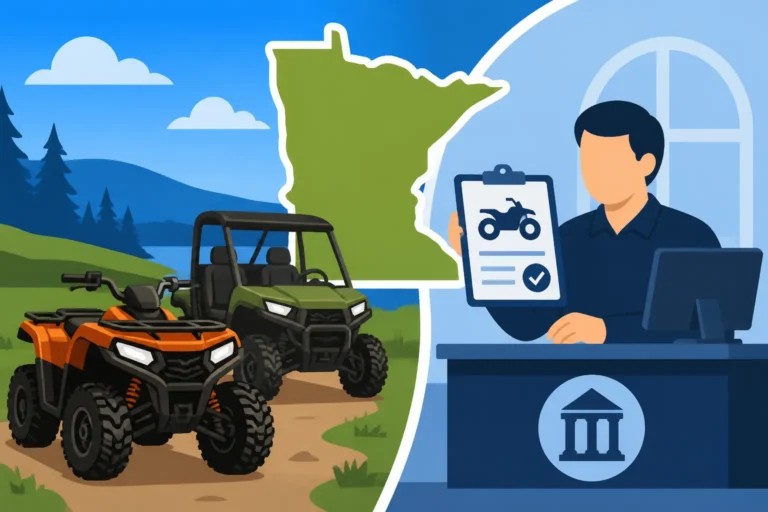
In Minnesota, you have a few options for submitting your OHV registration application. Most people opt to visit a local Deputy Registrar's office. These offices are found throughout the state and act as agents for the DNR, handling registrations for various vehicles. Going in person, especially for an initial joint registration, can be incredibly beneficial. You can present all your documents, and if there are any questions or issues regarding the multiple owners, the registrar can address them on the spot. This personalized attention can save you from potential rejections and re-submissions.
Alternatively, some registrations can be handled by mail, but for a new registration with multiple owners, an in-person visit is often recommended for clarity. While online options are expanding, registering a brand-new machine with complex ownership details isn't always available through the [Registering Online Through Minnesota eLicense] system for the very first time. Check with your preferred [Deputy Registrars That Handle ATV Registration] office beforehand to confirm their specific requirements for co-owned machines.
Fees, Taxes, and Signatures
When you register your jointly-owned ATV or UTV, you'll need to pay the applicable registration fees. These fees typically cover a three-year period. In addition to the registration fee, you will also be responsible for Minnesota sales tax on the purchase price of the machine, unless an exemption applies. This tax is usually collected at the time of registration if you bought it from a private party and the tax wasn't already paid. [Minnesota Sales Tax on an ATV Purchase] is an important consideration for any buyer.
For a co-owned machine, it's often preferred, and sometimes required, that both owners are present to sign the registration application. This ensures that both parties are legally acknowledging their responsibility and ownership. If one owner absolutely cannot be present, they may need to provide a notarized letter of authorization or a limited power of attorney, granting the other owner permission to sign on their behalf. Always confirm this requirement with your specific Deputy Registrar before you go to avoid a wasted trip.
The Importance of a Co-Ownership Agreement
While not a requirement for the state of Minnesota to register your ATV or UTV, a separate, formal co-ownership agreement is a smart move for any machine owned by two or more people. This private document can outline responsibilities, usage rules, and financial contributions in a way that the official state registration cannot. It's like a prenuptial agreement for your off-highway vehicle!
Consider including details such as:
- Usage Schedule: Who gets to ride when?
- Maintenance & Costs: How will you split the cost of oil changes, repairs, and upgrades?
- Storage: Where will the machine be kept, and who is responsible for its security?
- Insurance: Who will be the primary policyholder, and how will premiums be shared? [Insuring an ATV in Minnesota]
- Dispute Resolution: What happens if you can't agree on something?
- Selling the Machine: What's the process if one owner wants to sell their share or the entire machine?
- Contingency for Death or Disability: What happens to ownership if one party becomes incapacitated or passes away? [Transferring a Minnesota ATV After a Death]
Having these discussions and putting them in writing before you hit the trails can prevent major conflicts. Many folks find templates for such agreements on platforms like LawDepot, which can guide you through the process of outlining these critical details. It provides a legal framework for your partnership, giving both owners peace of mind and a clear understanding of their rights and obligations.
| Aspect | Single Owner Registration | Joint Owner Registration |
|---|---|---|
| Bill of Sale | Lists one buyer | Lists all co-buyers |
| Application Form | One owner's name and address | All co-owners' names and addresses |
| Signatures Required | One owner's signature | Often all co-owners' signatures |
| Presence at Registrar | One owner typically sufficient | All co-owners often preferred/required |
| Proof of Ownership | Direct to single owner | Direct to all co-owners |
| Co-Ownership Agreement | Not applicable | Highly recommended (private document) |
| DNR Record | Identifies one responsible party | Identifies all responsible parties |
Common Questions and Potential Pitfalls
Even with the best intentions and meticulous preparation, questions and unexpected situations can arise when dealing with co-owned assets. Knowing how to anticipate and address these can make all the difference in maintaining smooth sailing.
What If Only One Person Can Go to the Registrar?
Life happens, and sometimes it's simply impossible for both co-owners to be physically present at the Deputy Registrar's office for the initial registration or even for a [Minnesota Registration Renewal Every Three Years]. In such cases, the absent owner will typically need to provide a notarized letter of authorization or a limited power of attorney to the attending owner. This document explicitly states that the absent owner grants permission for the other owner to act on their behalf for the purpose of registering the ATV or UTV.
It's crucial to check with the specific Deputy Registrar's office you plan to visit ahead of time, as policies can vary slightly. Some may have their own specific forms for this purpose. Always ensure the authorization clearly identifies the machine (by VIN), both owners, and the exact scope of permission. Without proper authorization, the registrar may refuse to process the application, leaving you to make another trip or find another solution.
Selling a Co-Owned Machine
When the time comes to sell an ATV or UTV that is co-owned, the process requires the full cooperation and consent of all registered owners. Just as both names appeared on the original bill of sale and registration application, both names must appear on the transfer of ownership documents, and both owners must sign them. This includes signing off on the registration card or any other form required to legally transfer the machine to a new owner. [Transferring a Minnesota ATV After a Sale] outlines this process generally, but for co-owned machines, every owner's participation is non-negotiable.
If one owner is unwilling or unreachable, selling the machine can become a significant legal challenge. This is precisely why a strong co-ownership agreement, perhaps drafted with the help of resources like LawDepot, is so important. It should clearly outline the process for selling the machine, including how the sale price will be agreed upon and how the proceeds will be divided. Without such an agreement, a disagreement between co-owners about a sale could lead to a stalemate or even court intervention.
Adding or Removing a Co-Owner
The dynamics of ownership can change over time. You might want to add a spouse after marriage, or remove a friend who is no longer involved with the machine. Adding a co-owner typically involves a process similar to an initial registration. You would generally need to fill out a new application, present proof of current ownership (the existing registration), and provide a document (like a new bill of sale or gift affidavit) that transfers a share of ownership to the new party. Fees and possibly sales tax on the transferred portion might apply. The DNR record would then be updated to reflect the [Adding a Spouse to the Record] or other new co-owner.
Removing a co-owner also requires formal documentation. This usually involves the owner being removed formally relinquishing their interest in the machine, often through a signed and possibly notarized statement or a revised bill of sale where they transfer their share to the remaining owner(s). A new application would then be filed to update the registration to reflect the change. This process ensures the official record accurately reflects who has legal claim to the machine. [Taking a Name Off the Record] is a specific procedure that must be followed carefully to avoid any lingering liabilities for the outgoing owner.
Disclaimer
This article is for general informational purposes only and does not constitute professional advice. Laws, prices and regulations vary by location and change over time. Consult a qualified professional for guidance on your specific situation.