Class 1 and Class 2 Machines in Minnesota
It can be incredibly confusing to figure out where your off-highway vehicle (OHV) fits into Minnesota's rules, especially when you start hearing about "Class 1" and "Class 2" machines. Many riders get frustrated trying to decipher the distinctions, wondering if their pride and joy is even allowed on the trails they want to ride or if they need special considerations. This guide is here to clear up that confusion, diving deep into what these classifications mean for you as a Minnesota rider, from registration to hitting the trails.
Understanding Minnesota's ATV/UTV Classifications
Minnesota, like many states, has specific definitions for off-highway vehicles that dictate everything from where you can ride to how you register your machine. It’s not just bureaucratic jargon; these classifications are designed for rider safety, trail management, and ensuring machines are operated appropriately for their size and capability. Trying to navigate these rules without a clear understanding can lead to headaches, fines, or even damage to trails that aren't built for certain vehicle types.
What Defines an Off-Highway Vehicle in Minnesota?
Before we even get to Class 1 and Class 2, it's important to grasp what Minnesota considers an "off-highway vehicle" in the first place. Generally, these are motorized vehicles used off paved roads, designed for cross-country travel on land, snow, or ice. This broad category includes all-terrain vehicles (ATVs), often called quads or four-wheelers, and side-by-sides (SxS), sometimes known as utility task vehicles (UTVs) or recreational off-highway vehicles (ROVs). They're built for rugged terrain, not asphalt, and that's where the rules begin to diverge significantly from your typical car or truck. The defining characteristic is their intended use off-road, which sets the stage for how the state regulates them.
Breaking Down Class 1 and Class 2 Machines
When you dig into the Minnesota Department of Natural Resources (DNR) regulations, you'll quickly encounter Class 1 and Class 2. These aren't just arbitrary labels; they represent distinct categories based primarily on the machine's width, which has huge implications for trail access and safety. Many riders simply think "ATV" or "UTV," but the state sees specific dimensions. For a more general overview of these distinctions, you can check out [Minnesota ATV Classes and What They Mean].
-
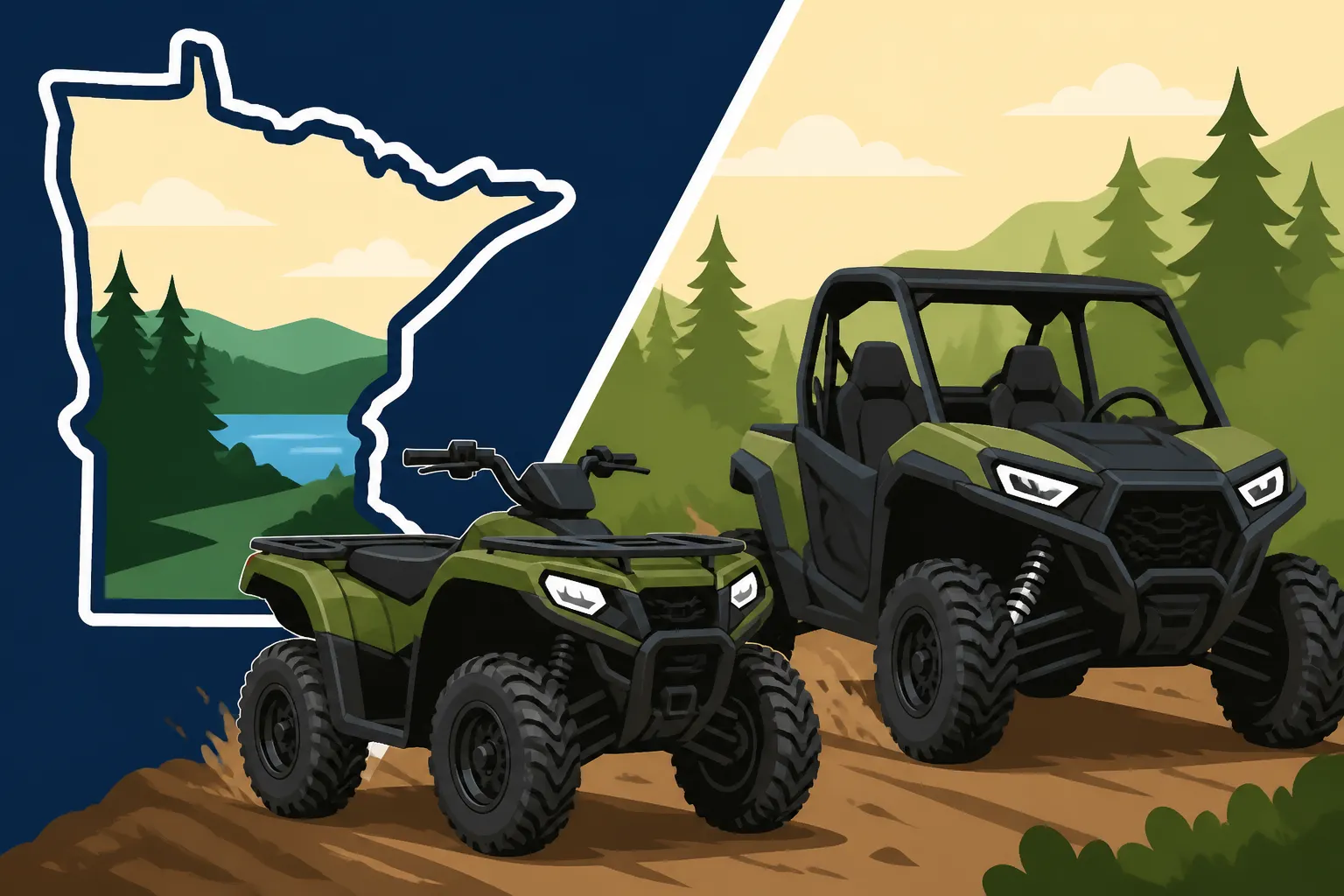
Class 1 Machines: Think traditional ATVs, the smaller, single-rider or two-rider machines. These are generally defined as being 50 inches wide or less, with a dry weight of 1,200 pounds or less. They typically have handlebars for steering and are designed for a more agile riding experience. Most older quads, and many newer sport or recreational ATVs, fall into this category. The crucial "50-inch" rule is often the most important factor here, as many trails are specifically designed with this width limit in mind. This allows them to navigate tighter trails, squeeze through smaller openings, and generally have less impact on narrow paths.
-
Class 2 Machines: This is where your side-by-sides, UTVs, and larger, multi-passenger recreational vehicles come in. A Class 2 machine is defined as being greater than 50 inches wide but no more than 65 inches wide, with a dry weight of 2,000 pounds or less. They usually have a steering wheel, foot pedals, and bucket or bench seating, often with roll-over protection structures. These machines are much wider, heavier, and offer more utility or passenger capacity. They've grown immensely in popularity, but their size means they simply can't fit on every trail, which is a common point of frustration for owners who bought a larger machine without realizing the access limitations.
Why These Classifications Matter for Minnesota Riders
Understanding whether your machine is a Class 1 or Class 2 isn't just an academic exercise; it directly impacts your entire riding experience in Minnesota. From the moment you try to register your vehicle to the trails you can legally access, these classifications are at the heart of it all. Ignoring them can lead to confusion, unexpected costs, or even legal trouble.
Impact on Registration and Titling
When you go to register your machine, either through the Minnesota DNR or a deputy registrar, the classification of your ATV or UTV is a fundamental piece of information they'll need. This is part of the broader process of [Registering an ATV in Minnesota]. The state needs to know what kind of machine you're bringing into its system, and whether it's Class 1 or Class 2 helps them apply the correct fees and identify any special considerations. While the base registration fee might be similar, the classification is recorded and can affect future interactions, such as if you ever need to replace a lost sticker or clarify your vehicle type. It's a foundational detail for proper state record-keeping and ensuring you're playing by the rules. Getting it wrong at the registration stage can cascade into issues later when you’re out on the trails.
Trail Access and Riding Opportunities
Perhaps the biggest and most impactful difference between Class 1 and Class 2 machines for most riders is trail access. Many of Minnesota's extensive Grant-in-Aid (GIA) trails, especially those originally designed for traditional ATVs, are designated as "50-inch limited." This means that only Class 1 machines (50 inches wide or less) are allowed. Trying to take a wider Class 2 machine on such a trail isn't just against the rules; it can damage the trail itself, which wasn't built to withstand the extra width and weight, leading to erosion or widening. This is a common source of disappointment for new side-by-side owners who find their options limited compared to their friends on smaller quads. However, many newer trails and dedicated OHV parks, like the Iron Range OHV Area at Gilbert, are designed to accommodate wider Class 2 machines. It's vital to check trail maps and signage religiously before heading out, to avoid an illegal ride or getting stuck. The designation determines whether you'll have a fun day or a frustrating one, possibly even incurring fines.
Safety Considerations and Equipment Rules
While most basic safety equipment rules, like helmet use for riders under 18, apply to both classes, the inherent differences in machine type do bring about specific considerations. For example, side-by-sides (Class 2) often come with seatbelts and roll-over protection structures (ROPS), which are crucial safety features not found on traditional ATVs (Class 1). These machines handle differently, too. A wider, heavier side-by-side has a lower center of gravity and can feel more stable, but its increased weight and larger turning radius require different driving techniques compared to the more dynamic, body-English riding style of a Class 1 ATV. Understanding your machine's class also helps you comprehend why certain trails might feel too tight or too rough, reinforcing the importance of matching your vehicle to the intended terrain.
Key Differences Between Class 1 and Class 2 ATVs/UTVs
The distinctions between Class 1 and Class 2 machines are rooted in their physical characteristics and, consequently, their design intent. These aren't just arbitrary numbers; they reflect how the vehicles are constructed and what they're best suited for. For any Minnesota rider, knowing these physical differences is crucial, whether you're buying a machine or planning a ride.
Width and Weight Limitations
The most fundamental difference, as mentioned, comes down to width and weight.
- Class 1: Max 50 inches wide, 1,200 pounds dry weight.
- Class 2: Over 50 inches but no more than 65 inches wide, 2,000 pounds dry weight.
These aren't just suggested guidelines; they are strict legal definitions. This is why you'll often see "50-inch" as a common benchmark in discussions about trail access. The difference of just a few inches in width can mean the difference between legally riding a designated trail and being in violation. The weight differences also play a role in trail wear and tear, braking distances, and stability, particularly when navigating steep inclines or declines. Riders often overlook these figures when buying, only to discover limitations later.
| Characteristic | Class 1 Machine (ATV) | Class 2 Machine (UTV/SxS) |
|---|---|---|
| Max Width | 50 inches | 65 inches (min 50.1 inches) |
| Max Weight | 1,200 pounds (dry) | 2,000 pounds (dry) |
| Steering | Handlebars (typically) | Steering wheel (typically) |
| Seating | Straddle-style, 1-2 riders | Side-by-side seats, 2+ riders, often bench style |
| Primary Use | Recreation, sport, light utility | Recreation, utility, hauling, multi-passenger |
| Trail Access | Generally wider access, 50-inch trails | More limited access on 50-inch trails, wider trails required |
Passenger Capacity and Seating Configurations
Another significant differentiator is how many people the machine can carry and how they sit.
- Class 1 ATVs are typically designed for one rider, straddling the seat like a motorcycle. Some models are specifically designed as "2-up" or "tandem" ATVs, allowing for a passenger behind the operator. These will have an extended seat and often separate footrests for the passenger.
- Class 2 machines (UTVs/SxSs), by their very nature, are designed for multiple passengers to sit side-by-side, much like in a car. They come with bench seats or individual bucket seats and often offer configurations for two, three, four, or even six passengers. This family-friendly aspect is a huge draw for many Minnesota riders, allowing them to share the outdoor experience with more people, but it also contributes to their larger footprint and weight.
The ability to carry multiple passengers is a major reason why many families opt for a side-by-side. However, it's crucial to remember that even if your UTV has seating for six, you must adhere to the manufacturer's stated passenger capacity. Overloading any OHV, regardless of class, is extremely dangerous and illegal.
Engine Size and Power Output Considerations
While engine size and power aren't directly part of the Class 1 or Class 2 definition in Minnesota, they are often correlated with the machine's overall size and capability. Generally:
- Class 1 ATVs can range from smaller youth models (which have their own specific rules regarding [Minnesota Age Rules for Young Riders]) to powerful utility or sport quads with engine displacements well over 700cc. Even these larger displacement ATVs still generally adhere to the 50-inch width limit.
- Class 2 UTVs/SxSs tend to have larger engines, often starting around 500cc and going up to 1,000cc or more, especially in sport models. This larger power output is necessary to move their heavier frames and multiple passengers. While more horsepower is exciting, it's the physical dimensions that primarily determine the classification, not the engine's cubic centimeters. A high-horsepower Class 1 machine is still a Class 1, and a modest horsepower side-by-side is still a Class 2.
Navigating Registration with Machine Classes
The classification of your ATV or UTV is more than just a label; it's a critical piece of information that ties into the entire registration process in Minnesota. Getting this right from the start ensures your machine is properly documented and you avoid any future hassles. The process isn't overly complicated, but knowing how your machine's class fits in can smooth things out considerably.
Required Documentation and Verification
When you head to a deputy registrar office or tackle the process online through Minnesota eLicense, you'll need to provide documentation that verifies your machine's specifics. This typically includes a bill of sale, a manufacturer's statement of origin (MSO) for new machines, or previous registration/title documents for used machines. It's on these documents that key identifiers like the Vehicle Identification Number (VIN), make, model, and often the machine's width and dry weight are recorded. The registrar uses this information to determine if it's a Class 1 or Class 2 machine and accurately record it in the state's system. For example, if you're registering a machine that's clearly a wider side-by-side, the paperwork should reflect its dimensions to match the Class 2 definition. If there's any ambiguity, you might be asked for further proof, so having all your ducks in a row with clear documentation is always a good idea. Sometimes, getting all your paperwork in order can feel like a chore, but tools like LawDepot can assist in creating professional and legally sound documents, such as a bill of sale, which clearly outlines the machine's specifications and helps prevent future disputes about its class.
How Classification Affects Your Registration Sticker
Once your machine is registered, you'll receive a registration sticker, which is actually a set of decals you apply to your machine. For more details, see [Where a Minnesota ATV Registration Sticker Goes]. While the sticker itself might not explicitly say "Class 1" or "Class 2," the information is encoded in the state's system. The DNR uses the classification information to manage public land access, track OHV types, and gather statistics. Incorrectly identifying your machine's class during registration could lead to discrepancies if a conservation officer ever checks your registration against your machine's physical dimensions. While it might seem like a minor detail, accuracy here protects you from potential questions down the line.
Registration for Machines from Out-of-State
If you're bringing an ATV or UTV into Minnesota from another state, the classification process becomes even more important. When you go through [Minnesota Registration for an Out-of-State Machine], the Minnesota DNR will apply its own classification rules, regardless of how the machine might have been classified in its previous home state. For instance, what one state calls a "medium-sized ORV" might perfectly align with Minnesota's Class 2 definition. You'll need to provide the same type of documentation (title, bill of sale) as if you bought it new, allowing the registrar to identify its width and weight. It's a good idea to measure your machine yourself and confirm its dry weight (often found in the owner's manual) before you even head to the DNR, so you know exactly what class it will fall into under Minnesota law. This proactive step can save you a trip and ensure a smooth registration process as a new Minnesota resident.
Riding Restrictions and Privileges by Class
The class of your ATV or UTV profoundly dictates where and how you can ride in Minnesota. This is where the rubber truly meets the road, or more accurately, where the tires meet the trail. Understanding these restrictions and privileges is paramount for a safe, legal, and enjoyable riding experience. Many riders get caught off guard by these rules, leading to frustration, especially if they've invested in a larger machine.
Specific Trail System Access
As we touched on earlier, the most significant impact of classification is on trail access.
-
50-inch Trails (Primarily Class 1): Many of Minnesota's older and narrower trails, particularly those managed within state forests or as part of the Grant-in-Aid system, are explicitly limited to machines 50 inches wide or less. This is often clearly marked at trailheads. These trails are frequently winding, with tight turns and narrow gates or bridges, making them unsuitable for wider Class 2 machines. Attempting to ride a Class 2 machine on a 50-inch trail is not only illegal but can also lead to significant trail damage, as the wider wheelbase tears up the shoulders of the trail. This also contributes to trail erosion and widening, which can be detrimental to the natural environment.
-
Wider Trails and OHV Parks (Class 1 & Class 2): Thankfully, Minnesota has been developing more trails that accommodate wider machines. Dedicated OHV parks like the Iron Range OHV Area at Gilbert are excellent examples, offering a variety of trails designed for both Class 1 and Class 2 machines. Additionally, some longer, multi-use trails, particularly those that follow old railroad grades or wider utility corridors, might be open to both classes. It is absolutely essential to check current trail maps and local regulations before you venture out. The Minnesota DNR website is your best friend here, providing up-to-date information on trail status and width restrictions. You wouldn't want to drive an hour or two to a trailhead only to find your machine isn't allowed. For side-by-side owners, seeking out trails specifically listed as open to wider vehicles will maximize your enjoyment.
Road Riding and Ditch Access Rules
Minnesota has specific rules regarding operating ATVs and UTVs on public roads and road ditches, and these rules can sometimes vary by machine class. Generally, [Minnesota's Ditch Riding Rules] permit ATV use in the ditch or shoulder of certain public roads, but there are nuances.
- Class 1 and Class 2 on Road Ditches: Both classes are often allowed in designated road ditches, particularly on county and township roads, provided all other rules are met (e.g., proper lighting, speed limits, respecting private property). However, the sheer size of a Class 2 machine can make ditch riding more challenging and potentially hazardous, especially in narrower ditches or those with steep inclines/declines. They also might be more visible and noticeable to passing traffic.
- Road Surface Restrictions: Crucially, Minnesota law generally prohibits ATVs and UTVs (regardless of class) from operating on the road surface itself, except for specific circumstances like crossing a road safely or operating in a city or county that has specifically designated certain roads as ATV routes. For more on this, see [Minnesota Rules on County Roads]. There are exceptions for farmers using machines for agricultural purposes, but for recreational riders, the road surface is almost always off-limits. The larger footprint of Class 2 machines might mistakenly lead some to believe they are more "road-worthy," but the legal restrictions apply broadly to OHVs.
Private Land Use and Exemptions
The classifications of Class 1 and Class 2 primarily apply to public lands, trails, and public road ditches. When it comes to private property, the rules are much simpler. If you own the land, or have express permission from the landowner, you can generally ride any type of ATV or UTV you wish, regardless of its class, as long as you're not violating local noise ordinances or other specific township rules. For instance, [Riding a Friend's Property in Minnesota] is usually fine, assuming you have permission. The state's classification system doesn't typically govern what you do on your own acreage. However, even on private land, common sense and safety still apply. A huge, heavy Class 2 machine can still damage sensitive areas, and riding without proper safety gear is always a risk, no matter the legal classification.
Common Misconceptions and Troubleshooting
Despite clear definitions, riders often encounter confusing situations or hold onto outdated information regarding Class 1 and Class 2 machines. Clarifying these points can save a lot of headaches and ensure compliance with Minnesota's OHV regulations. It's easy to get lost in the details, but a little clarification goes a long way.
"My UTV is 50 inches wide, so it's a Class 1!"
This is a frequently heard misconception that can lead to problems. While there are a handful of "50-inch specific" UTVs on the market, the vast majority of side-by-sides are wider than 50 inches. Many riders assume that because their UTV can fit down a certain trail, it must be 50 inches or less. Always measure your machine from the widest point (usually the outside of the tires or fenders). If it's even 50.1 inches, it's a Class 2 machine under Minnesota law. The 50-inch mark is a hard cutoff. If you have any doubt, measure it yourself. Don't rely on a salesperson's vague description or a hopeful assumption. Precision here is key, as law enforcement officers will likely have a tape measure.
"I registered it as an ATV, so it must be a Class 1."
The term "ATV" is often used colloquially to refer to any off-highway vehicle, including UTVs. However, for registration purposes in Minnesota, the DNR makes the distinction between "All-Terrain Vehicle" (often aligned with Class 1) and "Off-Highway Vehicle" or "Side-by-Side" (often aligned with Class 2). If you registered your wider side-by-side, it was processed as a Class 2 machine, even if the forms or conversations used the more general "ATV" term. The official record will show its dimensions, placing it into the correct class. It's important to understand that your machine's physical characteristics, as recorded, determine its class, not just the generic term used in conversation. If you are ever unsure about your machine's official classification, you can always request [Minnesota Records Request for a Machine] to confirm what the DNR has on file.
Dealing with Ambiguity and Unclear Documentation
Sometimes, especially with older or privately purchased machines, the paperwork might not clearly state the exact width or dry weight. This can create ambiguity when registering or if you're questioned by a conservation officer. If you find yourself in this situation:
- Measure and Weigh: Get definitive measurements of your machine's width (widest point) and find its dry weight specification in the owner's manual or by contacting the manufacturer. If you are selling a machine and the buyer needs to clarify its class, providing this documentation is a great service. LawDepot can assist in creating a detailed bill of sale that includes these crucial specifications, adding clarity for both buyer and seller.
- Consult the DNR: If you're still unsure, contact the Minnesota DNR directly. They can provide clarification based on your machine's VIN or other identifying information.
- Err on the Side of Caution: When in doubt about trail access, assume your machine is the larger class (if it's a UTV) and seek out trails known to accommodate wider vehicles. It's always better to be overly cautious than to accidentally violate regulations, especially as [Penalties for an Unregistered ATV in Minnesota] and other violations can be costly.
Understanding and respecting the Class 1 and Class 2 distinctions is a fundamental part of responsible ATV and UTV riding in Minnesota. It protects you legally, contributes to trail preservation, and ensures that everyone can continue to enjoy the incredible riding opportunities our state offers.
Disclaimer
This article is for general informational purposes only and does not constitute professional advice. Laws, prices and regulations vary by location and change over time. Consult a qualified professional for guidance on your specific situation.