Minnesota Rules Where the Ditch Runs Out
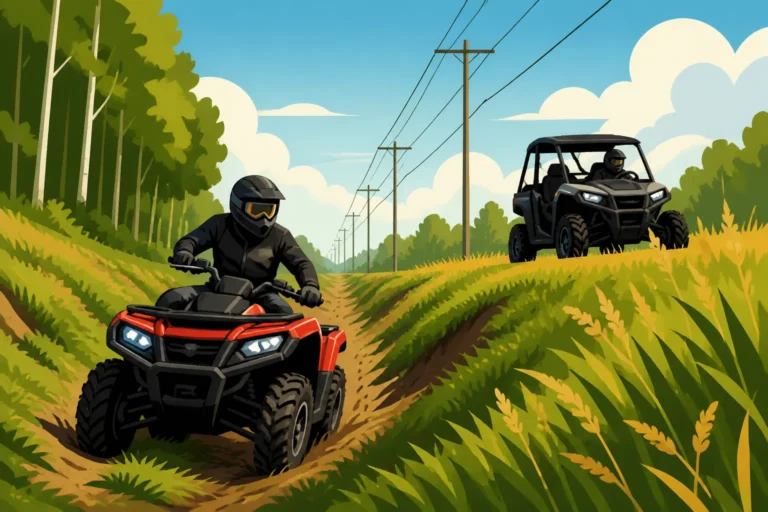
There's nothing quite as frustrating as enjoying a smooth ditch ride, feeling the wind in your face and the rumble of your machine, only for that ditch to suddenly… disappear. One moment you're cruising along the public right-of-way, and the next you're faced with a sudden drop-off, a culvert, a property line, or worse, the unexpected merging with the paved road itself. Navigating these tricky situations in Minnesota requires not just good riding skills, but a solid understanding of the law to avoid fines, accidents, or even trespassing charges. This guide is here to walk you through exactly what you need to know and how to handle those moments when the ditch simply runs out.
Understanding Why Ditches Aren't Always Continuous
It’s easy to imagine that every ditch alongside a Minnesota road or highway is a continuous, uninterrupted ribbon of trail just waiting for your ATV or UTV. But anyone who’s spent any time riding the ditches knows this simply isn't the case. These seemingly endless strips of public right-of-way are often broken up by a myriad of natural and man-made obstacles, and understanding why they occur is the first step in riding safely and legally.
The Varied Landscape of Minnesota's Roadways
Minnesota's landscape is incredibly diverse, from the rolling hills of the southeast to the flat, agricultural plains of the west, and the rugged forests of the north. This varied terrain directly impacts how ditches are constructed and maintained. In agricultural areas, ditches might be wide and shallow, used for drainage from fields, but then abruptly end at a private driveway or a field access point. In more urban or suburban fringes, ditches might be engineered differently, often disappearing into culverts or transitioning into storm drains as development increases. Natural features like small streams, wetlands, or even changes in elevation can also dictate where a ditch begins, ends, or changes character. It’s not a one-size-fits-all situation, and what you see in one county might be vastly different from another.
Common Obstacles That Interrupt Ditch Rides
Beyond the natural lay of the land, several common obstacles can bring a ditch ride to an abrupt halt. Bridges are perhaps the most obvious. When a road crosses a river, stream, or even a deep ravine, the ditch typically ends at the bridge abutment. Similarly, culverts – those large pipes that allow water to flow under a driveway or road – often mean the ditch itself essentially disappears for a short span. Private property lines are another huge factor. While the ditch is part of the public right-of-way, property owners have driveways and access points that necessitate an interruption in the continuous ditch. You might be riding along and suddenly encounter a paved entrance to a farm, a residential driveway, or even a business access road. These are not typically places where you can simply continue riding; you have to adjust your path according to specific rules. Even something as simple as a utility box, a road sign, or a mail cluster can subtly narrow or alter the ditch, making it unsafe or impossible to continue your current line of travel.
The Limitations of the Public Right-of-Way
It’s crucial to remember that while ditches are generally considered part of the public right-of-way, this doesn't grant unfettered access for ATVs and UTVs in all situations. The purpose of the ditch is primarily for drainage and road maintenance, not as an ATV trail. The rules allowing ATV and UTV use in ditches are a privilege, not an inherent right, and come with significant limitations. This means that when the ditch becomes impassable, or simply ends, you can't just create your own path. You cannot trespass onto private property, nor can you automatically transition onto the main traveled portion of the road without specific legal allowances. Understanding these limitations is key to staying out of trouble, and it's where the importance of knowing [Minnesota's Ditch Riding Rules] really comes into play. You have to be prepared for these interruptions and know the legal next steps.
Navigating Specific Obstacles When the Ditch Runs Out
When your pleasant ditch ride abruptly ends, your immediate reaction might be confusion or frustration. But for every type of obstacle that halts your progress, Minnesota law provides specific guidance on what you can and cannot do. Knowing these rules is paramount to safe and legal riding.
Crossing Bridges and Culverts
One of the most common reasons a ditch "runs out" is due to a bridge or a large culvert. As you approach a bridge, the ditch on either side will typically narrow and often rise to meet the elevation of the road surface. In Minnesota, you are generally allowed to cross bridges on your ATV or UTV, but this isn't a free-for-all. The law states that you can drive on the extreme right-hand side of the main traveled portion of the bridge surface to cross it. This means you must merge safely onto the shoulder or edge of the road, travel across the bridge, and then return to the ditch on the other side as soon as it's safe and practical to do so. This is a crucial exception to the general rule that [The Road Surface Minnesota Keeps Closed]. You should always exercise extreme caution, be highly visible, and yield to all other traffic when performing this maneuver. For culverts, especially those crossing private driveways, the situation is similar. You can typically cross over the top of the culvert to continue your ditch ride, but again, ensure you are not entering private property and are maintaining your position within the public right-of-way. It's often safer to slow down and treat these as mini-road crossings. More detailed information on this can be found in discussions around [Hazard Exceptions for Bridges and Culverts].
Dealing with Private Property Lines and Driveways
This is perhaps the trickiest scenario. You're riding along a ditch, and suddenly you encounter a private driveway, a field entrance, or what clearly looks like someone's lawn. In Minnesota, it is absolutely illegal to trespass onto private property with your ATV or UTV without explicit permission. When a ditch abuts a private driveway or property line, you have a few options, and continuing straight ahead is almost never one of them. If the driveway is simply crossing the ditch, you can usually cross it while staying within the right-of-way, similar to a small culvert. However, if the ditch truly ends and there's no continuous public right-of-way to continue your ride, you cannot just veer onto someone's land to get around the obstacle. Your options are usually to find another legal route, turn around, or perform a legal road crossing if circumstances allow. Always remember that property owners are within their rights to report trespassers, and the penalties can be significant. The rules regarding [Minnesota Trespass Rules Along Ditches] are very clear on this. When in doubt, turn around.
When the Ditch Merges with the Main Roadway
Sometimes, especially in more developed areas, or when approaching an intersection, a ditch might not just end at an obstacle; it might gradually, or abruptly, merge directly with the main traveled portion of the road or the shoulder. In these situations, your options become limited. If the ditch transitions into a usable shoulder, you might be able to continue on the shoulder itself, provided it's clearly marked for ATV/UTV use or if you are specifically permitted to use it for a short distance to access another ditch section or a legal crossing point. However, simply riding onto the paved or gravel road surface without a designated crossing point or marked route is generally prohibited. If the ditch completely disappears and forces you onto the main road, you must stop. You might need to make a legal road crossing if you're at an intersection or a designated crossing point. If no such crossing is allowed, you cannot continue on the main road. This is a critical point of [Minnesota Rules on County Roads] and [Minnesota Rules on State Highways] – the general prohibition on riding the road surface for extended periods still applies. It means you might need to backtrack or find an alternative route if the ditch truly runs out without a safe and legal way to proceed.
Legal Maneuvers When the Ditch Route Ends
When the ditch truly runs out and you can't simply cross an obstruction to resume your ride, you're faced with a choice: turn around, or perform a legal maneuver to continue your journey. Minnesota law provides specific pathways for ATVs and UTVs to navigate these interruptions, but it's crucial to understand the limitations and requirements.
Designated Road Crossings
Perhaps the most common legal maneuver when a ditch runs out at a road or intersection is a designated road crossing. Minnesota law allows ATVs and UTVs to cross public roadways under very specific conditions. This isn't just about gunning it across traffic; it involves a careful, controlled, and often quick maneuver. You must come to a complete stop, yield to all approaching traffic, and then cross the road at a right angle to the main traffic flow. The goal is to minimize your time on the paved or graveled surface. You can only do this where permitted, and you should ideally be crossing from one legal ditch section to another. [Crossing a Minnesota Road on an ATV] outlines these rules in detail, emphasizing the need for visibility and caution. You cannot make a crossing simply because you want to ride on the other side of the road; there must be a continuation of a legal ditch or trail there. Always be aware of your surroundings, use appropriate hand signals if necessary, and ensure your machine is clearly visible to other motorists.
Utilizing Road Shoulders for Limited Distances
In some very specific instances, Minnesota law allows for limited use of the road shoulder when the ditch runs out or becomes impassable. This is not a blanket permission to ride shoulders as if they were trails. Typically, this is allowed only to bypass an obstruction within the right-of-way or to make a legal road crossing. For example, if a section of the ditch is temporarily flooded, washed out, or impassable due to construction, you might be allowed to use the immediate shoulder for the shortest distance necessary to get past the obstruction and return to the ditch. This allowance is often at the discretion of local authorities or tied to specific posted routes. You must always stay as far to the right as possible, maintain a low speed, and yield to all other traffic, including pedestrians or cyclists who might also be using the shoulder. It's a temporary solution, not a continuous riding option, and you should always be looking for an opportunity to return to the ditch. This is also where accessories like a bright LED light bar from SuperATV could enhance your visibility to other motorists if you absolutely must use a shoulder briefly.
When Turning Around is the Only Option
Sometimes, despite your best intentions and knowledge of the rules, turning around is the safest and only legal option. This can be due to a genuine dead-end in the ditch system, an uncrossable obstacle, or simply reaching a point where no further ATV/UTV travel is permitted. For instance, if a ditch ends at the entrance to a state highway where no crossing is allowed, or if it abruptly leads into clearly marked private land with no through access, you cannot force a path. Accepting that you need to backtrack can save you from potential fines for illegal road use, trespassing, or even an accident. It's an important part of responsible riding. Plan your routes in advance, especially in unfamiliar territory, to anticipate these dead ends. Having a map or a GPS unit loaded with OHV-friendly routes can be invaluable in these situations, helping you avoid venturing into areas where you'll inevitably hit a wall. Remember, part of enjoying the ride is knowing when to call it and try a different path.
Safety and Planning for Unexpected Ditch Endings
While knowing the law is essential, practical preparation and a safety-first mindset are equally vital for those moments when the ditch unexpectedly runs out. Riding without anticipating these interruptions can quickly turn a fun outing into a stressful, or even dangerous, situation.
Pre-Ride Planning and Route Awareness
The best defense against being caught off guard by a ditch ending is thorough pre-ride planning. Before you even fire up your machine, take some time to study maps of the area you intend to ride. Online mapping tools, dedicated ATV/UTV trail apps, and even old-fashioned paper maps can highlight potential problem areas like major intersections, bridges, and areas with limited public access. Look for continuations of ditches, designated trail crossings, and known trail systems. If you're riding an unfamiliar area, talking to local riders or checking with the Minnesota DNR for local regulations and recommended routes can provide invaluable insight. Don't assume that just because a ditch starts somewhere, it will continue uninterrupted for miles. Understanding [What Minnesota Requires Before You Ride the Ditch] is just as much about planning as it is about knowing the legal framework. This proactive approach allows you to anticipate where you might need to make a crossing, use a shoulder, or even turn back, rather than reacting blindly in the moment.
Enhancing Visibility and Communication
When you're forced to transition from a ditch to a road shoulder or make a quick road crossing, visibility becomes absolutely paramount. Other motorists, especially those traveling at highway speeds, may not be expecting an ATV or UTV to suddenly appear on the road. Always ensure your machine's headlights and taillights are functioning correctly, even during daylight hours. Consider adding auxiliary lighting, like a light bar, or reflective tape to your machine to make it more noticeable. Wearing bright, high-contrast riding gear also significantly increases your visibility. If riding in a group, communicate clearly when approaching potential ditch endings or crossings. Appoint a leader and a sweep rider, and use hand signals to indicate turns, stops, and hazards. Remember, you might be focused on the ditch, but drivers on the main road are focused on their own traffic, and they might not see you until it's too late. Being seen is your first line of defense against an accident, particularly if you're briefly sharing space with faster-moving vehicles. For added safety, many riders opt for a whip flag, especially if their vehicle is smaller or obscured by terrain.
Respecting Private Land and Road Users
Even when the ditch runs out and you're in a tough spot, your responsibility to respect private property and other road users does not diminish. Never, under any circumstances, venture onto private land without explicit permission from the landowner. A momentary convenience is not worth the legal trouble, animosity, or potential damage. Similarly, when making a road crossing or using a shoulder, remember that you are a guest in that space. Yield to all other traffic – vehicles, cyclists, and pedestrians. Avoid sudden movements, excessive speed, or actions that could startle or endanger others. The future of ditch riding in Minnesota depends on responsible behavior from all ATV and UTV enthusiasts. Any incident that paints riders in a negative light can quickly lead to stricter regulations and decreased access. Equip your machine with quality tires, perhaps an all-terrain set from SuperATV, to handle varied surfaces smoothly and predictably, minimizing any need for erratic maneuvers. Always prioritize safety and courtesy, even when you're in a tricky situation due to the ditch ending.
Common Scenarios and Actions When the Ditch Ends
| Scenario | Legal Action (Minnesota) | Key Considerations |
|---|---|---|
| Bridge/Large Culvert Ahead | Transition safely to the extreme right-hand side of the road or shoulder, cross the bridge/culvert, and immediately return to the ditch on the other side. This is an exception to general road riding rules. | Yield to all traffic. Be highly visible. Do not linger on the bridge or road surface. Cross at a safe speed. |
| Private Driveway/Field Access | If the ditch continues on the other side, cross the driveway at a right angle, yielding to any traffic entering/exiting. If the ditch truly ends at the private property with no continuation, you must turn around or find a legal alternative. Do not enter private property. | Never trespass. Be cautious of blind spots from driveways. Observe traffic. |
| Ditch Merges with Main Road/Shoulder | If the ditch transitions into a usable shoulder, you may use it for the shortest distance necessary to reach another ditch section or a legal crossing point. If it merges directly with the main traveled portion of the road and no crossing is immediately available, you must stop. | Limited use only. Stay far right, low speed. Yield to all traffic. Do not ride on the main road surface unless making a legal crossing. |
| Intersection Without Ditch Continuity | Perform a legal road crossing at a right angle if permitted and safe. Stop, yield to all traffic, cross directly, and proceed to the ditch or trail on the other side. If no legal crossing is available or safe, you must turn around. | Yield to all traffic. Ensure clear line of sight. Be mindful of [Driver's License Rules for Minnesota Road Riding] if operating on specific road types. |
| Impassable Obstruction (e.g., wash-out) | Use the immediate shoulder for the shortest distance necessary to bypass the obstruction and return to the ditch. If this is not safe or possible, turn around. Do not create new paths by going off-road into natural areas or private property. | Prioritize safety. Evaluate the obstruction carefully. Ensure your machine, perhaps fitted with robust tires from SuperATV, can handle the transition back to the ditch. |
| Dead End (no legal continuation) | You must turn around and retrace your route or find an alternative legal route. | Plan ahead. Use maps or GPS to avoid dead ends. Accept that not every ditch is a through route. |
Remember, carrying appropriate [Minnesota Liability Coverage for Riders] is always a wise decision, especially when riding in areas where you might encounter unforeseen obstacles or other vehicles. If you find yourself in a collision or incident, knowing [Minnesota ATV Crash Reporting] procedures will be crucial, even if it's just a minor scrape.
Disclaimer
This article is for general informational purposes only and does not constitute professional advice. Laws, prices and regulations vary by location and change over time. Consult a qualified professional for guidance on your specific situation.