Snow-Filled Ditches After a Storm
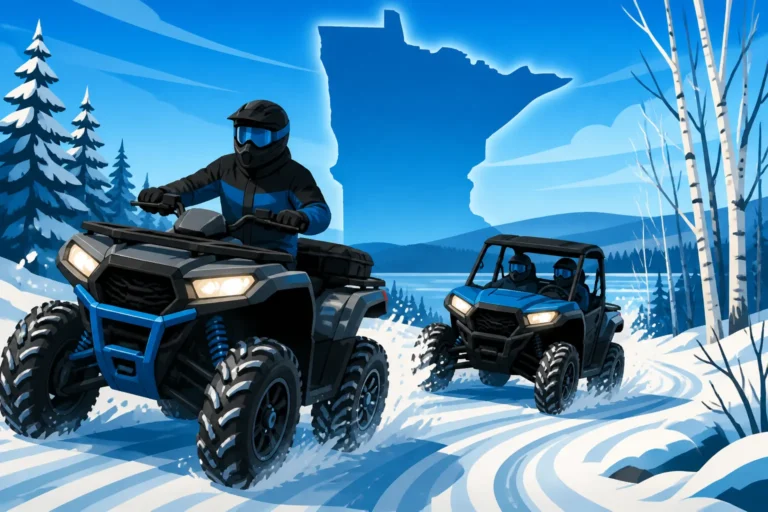
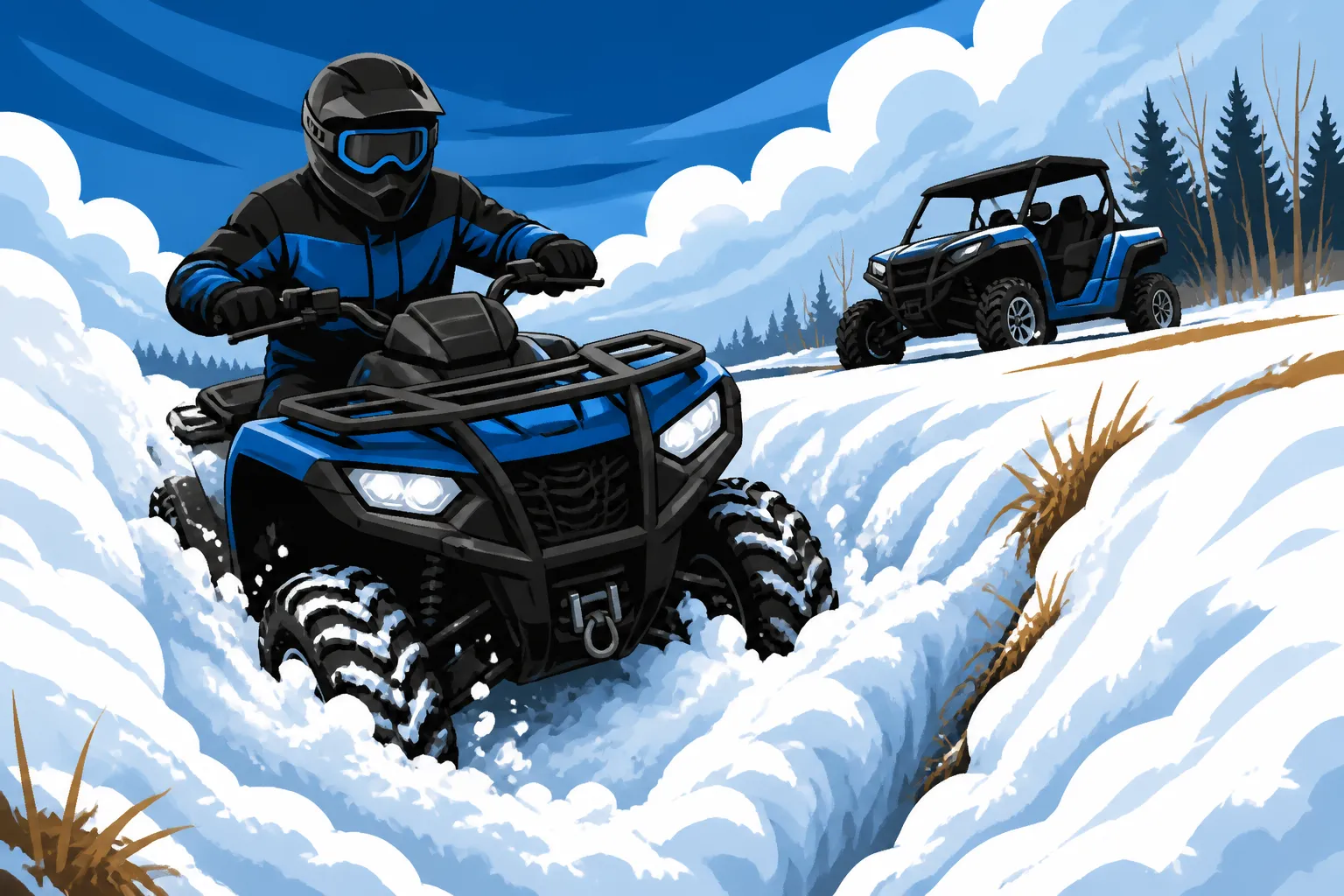
Ah, winter in Minnesota! There's nothing quite like the crisp air, the quiet hush of a fresh snowfall, and the undeniable urge to get out on your ATV or UTV and truly experience it. For many of us, that means heading for the ditches, those roadside rights-of-way that become a tempting wonderland of powder after a storm. But as inviting as those snow-filled expanses are, they also bring a unique set of challenges and questions about what's actually legal and safe. This guide is here to help you navigate those beautiful, yet sometimes perplexing, snowy ditches after a big Minnesota storm.
The Lure and the Laws: Why Snow-Filled Ditches are a Winter Wonderland (and a Legal Maze)
There's a special magic to riding your ATV or UTV through a freshly snow-covered ditch in Minnesota. It’s a completely different experience than summer riding, and it offers a unique blend of adventure and accessibility. But that allure comes with a layer of legal complexity that can leave even seasoned riders scratching their heads.
The Minnesota Ditch Riding Appeal in Winter
Think about it: after a heavy snowfall, the landscape transforms. The uneven ruts and dusty trails of summer are replaced by a pristine, soft blanket of white. Riding through it on your machine can feel like floating. The sound of your engine seems muffled by the snow, and the quiet beauty of the Minnesota wilderness, even alongside a road, is amplified. For many, it's a way to break free from the cabin fever that inevitably sets in during our long winters.
This serene, soft ride is a stark contrast to the often bumpy, dusty, and sometimes muddy conditions you encounter during warmer months. The snow can cushion the ride, making it feel smoother and more forgiving. Plus, these snow-filled ditches often provide convenient access points to ice fishing spots, hunting areas, or simply a way to connect with friends and neighbors who live a short distance down a rural road without having to trailer your machine everywhere. The ability to explore your local area, take in the winter scenery, and still be relatively close to home is a huge draw. It's truly a quintessential Minnesota winter experience for many ATV and UTV enthusiasts.
Understanding Minnesota's General Ditch Riding Rules and Winter Nuances
Minnesota law allows for ATV and UTV operation on the "unplowed portion of the right-of-way of a public road or highway." On the surface, that sounds pretty straightforward, doesn't it? The intent is to keep off-highway vehicles separate from regular road traffic, providing a safe corridor for riders while minimizing interference with other vehicles. You're generally expected to ride on the far right side, nearest to the lane of traffic, but always off the actual paved or graveled surface. You can dive deeper into the basics with [Minnesota's Ditch Riding Rules].
However, winter throws a big, beautiful, snow-filled wrench into that seemingly simple rule. What exactly constitutes the "unplowed portion" after a snowplow has been through? This is where the confusion and frustration often set in. A shoulder might be plowed clear, but the actual ditch — the lower, sloped area away from the road — could be filled with feet of fresh powder, often piled even higher by the snowplows. The spirit of the law, which aims for separation from vehicle traffic, is still crucial. So, if you're out there enjoying the powder, you need to constantly evaluate if you're truly in an unplowed section or if you've inadvertently veered onto what would be considered the active roadway or shoulder. This nuance is critical, as a misinterpretation can quickly lead to an unexpected conversation with a conservation officer.
Navigating the Whiteout: Practical Considerations for Snow-Filled Ditches
Riding in snow-filled ditches isn't just about knowing the law; it's about being prepared for the unique environment that winter creates. From how you set up your machine to how you approach visibility challenges, a little foresight can make a huge difference in your safety and enjoyment.
Machine Setup and Preparedness for Deep Snow
Getting your machine ready for deep snow is half the battle. Regular tires, while great for general trail riding, might struggle to find traction and floatation in several feet of powder.
- Tires: For starters, aggressive, open-tread tires designed for mud and snow will give you the best grip. You might also consider lowering your tire pressure slightly – just a few PSI below your usual trail pressure – to increase the tire's footprint and improve floatation over soft snow. Be cautious not to go too low, though, as you still need enough pressure to prevent pinching or damage if you hit a hidden obstacle.
- Winching Gear: Even in what seem like flat ditches, you can get surprisingly stuck in deep, heavy snow. A reliable winch is not just a luxury; it's a necessity. Imagine you're exploring a beautiful, untouched stretch of ditch, only to find yourself bogged down in a drift that's deeper than you anticipated. Having a robust winch, like one from SuperATV's line of recovery gear, can be the difference between a quick self-recovery and a long, cold wait for help. They offer a range of winches and recovery straps designed to handle tough conditions. Make sure your winch is properly mounted, maintained, and that you have all the necessary accessories like straps, shackles, and a tree saver.
- Warm Gear and Communication: Dress in layers! Minnesota winters are no joke, and while you might be generating heat while riding, stopping for even a few minutes can lead to a rapid chill. Waterproof and windproof outer layers are essential. Don't forget heated grips or a thumb warmer for your machine – your hands will thank you. Always carry a fully charged cell phone (consider an external battery pack as cold kills batteries quickly), and if you're going to be in more remote areas, a satellite messenger or GPS device for emergency communication. You can find more specific advice on preparing for cold weather in articles like [Winterizing a Machine in Minnesota].
- Emergency Supplies: Beyond communication, a small emergency kit should include a first-aid kit, a small shovel, a tow strap (even if you have a winch, it's good for helping others or getting a short pull), and some high-energy snacks and water. It might seem like overkill for a ditch ride, but conditions can change quickly, and getting stuck can turn a short outing into a longer ordeal.
For those truly dedicated to winter exploration, consider [Tracks on a Machine in Deep Snow]. While an investment, track systems convert your wheeled machine into a true snow beast, offering unparalleled floatation and traction in the deepest snow.
Safety and Visibility Challenges After a Storm
A fresh snowfall, especially combined with wind, can create whiteout conditions or obscure crucial visual cues.
- Reduced Visibility: Snow can significantly reduce visibility, whether it's falling, blowing, or simply reflecting sunlight. Drifting snow can appear suddenly, creating momentary whiteout conditions that make it impossible to see the road, the ditch bank, or any obstacles. This is why slowing down, especially when visibility is poor, is paramount. You can't react to what you can't see.
- Hidden Obstacles: This is perhaps the biggest danger of snow-filled ditches. What looks like a smooth, unbroken blanket of white can hide a multitude of hazards:
- Culverts: These metal or concrete pipes running under driveways or road approaches are notorious for trapping tires or causing abrupt impacts if you hit them at speed. They are often completely obscured by snow.
- Rocks and Debris: Plows can sometimes push rocks, chunks of ice, or other road debris into the ditch, which then get covered by snow.
- Fences and Posts: Old fence lines or property markers can be completely buried, creating a dangerous snag hazard for your machine or a serious fall risk for riders.
- Frozen Ruts: While the fresh snow is soft, deeper down you might encounter old frozen ruts from summer or early winter, which can violently jerk your handlebars if you hit them unexpectedly.
- Lighting and Visibility: Ensure your machine's headlights and taillights are clean and fully functional. For added visibility, especially during dusk or dawn or in areas with drifting snow, consider adding an amber whip flag. SuperATV, for instance, offers various whip lights and flags that can make your machine more visible to other riders and passing motorists, a small investment for a big safety gain. Remember to adhere to [Minnesota Headlight Rules After Dark] and ensure you have proper [Reflectors for a Ditch Ride] to be seen by other traffic.
- Riding with a Buddy: Whenever possible, ride with a friend. If one of you gets stuck or has an issue, the other is there to help. This is especially true in areas with limited cell service. Even for what seems like a casual ditch ride, the "buddy system" is always a smart play in winter.
Always ride at a speed appropriate for the conditions, assume there are hidden hazards, and maintain a keen awareness of your surroundings.
The "Unplowed" Conundrum: When is a Ditch Ride Legal?
This is truly the heart of the matter when it comes to riding snow-filled ditches in Minnesota. The legal definition of "unplowed" can feel like a moving target, especially after a snowplow has made its pass. It's a point of contention and confusion for many, and understanding the nuance is key to staying on the right side of the law.
Defining "Unplowed" in a Winter Context
Here's where the frustration often builds. When a snowplow comes through, it typically clears the main road surface and pushes the snow off to the side, often creating a snow berm or bank along the edge of the shoulder. For many, the "ditch" starts beyond that initial plowed-back area, where the terrain slopes down and where the snow accumulates in deeper drifts. The legal challenge is that the exact line between a "plowed shoulder" and an "unplowed ditch" isn't always clearly defined in practice, and it can vary depending on the road, the plow operator, and the amount of snow.
Consider these scenarios:
- The Plowed Shoulder vs. Deep Ditch: If the road has a clear, plowed shoulder, but then there's a significant drop-off into a deep, snow-filled ditch, riding in that deep ditch is generally considered acceptable, as you are clearly separated from the traveled portion of the road.
- The Plowed Approach: What if a homeowner has plowed out their driveway approach, pushing snow into the immediate ditch section? Is that section then considered "plowed" and therefore off-limits? This can be a grey area. Generally, if the intent of the plowing was simply to clear a private access point, and the rest of the ditch beyond it remains naturally snow-covered and untouched by the main road plows, you might still be within the spirit of the law. However, if the plowing has created a clear path that could be mistaken for part of the active roadway, it’s best to err on the side of caution.
- Snow Pushed onto the Ditch Bank: Often, snowplows push huge amounts of snow onto the ditch banks, creating massive piles. While this snow was moved by a plow, the area where it's piled up is generally still considered part of the right-of-way that is not the actively plowed road surface. The key question remains: are you sufficiently separated from the flow of traffic?
The critical takeaway is to always prioritize separation from active vehicle traffic. If you are riding on snow that is clearly part of the regular road surface, or an immediately adjacent area that is being actively maintained for vehicle travel, you're likely in violation. If you are in the lower, unmaintained, snow-filled portion of the right-of-way, you're more likely to be in compliance.
Avoiding Common Missteps and Officer Encounters
To ensure your winter ditch riding remains enjoyable and ticket-free, keep these points in mind:
- Stay Off the Road Surface: This is non-negotiable. Even if there's a thin layer of snow on the blacktop or gravel, if it's the actual road surface, stay off it. This includes bridges and culverts that are part of the roadway itself; you must dismount and walk your machine across if no safe ditch path exists. You can learn more about general road rules in [Can You Ride the Road Surface in Minnesota?].
- Know Your Local Ordinances: While state law governs most ditch riding, some cities and counties may have specific ordinances that restrict or prohibit ATV/UTV use within their municipal boundaries, even on ditches. It's always a good idea to check with local authorities if you plan to ride within a town or city limits.
- Proper Crossing Procedures: If you need to cross a road to continue your ditch ride on the other side, do so safely and legally. Come to a complete stop, yield to all traffic, cross at a 90-degree angle, and go directly across. Do not ride down the road surface to find a better crossing point. Consult [Crossing a Minnesota County Road on an ATV] and [Crossing a Minnesota State Highway] for detailed guidance.
- Be Visible and Alert: As discussed earlier, visibility is crucial. Always be aware of your surroundings, especially approaching intersections or driveways where other vehicles might be present.
- What to Do During an Encounter: If a conservation officer or law enforcement officer stops you, be polite and cooperative. Provide your registration and other requested documents. If you genuinely believe you were in compliance, you can explain your understanding, but avoid arguing. They are there to enforce the law, and respectfully engaging with them is always the best approach. You can learn more about enforcement in [Conservation Officer Enforcement in Minnesota]. Ignoring laws can lead to significant [Minnesota Fines for Illegal Road Riding].
| Scenario | Legal Interpretation (General) | Best Practice |
|---|---|---|
| Deep, Untouched Snow in Ditch | Generally permissible as it's the "unplowed portion" and separated from traffic. | Enjoy the ride! Ensure clear visibility and watch for hidden obstacles. |
| Snow-Covered Shoulder | Often considered part of the "plowed" or maintained roadway area, generally illegal to ride on. | Avoid. Even if snowy, if it's the shoulder, it's typically too close to active traffic lanes. |
| Plowed Driveway Approach | Gray area. If it's a small section affecting only a private access, ride with caution. | Exercise extreme caution. If it looks like part of the maintained path, consider a safe detour or walk the machine. |
| Snow Piles from Plows | Riding on the piles themselves is often fine, as they are not the active road surface. | Be aware of stability and potential for falling into holes or hitting hidden debris. |
| Actual Road Surface (even snowy) | Always illegal. | Absolutely avoid. Even a thin layer of snow does not make the road surface legal for ATVs/UTVs. |
Responsible Winter Riding: Beyond Just the Ditches
While the allure of snow-filled ditches is strong, responsible riding extends beyond merely understanding the law. It involves respecting private property, being mindful of the environment, and knowing when to seek out dedicated trail systems. Our winter landscape is beautiful, and keeping it that way for everyone is part of the Minnesota way.
Respecting Private Property and Agricultural Land
When everything is blanketed in snow, property lines can become incredibly difficult to discern. A fence might be completely buried, a field that was clearly agricultural land in summer might look like an inviting open expanse in winter. This makes unintentional trespassing a very real risk, and it's something every rider needs to be acutely aware of.
- Assume It's Private: When in doubt, assume the land is private. It's easy to get disoriented, especially in unfamiliar areas or during heavy snowfall. Don't assume a snow-covered field is public land just because there's no visible fence. Farmers and landowners have a right to their property, and riding across their land, even if it's under snow, is trespassing.
- Damage to Property: While snow provides a cushion, riding over planted fields or fragile winter crops can still cause damage, especially if the ground isn't fully frozen or if deep ruts are created that will persist into spring. This can lead to significant frustration for landowners and potentially strained relationships between riders and local communities.
- Know Before You Go: Whenever possible, consult plat maps or apps like onX Offroad that show property lines. This is especially useful if you plan to ride near specific hunting or fishing access points that border private land. Always remember that [Minnesota Trespass Rules Along Ditches] apply even when the ground is covered in white. Respect for private property is paramount for maintaining good relations and ensuring continued access to public riding opportunities.
Environmental Impact and Trail Alternatives
Even in winter, our riding choices have an environmental impact. While snow can protect the underlying vegetation to some extent, improper riding can still cause issues.
- Damage to Vegetation: Riding through shallow snow cover can still damage dormant vegetation or small saplings, especially in ditch areas that might have delicate ecosystems. Creating deep ruts that then freeze can also lead to erosion problems during the spring thaw, which can impact water quality in nearby streams and wetlands.
- Noise Pollution: While snow does muffle sound, it doesn't eliminate it. Be mindful of noise, especially when riding near homes, cabins, or wildlife areas. Using a machine with a properly maintained muffler and spark arrester is always good practice.
- Dedicated Winter Trails: Minnesota offers fantastic dedicated trail systems that are maintained for winter riding. While many are primarily for snowmobiles, some multi-use trails allow ATVs and UTVs in winter. These trails are designed to handle off-highway vehicle traffic and often provide a safer, more predictable riding experience without the legal ambiguities of ditches. Before heading out, check the Minnesota DNR website or local trail club resources for information on specific trails and their winter usage policies. For general advice on winter riding, check out [Winter Road Riding in Minnesota] (though be mindful that ditch rules are distinct from those for actual plowed roads).
- Snowmobile Trails are Different: It's crucial to understand that most groomed snowmobile trails in Minnesota are off-limits to ATVs and UTVs. These trails are funded and maintained by snowmobile enthusiasts, and mixing ATVs/UTVs with snowmobiles can be a safety hazard and damaging to the groomed surface. Always verify that a trail is open to your type of machine before you ride it. Respecting these boundaries helps preserve the integrity of both snowmobile and ATV trail systems.
By being considerate of property owners, minimizing your environmental footprint, and utilizing designated trails when possible, we can all contribute to a positive and sustainable riding culture in Minnesota's beautiful winter landscape.
Disclaimer
This article is for general informational purposes only and does not constitute professional advice. Laws, prices and regulations vary by location and change over time. Consult a qualified professional for guidance on your specific situation.