Minnesota Dealer License Rules for ATV Sales
Thinking about selling an ATV or UTV in Minnesota can feel like stepping into a tangled forest of regulations, especially if you're trying to figure out if you need a special license to do it. Many folks just want to sell a couple of machines a year, maybe upgrade their own rig, and suddenly they're wondering if they've unknowingly crossed a line into "dealer" territory, with all the paperwork and fees that entails. This guide is here to untangle those rules, explaining exactly when you need a Minnesota dealer license to sell ATVs, what it entails, and why these regulations exist to protect everyone involved.
Why Dealer Licensing Matters for ATV Sales in Minnesota
When you're looking to buy or sell an all-terrain vehicle, whether it's a quad or a side-by-side, it's easy to get caught up in the excitement of the machine itself. But behind every sale, there's a framework of rules designed to keep things fair and safe for buyers, and to ensure that the state gets its due in terms of taxes. Dealer licensing is a big piece of that puzzle, and it's not just red tape for the sake of it.
Protecting Buyers from Scams and Unsafe Machines
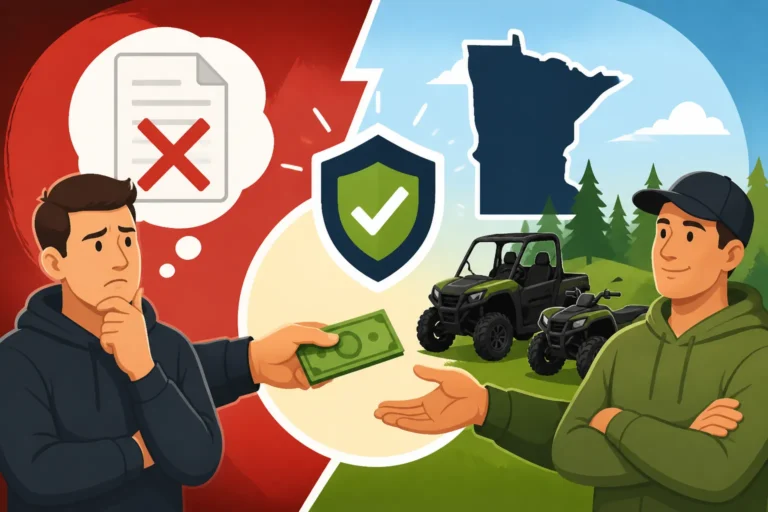
Imagine shelling out a significant chunk of change for what you think is a perfectly good ATV, only to find out later it has a hidden lien, a salvaged title that wasn't disclosed, or even worse, it's a stolen machine. Or perhaps the seller disappears the moment you drive off, leaving you with an unsafe vehicle and no recourse. This is exactly the kind of scenario dealer licensing aims to prevent. Licensed dealers are held to a higher standard of disclosure and conduct. They usually have established reputations and a physical presence, making them accountable. They're often required to stand behind their sales in specific ways, offering a degree of protection that a quick, cash-only private sale might not.
Furthermore, licensed dealers typically inspect machines before selling them, even used ones, to ensure they meet certain safety standards or to at least disclose any known issues. This transparency is crucial for buyers who might not have the mechanical expertise to spot potential dangers themselves. Knowing that a professional entity with a license at stake has vetted the machine offers a significant peace of mind.
Ensuring Proper Tax Collection and Registration
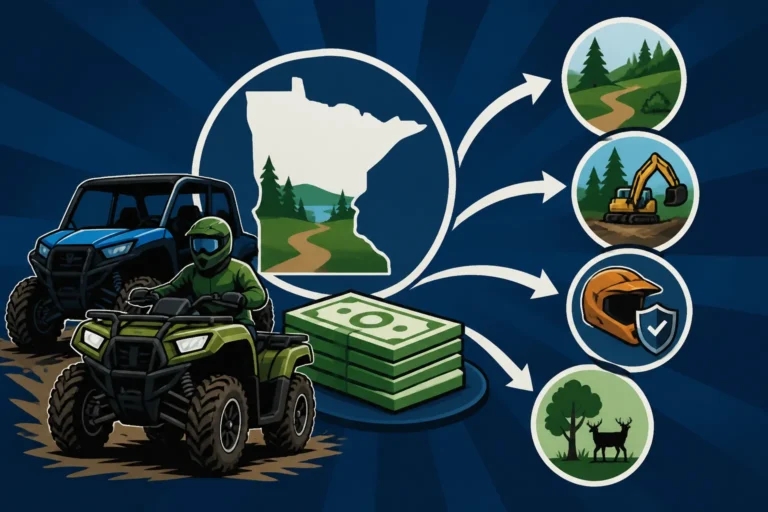
Beyond consumer protection, dealer licensing plays a critical role in the orderly collection of sales tax and the proper registration of off-highway vehicles. When you buy from a private party, it's often up to the buyer to remember to pay [Minnesota Sales Tax on an ATV Purchase] and get the machine registered. While many people do this diligently, some might overlook it, or intentionally try to avoid it. This leads to unregistered machines on trails, which impacts funding for those trails and makes it harder for law enforcement to track ownership.
Licensed dealers, on the other hand, are legally obligated to collect sales tax at the point of sale and often handle the initial registration paperwork for you. They act as an extension of the state in this process, ensuring that the sales tax is correctly remitted and that the machine's ownership is properly transferred and recorded with the Minnesota Department of Natural Resources (DNR). This streamlined process helps keep the system running smoothly, funding the trails and enforcement efforts that all riders benefit from. Think of it as a clear path for your machine to legally become yours and get out on the trails.
Who Needs a Dealer License to Sell ATVs in Minnesota?
This is where many people get confused, and understandably so. There's a big difference between selling your personal machine and operating a business that sells multiple machines. Minnesota law is designed to catch those who are operating like a business, even if they don't see themselves that way.
Defining "Dealer" vs. "Private Seller"
In Minnesota, the line between a "dealer" and a "private seller" isn't always as clear as you might think. Generally, if you're regularly buying and selling ATVs or UTVs with the intent to profit, you're likely considered a dealer and need a license. This isn't just about the number of machines you sell, but the intent behind your activities. Are you actively seeking out machines to purchase, fix up, and then resell them? Do you advertise your machines for sale publicly and frequently? If so, even if it's from your backyard, the state might view you as an unlicensed dealer.
A private seller, on the other hand, is typically someone selling a machine they've owned and used for personal recreation or work. Maybe they're upgrading to a newer model, or their kids have outgrown their youth machine. They're not in the business of continually acquiring and offloading inventory. The key distinction often revolves around the frequency and purpose of the sales. If you're only selling one or two machines you've personally owned over several years, you're almost certainly considered a private seller. However, if you're consistently turning over machines, even just a few a year, the DNR might take notice.
Exemptions and Casual Sales
Minnesota law does provide for what are often called "casual sales" or exemptions, which cover the typical private individual who sells their own property. You don't need a dealer license to sell an ATV that you have personally owned and registered for your own use. This is crucial for hobbyists, families, and casual riders who simply want to upgrade or offload an older machine. For example, if you've had your Polaris Sportsman for five years and decide to sell it to buy a new side-by-side, you're a private seller. The same goes if you're selling a machine that was [Inheriting an ATV in Minnesota] or gifted to you, provided you're not doing this as a business.
The real questions arise when you start to exceed what's considered "casual." While there isn't a hard-and-fast number that defines how many ATVs you can sell before needing a license, indicators like repeatedly selling machines within a short period, buying machines specifically for resale, or advertising yourself as a seller of multiple ATVs can trigger scrutiny. Always err on the side of caution. If you're uncertain, it's a good idea to reach out to the Minnesota DNR or Department of Public Safety to clarify your specific situation. They can provide guidance to help you avoid potential issues.
The Core Requirements for Obtaining a Minnesota ATV Dealer License
Becoming a licensed ATV dealer in Minnesota isn't a quick process. It involves a series of steps and commitments, all designed to ensure that dealers operate responsibly and adhere to state regulations. It's not just about filling out a form; it's about establishing a legitimate business with a physical presence and financial safeguards.
Establishing a Physical Business Location
One of the foundational requirements for any licensed vehicle dealer in Minnesota, including those selling ATVs, is having a bona fide physical business location. This isn't just your garage or a P.O. box. The location needs to be recognizable as a place of business, with sufficient space to display vehicles, an office area for transactions, and proper signage. It usually means a commercial zoning, a fixed structure, and clear business hours. This requirement ensures that customers have a legitimate place to conduct business, view inventory, and address any post-sale issues.
The state wants to know that a dealer is serious and invested in their operation. A physical location adds credibility and makes it easier for regulatory bodies to oversee operations. You'll likely need to provide proof of ownership or a lease agreement for this location as part of your application. Think about how this setup helps buyers; they know where to find you if they have questions about their [Minnesota ATV Registration Fee for Three Years] or need assistance after purchasing.
Meeting Surety Bond and Insurance Obligations
To protect consumers and the state, Minnesota requires ATV dealers to secure a surety bond. This bond acts as a financial guarantee, providing recourse for customers who might suffer losses due to a dealer's fraudulent activities, misrepresentation, or failure to comply with state laws. If a dealer engages in unethical practices or breaches a sales contract, the surety bond can be used to compensate the affected party. The amount of the bond can vary, so it's important to check current requirements with the state licensing authority. This is a significant financial commitment and demonstrates a dealer's accountability.
Beyond the surety bond, dealers will also need to carry various forms of insurance, including general liability insurance for their business premises and operations. This covers potential accidents or incidents that could occur on the dealer's property or during the course of business. Having robust insurance coverage protects not only the dealer but also their customers and employees, providing a layer of security that isn't present in private sales. When you're ready to create essential documents like purchase agreements or bills of sale, resources like LawDepot can provide templates that help ensure all necessary legal disclosures are included, which ties into operating responsibly with these bonds and insurance in place.
Understanding Application and Fee Structures
The process of applying for a Minnesota ATV dealer license involves submitting a detailed application to the appropriate state agency, typically the Minnesota Department of Public Safety or the DNR, depending on the specific license type. This application will require comprehensive information about your business, including its legal structure, ownership, and the physical location. You'll also need to provide documentation to support your claims, such as zoning approvals, proof of bond, and insurance certificates.
Along with the application, there are fees involved. These fees cover the administrative costs of processing your application, conducting background checks, and maintaining the licensing program. The initial application fee, renewal fees, and any inspection fees can add up, so it's wise to budget for these expenses. It's a recurring cost of doing business, often with annual or biennial renewals. Ensuring you have all your paperwork, from your business registration to a solid [What a Minnesota Bill of Sale Should Carry] for each transaction, is crucial for a smooth application and renewal process.
| Requirement Category | Key Elements | Purpose |
|---|---|---|
| Business Establishment | Physical lot, office, signage, zoning | Legitimate, accessible, and accountable business presence |
| Financial Safeguards | Surety bond, general liability insurance | Protects consumers from fraud/loss; covers business risks |
| Legal Compliance | Background checks, proper documentation, record keeping | Ensures ethical operation and legal adherence |
| Operational Adherence | Sales tax collection, registration handling, advertising rules | Ensures proper revenue collection and fair market practices |
Maintaining Accurate Records and Sales Documents
A critical aspect of being a licensed ATV dealer in Minnesota is the meticulous maintenance of records. Every sale, trade-in, and purchase must be documented thoroughly and accurately. This includes bills of sale, odometer disclosures (where applicable for road-legal vehicles, though ATVs have VINs and hours), sales tax records, and registration paperwork. These records are vital for several reasons: they prove ownership history, facilitate future transfers, help track sales tax remittance, and provide a clear audit trail for regulatory bodies.
Dealers are typically required to keep these records for a specified number of years, making them available for inspection upon request. Tools like LawDepot can be invaluable here, offering professionally drafted templates for all the necessary sales documents, helping dealers ensure they meet legal requirements and avoid omissions. Proper record-keeping isn't just a regulatory burden; it's a best practice that protects the dealer from disputes and ensures transparency with customers and the state. It also simplifies things when it comes time for [Minnesota Registration Renewal Every Three Years].
Penalties for Unlicensed ATV Sales in Minnesota
Attempting to operate as an ATV dealer without the proper license in Minnesota can lead to a host of unpleasant consequences. The state takes its licensing regulations seriously, not just to collect fees, but because these rules are designed to protect consumers and maintain fair market practices.
Financial Fines and Legal Consequences
If you are caught operating as an unlicensed ATV dealer in Minnesota, you could face significant financial fines. These penalties are designed to be a deterrent and can quickly add up, often assessed per offense or per machine sold. Beyond fines, you could also face legal action from the state, which might include cease-and-desist orders, or even criminal charges in more severe or repeated instances. The state's goal is to ensure compliance, and they have the power to pursue legal avenues to achieve it.
Moreover, if you've entered into contracts or agreements as an unlicensed dealer, those documents might be deemed void or unenforceable, creating massive legal headaches. Imagine a disgruntled buyer suing you for misrepresentation, and you can't even rely on your own sales agreement because you weren't licensed to conduct the transaction in the first place. The legal landscape for unlicensed sellers can be very rocky, potentially leading to costly court battles and damage to your personal finances and reputation. Even simple things like not having a proper [Minnesota ATV Registration Number Format] on file can lead to complications.
Risks to Both Unlicensed Sellers and Unwitting Buyers
The risks aren't just one-sided. Unlicensed sellers put themselves in a precarious position because they lack the legal protections and frameworks that licensed dealers operate within. Without a bond or proper insurance, they are personally liable for any issues that arise from their sales, whether it's a warranty claim (even if unstated, implied warranties can exist) or a claim of fraud. This direct personal liability can expose their assets to significant risk. Furthermore, they miss out on the valuable training and compliance resources that often come with being part of the licensed dealer network.
For unwitting buyers, purchasing from an unlicensed dealer carries its own set of dangers. They might inadvertently buy a stolen machine, a vehicle with undisclosed mechanical defects, or a machine with an unclear title history. If issues arise, they have far fewer avenues for recourse compared to buying from a licensed dealer who is bound by state regulations and backed by a surety bond. The lack of a clear [Proof of Ownership for a Minnesota ATV] can make future sales or even just getting the machine registered incredibly difficult. Both parties are generally better off when transactions occur through legitimate, licensed channels, where transparency and accountability are paramount. Ensuring all sales are documented correctly, perhaps using customizable forms from services like LawDepot, can provide a layer of protection, even in private sales, but it doesn't replace the legal requirements of a dealer license.
Disclaimer
This article is for general informational purposes only and does not constitute professional advice. Laws, prices and regulations vary by location and change over time. Consult a qualified professional for guidance on your specific situation.