Buying a Quad at a Farm Auction
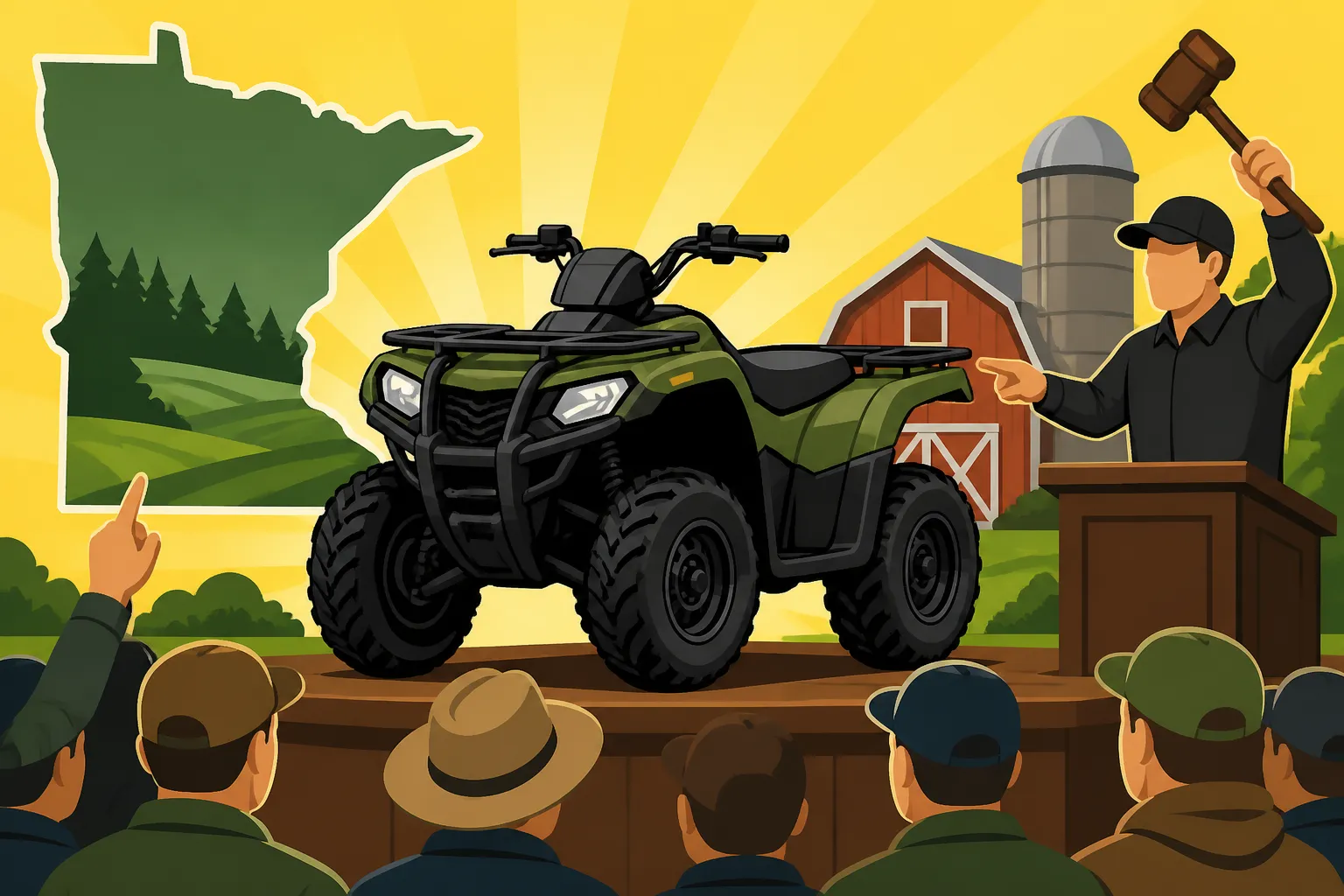
There's nothing quite like the excitement of a farm auction, is there? The smell of hot dogs, the buzz of the crowd, the anticipation of a good deal… and sometimes, you spot an ATV or UTV that looks like it could be your next trail companion or a workhorse for the back forty. But buying a quad at a farm auction in Minnesota isn't quite the same as strolling into a dealership, and it comes with its own set of unique challenges, especially when it comes to getting that machine legally registered. This guide is here to walk you through the ins and outs, helping you avoid common pitfalls and ensuring your auction find can hit the trails or fields without a hitch.
The Allure and Risks of Buying at a Farm Auction
Farm auctions hold a special place for many folks looking for a good deal on equipment, and ATVs or UTVs are no exception. But that unique buying environment also comes with some distinct advantages and disadvantages that you absolutely need to understand before raising your paddle.
Why Farm Auctions Are So Tempting
The primary draw, for most people, is the potential for a fantastic deal. You might envision snagging a slightly used side-by-side that someone just upgraded from, or finding a rugged ATV that's only seen light work around a hobby farm. Sometimes, you truly can find a diamond in the rough at a price significantly lower than what a dealer or even a private seller might ask. The "as-is, where-is" nature of an auction can mean that the seller isn't looking to haggle or make repairs, which often translates to a lower starting bid.
Beyond the price, there's the thrill of the hunt and the unique items that pop up. Farm auctions aren't just about big tractors; they often feature a diverse array of equipment, including various models of ATVs and UTVs that might not be readily available elsewhere. For those who enjoy the atmosphere of an auction, it’s also a social event, a chance to catch up with neighbors and soak in a bit of rural Minnesota culture. You might find a machine that's been cared for by a meticulous owner, used solely for light tasks, and could provide years of reliable service.
The Hidden Pitfalls You Might Overlook
Now, for the flip side: the "as-is, where-is" condition also means you're taking on all the risk. Unlike a dealer purchase where you might get a warranty or a private sale where you can take a test drive and ask a million questions, an auction moves fast. You typically won't get to fire up the engine, let alone ride the machine, beyond maybe a quick glance. This means identifying potential mechanical issues—like a slipping belt, a weak battery, or a noisy transmission—can be incredibly difficult, if not impossible, in the short viewing window. What looks like a great price on auction day could quickly turn into a repair bill that eats up all your savings and then some.
Furthermore, getting a detailed history of the machine is rare. You won't know if it's been regularly serviced, whether it's ever been wrecked, or how it was truly used. There's also the very real possibility of undisclosed liens on the machine, or, even more common, missing or incomplete paperwork. The auctioneer's job is to sell the item, not necessarily to provide you with a full ownership history or a pristine bill of sale. If you end up with an incomplete bill of sale, or need to create a robust one from scratch to establish your ownership, resources like LawDepot can be incredibly helpful for drafting legally sound documents that protect your interests. Without proper documentation, you might run into significant headaches when you try to register your new-to-you quad with the state of Minnesota.
Essential Pre-Auction Homework and On-Site Inspection
Going into a farm auction unprepared is like walking into a Minnesota winter storm without a coat – you're going to regret it. A little homework before you go, and a thorough inspection once you're there, can save you a world of trouble.
Before You Even Go: Research and Preparation
Before you even think about hitting the road, do some research on the auction itself. Look at the auctioneer's website or sale bill to see if specific ATVs or UTVs are listed. Sometimes, they'll post photos and brief descriptions, which can give you a head start. Research common issues for the makes and models you're interested in, so you know what to look for once you're on site. For instance, some older machines might have known carburetor problems, while others are notorious for suspension wear. Knowing these ahead of time helps you focus your inspection.
It's also a smart idea to bring a friend, especially one who knows a thing or two about off-road machines. A second pair of eyes can spot details you might miss in the excitement. Create a checklist of what to examine, and set a firm budget. It's incredibly easy to get caught up in the bidding frenzy and overspend. While it's often impossible to do a full background check on a machine at an auction, it's always wise to try to understand [Minnesota Records and a Machine's Ownership History] if any preliminary information is available. Knowing what questions to ask (even if the answers are brief) can be invaluable.
Your Auction Day Checklist: What to Scrutinize
Auction day is usually busy, so you'll need to be efficient. Get there early to have ample time to inspect any machines you're interested in. Start with the VIN (Vehicle Identification Number), which is usually stamped on the frame, often near the front wheel, or on a sticker near the handlebars or driver's side. Confirm it matches any numbers on the sale bill. Use this VIN to at least check for any obvious signs of alteration. While comprehensive checks are tough, it's always good practice to try [Checking a Serial Number Before You Pay] for theft, if you can access a database quickly via your phone, though internet access can be spotty at rural auctions.
Here’s a practical checklist for your on-site inspection:
- Overall Condition: Look for signs of heavy abuse, bent frames, cracked plastics, or obvious collision damage. A farm machine might have dings, but major structural damage is a red flag.
- Engine & Drivetrain: Check for fluid leaks (oil, coolant). Pull the dipstick to check the oil level and color; very dark or milky oil could indicate problems. Listen for strange noises if the auctioneer starts it up (though this is rare). Check the CV boots for cracks or tears, which can lead to costly repairs.
- Tires & Wheels: Inspect tire tread wear and look for bent rims or flat spots.
- Suspension: Push down on each corner to test the shocks. Look for excessive sag or leaking seals.
- Brakes: Check the brake levers/pedals for responsiveness (though you can't test ride).
- Steering: Wiggle the handlebars or steering wheel. Excessive play can indicate worn tie rods or bushings.
- Paperwork (what's available): Ask the auctioneer if they have any title, registration, or previous bill of sale. Sometimes, a machine might carry [What a Rebuilt Record Signals to a Buyer] or be listed as a salvage machine, which drastically impacts its value and future registration. If any documents are provided, ensure the VIN matches.
Even if you can only get a simple handwritten receipt from the auctioneer, ensure it includes the machine's VIN, the date of sale, the price, and the full names and addresses of both the seller (auction company) and buyer. If the provided documentation is minimal, remember that a service like LawDepot can help you generate a more formal bill of sale or other legal declarations after the fact, which can be crucial for your peace of mind and future registration efforts.
| Feature | Farm Auction Advantages | Farm Auction Disadvantages |
|---|---|---|
| Price Potential | Lower starting bids, potential for great deals | Easy to overpay in bidding frenzy |
| Variety | Diverse range of machines, unique finds | Limited selection on any given day |
| Inspection | Limited time, no test rides, "as-is" | Can't thoroughly vet mechanical condition |
| Paperwork | Minimal documentation, often just a receipt | Can be incomplete, missing, or unclear |
| History | Usually unknown or vague | Hidden issues (liens, unreported accidents) |
| Warranty/Returns | None, all sales final | No recourse if major problems arise |
| Immediate Need | Take possession same day | Requires immediate transport and payment |
Navigating the Purchase and Post-Auction Paperwork
The auction floor is a whirlwind, but the real work often begins once the hammer falls. Knowing how to bid strategically and, more importantly, how to secure the proper documentation, is vital.
Bidding Smart and Securing Your Purchase
When the bidding starts, it's easy to get swept up in the moment. Remember that budget you set? Stick to it. Don't let emotion drive your wallet. Watch for proxy bids or subtle signals if you're unfamiliar with the auctioneer's style. Bid clearly and confidently, but be prepared to walk away if the price goes above your comfort level. There will always be other machines, other auctions.
Once your bid wins, you'll be directed to the cashier or office to settle up. Payment terms can vary, with some auctions accepting cash, personal checks (sometimes with ID or prior approval), or credit cards (often with an added fee). Confirm payment methods before you bid. At this point, the machine is legally yours, and you become responsible for it. This means arranging transport right away. Don't assume you can leave it for days. The auction company will expect it to be removed promptly.
The Critical Step: Getting Your Paperwork in Order
This is where many auction buyers encounter their biggest hurdle for registration. Your absolute top priority after payment is securing a comprehensive bill of sale. Do not leave the auction site without it! A good bill of sale from the auction company should include:
- Date of Sale: The exact day you purchased the machine.
- Seller Information: The full legal name and address of the auction company.
- Buyer Information: Your full legal name and address.
- Machine Description: Year, make, model, and most crucially, the full VIN.
- Sale Price: The actual amount you paid for the machine.
- Signatures: Signatures from both the auctioneer/seller's representative and yourself.
Even if the auction company provides a generic receipt, politely ask if they can complete a more detailed bill of sale with all the above information. This documentation is your key to proving ownership to the Minnesota Department of Natural Resources (DNR). It's literally [What a Minnesota Bill of Sale Should Carry]. Without it, you could face significant issues trying to prove you own the machine, which is a common problem for those trying to register [Registering a Minnesota ATV With No Ownership History].
If the auction house provides only a bare-bones receipt, or perhaps nothing at all beyond the payment record, you may need to take proactive steps. This is where tools from a service like LawDepot can be incredibly useful. You can use their templates to draft your own comprehensive bill of sale based on the information you have from the auction, which you can then present when registering your machine. This helps solidify your claim of ownership and provides the detailed information the DNR will require. Remember, Minnesota Sales Tax on a Private ATV Sale in Minnesota typically applies, even if the auction house doesn't collect it directly. You’ll pay this when you register the machine, so factor that into your overall cost.
Registering Your Auction Find in Minnesota
You've got your new-to-you quad and a bill of sale – now it's time to make it legal to ride in Minnesota. The registration process is straightforward if you have all your ducks in a row. If not, it can be a bit of a labyrinth.
Preparing for DNR Registration
Before heading to a deputy registrar, gather all your paperwork. You'll need:
- Bill of Sale: Your detailed bill of sale from the auction company. This is your primary proof of purchase and ownership.
- Previous Registration/Title (if available): While rare at auctions, if the auctioneer provided any prior registration cards or title documents, bring them. Even an expired registration can help establish a chain of ownership.
- Photo Identification: Your valid Minnesota driver's license or state ID.
- Payment for Fees: Be prepared to pay the registration fee and sales tax.
The biggest challenge for auction-bought machines often revolves around the lack of a clear ownership history. The DNR wants to see a clear chain from the previous registered owner to you. If the auction bill of sale is your only document, it often suffices, but prepare to answer questions. Sometimes, you might need to prove [Proof of Ownership for a Minnesota ATV] with additional details or a sworn statement if the original paperwork is completely absent. The deputy registrar will look for the VIN to verify the machine's identity, so make sure it's accessible and legible. These are the key [Documents a Minnesota Registrar Wants].
The Registration Process and Common Hurdles
With your documents in hand, your next stop is a [Deputy Registrar Offices That Register ATVs]. These are local offices, often within county service centers or vehicle licensing bureaus, that handle all types of vehicle registrations, including ATVs and UTVs. You can usually find a list of locations on the Minnesota DNR website.
When you arrive, you’ll present your paperwork. The registrar will process your application, verify the VIN, and calculate the registration fees and any applicable sales tax. Be prepared for a few potential hurdles:
- Illegible VIN: If the VIN is difficult to read due to dirt, rust, or damage, the registrar might ask you to clean it or might even require a physical inspection to verify it. In rare cases, if the VIN is incorrect or questionable on the previous records, you might need to pursue [Correcting a VIN on a Minnesota Record].
- Lack of Prior Registration: If the machine was never registered in Minnesota (perhaps it was only used on private land), this isn't necessarily a problem, but the registrar will rely heavily on your bill of sale to establish ownership.
- Sales Tax: Remember that you’ll pay Minnesota sales tax on the purchase price of the machine at the time of registration, unless the auction company explicitly collected it and provides proof.
- Fees: You'll pay the [Minnesota ATV Registration Fee for Three Years], which covers public land use for three years.
Once everything is processed and fees are paid, you’ll receive a registration card and a registration decal. Keep the card with your machine when you ride, and apply the decal in the designated spot. While Minnesota doesn't issue traditional "titles" for most off-highway vehicles, understanding [Minnesota Title Rules for an Off-Highway Vehicle] is important. Your registration card effectively serves as your proof of legal ownership and permission to operate on designated public lands.
Disclaimer
This article is for general informational purposes only and does not constitute professional advice. Laws, prices and regulations vary by location and change over time. Consult a qualified professional for guidance on your specific situation.