Wildlife on a Northwoods Trail
A deer stepping onto a trail or a bear appearing around a bend can turn a relaxed Northwoods ride tense in a hurry. Knowing how to slow down, give wildlife room, and stay on the marked route helps protect you, your passengers, and the animals. This guide explains what to expect and how to respond before you head out.
Wildlife You May Encounter on a Northwoods Trail
Deer, bears, and other familiar trail neighbors
White-tailed deer are among the animals riders are most likely to see. They may browse near a trail edge, cross quickly in front of a machine, or stand still until the engine noise makes them bolt. A deer that seems calm can still move suddenly, so ease off the throttle whenever you spot one and scan for additional animals. Deer often travel in groups, and one crossing may be followed by another.
Black bears also live across much of northern Minnesota. A bear may be feeding, moving through its home range, or simply startled by a machine. Give it room rather than trying to get a closer look. Never feed a bear or leave food scraps behind at a trailhead or campsite. Feeding wildlife can create dangerous encounters for people and often leads to problems for the animal, too.
Smaller animals are easy to overlook but can be at greater risk when a machine moves quickly. Turtles, squirrels, rabbits, and other wildlife may cross a trail or sit in the vegetation beside it. Watch the trail surface as well as the distant tree line, especially in low light or where brush blocks your view. For more on two of the larger animals riders may encounter, see Moose and Bear on Northern Minnesota Trails.
Moose, wolves, and less predictable sightings
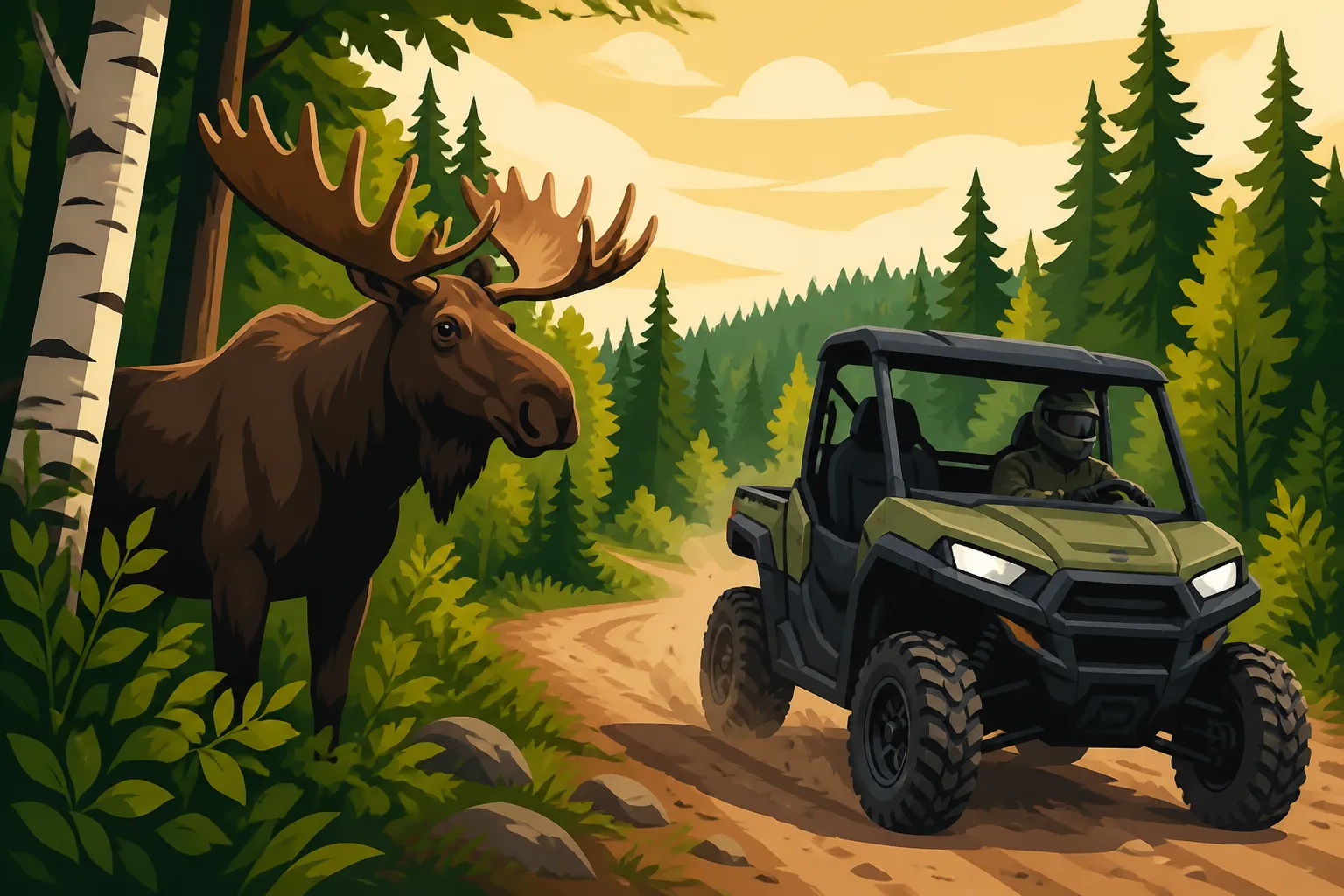
Moose are most associated with northeastern Minnesota, including parts of the Arrowhead region. Seeing one is memorable, but it is not a reason to approach, follow, or surround it with a group of machines. A moose can react defensively if it feels crowded or has a calf nearby. If one is on or near the trail, stop well back and give it a clear way to move away.
Wolves are generally wary of people, and sightings are unusual for many riders. If you spot one, keep your distance and do not try to lure it closer, chase it, or leave food out. The same basic approach applies to foxes and other wild animals: watch from a distance, avoid blocking their route, and continue only when there is ample room to pass without pressuring them.
Wildlife behavior can vary with season, weather, food availability, and whether young animals are present. A quiet animal is not necessarily tame, and a large animal that appears to be moving away may turn back if its path is blocked. Treat every close encounter as a reason to create more space, not as an invitation for a better photo.
How to Ride Responsibly Around Wildlife
Slow down where visibility is limited
A wooded trail can hide an animal until you are close. Blind corners, narrow cut-throughs, tall grass, and brushy trail edges deserve a slower pace because you may not have enough room to stop if something steps out. Keep extra distance between machines in your group, too. If the rider ahead brakes suddenly, the person behind needs time to react.
Use particular caution around dawn and dusk, when visibility is lower and animals may be active near trail edges. Dust, rain, and fading light can make it harder to spot movement. If conditions make it difficult to see far enough ahead to stop safely, slow down further or end the ride rather than relying on a headlight to make an unsafe pace manageable.
Pay attention to trail signs and the terrain around you. A route that feels wide and open in one section may narrow near a wetland or pass through dense woods a few minutes later. Check Minnesota Trail Difficulty Ratings when planning a ride, and match your route and pace to your experience, machine, and conditions. The same care that helps riders manage rough trail features also gives wildlife more time to move away.
Give animals space and keep the group calm
If an animal is ahead, reduce speed and stop at a safe distance. Keep the group together without crowding the animal, and leave a clear route for it to move away. Avoid revving engines, honking, shouting, or surrounding it to take photographs. If the animal does not move, wait quietly or turn back if you can do so safely.
Do not follow an animal down the trail. Even if it appears to be moving away, it may be frightened and may run toward a road, another group, or a more dangerous area. A calm retreat is usually better than pressing forward to get past it. Riders traveling in a group should agree on this approach before setting out so that one person’s decision to stop does not become another person’s attempt to squeeze by.
Never approach young wildlife or position yourself between an adult and its young. This is especially important if you see a fawn, calf, or other young animal near the trail. What looks like an abandoned youngster may simply be resting while its parent stays out of sight. Leave it where it is, keep people and pets away, and continue only when you can do so without disturbing it.
| What you see | Safer response | Avoid |
|---|---|---|
| Deer near the trail | Slow down, watch for others, and give them room to cross | Accelerating toward them or assuming the group is only one animal |
| Bear on or beside the trail | Stop well back and let it move away without pressure | Feeding, approaching, or following it |
| Moose near the route | Keep a wide buffer and wait or turn back | Blocking its path or getting between an adult and its calf |
| Small animal on the trail | Slow down and give it time to leave if safe | Swerving abruptly into another rider’s path |
| Animal that will not move | Wait quietly or retreat when safe | Revving, crowding, or surrounding it |
Plan a Ride That Minimizes Wildlife Disturbance
Use current route information and stay on marked trails
Before leaving, check that the trail is open and confirm where the legal route runs. Trail conditions and access can change, and a route shown in one map or app should not be treated as permission to ride beyond posted or designated trails. Reading a Minnesota OHV Trail Map can help you understand route markings, while Checking Minnesota Trail Status Before You Drive is useful when you want to confirm access before loading up.
A mapping tool such as onX Offroad can help you review routes and orient yourself while planning. Use it alongside official trail information and signs on the ground rather than as a substitute for them. A line on a screen does not override a closure, a posted boundary, or a change in trail conditions. If your route crosses an area that is closed or restricted, turn around and choose a legal alternative.
Staying on the marked trail matters for wildlife as well as for access. Riding off route can disturb habitat, damage vegetation, and widen the area affected by motorized use. Spring thaw can make some trails especially vulnerable to damage, so check Minnesota Trail Closures in Spring Thaw before heading out when conditions are soft. If a trail is closed, respect the closure instead of trying to find a way around it.
Choose timing and terrain with care
Plan enough time to ride at a controlled pace. A schedule that leaves no room to stop, wait, or reroute can push riders into making poor choices when they encounter wildlife. If you are traveling with children or less experienced riders, build in extra time and explain ahead of time that stopping to let animals pass is part of a responsible ride.
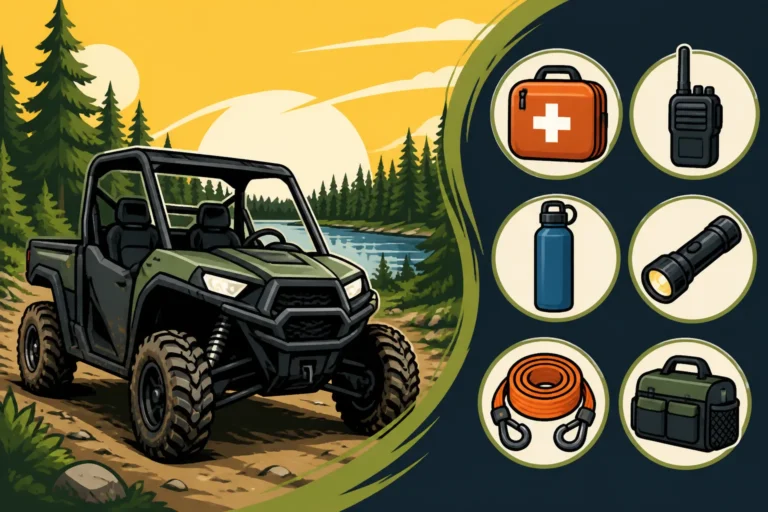
Weather and trail conditions also affect how well you can notice wildlife. Heavy rain, standing water, snow, dust, or deep shadows can reduce visibility. Choose a route appropriate to the group and check local conditions before setting out. Riders heading into remote areas should also consider communication and recovery needs; What to Carry on a Remote Northwoods Ride covers useful preparation for trips farther from services.
If you ride alone, think through what you would do if an animal blocks the route or a machine problem leaves you stopped in an isolated area. Share your planned route and expected return with someone, and avoid pressing deeper into unfamiliar terrain just to stay on schedule. Riding Alone in the Minnesota Backcountry offers additional planning considerations for solo trips.
What to Do During and After a Wildlife Encounter
Handle a close encounter without making it worse
The first priority is to keep control of your machine and avoid startling the animal. Brake smoothly, stay aware of other riders, and stop where you are not blocking a dangerous section of trail. If the animal is close, avoid sudden movements and give it space. Do not try to drive around it at close range if doing so would trap it between your machine and the trail edge.
If an animal appears injured, trapped, or unusually aggressive, do not approach it to investigate. Move away when it is safe and contact the appropriate local wildlife or law-enforcement authority for guidance. If there is an immediate threat to someone’s safety, use emergency services. Keep the location as clear as you can when reporting it, including the trail or nearby landmark, without returning to the animal for a closer look.
For a serious encounter, such as an animal charging or a rider being injured, focus on getting people to safety and contacting emergency help. Do not stop to film or gather around. Riders should know how to communicate within their group before a trip, particularly where cell service may be unreliable.
Leave the area as you found it
Once an animal has moved off, give it time before continuing. Look for young animals or others following nearby, and restart only when the route is clear. Keep food, wrappers, and other litter secured, and do not leave bait, scraps, or scented items behind. Even small amounts of food can encourage wildlife to return to places where people gather.
Keep pets under control and away from wildlife. A dog that runs after an animal can put itself, the animal, and nearby riders at risk. If your ride includes a stop at a trailhead or campsite, pack out everything you brought in and use the designated facilities. Respecting these small habits helps keep both trail areas and wildlife safer for the next group.
Seasonal conditions can bring extra concerns. In warmer months, insects and ticks can affect riders who stop in brush or tall grass, so check yourself and your gear after the ride. Ticks and Bug Season on the Trail offers more practical preparation advice. The goal is not to avoid every wildlife sighting; it is to enjoy one without turning it into a stressful or harmful encounter.
A little patience goes a long way on a Northwoods ride. Slow down where you cannot see far, give animals room to leave, and follow posted routes and closures. Those habits make encounters safer for riders and wildlife alike—and help keep the trails enjoyable for the next visit.
Disclaimer
This article is for general informational purposes only and does not constitute professional advice. Laws, prices and regulations vary by location and change over time. Consult a qualified professional for guidance on your specific situation.