Moose and Bear on Northern Minnesota Trails
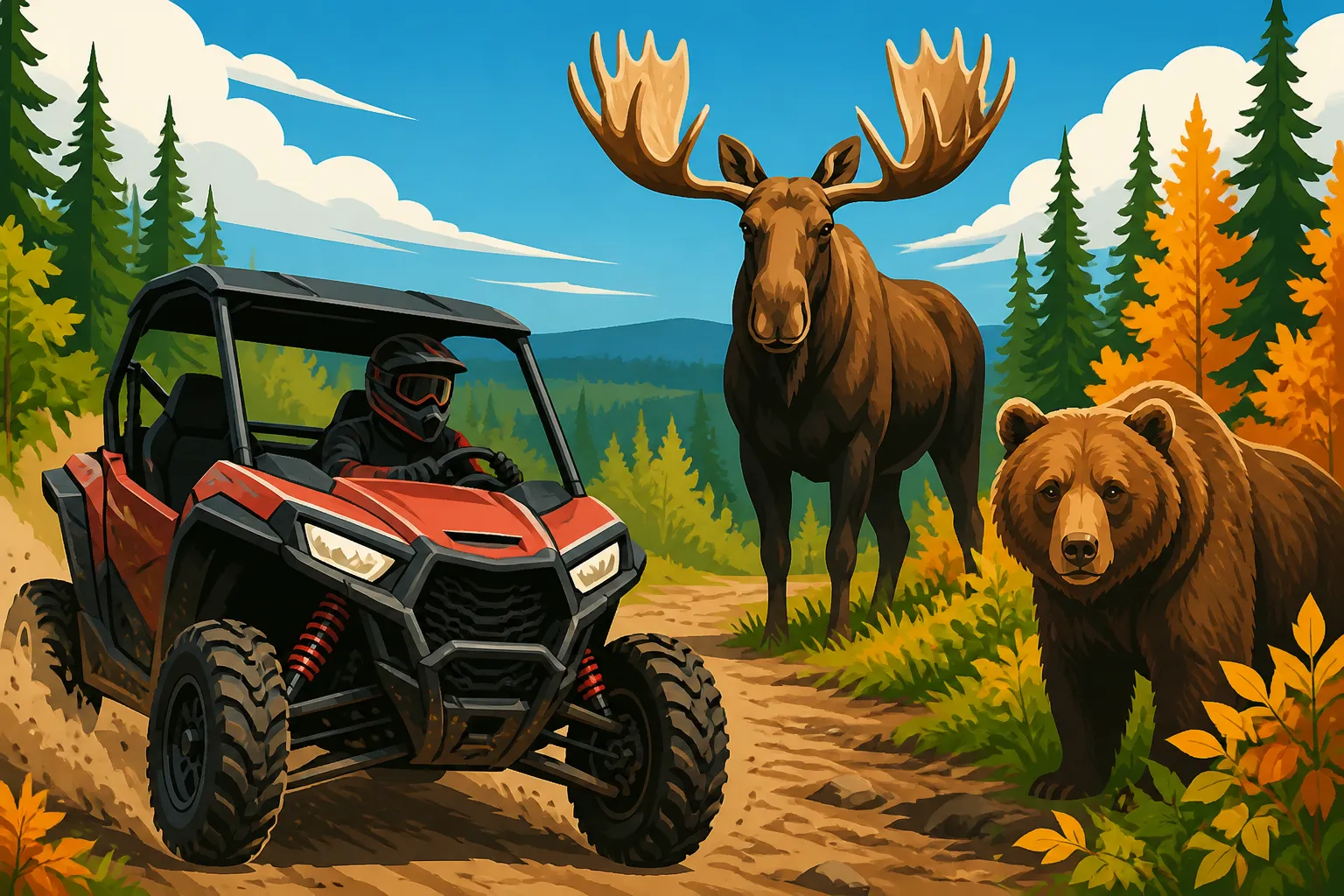
A moose stepping onto a trail or a bear appearing beside a machine can turn a relaxed ride in northern Minnesota into a tense moment fast. The safest response is to give wildlife room, avoid blocking its escape route, and know what to do before you meet an animal. This guide covers practical precautions for riding through bear and moose country.
Where riders may encounter moose and bears
Moose country along the North Shore and farther north
Moose may be seen in northern Minnesota’s forests, wetlands, and lakeside areas, including parts of the Superior National Forest and the North Shore. Riders exploring near Two Harbors, Ely, or farther toward the Canadian border may travel through habitat where a moose could appear beside or across a trail. Seeing one is never guaranteed, though, and a quiet, empty stretch of trail can change quickly.
A moose may look calm while feeding or standing near the trees, but it is a large, powerful wild animal. It can become defensive if surprised, crowded, or approached, and a cow with a calf needs especially wide space. Don’t assume that an animal will move away just because an ATV is approaching. Stop at a safe distance, keep the machine under control, and let the moose decide where it wants to go.
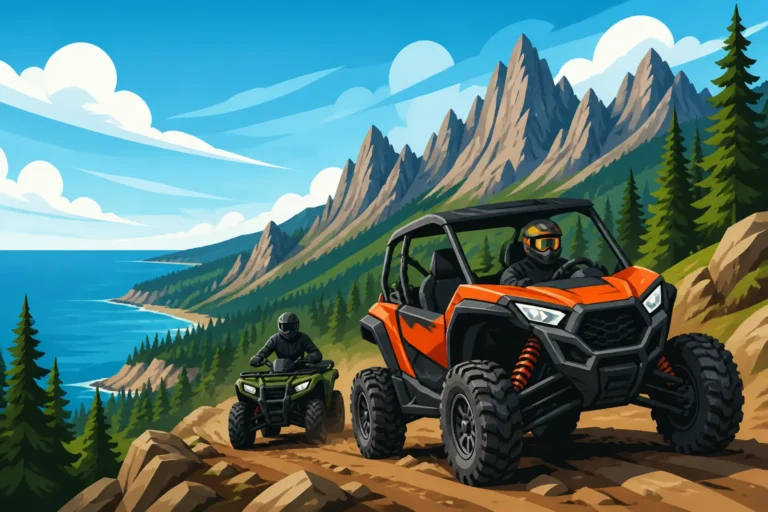
Trails through the Sawtooth Mountains and other wooded North Shore areas can offer a memorable sense of remote riding, but a scenic route isn’t a wildlife viewing route with guaranteed sightings. For general route planning, Riding the Sawtooth Mountains on the North Shore can help you think about the kind of terrain and trip you’re taking. Give yourself time to pause safely rather than pushing to keep a tight schedule.
Black bears across the Northwoods
Black bears live across much of northern Minnesota. A bear may cross the trail, forage along a clearing, or be spotted near a campground or other place where food is present. Most encounters end without incident when people give the animal a clear way to leave and don’t try to approach it. A bear near a trail is not an invitation to stop close for a photo.
Food and garbage can draw bears toward places people gather. Keep snacks, coolers, and rubbish secured at your staging area or campsite, and don’t leave food scraps behind. If you’re riding between communities or camping near a trail network, think through where food will be stored before you arrive. The same habits that keep a campsite tidy also reduce the chance of encouraging a bear to investigate a human-use area.
Keep in mind that wildlife habitat and trail access aren’t the same thing. A map app such as onX Offroad can help you orient yourself and plan a route, but it doesn’t replace posted signs, current trail information, or rules for the land you’re on. Treat Minnesota State Forest Riding as a reminder to plan around the specific forest and route, rather than assuming that every track shown on a map is open to motorized use.
What to do when wildlife is on the trail
If a moose appears ahead
Stop at a distance that gives the moose room. Keep your group together, avoid revving the engine, and don’t try to squeeze around the animal on a narrow trail. A moose may need time to decide where to move; crowding it or blocking its path can make the encounter more dangerous. If it heads into the woods, wait until it is well away and you can continue without following it.
If the moose is close, agitated, or moving toward you, don’t try to pass it. Look for a safe way to increase distance without driving toward the animal. If a substantial tree or another solid barrier is nearby, use it to create separation if you can do so safely. Never pursue a moose to get a better view, and don’t put yourself between an adult and a calf.
Riders sometimes feel pressure to keep moving because there are people behind them. Don’t let that pressure decide what happens next. Keep the group back, communicate calmly, and wait for the trail to clear. If the animal doesn’t move or the situation feels unsafe, turn around if you can do so without approaching it, or wait in a safe place until you can leave.
If you meet a bear
Don’t approach, chase, feed, or surround the bear. Give it an open route away from you, then slowly increase your distance. Avoid sudden movements and don’t run. If you’re with other riders, stay together rather than scattering in different directions. Speak in a calm, clear voice so the bear can recognize you as people, and keep your attention on where the animal is as you move away.
A bear that is feeding, startled, or accompanied by cubs needs extra space. Never move closer to cubs or position yourself between a mother and her young. If the bear doesn’t leave, or if there’s no safe way past it, back away and give the situation time. Don’t use an ATV to drive toward or pressure the animal.
If a bear approaches, stay focused on increasing distance and finding a safe route away. Keep other riders together and avoid cornering the animal. Bear behavior can vary, so don’t treat a close encounter as an opportunity to test how it will react. If there is an immediate threat, follow current wildlife-safety guidance and contact appropriate local authorities when it is safe to do so.
| Situation | Safer response | Avoid |
|---|---|---|
| Moose standing on the trail | Stop well back, stay together, and wait for it to leave | Trying to pass closely or blocking its route |
| Moose with a calf | Give the pair a wide berth and retreat if needed | Approaching the calf or getting between the animals |
| Bear crossing the trail | Pause, leave it room to move away, and increase your distance | Chasing it, feeding it, or stopping close for a photo |
| Bear near food or a campsite | Secure food and rubbish, then leave the area calmly | Leaving scraps or trying to drive the bear away at close range |
| Animal not moving | Wait somewhere safe or turn back if possible | Revving, crowding, or forcing a passage |
Plan a ride that leaves room for the unexpected
Choose routes and timing carefully
Build flexibility into your ride. A route that looks short on a screen can take longer when the surface is rough, a trail is blocked, or you stop for wildlife. Share your plans with someone who isn’t riding with you, keep a paper or offline map available, and agree on a regrouping spot in case your group gets separated. Planning a Minnesota Riding Trip is useful when you’re deciding how much distance to cover and what to bring.
Use onX Offroad or another mapping tool to get oriented, but confirm your route using current, authoritative trail information and signs at the trailhead. A line displayed on a map does not necessarily mean that motorized travel is allowed there. This matters in northern Minnesota, where routes may pass through different land types and conditions can change with the season. Check Checking Minnesota Trail Status Before You Drive before towing a machine a long distance to a trailhead.
Consider your group’s experience and the machines you’re riding. A narrow, rough route can leave little room to turn around or make space for wildlife. Review Minnesota Trail Difficulty Ratings before choosing a route, especially if you have new riders or unfamiliar machines in the group. Be ready to change plans if a trail is muddy, closed, damaged, or occupied by an animal.
Carry practical gear and prepare for poor reception
Northern Minnesota riding can take you away from reliable cell service. Don’t assume you’ll be able to call for help from every trail. Download or carry route information before leaving, bring a charged phone, and consider a communication device suited to areas with limited coverage. Tell a non-riding contact when you expect to return, and update them if your plans change.
Pack basic first aid supplies, drinking water, warm layers, and tools appropriate for your machine and route. A small repair kit can be useful for routine problems, but it won’t replace careful riding or a plan for getting assistance. What to Carry on a Remote Northwoods Ride and First Aid Far From the Trailhead can help you build a practical kit without treating every ride like an expedition.
An offline map in onX Offroad can help with orientation when service drops, but make sure the route information is saved before you lose reception. Carrying a paper map as a backup can also help if your phone battery runs down or the screen is difficult to use. If you become unsure of your location, stop somewhere safe, check your position, and avoid riding deeper into unfamiliar terrain just to see where a track leads.
Trail etiquette that protects riders and wildlife
Keep wildlife viewing brief and distant
A good wildlife encounter is one where the animal can carry on undisturbed. If you spot a moose or bear, keep your group quiet and well back. Don’t surround it with machines, follow it into the woods, or ask another rider to approach from a different direction for a photo. If it moves away, let it go. The chance to watch an animal for a few seconds is not worth causing it stress or creating a dangerous situation for your group.
Don’t stop in a blind corner or narrow section of trail to watch wildlife. If you can safely pull over without blocking the route, do so; otherwise, keep a safe distance and continue only when the trail is clear. Let other riders know about a hazard without creating a crowd around the animal. Wildlife on a Northwoods Trail offers additional context for sharing forest routes with wildlife.
Riding calmly helps you respond to changes ahead. Keep a speed that allows you to stop within the distance you can see, especially near brush, water, or bends in the trail. Don’t assume that engine noise will make every animal move away. Wildlife may be hidden by vegetation, and an animal that is startled at close range may behave unpredictably.
Respect closures and changing trail conditions
A closed or damaged trail is not a shortcut to work around. Seasonal closures and wet conditions help protect the trail and surrounding land, and detouring around a barrier can put riders in unsafe or unauthorized areas. Before leaving, check Minnesota Trail Closures in Spring Thaw and local trail notices; on the day of the ride, follow posted instructions even if a digital map appears to show an open route.
If an animal is on the trail, don’t create a new route through vegetation to get around it. Backtracking or waiting is often inconvenient, but it avoids disturbing habitat and keeps you on authorized routes. A tool such as onX Offroad can help you understand where you are, but signs and official access information should guide your decisions about where you may ride.
When you’re planning a longer Northwoods outing, consider the full trip: trail access, fuel, weather, parking, and the time needed to return. Minnesota Trails Near the Canadian Border is one useful starting point for exploring northern route areas, but always verify the specific trail network and current conditions before you go. A conservative plan makes it easier to slow down, give wildlife space, and still get everyone home safely.
Disclaimer
This article is for general informational purposes only and does not constitute professional advice. Laws, prices and regulations vary by location and change over time. Consult a qualified professional for guidance on your specific situation.