Gilbert Tough-Truck Course Events
A trip to Gilbert can be frustrating if you arrive expecting a scheduled tough-truck show and discover the course is quiet, closed for an event, or being used under different rules. This guide explains what tough-truck events at the Iron Range OHV Area may involve, how to plan around changing schedules, and what riders and spectators should check before heading out.
What to expect at Gilbert tough-truck course events
The Iron Range Off-Highway Vehicle Recreation Area near Gilbert is known for off-road riding terrain and purpose-built challenge areas. Tough-truck events are different from an ordinary trail ride: they tend to focus on vehicles tackling obstacles in a designated course or competition area, with spectators watching from approved viewing locations.
The exact format depends on the organizer and event. A gathering might feature timed runs, obstacle challenges, demonstrations, or other activities, but don’t assume every event includes all of them. Confirm the event description before traveling, especially if you’re bringing a particular vehicle or hoping to watch a specific kind of competition.
Tough-truck events are not the same as everyday trail riding
On a regular ride, you choose an open route and travel at a pace that suits the terrain and your group. At a course event, access may be organized around a program: vehicles may run in turns, spectators may be directed to specific areas, and some riding sections may be closed or restricted while an event is underway. The course may also be much more demanding than the trails a casual rider is used to.
That difference matters even if you are visiting with an ATV or UTV rather than a competition truck. An event can change where you can ride, where you can park, and which parts of the property are accessible. Check whether the event is open to general riders, whether spectators are welcome, and whether the facility is operating under special event procedures. For a broader look at the riding area itself, see [Iron Range OHV Area's 36 Miles] and [Which Iron Range Trails Allow ATVs].
Course features and vehicle suitability
A tough-truck course is built around challenges, not a comfortable cruise. Depending on the layout and event, obstacles may include uneven ground, steep approaches, large rocks, mud, ruts, or other technical sections. Those features can be hard on tires, suspension, steering components, and underbody protection. They can also make a route unsuitable for machines that are not designed or prepared for that type of riding.
Don’t judge a course by the fact that a vehicle can physically fit on it. A narrow ATV, a wide side-by-side, and a competition truck have different handling characteristics and clearance needs. Ask the organizer what kinds of vehicles are participating, which machines are allowed on the course, and whether spectators can enter the area on their own machines. You can also read [Minnesota Trail Difficulty Ratings] before choosing a ride elsewhere in the recreation area. A route that looks manageable from the parking area may feel very different once you’re on a steep or rocky section.
How to plan a visit around an event
The most useful planning step is confirming what is happening on the day you intend to go. Event dates, access arrangements, fees, participant requirements, and spectator policies can vary. A past event listing is not a reliable substitute for the organizer’s current announcement, and a general description of the OHV area does not necessarily explain what will be open during a special event.
If you are driving from outside the Iron Range, build in time to confirm the venue, parking instructions, and any restrictions before leaving. Gilbert is close to other Iron Range communities, but a wrong assumption about the event site or entry point can still add an avoidable detour.
Check the event details before setting out
Look for the event’s official announcement and verify the practical details that affect your visit. Pay attention to whether you need to register in advance, whether there are separate arrangements for competitors and spectators, and what time access begins. Ask whether the event is family-friendly, whether children must remain with an adult, and whether dogs or outside food are allowed if those details matter to your group.
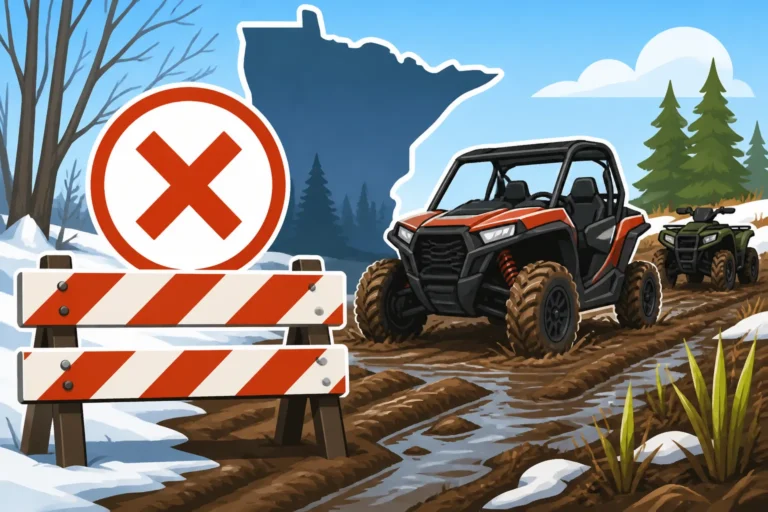
Also check what the event does to general riding access. Some areas may be reserved for competitors or temporarily closed, while other trails may remain open. If you’re hoping to combine watching with a trail ride, confirm that the plan is allowed rather than assuming the course and trail system will both be available. Before loading up, consult [Checking Minnesota Trail Status Before You Drive] and [Planning a Minnesota Riding Trip].
| What to confirm | Why it matters |
|---|---|
| Event date and location | Listings and access points can differ between events |
| Participant and spectator rules | Competitors and visitors may have different entry procedures |
| Vehicle eligibility | A machine suitable for trails may not be eligible for the course |
| Course and trail closures | Special events can affect access to parts of the property |
| Parking and staging | Event traffic may use different areas from regular trail visitors |
| Fees and registration | Admission, participation, and riding arrangements may be separate |
| Weather and cancellation updates | Rain or changing conditions can affect the course and schedule |
Prepare for the venue, not just the drive
Pack for a day outside rather than assuming the event will feel like a quick stop. Bring water, weather-appropriate clothing, sturdy footwear, and any personal items your group needs to spend time outdoors. If you plan to ride, bring the required safety gear and check your machine before leaving home: tire condition, brakes, lights, fuel, and basic recovery or repair supplies deserve attention.
A spectator who is not riding still benefits from practical footwear and layers. Course edges can be muddy or uneven, and standing outside for a long period can feel cold or tiring even when the day starts pleasantly. Keep children close and follow posted boundaries. Barriers and marked viewing zones are there to separate spectators from moving vehicles and course hazards.
For riders using the surrounding trail network, a map is helpful because cell coverage can be unreliable in some outdoor areas. onX Offroad can help you review mapped routes and understand how trails connect before you arrive, but do not treat an app as permission to enter a closed area. Follow on-site signs, closures, and event staff directions. If you use onX Offroad, download or prepare the information you need before leaving dependable service.
Participating, spectating, and riding responsibly
A good event day depends on understanding which role you have. Competitors need to follow the event organizer’s registration, inspection, and course instructions. Spectators need to stay in approved viewing areas. General trail riders need to respect closures and avoid crossing into event operations, even if a route appears open or a shortcut seems harmless.
Course events can be exciting because the action is close and the terrain is demanding. That closeness makes it especially important not to improvise. A driver may have limited visibility, a vehicle may slide or bounce unexpectedly, and staff may need clear access to respond to an incident.
If you are entering a course
Before registering, make sure your vehicle fits the event’s rules and your own experience. Ask about vehicle classes, required safety equipment, inspection procedures, driver qualifications, passenger policies, and whether there are restrictions on tires or modifications. Those requirements are event-specific, so don’t rely on rules from another competition or assume your regular trail setup is sufficient.
Inspect your machine before loading it. Look for loose components, tire damage, fluid leaks, worn steering or suspension parts, and anything that could become a problem under repeated stress. Pack equipment requested by the organizer, and arrive early enough to complete check-in without rushing. During a run, follow the course marshal’s signals and do not attempt an obstacle if you are unsure how to approach it. Walking away from a course section is a better choice than damaging a machine or putting someone at risk.
If you are riding an ATV or UTV elsewhere at the facility, remember that event access and trail access may be separate. Check the rules for the area you intend to use, and do not ride into a course or staging zone unless event staff specifically allow it. For a sense of how a designated challenge area differs from ordinary riding, see [Riding the Iron Range Rock Crawl] and [Rock Crawls and Mud Drags at the Iron Range].
If you are watching or riding nearby
Choose a viewing location designated by event staff. Avoid standing directly beside an obstacle, behind a vehicle that is preparing to move, or in any place where a driver might not see you. Never cross the course to get a better view or retrieve an item without permission. If an incident happens, give responders space and follow staff instructions rather than gathering around the vehicle.
If your group plans to ride during the same visit, make a separate plan for trail access. Confirm where to stage, whether the trails you want are open, and whether you need any permits or passes. Keep your route within signed, authorized areas. onX Offroad can be a useful planning aid for comparing mapped routes, while posted signs and current instructions at the site determine where you may actually ride. For staging and day-use logistics, review [Minnesota Trailhead Parking and Staging] and [Iron Range OHV Area Day Use Fees].
A family visit may work best if one person checks in with event staff while another gets the group settled in the designated area. Agree on a meeting place in case anyone gets separated, and make sure children know not to approach vehicles or cross marked boundaries. If the crowd is large or the course is noisy, keep your group together rather than relying on shouted instructions.
Common planning mistakes to avoid
Many disappointing visits come down to a small assumption: that an event happens on the same weekend every year, that a trail remains open during competition, or that every machine can enter the course. These details can change from one event to another. A few minutes spent checking the organizer’s announcement can save a long drive, a wasted admission, or an awkward arrival with a vehicle that is not eligible.
Assuming the course is always open
A purpose-built course is not necessarily available for casual riding whenever the surrounding recreation area is open. It may be reserved, closed for maintenance, or operating under event-specific rules. Do not use a previous visit or an old social media post as proof that access is available now. Confirm whether the course is open to the public on your intended day, and whether you need to be part of an organized event to use it.
Likewise, don’t assume that a spectator ticket, if offered, includes trail riding, or that a riding pass includes admission to a competition. These may be separate arrangements. Check what each fee or registration covers directly with the event organizer or facility.
Treating a map as a substitute for signs and staff
Digital maps are useful for planning, especially when you want to understand the layout before arriving. onX Offroad can help you get oriented and review mapped routes, but maps may not show temporary event boundaries, closures, or changes made for a particular day. At the venue, follow posted notices and staff directions even when they differ from what you expected from a map.
Don’t leave a signed trail to bypass a closed section, and don’t assume a visible track is a public route. If you’re uncertain, stop in a safe location and ask event staff or site personnel. Respecting closures protects riders, competitors, spectators, and the land—and it helps keep access available for future visits.
A well-planned trip to Gilbert starts with a clear distinction between the event and the rest of the riding area. Confirm the schedule and access details, prepare for the conditions, and follow the boundaries set for competitors and spectators. That way, you can enjoy the course action or explore the surrounding trails without relying on guesswork.
Disclaimer
This article is for general informational purposes only and does not constitute professional advice. Laws, prices and regulations vary by location and change over time. Consult a qualified professional for guidance on your specific situation.