Minnesota Alcohol Limit on an ATV
You've had a fantastic day out on the Minnesota trails, perhaps exploring the Nemadji State Forest, or maybe you've spent hours ice fishing on Lake of the Woods, and now you're heading back to the cabin. As the sun dips, the idea of cracking open a cold beverage before the last leg of your journey might cross your mind. But before you do, it's absolutely crucial to understand Minnesota's strict rules regarding alcohol and operating an ATV or UTV. This guide is going to walk you through exactly what those limits are, what happens if you're caught, and how to make sure your memorable day doesn't turn into a regrettable incident that impacts your driving privileges and your wallet.
Understanding Minnesota's DWI Laws for ATVs
It's a common misconception that because an ATV or UTV isn't a "car," the rules for alcohol consumption are somehow different or more lenient. I wish that were true for the sake of simplicity, but unfortunately, it's not the reality here in Minnesota. The state takes impaired driving very seriously, regardless of the vehicle type.
The .08% Rule: It's Not Just for Cars
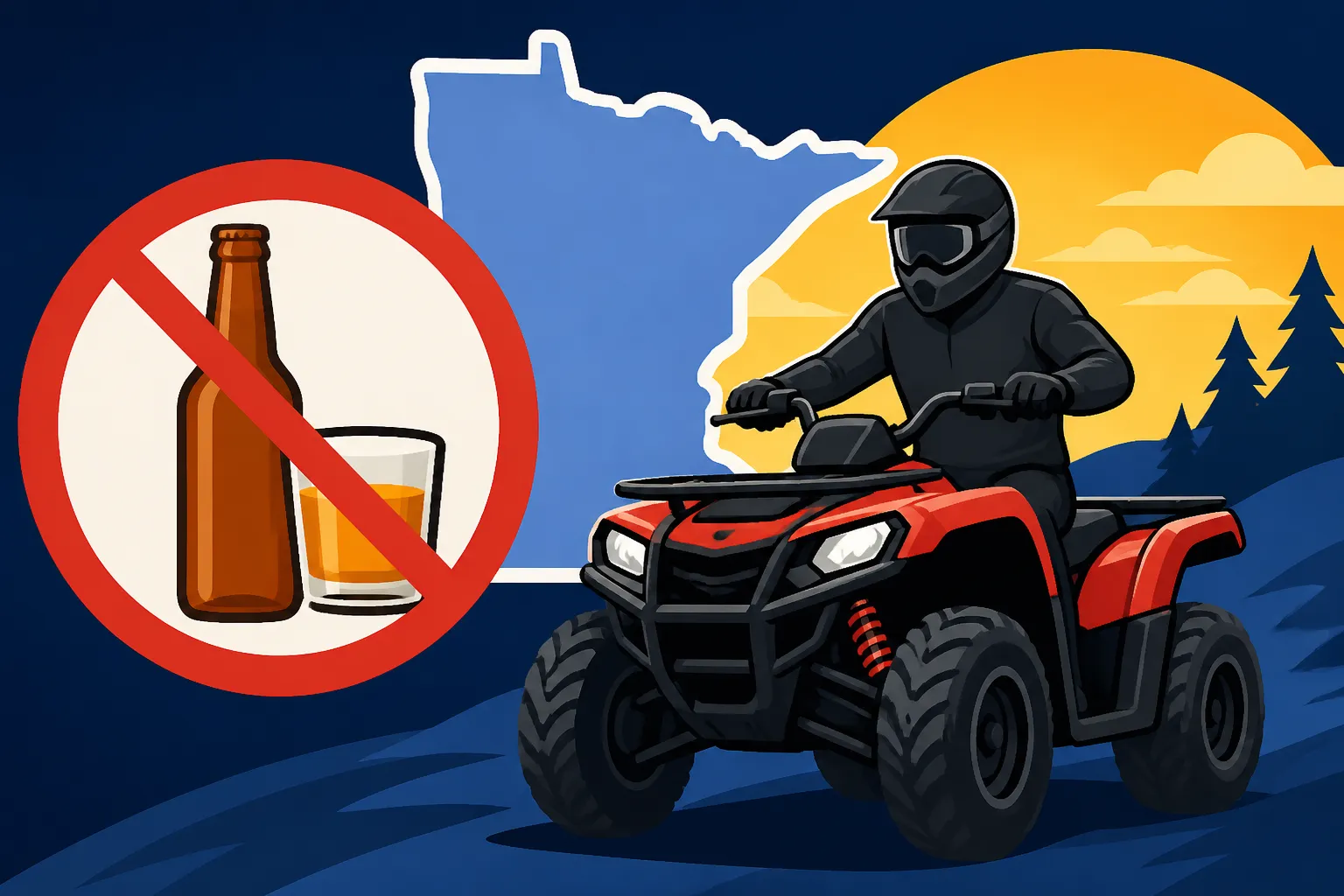
When we talk about driving while intoxicated (DWI), most people immediately think of cars, trucks, and paved roads. However, Minnesota law extends these rules to virtually any motorized vehicle operated on public lands or waters. This means that your ATV or UTV, whether it's a trusty Polaris Ranger for utility work or a high-performance Can-Am Maverick for sport, falls under the same .08% Blood Alcohol Content (BAC) limit that applies to someone driving their sedan on I-35. Reaching this limit is often much easier than people realize, especially if you haven't eaten much or are tired from a long day outdoors.
Think about it: even a couple of beers or a glass of wine can put some individuals over the limit, depending on their weight, metabolism, and how quickly they consumed the alcohol. The state isn't just looking for someone visibly falling off their machine; they're looking for a specific chemical threshold. This can be a rude awakening for riders who assume they're "fine" after a few drinks, only to find themselves facing serious charges. It's a key frustration point for many, as the relaxed atmosphere of the outdoors can sometimes lead to a relaxed attitude toward these very serious regulations.
Public vs. Private Land Nuances
Now, here's where another common misunderstanding crops up: the idea that "my land, my rules" applies to ATV operation. While there's a kernel of truth to the concept that private property has different regulations, it's far more complex when it comes to DWI laws for off-highway vehicles. In Minnesota, the vast majority of places you'd ride an ATV or UTV are considered "public" for the purposes of DWI enforcement.
This includes not just dedicated Grant-in-Aid trails or state forest roads, but also ditches alongside public roads, frozen lakes and rivers, and even trails that cross private land but are open to public use through an easement. If you're riding from your cabin across a snow-covered lake to a fish house, that lake ice is considered public domain for ATV purposes. [Minnesota Rules on Frozen Lakes] are clear on this. Even if you're just using your side-by-side to plow your own driveway, if that driveway is accessible from a public road, a conservation officer or sheriff's deputy could potentially intervene if they observe impaired operation from the public right-of-way. The safest bet is to assume that if you're not within the absolute confines of your private, fenced-off property with no public access points, you're subject to public land DWI laws.
Impairment, Even Below .08%
Here’s a crucial point that often catches people off guard: you can still be cited for impaired driving even if your BAC is below the .08% legal limit. Minnesota law allows for charges if you are "under the influence of alcohol" to the extent that your ability to operate the ATV or UTV is "impaired." This means that if a conservation officer pulls you over and observes signs of impairment – maybe slow reflexes, poor coordination during field sobriety tests, slurred speech, or difficulty following instructions – they can make a judgment call that you're too impaired to safely operate your machine, even if your breathalyzer test registers .05% or .06%.
This "physical control" aspect of the law is designed to protect everyone, recognizing that individual tolerance to alcohol varies wildly. What might be a negligible amount for one person could significantly affect another's ability to navigate challenging terrain, react to unexpected obstacles, or simply stay balanced on their machine. It puts the onus on the rider to ensure they are absolutely capable, not just legally under the BAC threshold. So, don't rely solely on a mental calculation of drinks versus time; truly assess your own state before you put the key in the ignition.
Consequences of an ATV DWI in Minnesota
Getting a DWI on an ATV or UTV in Minnesota is not just a slap on the wrist. The penalties are severe, designed to deter impaired operation, and they can have far-reaching impacts on your life, extending well beyond just your off-road adventures. Many riders are shocked to learn that an ATV DWI can affect their regular driver's license, which is a significant frustration for those who rely on their vehicle for work or daily life.
Immediate Actions and What to Expect
If a law enforcement officer, whether it's a sheriff's deputy, state trooper, or a Minnesota conservation officer, suspects you're operating an ATV or UTV while impaired, the process will typically mirror that of a car DWI. They will likely initiate a stop, which on an ATV might involve them pulling up alongside you on a trail or road ditch. You'll be asked to provide identification and your ATV registration. From there, if they observe signs of impairment, they may ask you to perform field sobriety tests (FSTs). These tests, though challenging to perform perfectly even when sober, are designed to assess coordination, balance, and the ability to follow instructions.
Following the FSTs, you'll likely be asked to submit to a Preliminary Breath Test (PBT). Refusing this test on the scene can sometimes lead to further suspicion. If the officer determines there's probable cause for arrest, you'll be taken into custody. At the station, you'll be read Minnesota's implied consent law, which states that by operating a motor vehicle (including an ATV) in the state, you consent to chemical testing (breath, blood, or urine) if arrested for DWI. Refusing this test at the station carries its own, often harsher, set of penalties compared to a failed test, including longer license suspensions. [Minnesota Alcohol Limit on an ATV] is rigorously enforced, and the immediate process can be intimidating.
The Legal Ramifications: Fines, Jail Time, and License Suspension
The legal consequences for an ATV DWI in Minnesota escalate significantly based on prior offenses and the presence of aggravating factors (like a high BAC, refusal to test, or having a child passenger). For a first offense with no aggravating factors, you could be facing substantial fines, potential jail time (even if suspended), and a revocation of your motor vehicle driver's license (yes, your car license!) for at least 90 days. The fines alone can run into the hundreds or even thousands of dollars, not including court costs and surcharges.
Subsequent offenses within a certain timeframe bring increasingly severe penalties. A second offense could mean mandatory jail time, steeper fines, and a longer license revocation, potentially for a year or more. A third offense often leads to felony charges, significant prison time, and loss of driving privileges for several years. Beyond the direct legal penalties, you'll also likely be required to attend alcohol education programs and might have to install an ignition interlock device on your vehicles for a period after your license is reinstated. It's a complex and costly legal journey that far outweighs the momentary enjoyment of an alcoholic beverage while riding. [Minnesota Fines for Illegal Road Riding] related to alcohol are among the highest.
Long-Term Impacts: Insurance, Record, and Reputation
The ramifications of an ATV DWI extend far beyond the immediate fines and license suspension. One of the most significant long-term impacts will be on your vehicle insurance rates. Once your insurance company finds out about a DWI on your record, whether it was in a car or on an ATV, your premiums for all your vehicles – car, truck, ATV, boat – are likely to skyrocket. Some insurers may even choose not to renew your policy, forcing you to seek high-risk insurance, which is considerably more expensive. This financial hit can last for several years.
Beyond the financial aspect, a DWI conviction becomes part of your public criminal record. This can have unforeseen consequences, such as making it difficult to secure certain types of employment, especially jobs that require driving or a clean background check. It can also impact your ability to rent housing, obtain professional licenses, or even travel internationally. Your reputation within your community, among friends, and certainly with local law enforcement can also suffer a lasting blow. It's a serious blemish that stays with you.
| Offense Level | Minimum Fine (Approx.) | License Revocation | Potential Jail Time | Other Penalties |
|---|---|---|---|---|
| 1st Offense | $300 | 90 days | 0-90 days | Alcohol assessment, education, possible ignition interlock, increased insurance. |
| 2nd Offense | $600 | 180 days – 1 year | 30-365 days | Mandatory jail, longer interlock, higher fines, extended education, vehicle forfeiture possible. |
| 3rd Offense | $900+ (Felony) | 1-6 years | 90 days – 7 years | Mandatory prison, felony record, vehicle forfeiture, severe license loss, intensive treatment. |
Note: These are general approximations. Actual penalties vary based on specific circumstances, aggravating factors (e.g., high BAC, child in vehicle, test refusal), and judicial discretion. Consult legal counsel for specific advice.
Practical Tips and Common Misconceptions
Given the severe consequences, taking proactive steps to avoid an ATV DWI is not just smart, it's essential. It requires a shift in mindset for some, but it's crucial for your safety, your legal record, and the reputation of the entire off-road riding community.
The "Zero Tolerance" Approach: Why It's the Safest Bet
My strongest recommendation, and one I preach regularly, is to adopt a "zero tolerance" approach to alcohol when you're planning to operate an ATV or UTV. If you're going to drink, don't ride. If you're going to ride, don't drink. It's that simple. There's no magical formula for calculating how many drinks put you at .08% BAC, and factors like fatigue, medication, or even the type of food you've eaten can drastically alter how alcohol affects you. What might have been fine last week could put you over the limit today.
Even a single beer can begin to impair judgment and reaction time, critical skills when navigating uneven trails or crossing busy intersections. You might feel perfectly fine, but your body's subtle responses are already changing. When you're out there, whether it's a tight technical trail or a wide-open gravel road, you need every bit of your focus and skill. Removing alcohol from the equation entirely means you never have to worry about the limit, the consequences, or compromising your safety or the safety of those around you. It allows you to fully enjoy your machine and the incredible Minnesota outdoors without that cloud of potential legal trouble hanging over your head.
Designated Riders and Planning Ahead
If your plans for the day or evening include both riding and consuming alcohol, the solution is always to plan ahead. This could mean having a designated rider who commits to staying sober, much like you would for a night out in your car. This person can then be responsible for operating the ATV or UTV for the group, ensuring everyone gets back safely and legally. Another excellent strategy is to separate your activities entirely. If you're going to a gathering where alcohol will be served, leave the ATV at the cabin or secure it at the trailhead and arrange for alternative transportation.
Sometimes, the best plan is simply to park the machine for the night once the drinking starts. Many of us have cabins or campsites where the machines are parked for the evening. If you're going to be at a friend's place or a local establishment, plan to walk, arrange for a sober ride, or even use a taxi or ride-sharing service if available in rural areas. While aftermarket accessories from companies like SuperATV can enhance your machine's utility and comfort, nothing replaces sound judgment, especially concerning alcohol. Responsible planning is key to enjoying both aspects of your outdoor lifestyle without putting yourself or others at risk. [Minnesota Penalties for Reckless Riding] also apply if your impairment leads to dangerous operation, regardless of BAC.
Debunking Myths: "It's Just a Trail Machine" and Other Fallacies
There are several persistent myths about ATV and UTV operation and alcohol that need to be completely debunked. The idea that "it's just a trail machine" and therefore immune to serious DWI laws is dangerously false. As we've discussed, Minnesota law treats ATVs and UTVs like any other motor vehicle when it comes to impaired operation on public land. Whether you're on a designated trail, a gravel road, a field approach, or a frozen lake, the DWI laws apply.
Another myth is that "conservation officers won't care" if you're out in the middle of nowhere. While you might encounter fewer officers in extremely remote areas, they are specifically trained and tasked with enforcing these laws. They patrol state forests, game lands, and even frozen bodies of water. [Conservation Officer Enforcement in Minnesota] is a very real presence. Relying on the hope that you won't be caught is a gamble with incredibly high stakes. Furthermore, the notion that you can "handle your liquor" is irrelevant in the eyes of the law; it's about your BAC, not your perceived ability to function. Even if you're a seasoned rider with a heavily accessorized machine from SuperATV, an impaired mind will reduce your reaction time and increase your risk of an accident. Being prepared for your ride should include having the right gear, having your machine well-maintained, and being absolutely clear-headed.
This article is for general informational purposes only and does not constitute professional advice. Laws, prices and regulations vary by location and change over time. Consult a qualified professional for guidance on your specific situation.