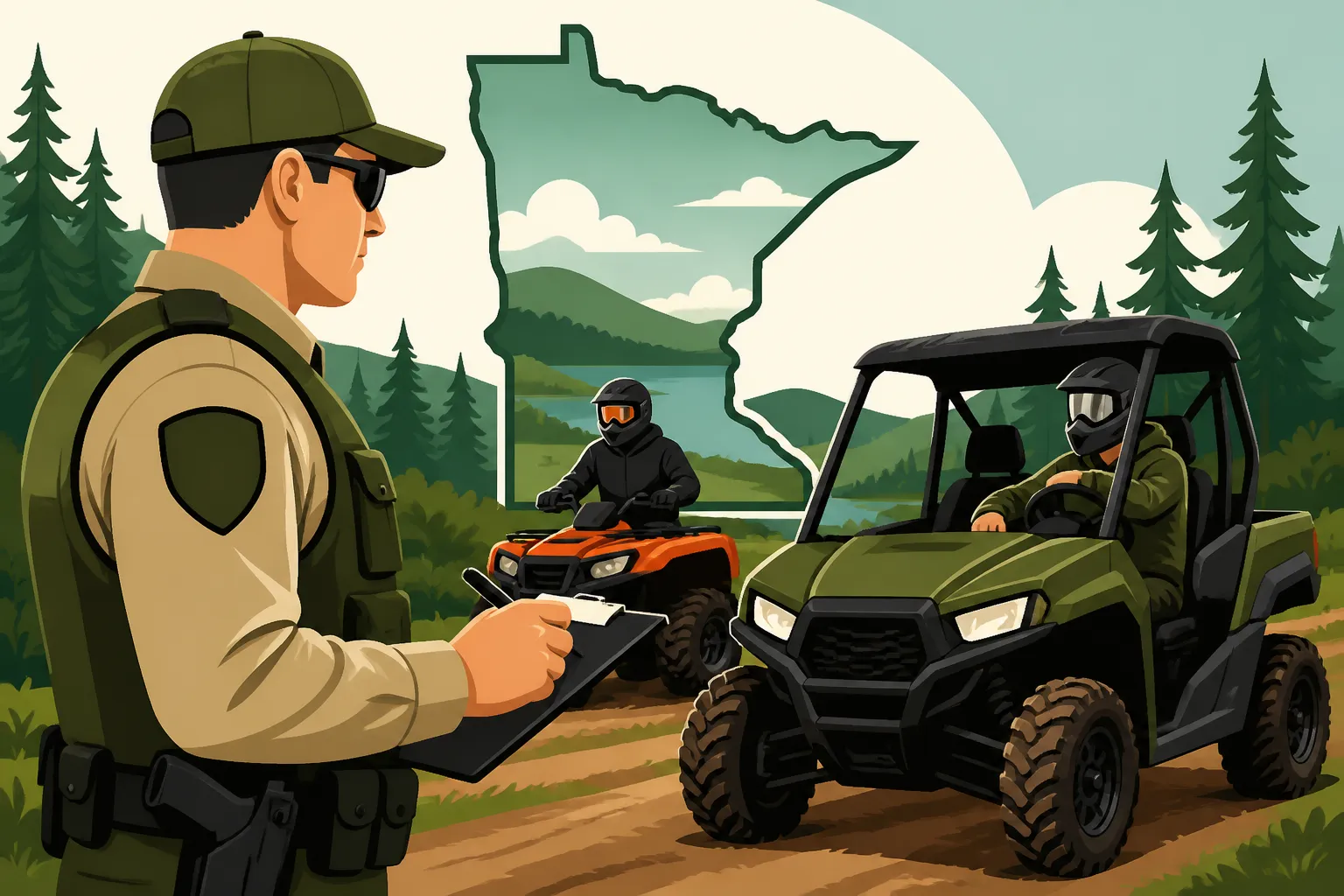
Conservation Officer Enforcement in Minnesota
It can be incredibly disheartening to plan a fantastic ATV or UTV outing in Minnesota, only to have it cut short by a run-in with a conservation officer because of an overlooked rule or a misunderstanding. Many riders feel frustrated by the sheer volume of regulations, worried about getting stopped, or unsure exactly what conservation officers are even looking for. This guide will thoroughly explain the role of Minnesota's conservation officers in ATV and UTV enforcement, detailing what you need to know to ensure your rides are legal, safe, and free from unexpected interruptions.
Understanding the Role of Minnesota Conservation Officers in ATV Enforcement
Minnesota's natural beauty, from its vast forests to its myriad lakes and intricate trail systems, is a treasure for all outdoor enthusiasts, including ATV and UTV riders. Ensuring these natural resources are protected, and that everyone enjoys them safely and responsibly, falls largely to the dedicated men and women of the Minnesota Department of Natural Resources (DNR) — our conservation officers. They aren't just there to catch people doing wrong; they are key figures in educating riders, preserving wildlife habitats, and making sure our trails remain accessible and enjoyable for years to come.
What is a Conservation Officer's Jurisdiction?
When you're out riding your ATV or UTV in Minnesota, it's important to understand that conservation officers have a broad jurisdiction, especially concerning natural resources and recreational vehicles. Unlike local sheriff's deputies or state patrol officers who primarily focus on roads and highways, COs are specifically empowered to enforce all laws pertaining to game and fish, forestry, parks, waters, and indeed, off-highway vehicles (OHVs). This means they can stop you on a designated trail, a forest road, a frozen lake, or even patrolling a roadside ditch. Their authority covers the vast majority of places you'd be riding your machine in Minnesota, extending beyond traditional roads into wilder areas and public lands. They are essentially specialized law enforcement officers with a deep understanding of environmental regulations and outdoor recreation, making them the primary point of contact for anything related to your ATV or UTV on public lands and waters.
This expansive jurisdiction ensures consistent enforcement across different types of terrain and ownership. For instance, if you're riding a state forest trail managed by the DNR, a conservation officer is the primary authority. The same applies if you're out ice fishing on a frozen lake with your side-by-side or traveling legally in a road right-of-way. They are often the most visible representation of law enforcement in these remote and recreational areas, working to maintain order and protect the environment. Their training focuses heavily on identifying violations specific to natural resource use, making them highly effective at spotting issues like illegal trail creation, habitat damage, or improper machine operation in sensitive areas.
Common Violations They Look For
Conservation officers are highly trained and observant, and they know precisely what to look for when encountering ATV and UTV riders. It's not just about speeding or reckless driving, although those are certainly on their radar. Their focus extends to a range of violations that impact safety, the environment, and the proper use of public funds and resources. One of the most common issues they check for is proper machine registration and valid trail passes. For Minnesota residents, this means having your current [Registering an ATV in Minnesota] decal displayed correctly and ensuring your registration hasn't expired. For out-of-state visitors, they'll verify you have a non-resident trail pass.
Beyond paperwork, COs diligently enforce safety regulations, particularly those involving minors. They will check to ensure that youth riders have completed [Minnesota's ATV Safety Training Requirement] if required by their birthdate, and that riders under 18 are wearing appropriate helmets, as per [Minnesota Helmet Rules for Riders Under 18]. They'll also observe riding behavior, looking for signs of impairment, careless operation, or riding off-trail. Environmental infractions are also a major concern; riding in closed areas, damaging sensitive habitats, or improper waste disposal can lead to serious consequences. Imagine pulling into a popular trailhead parking lot and seeing a CO systematically checking machines – they'll be looking at everything from properly mounted registration decals to spark arresters on exhaust systems and ensuring that your machine's sound levels are within legal limits.
The Power to Stop and Inspect
Just like any law enforcement officer, a Minnesota conservation officer has the authority to stop an ATV or UTV if they observe a violation or have reasonable suspicion that a law has been broken. This isn't just a suggestion; it's a lawful command that riders must obey. They might signal you to stop using flashing lights, hand gestures, or even an audible signal from their own vehicle or machine. Once stopped, they also have the power to inspect your machine, equipment, and required documents. This inspection isn't arbitrary; it's aimed at verifying compliance with all relevant laws and regulations.
For example, a CO might ask to see your registration card, proof of safety training, and photo identification. They may also visually inspect your machine for things like proper lighting, a working muffler, or the presence of a spark arrester – especially if you're on public lands where fire danger is a concern. If you have accessories, such as a full cab enclosure from SuperATV or an aftermarket exhaust, they might check those for compliance with local noise ordinances or visibility standards. Refusing to stop or cooperate with a lawful inspection can lead to additional charges, fines, and even the potential impoundment of your machine. It's always best to be courteous, provide the requested information, and avoid escalating the situation.
Common Interactions with Conservation Officers
Encountering a conservation officer on the trail or ditch can be a little nerve-wracking, especially if you're unsure of the rules or what to expect. However, understanding the typical flow of such an interaction can help immensely in making it a smooth and straightforward process. Remember, these officers are primarily focused on safety and resource protection, and most interactions are designed to be educational and preventative rather than punitive.
What to Expect During a Stop
When a Minnesota conservation officer signals you to stop, the first and most crucial step is to comply immediately and safely. This means pulling your ATV or UTV over to the side of the trail or ditch, turning off the engine, and keeping your hands visible. Avoid any sudden movements that might be misinterpreted. The officer will typically approach your machine and identify themselves, often stating their name and agency. They might explain why they stopped you – perhaps they observed a registration violation, noticed you riding in an unapproved area, or are simply conducting a routine safety check as part of a [Minnesota Conservation Officer Checkpoints] initiative.
During the interaction, the officer will likely ask for your driver's license or state ID, your ATV or UTV registration card, and proof of any required safety training. They may also inquire about your destination, where you started, or other aspects of your ride. It's common for them to ask about your machine's condition, particularly regarding safety equipment like headlights, taillights, and brakes. Be prepared for them to check for things like spark arresters, a vital component for preventing wildfires. Answer their questions honestly and respectfully. If you're unsure about something, it's better to say so than to guess or give misleading information.
Documents and Gear You Need to Present
To ensure a quick and hassle-free stop, always have your essential documents readily accessible. This usually means a valid form of identification (like your driver's license), your ATV or UTV registration certificate, and proof of any required OHV safety training. For those operating a side-by-side or ATV on public lands, having a current [Minnesota Trail Pass Rules for a Rented Machine] or your own if applicable, is also critical. These should ideally be carried on your person or in a secure, waterproof compartment on your machine, not buried under a pile of gear. Consider laminating copies of your registration or training certificates to protect them from the elements.
Beyond documents, conservation officers will also be looking for proper safety gear and machine equipment. This includes helmets for riders under 18, and eye protection for all riders in most situations. Your machine itself needs to meet certain standards: functioning headlights and taillights, an approved muffler with a spark arrester, and adequate brakes. If you've modified your machine with aftermarket parts, such as a robust skid plate or a new windshield from SuperATV, ensure they don't impede visibility or create new safety hazards that would draw an officer's attention. Think of it this way: everything you present, from your ID to your machine's equipment, tells a story about your commitment to safe and legal riding.
Remaining Calm and Cooperative
Perhaps the most important aspect of any interaction with a conservation officer is to remain calm and cooperative. It’s easy to feel defensive or anxious, but a calm demeanor can go a long way in ensuring a positive outcome. If you're stopped, avoid arguing, raising your voice, or making sudden movements. Follow all instructions given by the officer promptly and without hesitation. Present your documents clearly and answer questions directly. If you feel there has been a misunderstanding, explain your perspective politely and clearly, but do so after you have complied with their initial requests.
Remember, conservation officers are often working in remote areas and rely on professional conduct from riders. A respectful and cooperative attitude not only makes their job easier but also demonstrates that you are a responsible member of the riding community. Even if you believe you have done nothing wrong, being cooperative during the stop is the best strategy. If you receive a citation, you will have the opportunity to address it through the legal process, but a roadside stop is not the place for a heated debate. Ultimately, a positive interaction helps foster better relationships between riders and law enforcement, which benefits everyone who enjoys Minnesota's outdoor spaces.
Specific Rules and Regulations Conservation Officers Enforce
Minnesota has a detailed set of rules governing ATV and UTV use, designed to protect riders, other outdoor enthusiasts, and the environment. Conservation officers are tasked with enforcing these regulations across the state. Knowing these specific rules is your best defense against unexpected fines or penalties, allowing you to ride with confidence and peace of mind.
Registration, Decals, and Trail Passes
One of the most fundamental requirements for riding an ATV or UTV on public land in Minnesota is proper registration. If you're a Minnesota resident, your machine needs to be registered with the DNR, and the current registration decal must be prominently displayed on your machine. Conservation officers frequently conduct checks specifically for these decals. An expired registration or an improperly affixed decal can quickly lead to a citation. You'd be surprised how many riders forget their [Minnesota Registration Renewal Every Three Years] and get caught on a routine stop.
In addition to registration, a Minnesota OHV trail pass is required for many public trail systems. This applies to both resident and non-resident riders, although there are some nuances. For instance, if your machine is registered in Minnesota, the trail pass fee is included in your registration. However, non-residents must purchase a specific [Minnesota's Non-Resident ATV Trail Pass] to ride Minnesota's grant-in-aid trails. Officers will check for this pass, often looking for a sticker or asking to see proof of purchase. Don't be caught without it; these fees directly support the maintenance and development of the trails we all enjoy, and officers know exactly where that money goes.
Safety Training and Age Requirements
Minnesota is serious about youth safety on ATVs and UTVs. Conservation officers strictly enforce the rules around safety training and age restrictions. For riders born after July 1, 1987, an ATV safety training certificate is required to operate an ATV or UTV on public land or frozen public waters. This isn't just a suggestion; it's a legal mandate that officers will check for. Imagine a family riding together; a CO might pull over the group and ask all riders for their certification. A parent riding with their child needs to ensure the child has completed the necessary training and meets the age requirements for the specific machine they are operating.
Beyond the safety certificate, Minnesota also has specific age rules. For example, a 12-year-old generally needs to complete the safety training to operate an ATV in certain areas and must be accompanied by an adult if riding on public lands. There are also restrictions on engine size relative to the rider's age and ability. A conservation officer might observe a young rider on a machine that appears too large for them, prompting a stop to verify age and training. These rules are in place to prevent accidents and serious injuries, which is why officers are so vigilant in their enforcement.
Helmet, Eye Protection, and Other Equipment
Safety equipment goes beyond training; it also encompasses what riders wear and what's on their machines. In Minnesota, riders under the age of 18 are legally required to wear a DOT-approved helmet when operating an ATV or UTV on public lands, trails, or frozen waters. Conservation officers will absolutely pull over youth riders who are not wearing helmets. This is a non-negotiable safety rule designed to protect young, vulnerable riders.
Furthermore, eye protection is also generally required for all riders, regardless of age, whenever operating an ATV or UTV that doesn't have a windshield or an enclosed cab, to protect against debris and insects. Beyond personal gear, your machine itself must be properly equipped. This includes having functioning headlights and taillights for dusk or night riding, a working brake system, and a muffler that keeps noise levels within legal limits. An often-overlooked item is a spark arrester, which is mandatory on most public lands to prevent wildfires. Officers check for these details because they are critical for both rider safety and environmental protection. For instance, if you've added some aggressive lights or a loud exhaust system, a CO might check them against regulations, making sure you're compliant with all standards, even if your new light bar from SuperATV is otherwise top-notch.
Road and Ditch Riding Rules
Riding an ATV or UTV on or alongside public roads in Minnesota is one of the most complex areas of regulation, and it's where many riders inadvertently run afoul of the law. Conservation officers spend a significant amount of time enforcing these rules, as improper road use can lead to serious accidents. Generally, [Riding an ATV on the Road in Minnesota] is severely restricted, with most riding confined to the ditch or shoulder.
Even ditch riding has specific rules. [Minnesota's Ditch Riding Rules] dictate which side of the road you must ride on, speed limits, and how you can cross roads. Many riders assume they can simply ride any ditch, but this isn't always true. There are distinctions between township roads, county roads, and state highways, each with its own set of regulations. Officers will look for riders on the paved or gravel surface of a road, riding on the wrong side of the ditch, or traveling at excessive speeds in a road right-of-way. They also strictly enforce rules against impaired operation, knowing that [Minnesota Alcohol Limits for ATV Operators] apply just as they would for a car. Understanding these nuances is key to avoiding a citation for illegal road or ditch use.
Environmental Regulations and Trespass
Conservation officers are fundamentally guardians of Minnesota's natural resources. As such, they rigorously enforce environmental regulations and trespass laws related to ATV and UTV use. Riding off designated trails, in closed areas, or in sensitive habitats like wetlands or private property without permission can lead to significant penalties. [Minnesota Trespass Rules Along Ditches] are particularly relevant, as many ditches border private land. Even if you're technically in the ditch, encroaching onto adjacent private property can be considered trespassing.
Officers are trained to spot signs of environmental damage, such as new, unauthorized trails cut through forests, rutting in soft ground, or disturbing wildlife. They also enforce regulations against littering and improper waste disposal. For instance, leaving trash on a trail or damaging vegetation in an attempt to get around an obstacle will draw their attention. These types of violations not only harm the environment but also jeopardize future access for all riders. A CO is always on the lookout for riders who aren't respecting the land, and these actions can have both financial and legal consequences.
Consequences of ATV/UTV Violations in Minnesota
Ignoring Minnesota's ATV and UTV regulations can lead to a range of consequences, from minor fines to the loss of your machine and riding privileges. Conservation officers are not just issuing warnings; they are enforcing laws with real teeth, and understanding the potential impact of violations can underscore the importance of compliance.
Fines and Penalties
The most common consequence of an ATV or UTV violation in Minnesota is a monetary fine. These fines vary significantly depending on the nature and severity of the offense. For instance, a simple oversight like an [Fines for an Unregistered ATV in Minnesota] can result in a fine, and a [Minnesota Penalties for a Missing Sticker] might carry a separate penalty. More serious infractions, such as reckless operation, operating under the influence, or significant environmental damage, will incur much higher fines and potentially court costs. Each violation can add up, and what might seem like a small mistake can quickly become an expensive lesson.
Beyond the initial fine, there can be additional costs. Court fees, administrative charges, and increased insurance premiums can all follow a citation. For example, an ATV DWI carries severe penalties, including substantial fines, potential jail time, and the loss of your driver's license, which can impact your ability to operate any motor vehicle, not just an ATV. It’s crucial to remember that these aren't just minor tickets; they are legal penalties that reflect the state's commitment to safe and responsible outdoor recreation.
Machine Impoundment and Forfeiture
In certain serious situations, conservation officers have the authority to impound an ATV or UTV, and in extreme cases, the machine can even be forfeited to the state. Impoundment typically occurs for significant violations such as operating under the influence, reckless endangerment, or repeat offenses where a rider demonstrates a blatant disregard for the law. If your machine is impounded, you'll face not only the fines associated with the violation but also impoundment fees, storage costs, and the hassle of retrieving your machine, which can be a lengthy and expensive process.
Forfeiture, where the state permanently takes ownership of your machine, is reserved for the most severe offenses, often involving repeated, dangerous violations or criminal activity. While not common for a first-time, minor infraction, it is a very real possibility for egregious conduct. Imagine a scenario where a rider has multiple DWIs on their ATV, or uses their machine to commit serious wildlife poaching offenses. In such cases, the court may rule that the machine itself was an instrument of the crime, and therefore, it should be forfeited. This serves as a powerful deterrent, showing that the state is willing to take away the very tool used for illegal activity.
Losing Riding Privileges
Beyond financial penalties and the risk to your machine, repeated or severe ATV/UTV violations can lead to the suspension or revocation of your riding privileges. This means you could be legally prohibited from operating an off-highway vehicle on public lands and trails for a specified period, or even permanently. This consequence is particularly impactful for those who cherish their time on Minnesota's extensive trail network.
This loss of privilege could manifest in different ways. For example, an ATV DWI might result in the suspension of your driver's license, which would prevent you from operating any vehicle, including your ATV, in areas where a license is required. More directly, the DNR might suspend your OHV operating privileges. If you are caught riding during a period of suspension, you would face even more severe penalties, including additional fines and extended suspensions. This underscores the importance of taking all regulations seriously, as continued access to Minnesota's beautiful riding areas depends on responsible behavior and adherence to the rules.
How to Avoid Problems and Ride Responsibly
No one wants to have their outdoor adventure marred by a ticket or a confrontation with a conservation officer. The good news is that avoiding problems is largely within your control. By being proactive, staying informed, and adopting a responsible riding mindset, you can enjoy Minnesota's trails and outdoor spaces without unnecessary stress.
Proactive Preparation Before You Ride
The key to a worry-free ride starts long before you ever hit the trail. Before each outing, take the time to prepare yourself and your machine. This includes a thorough check of your ATV or UTV – inspect your tires, brakes, lights, and ensure your muffler and spark arrester are in good working order. If you have any modifications, like the robust bumpers or rock sliders from SuperATV, make sure they are properly installed and don't create any compliance issues. This routine check not only helps you avoid equipment-related citations but also ensures your safety on the trail.
Just as important is preparing your documentation. Always carry your valid driver's license or state ID, your current ATV or UTV registration, and any required safety training certificates. For out-of-state riders, don't forget your non-resident trail pass. Keep these documents in a waterproof bag or container, easily accessible on your person or within your machine's storage compartment. Think about where you're riding too. Are you on a designated trail? Is it open for the season? Do you know the local rules for ditch riding if you plan to use them? Checking a [Minnesota DNR Trail Map] or an app like onX Offroad beforehand can save you a lot of trouble.
Staying Informed on Current Laws
Laws and regulations can change, and what was legal last year might have been updated. It's the rider's responsibility to stay informed about current Minnesota ATV and UTV laws. The Minnesota DNR website is an excellent resource for the most up-to-date information on registration, safety training, trail access, and road use rules. Periodically review the regulations, especially before a major riding trip or at the start of a new riding season.
Consider joining a local ATV or UTV club. These organizations are often at the forefront of legislative changes, trail advocacy, and education. Club members frequently share information about new rules, trail closures, and what to expect from enforcement in specific areas. They also often organize group rides where experienced members can offer advice and guidance. Being part of a community that values responsible riding is one of the best ways to keep yourself and others informed and compliant. Even subtle [Minnesota ATV Rules That Changed Recently] might impact your next ride, and staying connected keeps you in the loop.
Reporting Issues and Being Part of the Solution
Responsible riding isn't just about following the rules yourself; it's also about contributing positively to the riding community and protecting the resources we all share. If you witness illegal activity, such as reckless riding, environmental damage, or trespassing, consider reporting it to the DNR. This doesn't make you a "tattletale"; it makes you a steward of the land and a protector of safe riding opportunities. Providing officers with information about illegal activities helps them target their enforcement efforts, protecting trails and wildlife for everyone.
Furthermore, consider volunteering for trail maintenance days organized by local clubs or the DNR. These efforts help keep trails open, safe, and enjoyable. By participating, you gain a deeper appreciation for the work involved in maintaining our riding areas and contribute directly to their longevity. Being part of the solution, rather than just a consumer of the resource, strengthens the bond between riders and the land, fostering a more positive relationship with conservation officers who are ultimately working towards the same goals: safe recreation and a healthy environment.
| Violation Category | Examples of Offenses | Potential Consequences |
|---|---|---|
| Registration & Permits | Unregistered machine, expired decal, no non-resident trail pass | Fines, impoundment |
| Safety & Equipment | No helmet (under 18), no eye protection, no spark arrester, loud muffler, non-functional lights | Fines, potential impoundment, ordered repairs |
| Operation & Conduct | Reckless riding, operating under the influence, riding off-trail, excessive speed | Fines, impoundment, loss of riding privileges, arrest |
| Environmental & Trespass | Riding in closed areas, damaging habitat, littering, private land trespass | Fines, restitution for damages, potential impoundment |
| Road & Ditch Use | Riding on road surface, wrong side of ditch, illegal crossings | Fines, impoundment, loss of driving/riding privileges |
Disclaimer
This article is for general informational purposes only and does not constitute professional advice. Laws, prices and regulations vary by location and change over time. Consult a qualified professional for guidance on your specific situation.