Minnesota Fines for Illegal Road Riding
It's incredibly frustrating when you just want to enjoy your ATV or UTV, but the rules for riding on roads in Minnesota feel like a confusing maze. So many riders have accidentally stumbled into trouble, facing unexpected fines and penalties just because they weren't entirely clear on what's allowed and what's definitely off-limits. This guide is here to shed some light on those tricky road rules, helping you understand the financial hits and other headaches that can come from illegal road riding, so you can keep your adventures fun and above board.
Why Road Riding is So Tricky in Minnesota
The allure of just hopping on your quad and riding a short distance down the road to a trail or a friend's house is powerful, isn't it? It feels so convenient. But Minnesota's laws regarding ATV and UTV use on public roads are a complex web, and misunderstanding them can quickly lead to an unwanted interaction with law enforcement and a hefty fine. The core issue often stems from a fundamental difference in how these machines are legally classified compared to traditional vehicles.
The Core Prohibition: ATVs Aren't Cars
Let's get this straight from the start: in Minnesota, ATVs and UTVs are not generally considered "street legal" vehicles like your car or truck. This is a crucial distinction that many riders overlook. They aren't designed or equipped, by default, to meet the same safety and operational standards required for regular highway travel. This means that simply registering your machine doesn't grant you carte blanche to cruise down Highway 10 or take the scenic route on a busy county road. The state views these as off-highway vehicles, intended for trails, private land, or very specific, limited road uses.
Because of this classification, operating an ATV or UTV on a road surface typically reserved for cars is largely prohibited, with very specific exceptions we'll dive into. The intention behind these laws is primarily safety, both for the ATV operator and for other motorists who might not expect a slower-moving, less visible off-highway vehicle on a paved road. It's not about trying to make things difficult; it's about minimizing the very real dangers that arise when two very different types of vehicles share the same infrastructure.
Exceptions and Designated Routes
Now, here's where it gets a little more nuanced, and where most of the confusion (and sometimes the fines) come in. While ATVs aren't generally street legal, Minnesota does permit their use on certain parts of the road system under strict conditions. We're primarily talking about the shoulder or extreme right-hand side of public roads, often referred to as "ditch riding," or on specially designated ATV routes. [Minnesota's Ditch Riding Rules] go into much more detail about the nuances here. Some smaller towns and counties have also specifically opened certain roads or sections for ATV use, usually marked with signage.
However, these exceptions come with their own set of rules regarding speed, time of day, required lighting, and driver age/licensing. For instance, you might be allowed to ride the ditch of a township road, but not a state highway. You might be allowed to cross a county road, but not ride on it for an extended distance. It's a patchwork quilt of regulations, and what's permissible in one township might be strictly forbidden in the next. This variability is precisely why relying on "what everyone else does" or anecdotal advice can lead you straight into trouble. Always check the local ordinances for where you plan to ride.
Common Misconceptions About "Street Legal"
One of the biggest pitfalls for riders is the idea that they can somehow modify their ATV or UTV to become truly "street legal" in Minnesota. You see all sorts of discussions online, and even aftermarket parts, suggesting ways to add turn signals, mirrors, or specific tires to make a machine highway-ready. While these accessories might be great for trail safety or enhancing the off-road experience—and companies like SuperATV make some fantastic performance parts—they generally do not change the fundamental legal classification of your ATV or UTV for broad road use in Minnesota.
The state's legal framework for what constitutes a "street legal" vehicle is very specific, usually involving classifications like motorcycles, passenger cars, or low-speed vehicles. ATVs and UTVs fall into their own "off-highway vehicle" category. Adding a horn or blinkers does not magically transform an OHV into a motorcycle in the eyes of the law. Unless it's a specific, manufacturer-produced model that meets all federal motor vehicle safety standards and is explicitly registered and titled as a street-legal vehicle (which is rare for traditional ATVs/UTVs), you're still operating an off-highway machine, subject to OHV laws. Thinking you've made your quad "street legal" with a few bolt-on parts is a common and costly mistake.
Common Violations That Lead to Fines
Now that we've covered why Minnesota's road rules are so complex for ATVs and UTVs, let's zero in on the specific actions that often land riders in hot water. It's not always intentional wrongdoing; sometimes it's simply a lack of awareness about what the law actually says. Understanding these common violations is your first line of defense against an unexpected ticket.
Riding on Prohibited Road Surfaces
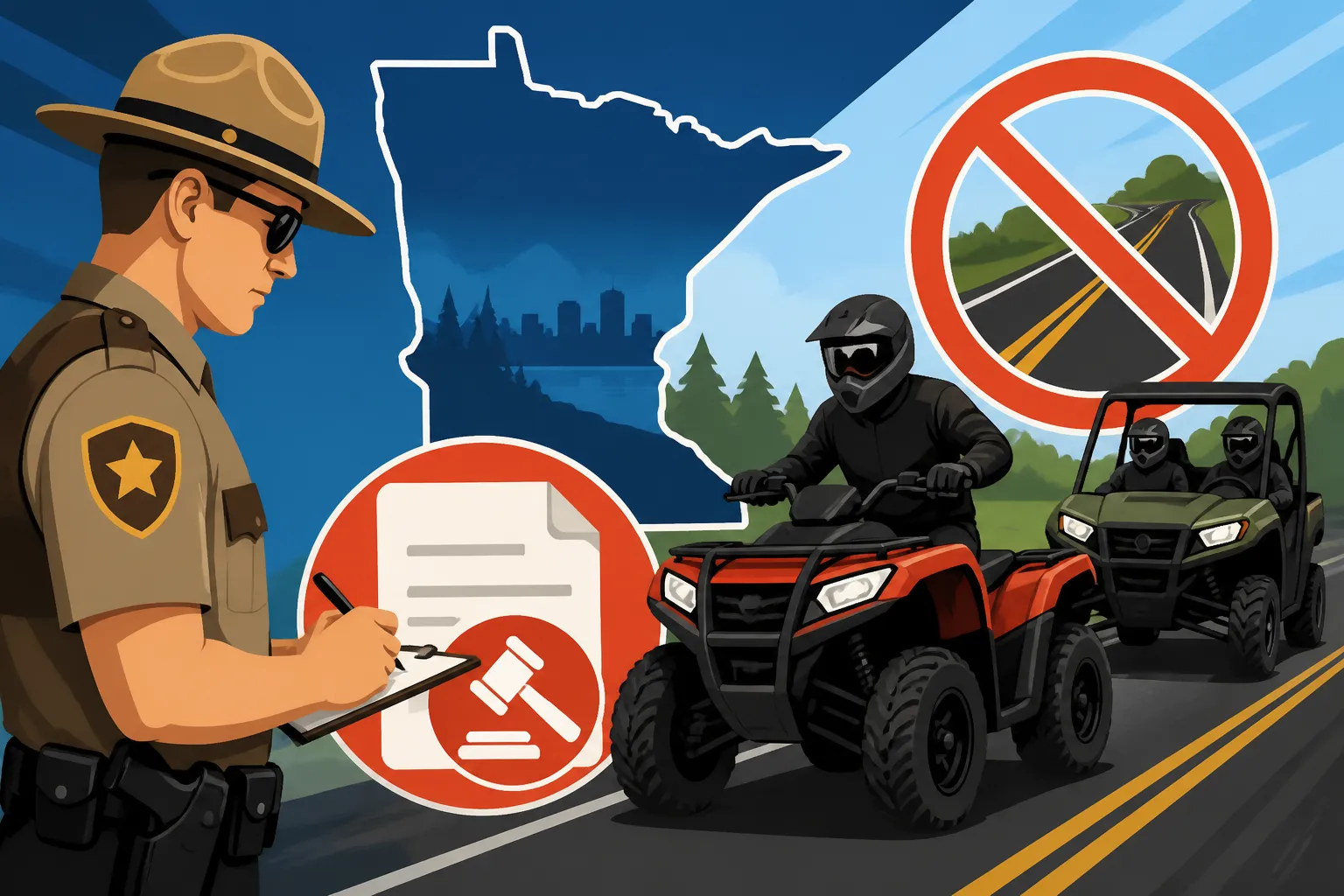
This is arguably the most frequent cause of fines for ATV and UTV operators in Minnesota. The temptation to take the most direct route, even if it's a paved county road or state highway, is often hard to resist. However, as we discussed, most of these road surfaces are strictly off-limits to off-highway vehicles. You might be able to ride the shoulder or ditch, but moving onto the actual travel lanes or ignoring "no ATV" signage is a clear violation. [The Road Surface Minnesota Keeps Closed] highlights these areas.
A common scenario involves riders attempting to cross a major highway or state-aid road by driving on the pavement, rather than using the safest, most direct perpendicular crossing point. Even short distances on a prohibited surface can result in a fine. Conservation Officers and local law enforcement are well aware of these common infractions, particularly in areas near popular trail systems or lakes where ATV traffic is higher. They often patrol these specific stretches, ready to enforce the rules that protect both riders and the motoring public.
Riding Without Proper Registration or Decals
Even when you're riding in a permissible area, like a designated trail or the shoulder of a specific road, your machine still needs to be properly registered with the Minnesota Department of Natural Resources (DNR). This isn't just a suggestion; it's a legal requirement for public land use. An unregistered machine, or one with expired decals, is a surefire way to earn a citation. [Registering an ATV in Minnesota] and [Minnesota's Three-Year ATV Registration] detail this process.
Imagine you're enjoying a beautiful day on a county road ditch, totally convinced you're following all the rules. A Conservation Officer pulls up, asks for your registration, and you realize your decal fell off last season, or maybe you simply forgot to renew it. Boom. Even if you were otherwise riding responsibly, that missing or expired registration can lead to a fine. It's a simple administrative detail that carries legal weight. Many riders also forget about [Where a Minnesota ATV Registration Sticker Goes] and proper placement, which can also draw attention and questions from authorities.
Operating Underage or Without a License
Minnesota has specific rules about who can operate an ATV or UTV and where, especially concerning younger riders and licensed drivers. If you're riding a ditch or designated route, and you're under 16, you generally need to be accompanied by a parent or guardian on a separate machine, or hold a valid ATV safety certificate. [Minnesota Road Rules for Riders Aged 12 to 15] clarifies this. For any road riding that requires a driver's license (which is typically very limited to specific statutory exceptions or local ordinances that allow street-legal vehicles), operating without one is a serious offense.
Consider a scenario where a 14-year-old, excited about a new side-by-side, takes it for a spin on a permitted township road shoulder without their parent nearby or having completed the necessary safety training. While their intentions might be innocent, they're in violation of the age and accompaniment rules. These regulations are in place for the safety of young riders, who may lack the experience and judgment to navigate public ways. Ignoring them not only risks a fine for the operator but potentially for the supervising adult as well.
Alcohol and Drugs
This is one area where there's absolutely no gray area: operating an ATV or UTV under the influence of alcohol or drugs is just as illegal and dangerous as operating a car under the influence. [Minnesota Alcohol Limits for ATV Operators] are clear on this. The consequences are severe, including significant fines, loss of driving privileges, and even jail time, regardless of whether you're on a trail, private land, or a public road shoulder.
The notion that an ATV is somehow "less serious" than a car when it comes to DWI laws is a dangerous misconception. Law enforcement treats impaired operation of any motorized vehicle with the utmost seriousness. A casual ride home from an ice fishing house or a campfire gathering after a few drinks can quickly turn into a life-altering event if you encounter a Conservation Officer or Highway Patrol. Not only are you risking hefty legal penalties, but you're also putting your life and the lives of others in extreme jeopardy.
Understanding the Financial Hit: What Fines Look Like
So, you've received a citation for an ATV or UTV road riding violation. Now what? The immediate concern for most riders is, understandably, the financial impact. While I can't give you exact dollar amounts (as these can change and vary by jurisdiction), I can describe the shape of what you can expect and why it's far more than just the number on the ticket.
Base Fines for Typical Infractions
When you get a ticket for illegal road riding, it usually starts with a base fine for the specific violation. For something like riding on a prohibited road surface or operating an unregistered machine, these initial fines can be significant enough to sting. Think of it as a penalty designed to deter future infractions and reinforce the importance of following the rules. It's not a slap on the wrist; it's a clear signal that the state takes these regulations seriously, primarily for public safety.
These fines are often set by statute or by local ordinances and can vary depending on the severity of the offense and the specific section of the law that was violated. For example, a minor technical violation, such as improper sticker placement, might carry a different fine than a more egregious offense like riding a Class 2 machine on a restricted road. Regardless of the exact amount, it's money out of your pocket that could have gone towards fuel for your next adventure, new gear, or even some cool SuperATV accessories for legal trail riding.
Escalation for Repeat Offenses
The law isn't keen on repeat offenders. If you've been cited for illegal road riding before and find yourself with another ticket for a similar offense, expect the penalties to escalate. This isn't just about higher fines; it can involve more serious consequences like extended suspensions of riding privileges or even impoundment of your machine. The system is designed to progressively deter habitual disregard for the rules.
This escalation means that while a first offense might be a costly lesson, a second or third can become a much bigger headache, potentially forcing you off the trails entirely for a period. It's a clear message: learn the rules the first time, or face increasingly stringent repercussions. Conservation officers maintain records, and prior violations will almost certainly be considered during subsequent enforcement actions. [Penalties for an Unregistered ATV in Minnesota] gives you a sense of this escalation for one common type of violation.
Additional Costs Beyond the Ticket
The base fine on your citation is often just the beginning of the financial burden. When you're caught riding illegally on a road, a whole host of other potential costs can quickly add up, turning a simple ticket into a much larger drain on your wallet. These are the hidden expenses that often catch riders by surprise.
First, there are often court fees and administrative costs. Even if you don't fight the ticket and just pay it, there's usually a processing fee tacked on. If you decide to challenge the citation in court, you could incur even more expenses, including potential legal fees if you hire an attorney. Then there's the inconvenience and time lost—time off work for court appearances, for example, which also has a monetary value. Beyond that, if your machine is deemed to be operated illegally and unsafely, law enforcement might order it to be towed and impounded. Towing fees, daily storage fees, and the hassle of arranging pickup can easily add hundreds of dollars to the cost of your transgression. So, while [Minnesota ATV Ticket Amounts] gives you a glimpse of the base fine, always factor in these compounding costs.
The Ripple Effect: Beyond Just Money
Getting a ticket for illegal road riding in Minnesota isn't just about the immediate financial hit. There's a broader ripple effect that can impact your driving record, your insurance, and even your ability to enjoy future rides. These less obvious consequences can sometimes be more frustrating and long-lasting than the initial fine.
Impact on Your Driving Record and Insurance
While operating an ATV or UTV is different from driving a car, many moving violations on an OHV can still find their way onto your state driving record. This is especially true for serious offenses like operating under the influence or reckless driving. Points on your driving record can lead to higher auto insurance premiums, even if the incident occurred on an ATV. Insurers often view a poor driving record as an indicator of higher risk, regardless of the vehicle type involved in the violation.
Imagine this: a minor infraction on your ATV leads to a few points, which then triggers a rate hike on your family's car insurance policy. Suddenly, that seemingly small ATV ticket is costing you significantly more over the next few years. It's a compounding effect that many riders don't anticipate. Beyond that, having violations on your record could make it harder or more expensive to obtain [Insuring an ATV in Minnesota] in the future, as some companies might view you as a higher liability risk.
Machine Impoundment and Recovery
One of the most immediate and disruptive consequences of illegal road riding, particularly for repeat offenses or serious safety violations, can be the impoundment of your ATV or UTV. When law enforcement determines a machine is being operated unlawfully or dangerously, they have the authority to seize it. This means your pride and joy is taken away, often towed to an impound lot, leaving you stranded.
The process of recovering an impounded machine is rarely quick, easy, or cheap. First, you'll have to pay any outstanding fines and fees associated with the citation itself. Then, you'll be on the hook for the towing fee to get it to the lot, plus daily storage fees that accrue every single day it sits there. These fees can escalate rapidly, especially if it takes you a few days to sort out the paperwork and payment. Plus, the sheer inconvenience of having to arrange transport to pick up your machine from potentially a distant impound lot adds to the headache. It's a significant disruption and an expensive lesson.
Loss of Riding Privileges
For serious or repeated violations, especially those involving alcohol, drugs, or egregious disregard for safety, Minnesota law allows for the suspension or revocation of your ATV operating privileges. This means you could be legally prohibited from riding an ATV or UTV on any public land, including trails, for a specified period. This consequence strikes at the heart of why many of us own these machines: the freedom and joy of riding.
Losing your riding privileges can be a devastating blow for enthusiasts. It means no more weekend trail rides, no more ice fishing excursions by quad, and no more exploring Minnesota's vast wilderness on your machine. For those who rely on their ATV or UTV for work or access to remote property, it can be even more impactful. This is a powerful deterrent designed to encourage responsible operation and underscore that the privilege of riding comes with the responsibility to adhere to the rules.
How to Avoid Illegal Road Riding Fines
The good news is that avoiding fines for illegal road riding in Minnesota is entirely within your control. It boils down to understanding the rules, being prepared, and making informed choices before you even turn the key. A little proactive planning can save you a lot of headache and money.
Know the Local Ordinances
Minnesota's ATV and UTV road rules can vary significantly from one jurisdiction to another. While the state sets the overarching framework, individual counties, townships, and cities often have their own specific ordinances that either open certain roads or place additional restrictions. What's allowed in one small town might be strictly forbidden just a few miles down the road. This is why "knowing the local ordinances" isn't just good advice; it's absolutely crucial.
Before you venture out, especially if you're exploring a new area, make it a habit to check with the local sheriff's department or city clerk's office. Many municipalities also post their ATV/UTV ordinances online. Don't rely on hearsay or what you see other people doing, as they might be breaking the law or simply unaware themselves. A five-minute phone call or quick search can prevent a costly fine and ensure your ride is legal and enjoyable. [Minnesota Cities That Allow ATVs on Streets] gives some examples of places where local rules might differ.
Stick to Designated Trails and Routes
The safest and most straightforward way to avoid illegal road riding fines is to simply stick to designated ATV trails and routes. Minnesota boasts an incredible network of [Minnesota's Grant-in-Aid Trail System] and other riding opportunities specifically designed for off-highway vehicles. These trails are maintained, usually well-marked, and explicitly legal for your machine. This eliminates the guesswork of figuring out which ditch or road shoulder is permissible.
Planning your rides around these established trail systems ensures you're always on legal ground. Use resources like the DNR's trail maps or apps like onX Offroad to locate and navigate these routes. While it might sometimes mean trailering your machine a bit further to access a trailhead, the peace of mind knowing you're fully compliant with the law is invaluable. This also helps support the trails, as registration and trail pass fees often go back into their maintenance.
Proper Registration and Safety Training
Before any ride, whether on a trail, private land, or a legal road shoulder, ensure your machine's registration is current and your decals are properly displayed. This is a basic requirement for public land use in Minnesota, and it's one of the easiest ways to get flagged by law enforcement if overlooked. [Minnesota Registration Renewal Every Three Years] reminds you of the cycle. You can usually renew your registration online through [Registering Online Through Minnesota eLicense] or at [Deputy Registrar Offices That Register ATVs].
Equally important is ensuring that all operators meet Minnesota's safety training requirements. For riders born after July 1, 1987, an ATV safety certificate is mandatory for operating on public lands. [Minnesota's ATV Safety Training Requirement] details this. Even if you're older than the cutoff, taking a safety course is always a smart idea to refresh your knowledge of operating rules and best practices. These simple steps of proper registration and training demonstrate responsibility and can often prevent unnecessary interactions with law enforcement.
When to Trailer, Not Ride
Sometimes, despite your best intentions, the most practical and legal solution for getting your ATV or UTV from point A to point B is to put it on a trailer. If there's any doubt about the legality of a specific road section, or if you need to cover a significant distance on a prohibited road, trailering your machine is the safest bet. It might add a few extra minutes to your journey, but it completely eliminates the risk of fines, impoundment, or even an accident.
Think of it as a small investment in peace of mind. Investing in a good trailer and proper tie-downs is far less expensive in the long run than facing repeated fines or losing your machine to impoundment. Many riders find that a compact utility trailer is incredibly versatile, not just for ATVs but for other hauling needs as well. Making the conscious decision to trailer when in doubt is a hallmark of a responsible and experienced Minnesota rider.
Disclaimer
This article is for general informational purposes only and does not constitute professional advice. Laws, prices and regulations vary by location and change over time. Consult a qualified professional for guidance on your specific situation.