North Dakota Riders Coming to Minnesota
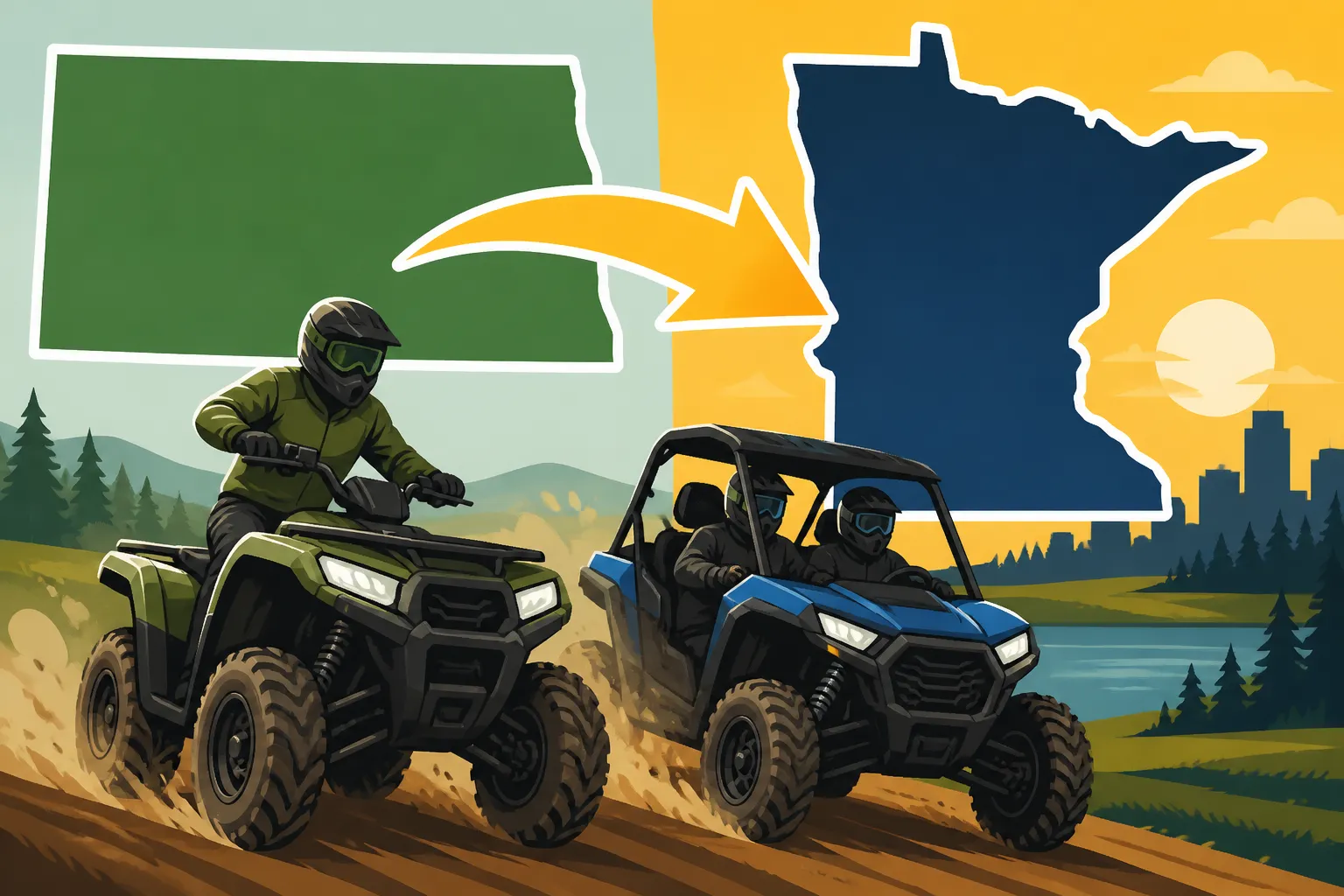
A North Dakota registration can make a Minnesota ride feel straightforward, but it does not automatically cover every Minnesota trail requirement. Before you cross the border, check whether your route requires a nonresident ATV trail pass, what proof to carry and which rider-safety rules apply. A little preparation helps you avoid turning a trail day into a paperwork problem.
Does North Dakota registration let you ride Minnesota trails?
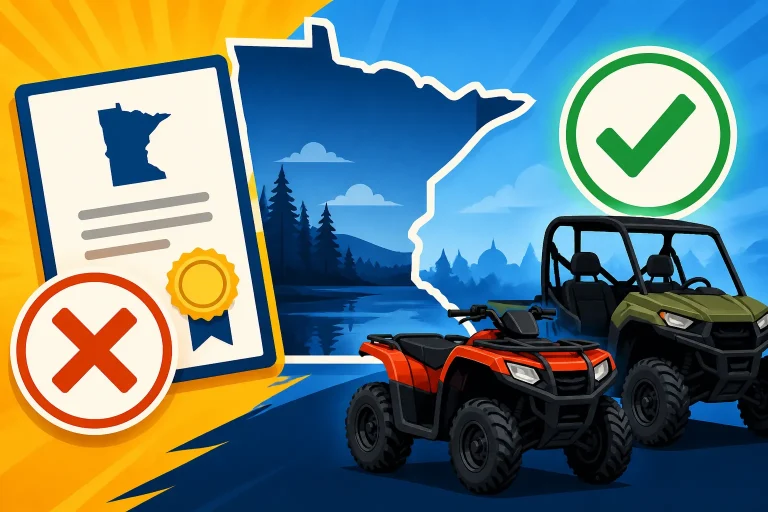
North Dakota registration and Minnesota trail access are separate issues. Your home-state registration may show that your machine is registered where you live, but it should not be treated as a substitute for Minnesota’s nonresident trail pass when that pass is required.
Minnesota does not offer reciprocity that lets North Dakota riders rely on their home-state registration alone for the applicable trail-pass requirement. Before riding, check the current rules for the trails you plan to use and get the required pass if your machine and route call for one. The distinction is explained further in Reciprocity Minnesota Does Not Offer and Minnesota’s Non-Resident ATV Trail Pass.
The pass question matters most when you plan to ride public trail systems. Minnesota’s Grant-in-Aid trails are developed and maintained through a state program and may cross public and private land. A trail’s location on private property does not necessarily mean it is outside the trail-pass rules. Check Grant-in-Aid Trails and the Trail Pass and Which Minnesota Trails Require a Pass before assuming a particular segment is exempt.
A pass is not blanket permission to ride anywhere. It does not give you permission to cross private land outside an authorized trail, ride a closed route, or use a road where ATV travel is prohibited. It also does not replace any registration, safety, equipment or local route requirements that apply to your situation.
| What you have or plan to do | What it means for your Minnesota trip |
|---|---|
| A current North Dakota registration | Carry it as proof of your machine’s registration, but do not assume it replaces a Minnesota nonresident trail pass |
| A plan to ride Minnesota public trails | Check the route and pass rules before leaving home |
| A route using Grant-in-Aid trails | Verify pass requirements even if part of the route crosses private land |
| A plan to ride on private property | Get the owner’s permission and check whether the pass exemption applies to the exact property and use |
| A route involving a road | Confirm that ATV travel is allowed on that specific road or crossing; a trail pass does not make road riding legal |
Registration status can also be affected by the kind of machine you own and how it is used. If you have a side-by-side, a modified machine or an ATV with unusual paperwork, don’t assume that rules for one type of vehicle apply to another. Minnesota Rules for Visiting Riders is a useful place to start, but confirm the requirements for your machine and route with the Minnesota DNR before traveling.
What to do before crossing the border
Start with your route, not just the destination. Identify the trail system, the trailhead and any roads or connectors you expect to use. Then check whether the route is open and whether it requires a pass. Trail access can vary by land type, management rules and seasonal conditions, so an online map or old trip plan may not reflect current access.
A practical preparation sequence is:
- Choose the trails you intend to ride. Use current trail information to identify whether you’ll be on a Grant-in-Aid trail, state forest route or another public riding area. Reading a Minnesota OHV Trail Map can help you interpret mapped routes, but verify access details before you set out.
- Check the pass requirement for that route and machine. Don’t rely on a friend’s experience from a different trail, machine type or year. Rules and access can differ.
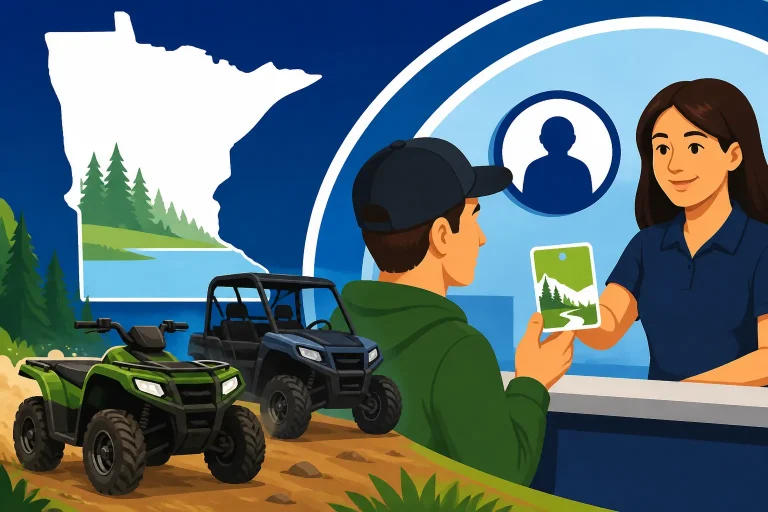
- Buy any required pass before riding. Minnesota offers online purchase options and license agents. Check the current process, validity period and instructions for displaying or carrying the pass through Buying a Minnesota Trail Pass Online.
- Gather your documents. Bring proof of North Dakota registration and ownership or other paperwork relevant to your machine. Keep the pass information available as well. Keeping the Paperwork With the Machine explains why having documents accessible can make a roadside check simpler.
- Confirm the route is open. Trail closures can happen because of weather, maintenance, land conditions or other restrictions. Check current notices before you tow the machine to a trailhead.
- Review rider requirements. Minnesota safety rules can depend on a rider’s age and date of birth, not just their state of residence. Check the training and supervision rules before traveling with younger riders.
The purchase step deserves care. Confirm that the pass you select matches the machine and activity, and read the instructions for how it must be displayed. Don’t rely on a screenshot or purchase confirmation as a substitute for an affixed pass if the rules call for a decal on the machine. Details can change, so follow the current Minnesota instructions rather than an old forum post or a sticker-placement assumption. See Carrying the Minnesota Trail Pass on the Machine for related practical guidance.
If you have more than one ATV in your group, check each machine separately. A pass associated with one machine should not be assumed to cover the rest. Likewise, don’t assume a pass bought for a borrowed or rented machine can be transferred to another ATV. The person arranging the trip should make sure every machine has the required documents and pass before the group starts riding.
Your North Dakota registration paperwork should be legible and match the machine’s identifying information. If the registration or ownership record has a different name, a damaged document or a discrepancy in the vehicle identification number, resolve the issue before the trip where possible. Officers and trail staff need to be able to connect the paperwork to the machine. For a machine with complicated or incomplete ownership records, use Minnesota Registration for an Out-of-State Machine as a starting point for sorting out the issue.
Minnesota requirements once you are riding
Minnesota rules apply while you ride in Minnesota, even if you registered the ATV in North Dakota and usually ride elsewhere. The pass is only one part of the checklist. You still need to obey posted signs, trail closures, land-manager rules and restrictions on where machines may travel.
Rider age and safety training
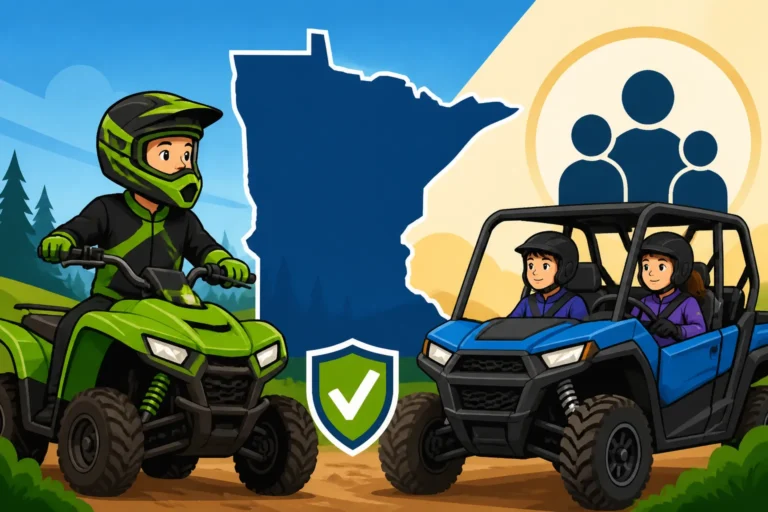
Minnesota’s safety-training requirements can apply to visitors as well as residents. Whether a rider needs certification depends on factors such as age and date of birth, and there may be separate rules for young riders and supervision. Don’t assume that a North Dakota card or course automatically satisfies Minnesota’s requirements. Check Minnesota ATV Safety Training Requirements and Out-of-State Certificates Minnesota Accepts, and confirm that the certificate is accepted for the rider’s situation.
For a group with children, sort out supervision and training before reaching the trailhead. A youth rider’s age, machine and riding location can affect what is allowed. Check the rules for the specific trail and public area rather than relying on a general rule of thumb. A child who is permitted to ride in one setting may face different requirements on a public trail or road right of way.
Trail access, closures and private land
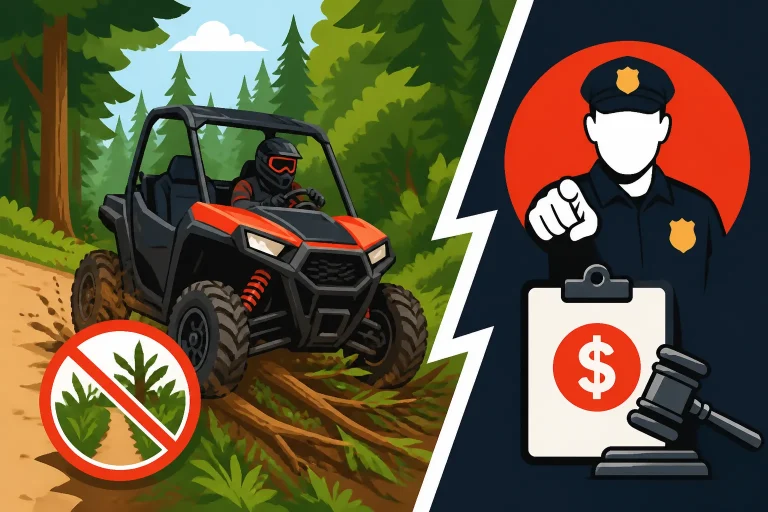
Stay on the route shown as open for ATV use. A visible track through the woods, a logging road or an unmarked path is not automatically an authorized ATV trail. This is particularly important where a designated route crosses private land: the trail may be open only along its marked corridor, while nearby land remains off-limits.
Do not use a trail pass as a reason to go around a barrier or continue into a closed section. If a trail is closed, turn back and use an authorized alternative. Check Minnesota State Forest Riding for the broader context of riding in state forests, and consult current trail notices for closures and seasonal limits.
Roads and connectors
A trail map may show a route approaching a road, but that does not mean you can ride along the road surface or take any convenient connector. Road use is governed by separate rules and can depend on the road authority and local authorization. Cross only where permitted, follow signs and use designated routes rather than improvising a way into town or to another trail.
If your trip includes road riding, review Riding an ATV on the Road in Minnesota before departure. A trail pass does not make an otherwise prohibited road route legal, and a route that is lawful in one town may not be allowed in another.
Documents and checks
Carry the documents and pass information required for your situation, and make sure they’re easy to retrieve. If an officer or trail official asks for proof, you don’t want to be searching through a trailer or trying to pull up an account with weak cell service. In remote areas, save essential information in a way you can access without a reliable connection.
Before setting off, check that the pass is displayed or carried as directed, the North Dakota registration is current, and the identifying information on the paperwork matches the machine. If you are using a borrowed ATV, confirm who is responsible for its paperwork and pass. A rider should not assume that the owner has handled every requirement unless that has been checked.
A North Dakota rider’s final trip checklist
A quick check before loading can prevent several common mistakes: assuming home-state registration is enough, buying a pass for only one machine in a group, or arriving at a closed trail with no alternate route. Use this list as a starting point, then verify current Minnesota rules for your exact trip.
- Trail plan: Identify the trail system and confirm that the route is open to your machine.
- Pass: Check whether a Minnesota nonresident ATV trail pass is required, and follow the current purchase and display instructions.
- Registration: Bring current North Dakota registration documents and make sure they match the machine.
- Ownership paperwork: Carry relevant proof of ownership, especially if the machine is borrowed, recently purchased or registered in someone else’s name.
- Rider eligibility: Check Minnesota training, age and supervision rules for every rider.
- Road use: Verify that each road segment or crossing is authorized; don’t use a pass as permission to ride anywhere.
- Trail conditions: Check closures and restrictions shortly before departure, not only when you first plan the trip.
- Group machines: Confirm that every ATV has the documents and pass required for that machine.
If you’re unsure whether a trail requires a pass, whether an out-of-state certificate is accepted or whether your North Dakota registration is sufficient for a specific use, confirm the answer with the Minnesota DNR or the relevant land manager before riding. Rules can depend on the machine, route and type of land, and the safest plan is to verify those details before the trip.
Disclaimer
This article is for general informational purposes only and does not constitute professional advice. Laws, prices and regulations vary by location and change over time. Consult a qualified professional for guidance on your specific situation.