What a Minnesota Conservation Officer Asks For
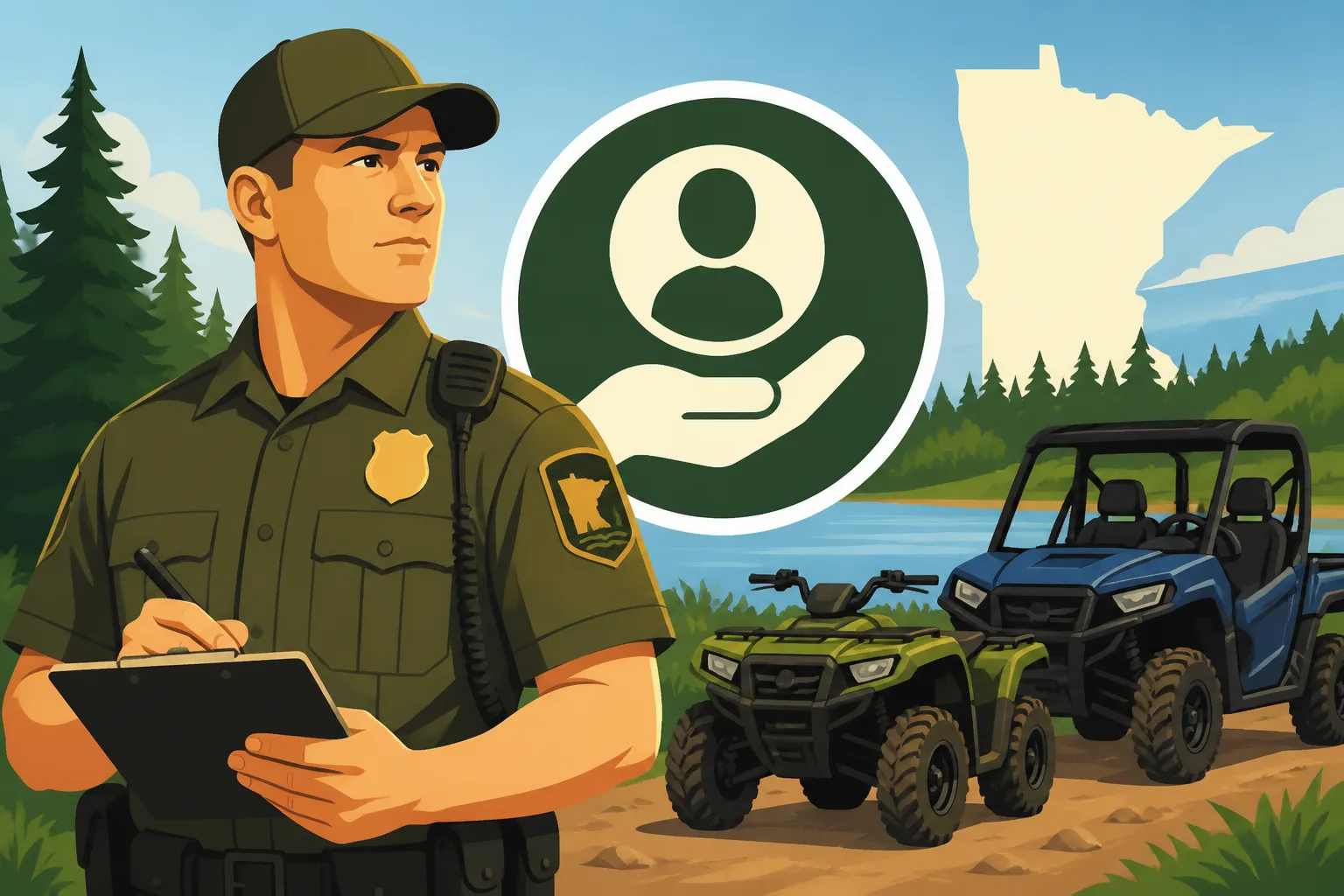
It's a moment many of us dread: that sudden flash of lights or the wave of a hand signaling you to pull over while you're out enjoying Minnesota's beautiful trails or ditch lines on your ATV or UTV. When a Minnesota Conservation Officer approaches, it's natural to feel a bit nervous, wondering what they're looking for. This guide will walk you through exactly what they're likely to ask for, helping you feel prepared and confident for any roadside check.
The Initial Stop: What Prompts a Conservation Officer?
No one wants to be stopped, especially when you’re just trying to enjoy a peaceful ride. But Conservation Officers (COs) aren't out to ruin your day; they're primarily focused on ensuring safety, compliance with state laws, and protecting Minnesota's natural resources. Understanding what might catch their eye can help you avoid unnecessary attention in the first place.
Visible Infractions That Draw Attention
Sometimes, a stop isn't random at all. COs are trained to spot common violations from a distance. Imagine cruising down a ditch line without your registration sticker visibly displayed, or perhaps you have a young rider on a machine without a helmet. These are immediate indicators that might prompt an officer to flag you down. Other visible issues could include riding on a restricted road surface rather than the designated ditch, or riding in an area clearly marked as closed or private land. Passengers riding illegally (e.g., more people than the machine is designed for, or a child on a single-rider ATV) are also easily spotted. These are often not about malice, but simply not knowing or forgetting a rule. Sometimes, an officer might be investigating a recent incident, like a [Minnesota ATV Crash Reporting], and sees a machine matching a description.
Routine Checks and Random Enforcement
Even if you're following every rule in the book, you might still get stopped. Just like highway patrol officers conduct routine traffic stops to ensure everyone is licensed and insured, Minnesota Conservation Officers regularly perform checks on trails, at trailheads, and along popular riding corridors. These stops are a fundamental part of their enforcement duties, ensuring the safety of all riders and the sustainability of our outdoor spaces. They're often seen as educational opportunities, allowing officers to interact with the riding community, answer questions, and remind riders of important regulations. Don't take it personally; it's simply part of maintaining order and safety on our shared trails and public lands. They might set up a temporary checkpoint at a popular access point to a state forest or a well-used bridge, simply stopping everyone passing through to make sure things are in order.
Key Documents You Must Present on Demand
When a Conservation Officer approaches, their primary goal is to verify that you, your machine, and your passengers are legally compliant with Minnesota's regulations. Having your paperwork in order is crucial and can make the interaction quick and painless.
Registration and Decals
This is almost always the first thing a CO will ask about. Your ATV or UTV needs to be properly registered with the Minnesota Department of Natural Resources (DNR) if you plan to operate it on public lands, trails, or ditch lines. The registration is valid for three years, and you should always have a current, visible decal affixed to your machine. The officer will want to see that sticker to confirm your registration is up to date. If it's expired or missing, that's an immediate red flag. They'll also typically ask for your actual registration card, which should be kept with you on the machine. This card contains vital information like your name, address, and the machine's VIN. Make sure it's legible and easily accessible, perhaps in a waterproof pouch. You can learn more about [Minnesota's Three-Year ATV Registration] and [Where a Minnesota ATV Registration Sticker Goes].
Proof of Ownership and Identification
While not always legally required to be carried on your person while riding, having some form of proof of ownership can be incredibly helpful if questions arise. This could be your registration card (which often serves this purpose), a bill of sale, or even your title. The officer will certainly ask for your personal identification, usually a valid driver's license or state ID, to confirm who you are and that you're old enough to operate the machine legally. For younger riders, they'll check identification for age verification as well. If you've recently purchased your machine, especially in a private sale, make sure you have a clear [What a Minnesota Bill of Sale Should Carry] or other documentation. If you need to formalize a private sale agreement or other ownership documents, online services like LawDepot can help you generate legally sound paperwork to ensure you always have proper proof of ownership readily available, even if you just keep a copy at home. This can be crucial in proving your machine isn't stolen or to resolve any ownership disputes.
Safety Training Certificate (if applicable)
Minnesota has specific requirements for ATV safety training, particularly for younger riders. If you were born after July 1, 1987, and you're 12 years old or older, you are required to have an ATV safety certificate to operate on public lands, trails, and frozen waters. A Conservation Officer will absolutely ask for this if you fall into that age group. They'll want to see your physical certificate or an acceptable digital copy. This requirement helps ensure that riders understand safe operating practices and the rules of the trail. Missing this certificate can result in a fine. For all the details, you can refer to [Minnesota's ATV Safety Training Requirement] and [The Minnesota Rule for Riders Born After 1987].
Non-Resident Trail Pass (for out-of-state riders)
For our friends visiting from neighboring states like Wisconsin, Iowa, or the Dakotas, there's another crucial document: the Minnesota Non-Resident ATV Trail Pass. If your machine is registered in another state, and you plan to ride it on Minnesota's Grant-in-Aid trails or other public riding areas, you'll need this annual pass. It's a critical revenue source that helps maintain our expansive trail system. Officers are very familiar with out-of-state plates and will certainly ask to see this pass. Don't get caught without it, as the fines can be significant. You can find more information about [Minnesota's Non-Resident ATV Trail Pass] and [What Minnesota Charges an Out-of-State Rider].
Ensuring Your Machine and Gear Meet Minnesota Standards
Beyond paperwork, a Conservation Officer is also checking the physical aspects of your machine and your personal protective equipment. These standards are in place for everyone's safety and to protect the environment.
Machine Requirements: Mufflers, Spark Arresters, Lighting
Minnesota has rules about how loud your machine can be and what kind of exhaust system it needs. All ATVs and UTVs operating on public lands must have an effective muffler system and a U.S. Forest Service-approved spark arrester. These are critical for reducing noise pollution, especially near residential areas and lakes, and for preventing wildfires. An officer might visually inspect your exhaust or even use a sound meter. If you're riding after dark or in low-light conditions, your machine must have working headlights and taillights. These aren't just for your visibility but also so other riders and officers can see you. Blown bulbs or non-functional lights are easy for a CO to spot. Learn more about [Mufflers and Spark Arresters in Minnesota] and [Lighting Rules for Minnesota Night Riding].
Personal Protective Equipment: Helmets, Eye Protection
Safety gear is non-negotiable for certain riders in Minnesota. For anyone under the age of 18, wearing an approved helmet is a strict legal requirement when operating an ATV or UTV. The CO will check to make sure young riders are properly protected. While adults aren't legally mandated to wear a helmet, it's always highly recommended for your own safety. Eye protection is also essential for all riders to prevent debris from impacting your vision. This could be goggles or a face shield on a helmet. An officer might inquire about eye protection, especially if you're riding on dusty trails or in areas with flying debris. Understand the rules by reviewing [Minnesota Helmet Rules for Riders Under 18] and [Eye Protection on a Minnesota Ride].
Passengers and Machine Capacity
ATVs and UTVs are designed with specific capacities for a reason. Carrying more passengers than your machine is designed for, or having a passenger on a single-rider ATV, is not only illegal but extremely dangerous. A Conservation Officer will certainly look for these violations. Side-by-sides typically have multiple seats with seatbelts, and those must be used. Traditional ATVs are generally designed for one operator, unless specifically manufactured and labeled for two riders. Be aware of [Passengers on a Minnesota Road Section] and the dangers of [Doubling Up on a One-Seat Machine in the Ditch]. Ensure your machine is rated for your passenger load and that all occupants are properly secured.
Understanding Your Rights and Responsibilities During an Encounter
Being prepared isn't just about having the right documents; it's also about knowing how to conduct yourself during a stop. A respectful and cooperative attitude can make a significant difference.
Remaining Calm and Respectful
When a Conservation Officer signals you to stop, pull over safely to the side of the trail or ditch line. Turn off your engine and remove your helmet so you can hear clearly. Remain in your seat unless instructed otherwise. Speak clearly and politely, answering their questions honestly. An officer has a job to do, and your cooperation helps them do it efficiently. Getting argumentative or aggressive will only prolong the encounter and can potentially escalate a minor issue into a more serious one. If you have questions about why you were stopped, or if you don't understand a directive, it's perfectly acceptable to ask for clarification respectfully.
Understanding Potential Violations and Penalties
If you're found to be in violation of a rule, the officer will explain what the infraction is. This could range from a warning to a citation and fine. Common penalties include fines for an unregistered machine, improper display of decals, not having a safety certificate, or illegal riding. These can add up, and repeat offenses often carry steeper consequences. Understanding the potential ramifications can help you avoid them in the future. For example, [Penalties for an Unregistered ATV in Minnesota] can be a real headache. Similarly, [Minnesota Fines for Illegal Road Riding] can put a serious dent in your wallet. If you believe you were cited unfairly or have questions about how to proceed, you do have the right to [Fighting an ATV Ticket in Minnesota].
Seeking Legal Clarity or Further Information
Sometimes, you might simply have a question about a specific rule or need to understand the nuances of a regulation. The Minnesota DNR website is an excellent resource for current ATV and UTV laws. You can often find contact information for your local DNR office or even specific Conservation Officers if you have non-urgent questions after an encounter. When you're managing important aspects of your off-road adventures, like buying or selling a machine, formalizing agreements, or ensuring compliance, having the right documentation is key. Services like LawDepot offer templates for various legal documents, from bills of sale to liability waivers, which can be invaluable for ensuring all your paperwork is clear and comprehensive, reducing misunderstandings or potential issues with enforcement. Being proactive about understanding the rules and having your documents in order will always contribute to a smoother, safer, and more enjoyable riding experience in Minnesota.
| Document/Item | Why a CO Asks | Consequence of Not Having It (General) |
|---|---|---|
| ATV/UTV Registration Decal | Proof machine is legally registered for public use | Fines, potential impoundment |
| Registration Card | Official proof of current registration, owner info | Could lead to ticket if decal not present or legible |
| Valid Driver's License/State ID | Operator identification and age verification | Fines, possible operating privilege suspension |
| ATV Safety Certificate | Required for specific age groups (post-1987 born) | Fines |
| Non-Resident Trail Pass | Required for out-of-state machines on public trails | Fines |
| Working Headlights/Taillights | Safety, legal requirement for night operation | Fines |
| Muffler with Spark Arrester | Environmental compliance, noise reduction | Fines, trail closure |
| Helmet (for under 18) | State law for minor rider safety | Fines for operator and/or parent/guardian |
Disclaimer
This article is for general informational purposes only and does not constitute professional advice. Laws, prices and regulations vary by location and change over time. Consult a qualified professional for guidance on your specific situation.